
Meeting Summary
Video (Part 1)
Video (Part 2)
Ad Hoc Committee on Gen Mkhwanazi’s Allegations
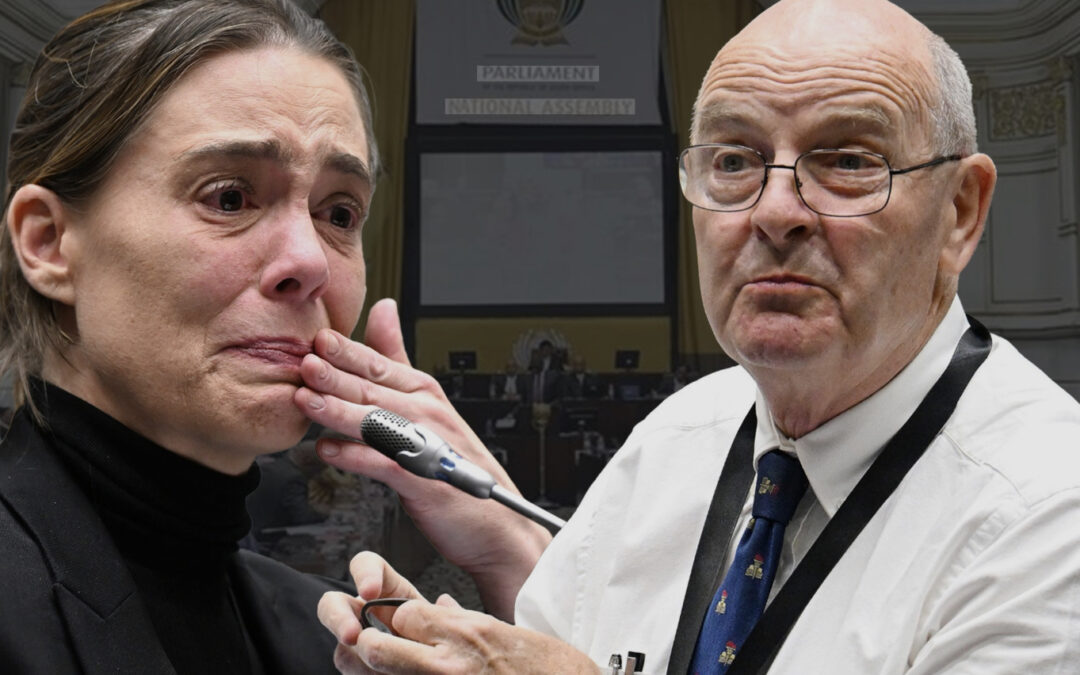
The Ad Hoc Committee met on 5 March 2026 to continue its inquiry into the allegations made by Lieutenant General Nhlanhla Mkhwanazi regarding corruption and misconduct within elements of the South African Police Service. The purpose of the meeting was to receive oral evidence from Mr Paul O’Sullivan and Ms Sarah-Jane Trent. The Committee sought to examine the information submitted by the witnesses and to question them on the allegations they had made concerning senior police officials, the conduct of certain investigations and the alleged misuse of Crime Intelligence resources.
The Committee first heard evidence from Mr Paul O’Sullivan. At the beginning of his appearance he apologised to the Committee for leaving the previous meeting before the proceedings had concluded. He explained that he had submitted a confidential affidavit to the Speaker outlining the circumstances that led to his departure. He confirmed that he was willing to continue with the inquiry and to respond to questions from Members.
Members began by questioning Mr O’Sullivan about messages he had sent to several individuals connected to the matters under investigation. The Committee referred to messages sent to Mr Nkabinde while he was appearing before the Committee and to similar communications directed at General Phahlane and Advocate Mashoga. Members raised concern about the tone and content of these messages and questioned whether they amounted to intimidation or harassment of witnesses.
Mr O’Sullivan responded that his conduct should be understood in the context of what he described as years of harassment and unlawful actions against him by certain police officials and prosecutors. He told the Committee that he had been arrested and prosecuted in several cases that he believed were fabricated in retaliation for his anti-corruption work. He acknowledged that his messages were strongly worded but maintained that they reflected his frustration with individuals whom he believed had abused their positions of authority.
The Committee also questioned him about a gathering that took place in December 2016 which had been described in different ways during previous testimony. Mr O’Sullivan explained that the event was a year-end braai attended by journalists and associates. During the gathering a journalist distributed copies of a book and a document titled Joining the Dots. He denied that the meeting had been a secret political gathering and said that the only reason for limiting publicity was concern for his personal safety at the time.
Members then turned to Mr O’Sullivan’s involvement in investigations relating to former Acting National Commissioner General Phahlane. The Committee asked why he had accompanied officials from the Independent Police Investigative Directorate to Sable Hills Estate and whether he had represented himself as an investigator or as an official of the Directorate. Mr O’Sullivan denied that he had misrepresented himself. He said he had assisted investigators because he had already gathered information about the matter and had knowledge that could assist them. According to him his role had been limited to sharing information obtained through the work of Forensics for Justice.
Members raised concerns about the propriety of a private individual participating in investigative activities linked to a statutory body. The Committee questioned whether it was appropriate for a complainant to be involved in the investigative process. Mr O’Sullivan rejected the suggestion that he had acted improperly. He argued that civil society organisations often collect evidence of corruption and pass it to law enforcement agencies when official institutions fail to act.
The Committee then examined the substance of the allegations presented by Mr O’Sullivan. A significant portion of his testimony concerned the Crime Intelligence secret service account. He argued that the account had become a slush fund that allowed large amounts of public money to be spent without adequate oversight. He told the Committee that the budget allocated to the account had increased substantially over the years without corresponding improvements in public safety. In his view the lack of accountability had created opportunities for corruption and abuse of resources.
Mr O’Sullivan also referred to alleged irregular property transactions involving individuals connected to Crime Intelligence. He explained that research conducted by Forensics for Justice had identified properties that were purchased at prices higher than the advertised value. He said this information had been compiled through the examination of title deeds and other records and had been submitted to the Inspector-General of Intelligence for investigation.
Members further questioned him about allegations relating to the Political Killings Task Team. Mr O’Sullivan told the Committee that he had received affidavits alleging that certain members of the task team had received payments or benefits from individuals connected to the University of Fort Hare case. He argued that these claims pointed to possible corruption within the team and warranted further investigation.
Another allegation raised during his testimony concerned an informer who claimed to have been recruited into an armed structure that operated alongside official police units in KwaZulu-Natal. According to Mr O’Sullivan the informer alleged that recruits were trained, issued with uniforms resembling those of the police and deployed in violent operations. He told the Committee that the individual claimed innocent people had been killed and that evidence had later been planted to conceal the truth.
Members also questioned Mr O’Sullivan about his background and professional history. The Committee asked about his previous employment, his role as a police reservist and aspects of his personal background. Members also asked about his educational qualifications. Mr O’Sullivan declined to provide details of his tertiary education and argued that the questions were outside the scope of the Committee’s mandate. This led to a tense exchange between the witness and Members who insisted that the Committee had a duty to examine the credibility of those presenting evidence.
The Committee also asked about his relationships with several individuals connected to previous investigations and litigation. Members questioned him about financial contributions he had made to legal efforts aimed at restoring Mr McBride to office. Mr O’Sullivan confirmed that he had provided financial support for that litigation. He argued that this had been necessary because he believed the criminal justice system had been compromised at the time.
After Mr O’Sullivan concluded his testimony the Committee proceeded to hear evidence from Ms Sarah-Jane Trent. She explained that she had worked closely with Mr O’Sullivan and had assisted the work of Forensics for Justice in a legal and administrative capacity. Members asked her to clarify the nature of her role within the organisation and the extent of her involvement in matters relating to investigations into police corruption.
The Committee questioned Ms Trent about her presence during investigative activities linked to the Phahlane matter. Members asked whether she had represented herself as a member of the Independent Police Investigative Directorate or as a police investigator. Ms Trent rejected that suggestion. She stated that she had never claimed to be a police officer or an investigator and had only accompanied Mr O’Sullivan in a supporting role.
Members also asked Ms Trent about the circumstances surrounding her arrest. The Committee heard that she had been detained for two nights and that her cellphone had been seized by investigators. Members asked whether she had refused to provide investigators with the access code to the device and whether the phone had later been sent abroad for forensic analysis. Ms Trent confirmed that she had declined to provide the code. She explained that this decision had been taken on legal advice because she believed investigators did not have lawful authority to demand it. According to her testimony the phone was later sent overseas for forensic extraction of its contents.
The Committee further questioned Ms Trent about her professional background and her working relationship with Mr O’Sullivan. Members sought to understand whether she held any formal legal position within Forensics for Justice and whether she had been involved in the investigative decisions made by the organisation. Ms Trent reiterated that her role was primarily supportive and administrative rather than investigative.
Meeting report
Chairperson: Good morning, Honourable Members, Evidence Leaders, and Mr Paul O’Sullivan. Mr Paul O’Sullivan, let me thank you for agreeing to come back. Let me also thank you for writing to us apologising for what happened last week where you ended up leaving the proceedings in the manner that it happened. But what is very important [is] that you are here today and we are going to continue with our business. I will give you some five minutes, two to five minutes if there is anything you want to say, before we go ahead with the proceedings. Today we are going to allow the members to interact with you and thereafter give to the legal team to conclude their business with you and we should be able to release you. Can I check if there is one or two things that you want to say?
Mr Paul O’Sullivan (Witness): No, thank you, Chair. I am just happy to continue to complete this exercise because it is been going on for quite some time now.
Chairperson: In the letter that you wrote to us, you requested that there was some part which was confidential, because it contains your personal details, which you may not want them to go out publicly. Am I representing you correctly?
Mr O’Sullivan: That is correct.
Chairperson: Maybe even without going into, without reading that letter into the record, is it not better when you say it yourself?
Mr O’Sullivan: Thank you. It is a lengthy document. It is an affidavit under oath. It says, “I, the undersigned Paul O’Sullivan, state under oath as follows. The purpose of this affidavit is to deal with my apology for and reasons for departure from the Ad Hoc Committee on 2026-02-26. I unreservedly apologise to the Speaker of the National Assembly and all Members of Parliament, including but not limited to the Chairman and Members of the Ad Hoc Committee, for departing from the Ad Hoc Committee at 13:15 on 2026-02-26. The circumstances leading to my departure can be described as follows…” and then I explain a number of confidential reasons why it was necessary for me to leave. So, that is the apology I gave.
Chairperson: Thank you so much. I am going to allocate to Members.
Mr X Nqola (ANC): Mr O’Sullivan, a lot of evidence has been presented before the Committee, and amongst the issues that were raised with the Committee, one is that you have, through a video that was played here, threatened Parliament and the Members of the committee. The second issue that the Committee had to deal with is a threatening message you sent to Mr Nkabinde when he was testifying here. After you have staged a walkout, General Phahlane reiterated that you have constantly sent him threatening and insulting messages. Yesterday, a prosecutor that prosecuted a case against you, Adv Mashoga, showed us numerous threatening and insulting messages you sent to him when he was a prosecutor in a case against you. Why are you this bully?
Mr O’Sullivan: I cannot explain.
Mr Nqola: You just bully around people? You threaten them? You threatened, according to the evidence that was delivered to us yesterday, Adv Mashoga, that you are going to send him to jail. You later, after he is arrested, are going to go after his wife. You are going to ensure that his house is taken to auction. You will buy that house in [an] auction and you will sell it for profit. Why are you bullying people around? Where do you get this authority, you and you alone, to bully people around?
Mr O’Sullivan: Sorry, Chairman. It might be seen as bullying on my part, but it needs to be taken into context with the unlawful conduct of those people against me, which included dragging me off the plane in front of my minor children, assaulting me, detaining and torturing me for three days, repeatedly raiding my offices, and all sorts of other extraneous activities, including falsely charging me and forcing me to stand trial on no fewer than six different trumped-up trials, four of which were acquitted. I was found not guilty. It forced me to spend 88 days in court of my own time and 140 days in preparing to spend 88 days in court. I had to move my family to the other side of the world for their own protection because people wanted to kill me, and that included police officers who were part of this whole conspiracy against me. So if my conduct was seen as bullying, it was a response to the outrageous and egregious conduct of prosecutors and police officials who acted unlawfully as they were part of the state capture project. They wanted to silence anybody that was exposing corruption. So that really is the very simple answer for the alleged bullying, but to be frank with you, the criminal justice system, as we know, is still captured, and the cases I have opened against those people are still gathering dust, save for the cases I have opened against Phahlane, because he is now on trial for, I think, plus minus, R300 million. If I had not opened the case against him, I think he would have probably gotten away with it. If we look at this in perspective, I opened the case against General Phahlane in February 2016, and by October 2016, no investigation had been done whatsoever, apart from the investigation which I carried out at my own expense, on my own risk, to identify witnesses and take statements from them, because the Independent Investigative Police Directorate (IPID) was captured at that stage. So I am sorry it is seen by certain people as bullying. It is certainly seen by the people who attacked me as bullying, but what they failed to do is point out, while they are describing my bullying, the unlawful conduct that they carried out against myself and my family.
Mr Nqola: That is fine. Even so, there is nothing that gives you a right to insult and threaten people. And for that matter, the evidence that is before us is that there is nothing wrong we have done as this Committee. There is nothing wrong Adv Mashoga did, but you send him threatening emails. Let us pass that part. Was the braai about a braai or about a book launch?
Mr O’Sullivan: Are we talking about the braai in December 2016?
Mr Nqola: Yes.
Mr O’Sullivan: The braai was a year-end braai, and invited to that braai was a journalist who wrote a book, and that book was distributed at the braai, and also distributed at the braai was a document, which is actually in part of my bundle, called “Joining the Dots”. Unfortunately, whatever else took place at the braai is a complete misrepresentation. I was only there for an hour and a half to two hours, and then I left, because I had to go to the airport. I was flying overseas. So it was a braai, and a book launch, and the handing out of a document called “Joining the Dots”.
Mr Nqola: Okay, if it is a braai and a distribution of copies of a book written by one of your own, why was it highly confidential?
Mr O’Sullivan: It was not confidential. The only thing that was confidential at the time, and this is a fact, there was an attempt to murder myself, and at the time I did not want anybody to know where I was. So the only thing that was confidential was the fact that the braai was taking place, and that I would be there. Bearing in mind by that stage, I had already survived something like six or seven attempts on my life in the prior three years to that time.
Mr Nqola: Did you buy Radovan Krejčíř’s house?
Mr O’Sullivan: No.
Mr Nqola: The prosecutor that prosecuted your impersonating an IPID official case solicited witness statements from the security guards that were there when you visited the estate, the estate manager, and the people who were dealing with the building plans and stuff. They are corroborating with the allegations made by General Phahlane that you have asked them questions about, amongst other things, the nature of the guns his protectors carry, how many protectors, how many cars and stuff. You have said to us you only went there to point out what you deemed as a crime scene. So how did this kind of question be part of what you call just pointing out of a crime scene?
Mr O’Sullivan: Chairman, there was a criminal investigation by IPID which was 10 months late getting off the ground because of the capture of IPID by the then Minister of Police and others. The investigation, when it got off the ground, resulted in me being requested, and I complied with the request, to assist bring the investigating team up to speed. I have set this out in some detail. I did not see what took place, I believe, in this Committee yesterday, but the false allegations made by Michael Mashoga contained within his affidavit is a repeat of the same allegations he placed before the Zondo Commission in 2020. I provided a very detailed response to those allegations, including the tape recordings of the meetings that we had which proved that the counter-investigation being carried out by the North West Team or Mabula Team, whatever you would like to call it, resulted in them obtaining contradictory sworn statements from witnesses who had already provided sworn statements to IPID officials. The sworn statements provided to IPID officials were now being countered under the false allegation, and I believe the evidence has been led by Robert McBride, that there was a so-called threat against General Phahlane, but the reality of the situation is there was no request to carry out a threat analysis. That was a cover story, and the cover story resulted in a docket being opened, I think, on the first week or the second week of January, multiplicity of statements being taken from state witnesses who had already given statements to IPID, and three weeks later fraudulently obtaining arrest warrants and then arresting people to stop the investigation into General Phahlane. The end result was that IPID took it upon themselves to launch an application in the High Court to have the counter-investigation declared unlawful, and the counter-investigation eventually, I think it was Justice Tuchton, gave an order stating that the conduct of the North West team was illegal. But notwithstanding all of that, my submission to the Zondo Commission sets out chapter and verse with evidence, and the evidence includes the transcripts of the meetings that took place, and those transcripts and the voice recordings prove beyond reasonable doubt that the counter-investigation statements were false, and they were only intended to bring false charges against myself, my then corporate counsel Sarah-Jane Trent, and I think two or three – I cannot remember their names – of the IPID officers that were carrying out the investigation based on the docket which I had opened. At that point it became clear that, in fact, the docket I had opened ended up getting parked, and I do not think, although he was arrested on it, he was prosecuted on it. Then other dockets were opened by IPID, which I had absolutely nothing to do with.
Mr Nqola: Okay, I think we got the point. Did you or did you not threaten those people there to falsify statements, to give your personal banking details of people, to give you the building plan of General Phahlane’s house, and if not, they are liable for an imprisonment of a time period not less than two years, because they are defying you, and you are from IPID?
Mr O’Sullivan: The answer is no, it is an absolute lie.
Mr Nqola: So, if you were there to point out a crime scene as a complainant at IPID, what was Ms Trent doing there?
Mr O’Sullivan: Well, she was my corporate counsel. She is an attorney, and she assisted me with the investigation into Phahlane. She was also at the time a director of Forensics for Justice. Forensics for Justice were carrying out the investigation. Forensics for Justice was registered, and the purpose of Forensics for Justice is to expose state-sponsored corruption, and if you go on the website, you can see all the cases where we have brought charges against people for corruption. I think only two of those cases involved working with IPID, and that was the case against General Ntlemeza, who eventually got fired – it was found that his appointment was unlawful because he was not a fit and proper person – and also the Phahlane matter. The Phahlane matter that the docket I opened only related to where the funds came from for the construction of his house, and his corrupt relationship with a police supplier. When IPID investigated that, they found a lot more, and I was not involved in that investigation at all.
Mr Nqola: Let us go back to your walkout. Do you understand that you took an oath that you are going to answer fully and satisfactorily, and you just stood up when the Evidence Leader was still busy questioning you? Do you not consider that as breaking your own oath that you have taken in Parliament? Consequences for that should be followed in accordance with the Powers, Privileges, and Immunities of Parliament and Provincial Legislators Act?
Mr O’Sullivan: No, I do not.
Mr Nqola: You stood up without being released.
Chairperson: Hon Nqola, that question is not related to our terms of reference. It is a matter which the Committee can deal with at its own time.
Mr Nqola: Are you saying we should not ask questions in relation to the march out?
Chairperson: Yeah, it is not related to our terms of reference. Let us probe the witness for the purpose we called him here. If Members want to discuss that matter, we can discuss it later, but not during the proceedings.
Ms K Sangoni (ANC): Good morning, Mr O’Sullivan. I think a lot of ground we have already canvassed, but there are obviously things that have arisen since the last time you were here, and we thought that we would use this opportunity to then address those. Now, just this morning when you arrived, you said the South African Police Services (SAPS) is still captured. Who has captured SAPS right now, according to you?
Mr O’Sullivan: I have set this out in my affidavit in some detail, and I remain of the opinion that certain senior management within the police, specifically within crime intelligence (CI), and the Police Commissioner himself, they have a lot of questions to answer. I am not [a Member of] Parliament, but somebody somewhere needs to be asking those questions, and the type of questions I am talking about are set out in some detail in my affidavit. I have gone over it already. If you require me to go through it again, I am happy to do so. I remain of the opinion that if you can open a docket in South Africa and three weeks later get warrants of arrest for two people or four people who are exposing a corrupt police chief, that is proof that the state is captured, that the police and the prosecution service is captured. Then when those people get arrested, in breach of a high court order that says that I may not be arrested – and by the way, I spent over R500 000 to get that high court order. The only reason I applied for that high court order was because the dirty cops kept raiding my offices and kept threatening to arrest me, and did arrest me, and dragged me off planes, and do all these nasty things. I was left no alternative but to get the high court order. Having obtained the high court order, we have video footage of this North West team arresting me, and my attorney reading the high court order out to them, and them saying ‘That order does not apply to us’. Then that same night when my attorneys go and bring an urgent application for habeas corpus at midnight in the high court, the same prosecutor that was here yesterday, Michael Mashoga, went there and told the court that order does not apply to him either. They wanted to detain me, and the reason they wanted to detain me was as punishment to stop me from exposing corruption.
Ms Sangoni: I have got the high court order because I wanted to ask you about that. I do not want you to go back to your affidavit, we have gone through that at length. The problem we have, whether it is your problem or our problem as a Committee, is that everybody makes sweeping statements about how corrupt CI is. I would have thought that at least you would be in a position to at least give us some sort of evidence around this. Would you be able to do that? Do you have evidence that points to this corruption in CI and the Police Commissioner?
Mr O’Sullivan: Yeah, I have the evidence, it is contained within my affidavit. Must we go back to it and read it? I have set out copious detail[s] of how the CI Secret Service account, which I call a slush fund, has been a piggy bank for senior police officials for the last 20 years – and it is still a piggy bank. In 2012 that piggy bank budget was R98 million per annum. This year it is R600 million per annum, which is a growth of over 500 percent, and during the same period inflation only grew at 113 percent.
Ms Sangoni: Adv Mashoga contends that you have contravened both the National Prosecuting Authority Act as well as the National Credit Act, and he sets out why. I am going to start with the National Credit Act. He is talking about your ability and consistent obtaining of personal credit information amongst others, financial information of private citizens. Now you are not authorised to have that information, do you?
Mr O’Sullivan: That is not correct. If you look at the Act, it makes it clear that the information can be used for fraud prevention and fraud investigation purposes. Now fraud and corruption are pretty much the same thing. Quite often, a person is charged with fraud and corruption, or just corruption, or just fraud, and those investigations, they are investigative tools. So every certified fraud examiner in the country who carries out fraud investigations, signs a code of conduct, has access to those tools, but they are not allowed to…
Ms Sangoni: Sorry, Mr O’Sullivan. When you were getting the personal information of Mr Du Preez, General Phahlane’s driver, were you investigating him for fraud?
Mr O’Sullivan: When you are doing a fraud investigation you have to be able to find witnesses. In the case of General Phahlane, we received information and it was the builder of the house. He gave information that he was paid with Checkers or SPAR bags out of the boot of General Phahlane’s car, and the first payment was R350 000 in cash, the second payment was R350 000 in cash. So we asked him who was the driver of the car. Actually, it was IPID that wanted to know his details. He couldn’t provide the details. So all we had was a name, and I cannot remember the first name. I think it was Alvain Du Preez. So we went through the population register and got a list of all the “ADu Preez”, and then you can work out by looking which one of them is working in the police, and then we were able to establish that. We then provide[d] that information to IPID, and then IPID decided to interview, and they asked me to go with [them]. The reason they asked me to go with [them] was because Mandla Mahlangu felt that Mr Du Preez would answer questions better to a white man than he would to a black man.
Ms Sangoni: Mr O’Sullivan, when you got Hon Skosana’s information, were you investigating him for fraud?
Mr O’Sullivan: I did not get his information. It is a High Court judgement, and it is public information. So I got a phone call the week before I appeared last time, and the phone call gave me the details. I sent somebody to Middleburg High Court, and they confirmed to me that there was a High Court judgement against Mr Skosana.
Ms Sangoni: But were you profiling the Members of this Committee, Mr O’Sullivan? I do not know why that would necessarily be of interest to you.
Mr O’Sullivan: Well, it is not of interest to me unless somebody phones me and provides me information. So we do not profile. I do not know anything about you or anybody else on the Committee. The only person I got information about was Mr Skosana, and it was a phone call. They provided the information. I then decided to check it out.
Ms Sangoni: But can you see where I’m going with this, Mr O’Sullivan? I mean, there are accusations that are made [that] because of your forensic capabilities, you are able to go after private citizens. You get their personal information, and then that is used to intimidate them. What would be your comment to that?
Mr O’Sullivan: That is absolutely not true.
Ms Sangoni: But I want to go to Adv Mashoga. This is a conversation we were having as Members, that everybody sits there. You have got markedly different versions of what had happened. But in Adv Mashoga’s statement, he says there is an email that you wrote to Mzinyati, who I think was the Director of Public Prosecutions (DPP) of Gauteng, if I am not mistaken, where you said “The latest criminal suspect I need to bring to your attention is Adv Mashoga”, and then you go on and on. Now, why do you refer to Mashoga as a criminal suspect, and what evidence do you have that Mashoga is a criminal?
Mr O’Sullivan: So the email would have set out the reasons why. [What] would have set out the reasons why was my statement to the Zondo Commission, which is 55 pages long. If the Chair requires, I will make that statement available to this Committee through the Evidence Leader. That statement sets out chapter and verse that Michael Mashoga perjured himself by lying through his teeth to the Zondo Commission and to the court.
Ms Sangoni: Without going [in]to the statement, when you say he is a criminal, is it a crime of perjury, or is there anything else that you are accusing Adv Mashoga of?
Mr O’Sullivan: My allegations were perjury and defeating the ends of justice.
Ms Sangoni: In relation to the case that he was prosecuting you for?
Mr O’Sullivan: In relation to his conduct in assisting the North West team to shut down an investigation involving General Phahlane, where the allegations were quite clear that we had a corrupt acting chief of police. Now, if you have a corrupt acting chief of police, it does not take long to figure out what is going to happen to the criminal justice system. In the case of General Phahlane, the evidence against him is overwhelming. I think he is arraigned on two or three different trials. By the way, we had nothing to do with those investigations at all, that was other work that IPID did. I had no knowledge of that. In my affidavit to the Zondo Commission, I set out to prove that there were five lies that Adv Mashoga made in order to obtain warrants of arrest. So that means he fraudulently obtained warrants of arrest for one reason and one reason only, because he was part of a conspiracy to shut down a corruption investigation.
Ms Sangoni: Mr O’Sullivan, you go to court, [and] you say that you were being harassed by the SAPS, I will assume. Amongst your papers, you ask for 48 hours notification before an arrest. Is my understanding correct in terms of what you asked the court for? I think I am struggling to understand why a court would grant a citizen such unprecedented, in my view, leeway to say that cops cannot touch you in any matter in perpetuity. You must be given 48 hours notice. Could you take us through how that would have come about?
Mr O’Sullivan: Sure. This is a simple one to explain. This took place in September. The application was launched in September 2016. Now, prior to September 2016, I had received multiple breaches of my constitutional rights by dirty cops, being directed by various parties, and those parties included the then head of Directorate for Priority Crime Investigation (DPCI), Major-General (Maj Gen) Ntlemeza, the Gauteng head of DPCI, Maj Gen Mokotedi, and the acting chief of police, General Phahlane. Now, in my affidavit, I set out chapter and verse as to why that court order was necessary. We asked for an undertaking, we were given an undertaking, and a week later the prosecutor said, ‘No, I am not honouring that undertaking. I am going to arrest your client again.’ So then we went to court. And in fact, we did not ask for that court order. What we asked for was that for any alleged offence that took place prior to, and I think the date was 1st of June 2016, I not be arrested at all, but I would be brought to court with a J175, which is a summons to attend court. And the prosecutor made it clear that no, he will arrest when he feels like it. Now, that is contrary to prosecution policy. It is contrary to the rules, and it is contrary to the Constitution. Arrest is the last means to get a person to court. You can summons a person to come to court. By the way, there is two DPCI reports as part of my bundle. The second DPCI judge report, which they took three years to investigate, found, and it is in my statement, that the conduct against me was a massive violation of my constitutional rights. And if you look at the letters from the prosecutors, they made it clear that the intention was to arrest at any cost. So there was clearly a conspiracy to shut down the corruption investigations we were busy with.
Ms Sangoni: Okay, so Mr. O’Sullivan, you do agree though that there is now the special dispensation that is created for you, and arguably you alone? What do you intend to do in these 48 hours that you must be given notice before you are arrested?
Mr O’Sullivan: Prepare a bail application so that they cannot do what they did last time, which is to drag me off to a police station, tell my lawyers I’m at another police station, and then hide me and put me in a place where they can torture me. That is what they did for three days and nights.
Ms Sangoni: So given that Mr Ntlemeza, Mr Phahlane, and all of them are no longer in the system, would you be looking at getting that order revoked? Would you have any objections to having it revoked?
Mr O’Sullivan: Well, given the conduct of the police right now, I would absolutely object to it. By the way, the police launched an application to set it aside and they lost. Let me explain to you why they lost. They lost because they weren’t able to prove that their conduct was lawful. So you cannot have police deciding, ‘let us punish this guy by arresting him on a Friday afternoon and keeping him until Monday. While we keep him, we will hide him somewhere.’ That is what the Apartheid police were doing.
Ms Sangoni: Okay. Mr O’Sullivan, will you ever get to a point where you acknowledge, if not admit, that in your interaction with IPID, and in particular during the time of Mr McBride, you would have overstepped what any ordinary citizen investigator is meant to be doing? You were sharing phone numbers, identification document (ID) numbers, forensic details, all sorts of things that you should not be having, effectively ingraining yourself within IPID machinery. Adv Mashoga contends that that is the reason why you paid for Mr McBride’s legal fees so that when he gets back, you are embedded within IPID. Do you still maintain that you have not overstepped the legal framework in which you are meant to operate as far as an investigator is concerned who is outside IPID because you are not an IPID member?
Mr O’Sullivan: Of course I am not an IPID member and I never held myself out to be an IPID member. As far as making a contribution to legal fees, I did not pay the legal fees, I made a contribution. What we had at that time is we had a captured police service, we had a captured prosecution service and State Capture was in full swing.
Ms Sangoni: Did you then not go and capture IPID?
Mr O’Sullivan: No, absolutely not. In fact, the reality of the situation is that when I did not just, by the way, make a donation towards the legal fees of Robert McBride. We also made a donation – and I know they have disputed it, but it is a fact of life and I have got the proof – of R100 000 to the Helen Suzman Foundation. The reality of it is that the only possibility of starting somewhere to uncapture a captured state… I saw we were not going to get anywhere with trying to uncapture the police. We were not going to get anywhere with uncapturing the prosecution service. We had an unlawfully appointed head of prosecution service, Shaun Abrahams. We had an unlawfully appointed head of the police. We had an unlawfully appointed head of the DPCI. We had an unlawfully suspended head of IPID, and the acting head of IPID was in cahoots with the criminal syndicate that were involved in State Capture. So I was quite keen to see Mr McBride back at work and hopefully, it was kind of the last chance of trying to do something to save this country from going down the drain. When I got involved with Mr McBride, which was at the end or beginning of November 2016, I took that involvement through till probably the end of January. And then I said, ‘I have done enough. I am stepping back.’ That is exactly what happened. If that is capturing IPID, that is a dream. It is the opinion of the North West team and their captured prosecutor. It is the dream of Mr Phahlane. It is the dream of Mr Nkabinde. And if you really want to get to the bottom of things, you must try and work out how all these witnesses miraculously appeared here with this single narrative that actually, Paul O’Sullivan is the head of State Capture, not all these criminals.
Ms Sangoni: Okay. Final question. So what is your relationship now with our law enforcement agencies? Are you still embedded, my word, within the system? And why did you feel the need all the way from London to come out and blast General Nhlanhla Mkhwanazi the way that you did after his press conference? I think at some point he even sought to sue you, if I am not mistaken.
Mr O’Sullivan: Can I answer that?
Chairperson: The time of the Member has expired. She will remind you later during my time.
Mr S Nomvalo (MKP): Good morning, Mr O’Sullivan.
Mr O’Sullivan: Good morning.
Mr Nomvalo: Let us start from the response you have given to Hon Sangoni about the 48-hour notice. If I hear you correctly, you are saying the reason why you must be given a 48-hour notice before you are arrested is because they want to afford you an opportunity to do [a] bail application. Is that what you have said?
Mr O’Sullivan: That is what I said, but it is not just that. It is also to have lawyers on standby, because what the police were doing on a regular basis were attempting to arrest me. While I am in court, I brought an application, for example, to get my passports handed back to me, because they refused to give me my passports. They did not want me to travel overseas, so I had to bring an application in court to get my passports back. And when they handed my passports back, they first of all tried not to hand me my passports back.
Mr Nomvalo: That to me means there are laws for Mr Paul O’Sullivan and laws for other citizens in this country, because in terms of the process, when a suspect is arrested, he must appear in court within 48 hours to be charged formally, and thereafter is given seven days while in custody to make bail application.
Mr O’Sullivan: Well, I think the laws are the same for everybody in the country.
Mr Nomvalo: No, but there is…
Mr O’Sullivan: Sorry, am I allowed to answer the question?
Mr Nomvalo: Yeah, but if you can quote the law that says before you are arrested, you must be given a 48-hour notice.
Mr O’Sullivan: There was a high court application brought in September 2016 as a result of multiple abuses of my constitutional rights. That high court application was initially opposed by the state, and in November 2016, the state agreed to the order and the high court order was made. If they had not breached my constitutional rights, I would not have had the need to bring the high court application in the first place.
Mr Nomvalo: Yeah, that is why I am saying because you cannot even quote a section. You cannot say this judgement was relying on this section, because there is no such… There is no law in South Africa that says before a suspect is arrested, he must be given a 48-hour notice.
Mr O’Sullivan: If the high court makes an order, the high court makes an order.
Mr Nomvalo: That is why I’m saying it means there are laws for Mr Paul O’Sullivan and laws for the entire citizens of South Africa.
Mr O’Sullivan: That is a statement from the Member, but the reality of the situation is the high court made that order and the state consented to that order. A year later, the police tried to have the order overturned and they failed.
Mr Nomvalo: When you were here, we played a video of your interview in which you made certain remarks about Members of Parliament and you made an undertaking that you will go to [the] media to retract those remarks and you were given a platform in the media to explain what you did here on your previous appearance. Why did you not use that platform to retract what you said about Members of Parliament?
Mr O’Sullivan: On the way out, the media asked me and I confirmed it to them then.
Mr Nomvalo: What did you confirm to them?
Mr O’Sullivan: The apology and the retraction. I do not go on social media and I do not watch TV, so I do not know whether or not they did it, but it was an ENCA reporter who put the mic to me. I confirmed the retraction and I confirmed the apology. I complied with the undertaking I gave.
Mr Nomvalo: You know, Mr Paul O’Sullivan, I know the Chair said you will give us another platform, so I am not going to go into the merits of what transpired at this stage, but I’m very worried about your character. You threaten people with ease. I get worried when a white person threatens black people like this because you are putting an emphasis to a narrative that there is an Apartheid residue in this country and you are a manifestation of that residue. As Members of Parliament, some of us feel badly that this residue even finds expression in a democratic institution such as Parliament. We are representatives of the people here, so if we cannot protect ourselves against white arrogance, it means our people on the ground are vulnerable and it means they express the worst; if it reaches here in parliament, it means what is happening on the ground is worse. When Adv Mashoga was here yesterday, he read an email that you sent to General Phahlane. I am going to read this email. This email was sent on the 26th of November 2016 and the author of the email is Mr Paul O’Sullivan. This is how it reads: “This one is just between me, you, and Mr Phahlane. You know you are a corrupt cop. I know you are a corrupt cop. Fikky knows, your wife knows, Yola knows, Henry knows, and soon the whole world will know. When I send you to prison, and you know I will, you should not blame me, blame yourself for being a dishonest piece of rubbish. I am going to enjoy putting you away, and when I am done with you, I am going after your wife. Then I am going after Ntlemeza, and then Mokotedi. Then I am going after Nhleko. Then I am going after the boyfriend of the Ling Ling Twins. And whilst I am going after all of you, I am going to send Moon to prison. Then your house and assets will go under the hammer, whilst you and your wife are in prison. I will do what I did to Christian, I will buy it on auction and sell at a profit. Stop me if you can, you lowdown piece of rubbish.” Do you know this email?
Mr O’Sullivan: Sounds familiar.
Mr Nomvalo: Is it appropriate for you to address people like this? General Phahlane, [at] this time, was he not a commissioner?
Mr O’Sullivan: He was an acting commissioner.
Mr Nomvalo: Mr Paul O’Sullivan, is it appropriate for you to write this kind of an email to an acting national commissioner?
Mr O’Sullivan: Given the circumstances at the time, it was more than appropriate. This is in the week when I received the death threat, which we traced back to a police official connected to him, and Mandla Mahlangu received the death threat. He was subsequently murdered. Given the circumstances at the time, it was entirely appropriate.
Mr Nomvalo: Oh, is it appropriate for you to say to a man you will go after his wife?
Mr O’Sullivan: Given the fact that his wife was involved in the corruption with him and had been unlawfully appointed and elevated in rank in the police. In fact, three or four months after that email, he was arrested, she was arrested, and they both sat in the dock together.
Mr Nomvalo: It is appropriate for you to say to him you will buy his house and sell it at a profit?
Mr O’Sullivan: Why not?
Mr Nomvalo: So it is appropriate?
Mr O’Sullivan: Why not?
Mr Nomvalo: It is appropriate for you to threaten a witness while he is testifying here in Parliament?
Mr O’Sullivan: I did not threaten any witness. I told the witness he was lying through his teeth and he belonged in prison.
Mr Nomvalo: Did you not send a message to Mr Nkabinde?
Mr O’Sullivan: I did not send any witness a threatening message. I told him it was an offence to lie. It was an offence to commit perjury and he belonged in prison and that is a fact. I told him also that I would be opening a docket against him. I have opened that docket against him and I think the rest of it we should not be debating in Parliament. We should leave it up to the criminal justice system.
Mr Nomvalo: Is it appropriate for you to send messages to a prosecutor who is prosecuting you?
Mr O’Sullivan: He was not prosecuting me.
Mr Nomvalo: Was he not prosecuting your case?
Mr O’Sullivan: The case had been struck off the roll.
Mr Nomvalo: No, no, no. I am saying during the course of prosecution.
Mr O’Sullivan: No, I did not send any messages during the course of prosecution.
Mr Nomvalo: Even after. I am saying to you, Mr Paul O’Sullivan, when a matter is struck off the roll, it cannot be reinstated. It doesn’t mean that that matter cannot be reinstated. Is it appropriate for you to send messages to a prosecutor who is dealing with your case? Mr Paul O’Sullivan.
Mr O’Sullivan: Chairman, I will answer a question if I am allowed to answer a question.
Mr Nomvalo: You are now allowed.
Mr O’Sullivan: Given the circumstances of what was going on at the time, given the criminal conduct of the North West team or the Mabula team, whatever you want to call it, and given the circumstances of that prosecutor, what I did, I believe was appropriate. That was by the way, nine years ago. If it is not appropriate, why are we discussing it today?
Mr Nomvalo: No, no. It is because the case is going to be reinstated. For as long as we are Members of Parliament, it will never die an accurate death. It was struck off the roll. You were not acquitted. So it will be re-enrolled. Now, if that prosecutor was still working for the National Prosecuting Authority (NPA), he was going to handle the matter as he was doing before.
Mr O’Sullivan: Is that a question? Can I answer?
Mr Nomvalo: I am making a statement, but you can respond if you like.
Mr O’Sullivan: Okay, yes, I will respond. What you have indicated, in my opinion, amounts to prima facie evidence of the fact that certain Members of this Committee have taken a decision that a case that has no merits whatsoever will be reinstated. That means that those Members of the Committee that have demanded the reinstatement of that case have failed to read the memorandum by the new National Director of Prosecutions, where he makes it clear that there will be a re-examination of the case. He does not say he is going to reinstate the case. I can assure this Committee there is not a cat in hell’s chance of that case being reinstated, because the case is fake and it is made up by dirty cops and a dishonest prosecutor, and it is going nowhere.
Mr Nomvalo: No, it is the court that will make that determination. You are not a court of law.
Mr O’Sullivan: Well, I am glad the court will make that decision, because just a few moments ago you said you were making that decision.
Mr Nomvalo: Yeah, we will use our oversight powers to make sure that that matter is reinstated.
Mr O’Sullivan: So that would amount to political interference in the criminal justice system.
Mr Nomvalo: No, it means you do not understand the principle of separation of powers and the constitutional mandate of Parliament, but we are not there. You are saying you received a call from somebody who told you that there is a judgement against Mr Skosana. You know, we are tired of being told that ‘I cannot disclose my sources’ and so on, because it has been a song of the year now. That is what you told us when you appeared. You did not want to disclose many people. You were saying it is confidential and so on. So who told you that there is a judgement against Mr Skosana?
Mr O’Sullivan: The call came through, on – I do not know how you say it, where you cannot see the number. It was a black male. I do not know who the person was. I asked him for his details. He would not give it to me. He told me, ‘Do yourself a favour.’ He gave me the case number. Middleburg High Court. I wrote it down. I got somebody to go to Middleburg High Court and have a look, and they confirmed there was a judgement there against a company. The company was a close corporation, and the member was, allegedly, personally liable for the judgement.
Mr Nomvalo: So you were told by a stranger?
Mr O’Sullivan: It was in the court papers.
Mr Nomvalo: No, no. I am saying the person who called you.
Mr O’Sullivan: He only gave me the case number. Shall I give you the case number?
Mr Nomvalo: No, no. We know the case number.
Mr O’Sullivan: Okay.
Mr Nomvalo: The person who told you, we want his particulars.
Mr O’Sullivan: Well, I do not know how I can get those. He would not give me his details. We get anonymous calls all the time.
Mr Nomvalo: So he gave you a call?
Mr O’Sullivan: Correct.
Mr Nomvalo: And then he told you that there is a judgement against Mr Skosana?
Mr O’Sullivan: Correct.
Mr Nomvalo: Do you have his number, that person?
Mr O’Sullivan: I just explained. The call came through where you cannot see the number. So if you do #31# before you make a call, it conceals your number. You cannot see it.
Mr Nomvalo: Mr Paul O’Sullivan, generally, do you respect black people?
Mr O’Sullivan: Absolutely.
Mr Nomvalo: But why are you threatening them like this?
Mr O’Sullivan: Who am I threatening?
Mr Nomvalo: Those that I have mentioned to you.
Mr O’Sullivan: Oh, phone Radovan Krejčíř’ – he is a white person – and ask him if I threatened him. Phone George Michaelides, the attorney who stole R35 million from his trust account. Ask him if I threatened him. I threatened them with criminal justice. That is it.
Mr Nomvalo: No, I am saying, why are you doing that? You did not only threaten them. There are a few of many that you have threatened.
Mr O’Sullivan: I opened criminal cases against them as well.
Mr Nomvalo: No, but you also threatened Members of Parliament.
Mr O’Sullivan: Which Members of Parliament?
Mr Nomvalo: You threatened us.
Mr O’Sullivan: How did I threaten you?
Mr Nomvalo: You sent an email to the Evidence Leader.
Mr O’Sullivan: What did the threat say? Did I say I am coming to hit you?
Mr Nomvalo: You were telling us that we belong to a party of criminals and you will send us to jail.
Mr O’Sullivan: That is not a threat, it is a statement. I never said I will send anybody to jail.
Mr Nomvalo: No, that is what you said.
Mr O’Sullivan: No, I did not.
Mr Nomvalo: That is what you said.
Mr O’Sullivan: I did not.
Mr Nomvalo: You said you will send us to jail.
Mr O’Sullivan: I am sorry, he is wrong. I never said I would send him to jail. I said nothing of the kind.
Mr C Shongwe (MKP): Good morning, Mr O’Sullivan.
Mr O’Sullivan: Good morning.
Mr Shongwe: You said if it was not for you, Phahlane would walk away with crime.
Mr O’Sullivan: I said, if I had not opened the case against him, he would have got away with it.
Mr Shongwe: So you admit you are the one who opened the case.
Mr O’Sullivan: I have stated it in my affidavit that on the 25th of February, 2016, I opened a comprehensive criminal docket against General Phahlane, having spent several months investigating after receiving information from whistleblowers who came forward and provided me with evidence.
Mr Shongwe: So can you in South African law open a case against somebody and then be an investigator at the same time?
Mr O’Sullivan: If I look at my statement to the Zondo Commission, I make it clear that opening a docket is different if you are the victim of a crime. Now, for example, if somebody breaks into my office and steals my computers, it would be inappropriate for me to do anything more than an internal investigation and then open a docket. When it comes to Forensics for Justice, which was a charity that was formed for the purpose of investigating state sponsored corruption, I formed a team of people that could investigate and did investigate and provided those resources to the state because the state is under-resourced when it comes to investigating that type of crime.
Mr Shongwe: May I interject you? My question is: Is it allowed in South African law to open a case and be the investigator at the same time?
Mr O’Sullivan: It happens all the time.
Mr Shongwe: No, no, no, the question is, did it happen before? I am only asking, is it allowed in the South African law to be an investigator and at the same time be the person who opened the case as a civilian?
Mr O’Sullivan: Yeah, it is allowed.
Mr Shongwe: No, it is not allowed. We will argue that later. Radovan Krejčíř’’s house, are you staying there?
Mr O’Sullivan: No.
Mr Shongwe: Did you stay there?
Mr O’Sullivan: Never.
Mr Shongwe: Have you been in that house?
Mr O’Sullivan: I have been in it.
Mr Shongwe: Doing what?
Mr O’Sullivan: Having a look.
Mr Shongwe: Just a look?
Mr O’Sullivan: Had a braai there.
Mr Shongwe: On what conditions were you having a braai there? Who authorised you to have a braai there in that house?
Mr O’Sullivan: Well, the owner of the house.
Mr Shongwe: Who is that?
Mr O’Sullivan: A company.
Mr Shongwe: Whose company is that?
Mr O’Sullivan: It is not my company.
Mr Shongwe: Whose company is it? Who is the owner?
Mr O’Sullivan: I do not know the name of the owner now.
Mr Shongwe: How were you invited by a person you do not know to a braai?
Mr O’Sullivan: Sorry, I was not invited. I got hold of the company that purchased the house. I got hold of the director and I said, can I come there and have a braai?
Mr Shongwe: Who is that owner? How did you get hold of that name?
Mr O’Sullivan: That person does not own the house anymore. It is owned by somebody else.
Mr Shongwe: I am not asking who owns the house now. I am asking who is that owner?
Mr O’Sullivan: His name [is] Anthony Fitzhenry.
Mr Shongwe: Now at that time you went to that braai, your life was in danger, right? Is that the reason the braai was private?
Mr O’Sullivan: What one does not like to do is go out in public places when you know that there is somebody trying to kill you.
Mr Shongwe: Yes, and at that time you went to that house invited by a person you do not know. You went to the braai of a house of a person you do not know but your life was in danger. Does it make sense?
Mr O’Sullivan: It is not true. I will explain to the Member again. I got hold of the owner of the house and I asked him if I could use the house for a braai. I was not invited.
Mr Shongwe: Did you know the business owner? Were you friends?
Mr O’Sullivan: Yeah.
Mr Shongwe: Now you are friends. You started by saying you did not know the house owner. You did not know the business owner. Now you are changing?
Mr O’Sullivan: We are friends.
Mr Shongwe: No, you are lying. You have got three statements at once. You said you did not know the business owner. You got a call from a person you do not know. Suddenly you had a braai there at the house of a person you did not know?
Mr O’Sullivan: Yes, we became friends.
Mr Shongwe: Did you buy that house of Radovan Krejčíř’?
Mr O’Sullivan: No.
Mr Shongwe: Is that your house?
Mr O’Sullivan: No.
Mr Shongwe: Did you buy it indirectly through a company?
Mr O’Sullivan: No.
Mr Shongwe: If your life is in danger, how would you go to a house of a person you do not know? Tell me this. It is fine, let us leave it. You are lying. Tell me this: a facial makeup artist is shot dead, allegedly, by her boyfriend, and a policeman covers up that story, allegedly. Right? Keep that in mind. One. Two. Drugs worth R300 million get stolen and lost. A case alleges that a person who is a police officer is involved in that case and the case gets withdrawn. That is number two. A father loses his son in hospital when a doctor was operating [on] that son. It is alleged that that father goes and says to his friend he has shot that doctor because he lost his son through the hands of that doctor. That is number three. It is also alleged that cigarette smugglers, cigarette sellers and all that get cases covered up by the same police officer. Now the most amazing thing is this: This police officer owns multiple franchise[s] of business, lucrative businesses. This person remains in the leadership. But you as a lover of South Africa never investigates that person, Feroz Khan. We cannot even get the name here in Parliament to get that person to come here and answer. Apparently he is being covered up and protected. Even by us now they say we are protecting him. We cannot get him here. Why did you not investigate Feroz Khan, but you went for Phahlane, whom you do not have a single evidence of what he has done? Your statement sitting there in front of you does not have an ounce of evidence about Mr Phahlane.
Mr O’Sullivan: There are probably a million crimes going on in South Africa and you can ask me the same question why I did not investigate them. Let me just put the following to you. Forensics for Justice is a registered, non-profit company, NPC. It has limited resources. Nobody came to us by the way with all this talk about the makeup artist.
Mr Shongwe: But you do know Khan right?
Mr O’Sullivan: I have met him twice.
Mr Shongwe: You know Sibiya right?
Mr O’Sullivan: I have met him several times.
Mr Shongwe: You know Mandla, right?
Mr O’Sullivan: Yes.
Mr Shongwe: Mandla Mahlangu has a R7 million plot with a salary of the SAPS. Why would a person who owns so much businesses continue to be a police officer when you can open that space for people in South Africa to get a job, who has millions of businesses, sits there and it does not catch your eye? Allegations of R300 million [worth] of drugs, that does not catch your eye, but Phahlane’s house catches your eye? Mr O’Sullivan, you are playing with us.
Mr O’Sullivan: Is that a question?
Mr Shongwe: It is a question. How do you identify who to attack? Why would you leave Feroz Khan out and just go strictly for Phahlane for R80 000.
Mr O’Sullivan: So the reality of the situation, it is not a case of what catches my eye. If somebody come[s] to us and gives us information that… in this case it was a Brigadier Moonsamy in the police who came to us and explained to us in some detail about how he believed there was corruption going on with General Phahlane. As far as you mentioned Feroz Khan, I had a tip-off about Khan and when I investigate[d] that tip-off I found that the tip-off was false. I did not tell Feroz Khan who the tip-off came from, but I called Khan and I sat him down and I explained what the tip-off was, and that was like five or six maybe more years ago, and that was the last time I saw him. Now at the end of the day we cannot just say ‘Oh, something catches our eyes so we must go and investigate it.’ We are not the state, we are a charity and we do not have limitless resources that we can run around and do all these things when in fact when somebody comes to us with prima facie evidence, we then have the ability to investigate something and we investigate it.
Mr Shongwe: It does not make sense that Mr Phahlane has paid for that sound system and has proof, but you continued with the case, but you are saying with Feroz Khan you got a tip-off and you just let it go just like that.
Mr O’Sullivan: No, in fact unfortunately you have completely misinterpreted the statement which is included in my bundle.
Mr Shonggwe: What evidence does your statement have on Phahlane? Just one [piece of] evidence.
Mr O’Sullivan: So the reality of the situation, the reality of the situation is that the evidence in the Phahlane case that we investigated, the sound system was less than one percent of the complaint. In fact as far as the sound system was concerned, we were not interested in the purchase of the sound system. We were interested in the fact that a contractor of the police installed the sound system. In other words, a police supplier went to his house and installed the equipment in his house and he didn’t pay for that installation. The other part of our complaint was that he built a house at somewhere between R4 and R5 million that he built.
Mr Shongwe: Mr O’Sullivan, why did you go look for proof of payment if it was not important?
Mr O’Sullivan: What is the question?
Mr Shongwe: This man does not tell the truth.
Mr D Skosana (MKP): Firstly, Chair, I just want to start by saying I want to give evidence of the allegation made against me in the precinct of Parliament that I am running away from the bank. I must go and pay my debt. Can you please give him the proof of payment which was paid last year? I want him to apologise and retract for us to have a conversation because he misled this country because that judgement we are talking about is here and the company name is Landiwe Security and Projects. That was the judgement. That was the payment. The person who called you, whoever he is, misled you. The total payment is R642 000.
Mr J Malema (EFF): I do not know which part of our investigation this one falls under; where a Member of the Committee produces evidence. I thought it should be the other way around because we should not create the wrong precedent of the committees to follow where things are done like we are school kids accusing each other of this and that and having to prove to each other about this or that. I think just saying the allegation was a lie and so on and so forth is sufficient than to produce evidence to a witness about personal matters.
Chairperson: That is a valid point.
Mr Skosana: What I am saying is that misleading this Parliament was completely out of line. I just want him to retract that.
Chairperson: Mr Paul O’Sullivan, do you see the proof of payment?
Mr O’Sullivan: Chairman, what I see is I see some documents which are a bit fuzzy but it appears to be proof of payment.
Mr Skosana: I am not surprised. The arrogance is on a high level. I can tell you now, you are dealing with the wrong Hon Member. Maybe in the last administration, people used to dance for your tune. I am not going to do that. You say you are not going to retract what you said, even if you have the proof of payment. That tells me that even before you came in here, you investigated all of us because you are calling us crooks and I can tell you, Mr O’Sullivan, that we have been tolerating this white supremacy for many years in this country. Now, let us start here. On the knowledge allegation of these syndicates you are talking about, you stated that you have no knowledge of the allegation made by Lieutenant-General (Lt Gen) Mkhwanazi regarding a criminal syndicate infiltrating law enforcement structures. Given your extensive involvement in investigations relating to senior sub-officials, can you explain why you would have no knowledge whatsoever of the alleged network or individuals identified in those allegations?
Mr O’Sullivan: It is like asking somebody why they do not know about this or why they do not know about that. The reality of the situation is that until I heard the mention of the name Cat Matlala, I had never heard of this person before. I had no knowledge other than what I had read in the media about his alleged involvement with some extraction system or scheme. It was not the matter we were investigating. We had no knowledge of the inner details of that system. What I did, however, have knowledge of was Lt Gen Mkhwanazi’s involvement in trying to unlawfully pervert the course of justice when it came to the IPID investigation in respect of General Phahlane. Evidence has already been led. I suggested in one of my earlier emails to this Committee that the Committee should, in fact, call Humbulani Kuba, who is a senior IPID investigator, and let him explain to this Committee how it was that he came to meet General Mkhwanazi in 2017 and be escorted into a hotel room, and then to be told that he needs to come over like Cedric Nkabinde has done, and become a witness against IPID because they want to stop the Phahlane investigation.
Mr Skosana: If that is the case, have you opened a case against General Mkhwanazi? Yes or no?
Mr O’Sullivan: A case was opened way back.
Mr Skosana: Against General Mkhwanazi?
Mr O’Sullivan: Against all the people.
Mr Skosana: No, no, I am talking [about] General Mkhwanazi, leave the other people.
Mr O’Sullivan: There was not a single case.
Mr Skosana: My question is simple: Have you opened a case against General Mkhwanazi?
Mr O’Sullivan: Correct.
Mr Skosana: Thank you. Now, it was made clear and I am unambiguous that you, Mr O’Sullivan, are not a member of the IPID. Can you explain how that distinction was communicated to a witness at Sable Hills and whether any written disclosure or identification was provided to avoid the perception that you were acting as an investigator with an official authority? Hon Nomvalo asked you earlier about that; that you are a complainant and an investigator. How so?
Mr O’Sullivan: Okay, so this question has been answered. I am going to read from the affidavit.
Mr Skosana: No, do not read [it]. Answer me because I have the affidavit. I just wanted an answer from you. This is the affidavit I provided to the Zondo Commission on the 19th of October. I am referring to the affidavit of Michael Mashoga to the Zondo Commission, and I refer to it with the headline, “Lie 2, O’Sullivan expressly held himself out as an IPID investigator.” And I stated on the oath, this lie is easy to prove. One only has to have regard to the transcripts of the meeting with Mr Chris Jooste. “It is clear from the transcripts that despite the lies peddled by the Mabula squad and Mashoga, I at no point introduced myself as being from IPID, let alone expressly held myself out to be from IPID, as Mashoga fraudulently claims. How does Mashoga then contrast the exculpatory evidence, the exchange of emails I had with Jooster on 2016…”
Mr Skosana: Mr O’Sullivan, I have got that. If [the] Zondo Commission calls you again, please go and explain to them. I am asking you here as a Member of this Ad Hoc Committee. My question was very simple. If you do not want to answer, it is fine. But reading that is not going to take us anywhere. Now, I am going to ask you again, your interference of evidence in your WhatsApp messages, in [your] annexure, “The CCTV photos are not important and cannot remove it from the statement.” Who gave you the instruction on what authority was the evidence alleged to be removed? You remember the story about the CCTV one at the Sable Hills?
Mr O’Sullivan: I do not understand.
Mr Skosana: Okay, let me lead you. In the email which you wrote [on] 26 December 2016, you said you will bring Mono and yourself to prison. You were threatening Phahlane as well and you were threatening Adv Mashoga. Can you confirm whether this communication was received and whether it was reported to the authorities?
Mr O’Sullivan: Which communication?
Mr Skosana: There are attachments here of emails. Are you denying those emails?
Mr O’Sullivan: I cannot see these emails. I do not have them in front of me.
Mr Skosana: Evidence Leader, he says he does not have those attachments which Adv Mashoga gave us yesterday.
Adv Bongiwe Mkhize (Evidence Leader): We will make them available.
Mr Skosana:. In the same correspondence, you warned that your wife and associate would be targeted next. That is what you responded when Hon Nomvalo asked you. I am making a follow-up now. Did you interpret this as an intimidation or aiming at influencing the investigation on your conduct?
Mr O’Sullivan: No, definitely not.
Mr Skosana: Why were you threatening them?
Mr O’Sullivan: As I explained before, given the criminal conduct of both the Mabula team and Michael Mashoga, it was appropriate to take steps to notify them that I was not going to tolerate their nonsense.
Mr Skosana: Now, last week, you were saying that there is rubbish when we are asking you, and you call us names. I am going back to the CCTV issues, because there was a removal or exclusion on CCTV evidence formally recorded in the investigation file. My question is, who authorised it? Did any investigator or official attempt to alter witness statement[s] or evidentiality material relating to the CCTV footage? Or you do not know anything about the issue of CCTV?
Mr O’Sullivan: Yes, in fact, that was also covered in my statement to the Zondo Commission, where Mr Jooster was sent a draft statement, and when he wanted to sign the statement, he asked if he could remove from the statement the reference to the CCTV footage which he had given to Phahlane. Mandla Mahlangu, who was present, said to Mr Jooster, ‘You may remove it from the statement.’ So, it was not anything to do with me at all.
Mr Skosana: I want us to play a video, because we have a dishonest criminal fraudster with the so-called Forensics for Justice There is no justice at all. That so-called Forensics for Justice for me is Forensics for Fraud.
Chairperson: Mr O’Sullivan, and Hon Skosana, if you are going to use those words criminals and fraudsters to describe witnesses before us here, that cannot be accepted. We are probing allegations, and both of you must refrain from using those words to describe any person coming before us, or to describe any person against whom allegations have been made.
The Committee proceeded to play a video clip for Mr O’Sullivan.
Mr Skosana: Now, I just wanted to ask you, did you assist your partner, Sarah-Jane Trent, to lay a charge blaming Duduzile Zuma for the unrest caused by her father’s detention without trial by Judge Khampempe and other judges?
Mr O’Sullivan: It was quite a few years ago. I think it was 2021. I believe that I sent a complaint to the National Director of Public Prosecutions (NDPP) , consisting of a sworn statement.
Mr Skosana: Did you help her or not?
Mr O’Sullivan: I think I may have.
Mr Skosana: You have done that.
Mr O’Sullivan: Yes.
Mr Skosana: Be that as it may, you have been saying that you are opening dockets against people. How do you open dockets if you are not a policeman? Only a policeman can open a docket.
Mr O’Sullivan: I am sorry, but the gentleman’s understanding for the law is factually incorrect.
Mr Skosana: I am asking about a docket.
Mr O’Sullivan: You go to the police station. You complete all the documentation.
Mr Skosana: No, no. I am talking about a docket. You said you are opening dockets.
Mr O’Sullivan: Correct.
Mr Skosana: You can go and open a case, not a docket. It is only a policeman who can open a docket, Mr O’Sullivan.
Mr O’Sullivan: They register the docket on the crime administration system (CAS).
Mr Skosana: No, I am saying, unfortunately, you have been playing with our justice system in this country. You are [a] law unto yourself. And this must stop. And we are going to open a case against you.
Mr O’Sullivan: Well, I am happy for you to do that.
Mr Skosana: I can tell you now, it is not a threat. Even this case of you having the so-called 48-hour notice. There is no citizen. It is only you in this country who has that. We are not that special.
Mr D Klopper (DA): Mr O’Sullivan makes it extremely difficult for this committee to ascertain what is true and what is factual, considering that we do not have a forensic investigator at our disposal. When Hon Nqola asked about Krejčíř’’s house today, you denied buying the house. Let me pose it to you differently, Mr O’Sullivan. Did you buy the house in an auction?
Mr O’Sullivan: So I bid at the auction for somebody else.
Mr Klopper: And you put that same house in the market in January?
Mr O’Sullivan: No, I did not put the house on the market. The owner of the house put the house on the market.
Mr Klopper: So you were bidding in the case? You were not using your own money? It was not for yourself or any other business that you own?
Mr O’Sullivan: That is correct.
Mr Klopper: My opinion of you, sir, is somewhat split, considering your conduct statements and your evidence. Firstly, I have respect for you, for your age and your experience, and it comes with a lifetime of work. Few people reach a stage in life where they spend so many years involved in matters of justice and crime. And I think that in itself, Mr O’Sullivan does deserve acknowledgement. But where I do find myself in conflict is when I read some of the words you have chosen to write, and it has already been spoken on today, and subsequently threaten people who have appeared as witnesses and who have also testified before this Committee. Some of the emails that were placed in front of us are just plainly rude, and they are threatening. They do not resemble what I would expect from a routine professional engagement. While I appreciate your defence to bullying, as that is your view, Sir, it is still no way to conduct yourself, especially when speaking to the NPA who were prosecuting, and because your threats may be construed as interference with the independence of the NPA. If you had to threaten the Evidence Leaders and the Members of this Ad Hoc Committee in a similar manner, I am sure you do not believe that this House would allow it. At the same time, what is also clear, and it is consistent, that you have pursued corruption with determination. I think you have said so in almost every email that you have sent. So your effort is also not undeniable. However, it becomes difficult when the same pursuit of justice is accompanied by language that undermines your own credibility. So when emails cross the line into threats and personal attacks, and personal attacks on one’s family, it risks bringing your own reputation into disrepute. That is something, Mr O’Sullivan, I cannot agree with you. Now, I will say this. It is entirely possible that many of the things you say – the suspicions and the allegations that you raise in those emails – do maybe contain truth. It is not for me to judge whether the person is guilty or not. However, they might contain [the] truth. And it may be very evident that what you wrote about some of those individuals, that they are indeed hiding something, which in my opinion is something that I believe. And if that is the case, it should not come at the expense of your improper conduct and decorum over the years in the emails, in this House. And perhaps it is part of the environment that you have worked [in] that you need to appear to be tough. But there is a very short distance, Mr O’Sullivan, between demonstrating toughness and becoming unnecessarily rude, or overreaching the limits of what one is permitted to do. And I think that is a fact that binds everybody in this room, as we are all bound by the same rules and regulations. Being direct is necessary, Mr O’Sullivan. But being direct can quickly become threatening, and being firm can quickly become attacking. Mr O’Sullivan, you are entering a stage in your life where many of us are taught, and I am sure many of us in this room will agree, that a person deserves a measure of respect simply for the years that they have lived and experiences they have gained. I have also seen that some people here have spoken to you with extreme disrespect. There has been name calling, insults, and comments that are plain defamatory. And in my view, Mr O’Sullivan, it is also morally wrong, and completely indefensible. At the end of the day, Sir, you are also somebody’s father, you are someone’s brother, friend, maybe you have grandchildren. But with equal respect, Sir, when one speaks to others in the same harsh manner that we have seen in some of your emails, it becomes difficult to separate the two. You have in many instances been on both sides of the fence. You have dished out, Mr O’Sullivan, and now you have also received. I have no doubt that, like many people in this room, that are passionate about removing corruption from our institutions, the goal is shared by many of us. But there are rules to be followed, Mr O’Sullivan, and there are standards of conduct that must be maintained. Passion for justice cannot replace discipline in your behaviour, in the language you choose to use, and how you approach people. That is the balance I struggle with when I look at your evidence before this Committee. You find corruption and wrongdoing on one hand, but then on the other, you front as a white man – those were your words, Sir – to access places like Sable Hills, and you take pictures of people’s houses, and you question and interview people. Unfortunately, Mr O’Sullivan, it is a fact that I battle to reconcile. But I thank you for coming back to this Committee, despite all the issues and medical issues and so forth, and I thank you for your time. Thank you, Mr O’Sullivan.
Mr O’Sullivan: Obviously, with the benefit of hindsight, it is not easy to change history. When you are fighting evil, sometimes you have to put on a cloak to make yourself look a lot tougher than you are, especially when you have got problems with people trying to murder you, people trying to arrest you falsely, people sending out somebody to kill your family because they cannot get to you. So you have to, unfortunately, fight fire with fire. And whilst I regret that some of the emails may be seeming to be threatening or rude, sometimes it is necessary to bring the battle to them, them that will leave no stone unturned to shut you down and put you in prison and drag you off planes, assault you in front of your children, raid your offices on multiple occasions, and have prosecutors that magically whip up arrest warrants within three weeks of a fake docket being opened. So yes, it may look like they were rude and insulting. And sadly, I have to admit, they were intended to be rude and insulting, because I wanted to bring the fight to them and show them that I am not going to be a walkover. And unfortunately, sometimes they will just show you what they have got there. What they will now show you is how they have connived behind your back to pull off the things that they pulled off, which included dragging you off at 220 kilometres an hour with handcuffs on so tight behind your back that you can hardly move, and putting you in a cell with raw sewage running across the floor. And when somebody comes to bring you food and comfort items, the other 17 members in the cell share it out amongst themselves. It leaves you knowing that if you do not fight hard, you are going to lose. Unfortunately, it was necessary to take those steps. And if I had to do it all again, I might have done it slightly differently. I probably would have done. But the benefit of hindsight is that I realised that if I did not fight hard, I would be dead, or my family would be dead. I had to move my family overseas for their own protection. And I apologise for being rude and taking the fight to them. But I realised that if I did not, they would have beaten me, and they would have got away with what they were doing. And it was not done for any other reason than to demonstrate to them that I was not going to be walked over. I wanted them to be aware of the fact that I was onto them.
Ms L Mathys (EFF): Good morning, Mr O’Sullivan. Hon Shongwe asked you if you owned Krejčíř’’s house, and you said that you do not, and it is owned by a company. Is the director that you were speaking about, Anthony Fitzhendrick?
Mr O’Sullivan: That is correct.
Ms Mathys: Is he your business partner?
Mr O’Sullivan: He is a friend and a business partner.
Ms Mathys: Okay, and did he resign from Forensic for Justice in 2016?
Mr O’Sullivan: I cannot remember.
Ms Mathys: But he resigned at some point?
Mr O’Sullivan: I do not know if he was a director of Forensics for Justice.
Ms Mathys: Is that because the two of you have a few directorships together in some companies, one of them called St Helena Corporation?
Mr O’Sullivan: That is correct. I sold him that company.
Ms Mathys: Okay, and then are you a director of a company also called Tradewinds Corporation with Anthony?
Mr O’Sullivan: That is correct. That is a public company based in London.
Ms Mathys: Okay, and this is the one who holds the mortgage for your house?
Mr O’Sullivan: No, there is no mortgage on my house.
Ms Mathys: Did it ever hold a mortgage for your house?
Mr O’Sullivan: I am trying to remember the year, but I think at one stage, yes, that is correct.
Ms Mathys: And it also holds the mortgage for the Krejčíř’ house?
Mr O’Sullivan: There is no mortgage on the Krejčíř’ house.
Ms Mathys: Did it at some point hold the mortgage for the Krejčíř’ house?
Mr O’Sullivan: Never.
Ms Mathys: I just want to go to the charge sheet. And on page 31, an advocate that was here, the former senior prosecutor in your 2017 case, told the Committee yesterday that you went to the Sable Hills Waterfront Estate with the IPID officers and that you took photographs of General Phahlane’s home. Did you do that?
Mr O’Sullivan: No, I took Google Earth photographs in the previous year. I never took photographs of the house when I went there. In fact, I included that photograph in the docket that I opened. I took that photograph in 2015.
Ms Mathys: So you did not take any pictures inside the home and sent it through to the IPID investigators? We will not find any information later that will confirm that you took pictures and then you sent it to the IPID investigators?
Mr O’Sullivan: I have never been inside the house in question. Never been there.
Ms Mathys: The affidavit you refer to quite regularly here to the Zondo Commission, in paragraph 31, you state there was an internal confidential memorandum within the NPA. This was in relation to the senior prosecutor that was prosecuting your case. It was regarding the arrest of Sarah-Jane Trent that involved the kidnapping and that a phone was stolen. Can you confirm that you received this memorandum from the authors? Or how did you get a copy of an internal memorandum from the NPA?
Mr O’Sullivan: I had opened the docket for kidnap and contempt of court. And Sarah-Jane Trent had opened the docket for kidnap and theft of her cell phone and intimidation. These dockets were unlawfully removed from the prosecutors. I cannot remember the lady’s name now, but the lady in question supplied me with a copy of the letter saying, ‘Listen, it is out of our hands. We have sent this docket to..’, I think it went to Shaun Abrahams or somebody else. I do not know.
Ms Mathys: The question here was there was an internal confidential memorandum?
Mr O’Sullivan: Yes.
Ms Mathys: I am asking about that because you referred to it in page 34 of your affidavit to the Zondo Commission. How did you get that internal memorandum?
Mr O’Sullivan: I cannot remember now. We are talking about 10 years ago.
Ms Mathys: Do you know who the authors were?
Mr O’Sullivan: I cannot remember their names. They were two deputy directors of prosecution.
Ms Mathys: No, the authors of that internal memorandum.
Mr O’Sullivan: I would have to look at my statement [to] just find their names. But I believe there were two deputy directors of public prosecution in Pretoria.
Ms Mathys: Well, do you know if there were members of AfriForum?
Mr O’Sullivan: I have not a clue.
Ms Mathys: Okay. We are going to talk about the Barkhuizen matter. Do you recall that? In 2015, did the family request or did you assist the family?
Mr O’Sullivan: I cannot remember the lady’s name. Mrs Barkhuizen was murdered.
Ms Mathys: And her husband, George Barkhuizen, was initially convicted of her murder. Were you involved in the investigation?
Mr O’Sullivan: In fact, the family came to us. It was a pro bono case, so the family did not have any money. Their complaint was that Mrs Barkhuizen had been murdered. When we carried out the initial investigation, we were able to secure video evidence. We supplied that to the police, to the investigating officer. Mr Barkhuizen had appointed an attorney. I asked the attorney if he would be prepared to meet with me to clear the air, and he agreed to meet with me and one of my colleagues, Melissa Naidoo. I suggested to his attorney that the police should be present in case they would have questions as well. We sat in a plus minus three hour meeting. At the end of the three hour meeting, the police decided to arrest him for the murder and he was charged. When the matter went to the high court, I was subpoenaed as a witness – so too was Melissa Naidoo. We gave evidence. At the end of the high court trial, he was convicted. I think he got life in prison and he took it on appeal about two years later. I believe the appeal court overturned his conviction.
Ms Mathys: From what you have just explained, that you were working with the police in this investigation?
Mr O’Sullivan: So any investigation you do, especially a murder, you have to work with the police. You cannot carry out the investigation on your own. So what we did, we carried out our own investigations and the information that we obtained, we supplied it to the police. So we did not investigate with the police. We carried out our own investigations. I got 25 volunteers and we searched the whole area of ground near the house where the murder took place. We did more than that. We knocked on the doors of every single house in the street where the murder took place to see if anybody heard or saw anything. The police did not have the resources. We were able to get some video footage from one of the houses which was then handed over to the police.
Ms Mathys: On that case, you confirmed that you were present at the Oakdene offices when Waidman who was the investigator, conducted the search. You conducted the search with her on the 3rd, at around the 3rd of July 2015? Do you remember?
Mr O’Sullivan: I do not think we carried out [the search]. I think the police carried out the search.
Ms Mathys: You were not there?
Mr O’Sullivan: I do not recall being there when the police carried out any search.
Ms Mathys: George was convicted and he took the matter on appeal and it was overturned. The judgement is eight pages and the judges make quite scathing remarks that the primary witness, his initial statement was changed and he also refers to the private investigator. You do not remember any of that?
Mr O’Sullivan: I have no knowledge of that. I think there was another private investigator involved. The family involved another person.
Ms Mathys: But they also summonsed you in the primary investigation.
Mr O’Sullivan: To the trial?
Ms Mathys: Yes.
Mr O’Sullivan: I believe the other person was summonsed as well. Not summons, subpoenaed.
Ms Mathys: So you were summonsed to the trial?
Mr O’Sullivan: No, I was not summonsed. I was subpoenaed.
Ms Mathys: Oh, sorry. I beg your pardon. You were subpoenaed to the trial. There was also to your knowledge, another private investigator that was subpoenaed to the trial.
Mr O’Sullivan: I think there was a lot of people subpoenaed to the trial.
Ms Mathys: No, I am asking about a private investigator.
Mr O’Sullivan: Yes, I believe there was another, I do not know who his name was, private investigator that the family went to.
Ms Mathys: If they did not have money, how would they have gotten two private investigators?
Mr O’Sullivan: We did not do it as a private investigator. We did it as a pro bono case with Forensics for Justice. The reality of the situation is they have been to somebody else. They had paid that person money. I do not know what happened there, but apparently they had not got any results.
Ms Mathys: So there were two private investigations yourself and somebody else who you do not know, but you continued investigating?
Mr O’Sullivan: Just to clarify, we were not private investigators. We carried out a forensic investigation.
Ms Mathys: No problem. So you are saying that the high court judgement where it talks specifically about the private investigator who was with the colonel who was investigating and they got the primary witness to change their statement was not referring to you?
Mr O’Sullivan: Definitely not. I never got any witness to change any statement. I would not do that. That would amount to defeating the ends of justice.
Ms Mathys: I am just saying this judgement says that. You disputing that the three judges who made this call and quite scathing remarks, which we will make the judgement available, was not referring to you as the private investigator?
Mr O’Sullivan: I have not seen the judgement.
Ms Mathys: We can make that available. I am just asking, but now it is only after when I brought this up, you said that there was another private investigator.
Mr O’Sullivan: We knew all along that there was another private investigator and it was in the media that there was another private investigator, but I cannot remember. We are talking about more than 10 years ago.
Ms Mathys: No problem. I would have just thought you would have said that when I asked initially that you did the work pro bono, but the family had already paid for another private investigator.
Mr O’Sullivan: You did not ask me that.
Ms Mathys: No, I did not, but you mentioned it when I brought up the court judgement. We can move on then. It is not a big deal. We can get clarity from the court as well on which private investigator they were referring to in that judgement. Are you registered with the Private Security Industry Regulating Authority?
Mr O’Sullivan: I am, yes.
Ms Mathys: Okay, how many companies are registered there? We could not find details.
Mr O’Sullivan: It is there on the register. I will call it up now if you want.
Ms Mathys: Okay. Then, there is a code of conduct for those that are registered private security practitioners. Are you familiar with it?
Mr O’Sullivan: So if I can explain to you, the Private Security Industry Regulatory Authority, my registration dates back to the 90s and I have just kept the registration going, but I actually do not perform any security work. So I am not even obliged to be registered.
Ms Mathys: So who regulates your work as a forensic investigator?
Mr O’Sullivan: The Association of Certified Fraud Examiners. And there is a code of conduct.
Ms Mathys: Is that in South Africa?
Mr O’Sullivan: Correct.
Ms Mathys: Let us talk about the PPE investigation you did for the ANC involving the R125 million.
Mr O’Sullivan: We did not do the investigation for the ANC.
Ms Mathys: Who did you do it for?
Mr O’Sullivan: I cannot remember the gentleman’s name.
Ms Mathys: Was he an ANC member? Was he the Member of the Executive Council (MEC) of Health?
Mr O’Sullivan: That is it. MEC of Health in Gauteng. He approached us.
Ms Mathys: But he is the ANC.
Mr O’Sullivan: Yes, but we did the investigation for him in his personal capacity.
Ms Mathys: Did you do the investigation for him because he was charged for corruption in the scandal or how did it come about?
Mr O’Sullivan: No, he was not charged with corruption. The allegation was that he had allowed, if I recall correctly, employees within the Department of Health in Gauteng. He asked us to do the investigation personally. It was not done for the ANC and it was not done for the Department of Health. Our investigation identified the individuals within the Department of Health. We then handed that investigation to him, which he then went and gave to the police.
Ms Mathys: Dr Bandile Masuku, is that the name?
Mr O’Sullivan: That sounds familiar.
Ms Mathys: How did he find out about you? Did he approach you?
Mr O’Sullivan: I do not know. We have a website and we have a telephone number. He approached. He asked for a meeting and he signed the mandate. We carried out the investigation. It was not a long investigation. We interviewed, I think, maybe two, three, four people. And then we drew up a report and we gave it to him.
Ms Mathys: Do you know what happened to the report?
Mr O’Sullivan: I haven’t a clue.
Ms Mathys: Do you know if anybody was cleared? Did the ANC use that in its integrity committee? You do not know anything? You just submitted it to him?
Mr O’Sullivan: I have no clue. We gave him the report. I understand he went and opened a criminal docket against the members of the employees. I think the one was the chief finance officer. I cannot remember her name. Another one was a procurement officer; and that they had rigged the procurement process to acquire, I am not sure if it was masks or something else.
Ms Mathys: So it was those working in the department that you found were involved in the PPE [scandal] and you cleared any politicians of any criminal [wrong]doing? Or did you identify any politicians in your report?
Mr O’Sullivan: One thing we never do is we never issue a certificate of cleanliness. What we did say, I think, in the report is these are the people we have identified and we explained the reasons why. I think we may have said we found no evidence implicating and we listed the people that we could find no evidence. That is not a report of cleanliness. It is just a statement that we could find no evidence.
Ms Mathys: Your engagements with the now Lt Gen Mosikili. She was at some point an acting commissioner in Gauteng and she also headed up its detective services. What has been your engagements with her over the years?
Mr O’Sullivan: I do not think I have spoken to her for more than 10 years. I cannot remember.
Ms Mathys: So when you were in contact with her 10 years ago, however long it was, what sort of engagements did you have with her?
Mr O’Sullivan: It is probably even more than 10 years ago. I’m afraid I cannot remember.
Ms Mathys: Did you have meetings with her regularly?
Mr O’Sullivan: I do not think so. We may have had. I just cannot remember.
Ms Mathys: You have never asked to have meetings with her and dropped off dossiers in her office on investigations?
Mr O’Sullivan: I cannot remember. It is possible. If I could remember, I would absolutely say I can remember this and I can remember that.
Ms Mathys: You remember a lot of other things though.
Mr O’Sullivan: Well, with all due respect, you know, you have to try and move some of the stuff out of your memory to put other stuff into the memory. As far as I can remember, my interactions with General Mosikili at the time were business-like, cordial, and professional. The same with General Sibiya. We never had any social interactions with her. I think at one stage, she was head of detectives for Gauteng. And during that period, there would have been cases that, and I do not think we are alone in saying this, get stuck in a log jam at a police station somewhere or there is some interference with a case where the case does not get properly investigated. And the only way to deal with those matters is to escalate it. We would have escalated those matters.
Ms Mathys: When she spoke about you, she spoke about you rather affectionately. But I suppose she is younger and her memory might be a little bit more fresh.
Mr O’Sullivan: If I say I probably have not spoken to her for 10 years, I think that would be fairly accurate.
Ms Mathys: No, but I was not talking about the time on how long, but I was talking about a period. There is an email, but it is unconfirmed yet – and we are getting clarity on this email – where she recommends you to do this investigation for Dr Masuku – like highly recommended you. Would you be surprised if she would do something like that?
Mr O’Sullivan: I would have no knowledge of this email. I cannot remember why Dr Masuku came to us. People come to us and they ask us to do an investigation. The first thing we do is the normal Financial Intelligence Centre Act (FICA) checks and stuff. Then they sign a mandate and we get on with the investigation.
Ms Mathys: Completely understand, Mr O’Sullivan. It was just quite a big case. I thought it would be something that would be entrenched in your memory, but that is no problem. Apparently, and you will tell us yes or no, there is a download or an existence of some proof of payments amounting to R200 000. This reflects payments that were made towards McBride’s legal fees at some point. Are you aware of anything like that?
Mr O’Sullivan: I think I already gave evidence that we made a donation to. And it was just a contribution. I believe the legal fees ran into millions, but we donated R200 000.
Ms Mathys: So you are confirming that?
Mr O’Sullivan: That is correct.
Ms Mathys: And you personally authorised those payments towards the legal fees?
Mr O’Sullivan: That is correct. In fact, we paid it to the attorneys.
Ms Mathys: We are just going to go back a little bit when you applied for your permanent residency in South Africa in 1989. In that application with the information we received from Home Affairs, and I hope the Evidence Leaders circulated that bundle because we put it in the group a while ago, you declared that you owned two houses, one in the United Kingdom, which was still under mortgage and being paid, and then another house in South Africa. You said you had very little cash in hand. There is no record on this application of multiple properties or significant capital investments. Is this correct?
Mr O’Sullivan: No, so that would have been the properties in my personal name.
Ms Mathys: So when you submit applications to Home Affairs, it is my understanding that you would state that this is my personal [details]. So you did not provide the information to Home Affairs when you applied for your permanent residency to state that ‘these are the companies and these are the properties that I have’?
Mr O’Sullivan: I cannot remember. We are talking [about] forty years ago. I went and I sat and they wanted accountants’ records, audited accounts and so on. If I have to look for them now, I do not think I will find them.
Ms Mathys: Home Affairs’ file does not have anything that indicated that you had more than two properties and one was under investigation.
Mr O’Sullivan: Under investigation?
Ms Mathys: Sorry, not under investigation. That you had any other properties that just indicate one was under mortgage.
Mr O’Sullivan: I had multiple properties.
Ms Mathys: You did not declare that to Home Affairs when you applied in 1989?
Mr O’Sullivan: I absolutely did. They were not in my name.
Ms Mathys: But you declared to them?
Mr O’Sullivan: I declared all my assets and liabilities.
Ms Mathys: So I think we must note, for our Evidence Leaders and our legal team, that we get clarity on all the documents. They have provided it to us, but we must get it officially via the Committee Chair, because what we have is not showing that. In 1991, there was a motor accident judgement in the UK – Dr R Finn. So you wrote to the Department of Home Affairs stating that he was pursuing a private investigation against you for a motor accident that you caused. And then he obtained a judgement for you for a thousand pounds? Are you aware of that correspondence?
Mr O’Sullivan: I know nothing about it.
Ms Mathys: Home Affairs later contacted you regarding this matter, and you responded to the letter from Dr Finn.
Mr O’Sullivan: I do not even know who this Dr Finn is.
Ms Mathys: You do not know?
Mr O’Sullivan: No.
Ms Mathys: Okay. That is also something we must note and follow up and get clarity on the Home Affairs files. But in the meantime, we do have those few documents.
Mr Malema: Mr O’Sullivan, when you walked out of the hearing last time, that was you feeling very superior and looking very down at us and thinking you are more powerful than all of us. Am I correct to put that statement?
Mr O’Sullivan: No, that is not correct.
Mr Malema: But what was going on? I mean, if the Chairperson is sitting there, we are here, why would you just feel this power that you do not have over Parliament and just walk out?
Mr O’Sullivan: I am afraid it is a misinterpretation on your part. It may look that way, unfortunately. And it is very unfortunate. My health is not good. And I am already now starting to feel quite a bit of pain sitting here.
Chairperson: Can we reserve that question for our later session, like I requested? We will come and deal with that matter and give you time to solicit answers from him.
Mr Malema: When you were saying to Hon Skosana ‘Go and pay your debt’, in the precinct of Parliament. You are continuing with your style of silencing people, intimidating people. And you thought Hon Skosana was those kind of people who will sheepishly just disappear by you telling them about their private and personal matters. I think that is how you got your influence in society and in the law enforcement, where you come across personal information about people and you use it to silence them. That fits very well into the narrative that you have become this bully in the country where you do as you wish, and you wanted to do that with Hon Skosana [and] by extension, all of us sitting here.
Mr O’Sullivan: There is no question, it is just a statement.
Mr Malema: Yeah, we do not only ask questions, we also make statements.
Mr O’Sullivan: First of all, there was an attempt to obstruct me leaving. And then I was followed out. And then outside Parliament, without parliamentary protection, I was provoked. The statement was made in front of the glare of the media ‘He is a spy, he is running away. Look at that spy, he is running away.’ I pointed out to him, very simply, I said, ‘You are not in Parliament now. You do not have the protection of Parliament. It would be better if you just go and settle your debt with the bank.’ That was it. That is all I said. It had nothing to do with bullying or trying to silence. If the Member had not been insulting me outside Parliament, I would have not said anything at all. But unfortunately, by that stage, I had heard enough insults.
Mr Malema: Mr O’Sullivan, just for your information, Mr Skosana was still in Parliament. This is a precinct of Parliament, and all his privileges and yours were prevailing at that moment. So Parliament does not necessarily mean me and you sitting under this building. It means the whole precinct. So if we are going to take that discussion further, at least have that understanding. But I want to ask a different question.
Mr O’Sullivan: So the fact of the matter is I do not agree with that interpretation of the Act. I believe that [the] Act applies to a sitting, either a committee or a parliamentary process. I do not believe it applies to the car park and the whole of the precinct. My interpretation of it is that I was being badgered. I was being followed out and screaming and shouting at me, provoking me. And if that would not have happened, there would have been no comment about ‘go pay back the bank’ or ‘it is better if you go and settle the bank’ or whatever the words were that I said. So I am not accepting that you have parliamentary privilege everywhere. Here, yes, you can call me all the names under the sun and I have to sit here and tolerate it. But once you step outside, you are no longer having the protection. That is my interpretation. And if I am wrong, then so be it. But the point is, I responded. And based on the information I had available at that time, I was just responding from my stomach and my heart, not from my head, because I was just tired of all the insults that I had received that day.
Mr Malema: Were you friends with Anthony, the one who bought Krejčíř’’s house? Earlier on, when Hon Nomvalo asked you, the first impression you created was that you do not know the person who bought the house. It was bought by the company. ‘Later on, I went to have a braai. I called the director of the company’ and so on and so forth. And when Members pursue you, it looks like you always knew this person, even when you were buying the house. Even when you went for a braai, you knew the person. Am I correct?
Mr O’Sullivan: Yeah, so there is a timing issue because the person that bought the house, I cannot even remember his name. So actually, as far as Anthony is concerned, I bid at the auction and I had him on [the] telephone because I suggested to him that if the house was available on auction for a good price, it would be worth buying. I had already known him [for] a number of years by that stage.
Mr Malema: So you guys bought at Krejčíř’’s house, you and Anthony?
Mr O’Sullivan: No, I did not buy it. I assisted him to buy the house.
Mr Malema: But you are partners?
Mr O’Sullivan: Not on that business.
Mr Malema: Not on the company that bought the house?
Mr O’Sullivan: That is correct.
Mr Malema: So when it comes to buying the house, you and Anthony, even when you assisted him and put him on the telephone and all of that, the relationship stops when he is buying the house. From there it continues – this partnership. It only separates on the buying of the house, but otherwise you are partners.
Mr O’Sullivan: I have a lot of other business activities that Anthony is not involved in. He has a lot of business activities that I am not involved in. And we have some business activities which we are both partners in. That is how it works out there. But I was not the partner on that. I just merely assisted him by going to the auction and bidding.
Mr Malema: And you know by principle that the complainant can never be an investigator on his own matter. That you know. You cannot say there is nothing that stops the complainant to be an investigator. From a simple principle of law, you cannot be a complainant and investigator in your own matter.
Mr O’Sullivan: Which Act are we referring to?
Mr Malema: No, I am saying a principle. A generally accepted principle is that you cannot be a complainant and investigator and a judge in your own matter.
Mr O’Sullivan: Well, you certainly cannot be an investigator and judge because that would be a distinct conflict of interest. The reality of the situation is that you can be a complainant and investigator provided you have no conflict of interest. Now, for example, if Forensics for Justice set up investigations into state-sponsored corruption, we are not a victim of that crime. The whole of the country are victims of those crimes. What we are doing is we are investigating those crimes for the sole purpose of bringing that case to a point where the corrupt individuals can be prosecuted. We do not go out there to fabricate any cases. All that evidence has to stand the test of time in a court of law. We sit with the prosecutors. We sit with the police. And where there is under-resourcing of the police and the prosecutors, we help them fill that gap by providing the specialised skills that we have so that, for example, the matter can be brought to trial. If you look at most of the big fraud and corruption cases today, the police do not work those cases on their own. They work with forensic companies because they just do not have the resources to work those cases on their own. So you end up with firms like Ernst & Young or PwC. Some law firms have their own investigation teams like Webber & Wenzel, Bowmans. Those teams work together with the police. We do exactly the same. We work together with the police. We do not drive the investigation. We assist the investigation. I think that is the most important thing to understand. If the police had to do these investigations on their own, they would never get out of the starting blocks because they just do not have the resources. So what happens is, and there is a balancing act, with Forensics for Justice, I fund those investigations because I believe it helps make the country a better country. And we also get some public subscription[s]. But in the ten years that Forensics for Justice has been running, I doubt very much that our public subscription exceeds R1 million. Whereas my contribution exceeds R15 million. I try to do it. It is my way of putting something back into the community.
Mr Malema: That is fine. But you just answered it. You are not investigating. You are assisting the investigation because you know for a fact that you cannot be a complainant and an investigator at the same time. So for instance, if I were to complain about a criminal who ran away from Parliament and I open a case against that criminal and the police say, ‘We cannot see that criminal.’ [I say] ‘Here is the criminal at the airport.’ It does not make me an investigator. I am just helping [the] police who are saying, ‘We cannot see. We have been looking around and we cannot find this person.’ In the same matter, where am I complaining, the person I am complaining at said he is going to the airport. I am not investigating, but I am a complainant. You know for a fact, that is why you are saying ‘we are assisting them in the investigation.’ You cannot be a complainant and investigator in your own matter. You know that.
Mr O’Sullivan: I disagree.
Mr Malema: Then you are deliberately trying to mislead this House. This country must leave here with the understanding that they can be complainants and be investigators in their own matters? It is wrong.
Mr O’Sullivan: If the complainant is an investigative firm, but not the victim of the crime, it is standard practice that they carry out the initial investigation and that is exactly what we do. We carry out the initial investigation. We prepare all the evidence and the sworn statements that we take. And when we finished with doing all that, we go and sit at the police station and we register the docket. After that, we meet with the police and we meet with the prosecutor and we ascertain [if] there [is] something else they need? If we are able to assist, we will do so. We have cases going at the moment, complex fraud cases involving hundreds of millions of Rand[s], where the prosecutor sits with us and the police and the prosecutor would say, ‘Is it possible to get the statement from this person and that person?’ And the policeman would say, ‘Ah, that person is employed by the complainant company. So is it okay if the forensic firm get that statement?’ And the prosecutor agrees and that is standard practice. It is going on all the time. It is not a case of where we are the victim. We are the complainant.
The Committee adjourned for a lunch break.
Mr M Mncwango (IFP): Good afternoon, Mr O’Sullivan. Mr O’Sullivan, do you still call yourself and those that work with you as “corruption fighters?”
Mr O’Sullivan: Well, I suppose that is the function of Forensics for Justice. I suppose you could say that.
Mr Mncwango: I am asking this because there is a notion that those that call themselves corruption fighters, they feel that they are enjoying some kind of immunity from the operation of the law, to a point actually where they feel that being a corruption fighter, it actually absolves you from any criminal prosecution. What would be your take on that one?
Mr O’Sullivan: Well, if that is the case, I have yet to see the evidence of that because as I said previously, I spent 88 days on six trials and 140 days preparing for that 88 days on six trials. And of the six trials, I was acquitted on four. One, the state withdrew, and the other one was struck off the roll. I do not think I was immune at all. In fact, I was a target.
Mr Mncwango: Why would you then consider any criminal prosecution against you as a corruption fighter amounting to State Capture?
Mr O’Sullivan: Chair, if you look at the DPCI judge report – there is two such reports. By the way, two separate judges because the DPCI judge changed between the first report and the second report. The second report dealt with the allegations I had made and the first report dealt with the allegations that Colonel Coetzee had made. Both those DPCI judge reports, which cumulatively was five years of investigation and scathing findings; so that is the two DPCI judge reports. But if we then go and look at the judgments that the magistrate caught in Randburg when the trumped-up cases against me on which I was acquitted and the judgments in the trumped-up case against me in the Kempton Park Court upon which I was acquitted, both of the judges in the Randburg Regional Court made scathing findings against the state and they made it clear that the state had gone above and beyond the call of duty in targeting me. The Kempton Park magistrate also made scathing findings against the police for targeting me. So I think those judgments are a matter of fact and they speak for themselves.
Mr Mncwango:Well, thank you. Let’s look at the Kameeldrift matter. Are you familiar with that?
Mr O’Sullivan: I am.
Mr Mncwango: What was happening there? Who were those people who were charged there and for what? What were the charges levelled against them?
Mr O’Sullivan: Are you talking about the Kameeldrift case that I opened or the Kameeldrift case that the counter-investigation team opened against me?
Mr Mncwango: I am talking about the Kameeldrift case which Adv Mashoga came and actually talked about here.
Mr O’Sullivan: In the first place, Adv Mashoga based all of his false allegations on the counter-investigation that was carried out by the Mabula team and those statements contained within the docket, we have been able to prove beyond reasonable doubt that those statements were procured by police officials who wrote the statements for the individuals and told them to sign them. That is what they did. The evidence they produced in those statements unfortunately, they lied. We can prove that because we have the voice recordings of the meetings we had at Sable Hills Estate. We have the voice recording of the meeting we had with the contractor, Frikkie Terblance. We have the voice recording of the meeting that we had with Alvain Du Preez. And when you put all those voice recordings together and play them or read the transcripts you can see that the transcripts are diametrically opposed to the purported evidence that is contained within the Kameeldrift – the docket that was opened by Mabula. Now, when Mabula opened the docket, he did it in January 2017 and three weeks later, miraculously, based on these trumped up statements with no exercise – normally what happens is a person becomes under the attention of a prosecutor, the prosecutor will instruct the investigating officer to go take a warning statement. That is called audi alteram partem. In other words, get the other person’s version of events. None of that took place with the fake docket that was opened by the North West team. In fact, that docket was opened for one purpose and one purpose only, and that was to interrupt and stop the investigation into a corrupt acting chief of police, namely General Phahlane.
Mr Mncwango: How far is the investigation on that docket now?
Mr O’Sullivan: The docket was struck off the roll nine years ago. The case itself has not been resuscitated but the docket has been brought back to be looked at and assessed as a result of the interactions between certain Members of this Committee and the new NDPP. I wrote to the new NDPP and he supplied me with a reply and the reply made it clear that all the matters that I had raised in that reassessment of the docket. When I wrote to the NDPP, I asked him to take into consideration a whole lot of other cases which had not been considered. And those cases – sixteen other dockets which are directly related to the cases that we opened against General Phahlane. The NDPP wrote back to me and when he wrote back to me, he made it clear that all of those would be taken into account.
Mr Mcwango: Now that you have actually mentioned the dockets that were opened against General Phahlane, I was actually going to ask you whether you are familiar with the group that called themselves “Security WhatsApp Group”? If so, what is the relationship between the Phahlane Task Team and the “Security WhatsApp Group?” When Mr Nkabinde was here, he made mention of the existence of a “Phahlane Task Team”. Are you familiar with those two groups?
Mr O’Sullivan: I am aware of what happened. I did not have WhatsApp but I am aware that a WhatsApp group was formed and it was called “Security”. This was formed after both myself and the late Mandla Mahlangu received death threats. The death threats are on the record in my statement. It makes it crystal clear that there was an intention to murder both of us. After that, there was a concern that there might be an attempt to murder both of us or other members of the group. So, somewhere along the way, I think it was either Mandla or one of them formed a WhatsApp group so that if there was a security threat, they could talk to each other about it. As I said, I was not on WhatsApp so I do not really have any knowledge other than the fact that such a group was formed. Actually, at the time, I did not even know such a group was formed. I only found out about it later.
Mr Mncwango: I actually wanted to go on and say when Mr Nkabinde was here, he actually outlined to us why the Phahlane Task Team was actually formed and what was the purpose of actually having a Phahlane Task Team. One, to ensure that Phahlane actually goes to jail and secondly, to ensure that General Phahlane is not confirmed ultimately as the National Commissioner of the Police. He goes on to say that the gathering that you prefer to call a braai, or others call a book launch, Mr Nkabinde, when he was here, he said it was neither of the two, but it was a meeting which was ostensibly called and convened and coordinated by Ms Trent to actually concoct ways to ensure that General Phahlane does not ever become a National Commissioner. What would you say to that?
Mr O’Sullivan: Of course, this would be the same Cedric Nkabinde who was offered the job at the rank of Brigadier in the Police for turning against the IPID investigators and fabricating these stories. So other than to say that Mr Nkabinde and the truth are very big strangers. Everything he told this Committee was a lie and he knows it was a lie. I am absolutely convinced that Mr Nkabinde was part of the conspiracy, part and parcel of the conspiracy to derail the Phahlane investigation, and he made it clear by virtue of his conduct. How can a person one minute be an investigator with IPID, and the next minute be working with the team that’s trying to derail the investigation into the Acting Commissioner of Police. So I have absolutely no doubt that Mr Nkabinde was very dishonest when he provided evidence at this Committee. He lied through his teeth and he forgot to mention that he was offered a job as a Brigadier. He forgot to mention that Humbulani Khuba was also offered a job, I think, as a Maj Genl or a Lt Gen, and all they had to do was turn into witnesses.
Mr Mcwango: Mr O’Sullivan, there is an observation which was made by Adv Mashoga yesterday when he was here. He said, “In my opinion, there was evidence of a sustained, continuous, unlawful campaign to target Phahlane and other victims. Trent, O’Sullivan, and IPID officers were an enterprise. They even had a WhatsApp group formed during the investigations against Phahlane. What would be your take on that?
Mr O’Sullivan: Well, everybody is entitled to their opinion, but that opinion is a dishonest opinion. Adv Mashoga knows that I was not on any WhatsApp group and I never formed part of any WhatsApp group, so for him to say that I was part of a WhatsApp group is a total lie. Secondly, the miracle that we saw in the criminal justice system where somebody opens a docket the second week of January and the first week of February arrest warrants are issued. It just did not happen on any other case in this country that an investigation can be completed and a docket registered and arrest warrants issued without even the alleged suspects having given their version of events. So the whole thing was a complete setup and the setup included all the people of the North West team who, by the way, I understand, had regular meetings with General Phahlane and that included regular meetings with Michael Mashoga. It is sad, but the reality is that there was absolutely no case to answer and there is still no case to answer.
Mr W Wessels (FF+): Good afternoon, Mr O’Sullivan.
Mr O’Sullivan: Good afternoon.
Mr Wessels: Sir, you this morning said, and I quote to a large extent verbatim, that if you have not stuck to your guns, General Phahlane would have “gotten away with it”, and the “it” refers to the alleged corrupt activities. But I do want to refer you to an email that we were provided with yesterday. I think you have been made privy to those emails. It is ,if I understand it correctly, that was actually the first email that you sent to General Phahlane. It was on the 12th of February, 2016. In that email, you address it to the “Dear Acting Commissioner of Police.” I am not going to read everything, but you then say that “I always thought you were straight until I saw how you were helping Munu. Then I started looking into you and I found out that you have skeletons in the cupboard too. In fact, more skeletons than Selebi had. You obviously know what you have been up to for the last few years. No one knows better than you. Now I know too, and that is after only a week of digging into you. You fix this problem with Munu and Krejčíř, and fix it now. Or you will go the same way as Selebi. That is a guarantee. You fix Munu and Krejčíř and I will lose interest in you. If you do not, I will be all over you like a bad-fitting suit”, and so forth. Now Mr O’Sullivan, that seems like you say to him to address the problem. We do not have to talk about the problem that you identified with the Krejčíř and the Munu situation, but you are putting it to him that he should act on that. And if he does not, you are going to act on the skeletons in his closet. So that does not seem as though you found out about this corruption and you made it your mission to get him to be held accountable, because if he did what you wanted him to do, you would have lost, and you say it here, interest in him. Can you comment on this email?
Mr O’Sullivan: This email was intentionally disruptive. By this stage, the docket was ready to open. In fact, I opened it a week later. I had already been investigating him for several months. This was what we call a curveball. You throw somebody a curveball to see what they are going to do about it. Well, we know what he was going to do about it because six weeks after that email, I was arrested and dragged off a plane at OR Tambo Airport in front of my children. So this was not factually truthful on my side. It was a deliberate curveball intended to wrong-foot him, and it had that effect.
Mr Wessels: I hear you. So you would have gone ahead with the corruption charges regardless?
Mr O’Sullivan: The docket was ready. I opened it, I think, less than a week after this, and I had been investigating that since the previous May. So this was an intentional curveball to make him think that he might get off the hook, but there was absolutely no way he was going to get off the hook.
Mr Wessels: When were you dragged off an aeroplane?
Mr O’Sullivan: End of March.
Mr Wessels: 2016?
Mr O’Sullivan: Correct.
Mr Wessels: There is an interview that you refer to that situation, and you say that that was with regards to the Dudu Mnyeni investigation. Or was that a different drag off the plane?
Mr O’Sullivan: Oh, no, no, no. Everything was linked. Of course there will be members here that will disagree with this, but what happened was the then-President appointed General Phahlane as acting commissioner of police. And by the way, he sat as acting commissioner of police from August 2015, when General Phiyega was suspended. Now, in that period, if you look at our document called “Joining the Dots”, we set out a chronology of how State Capture took place. That chronology only dealt with the capture of the criminal justice system. Although it did not deal in detail with the capture of Eskom or Transnet or Prasa. But what we said in that document was the capture of the criminal justice system became necessary in order to shield the people that were involved in the bigger project of State Capture. I think we have said it in the Joining the Dots document, that if we have had an effective criminal justice system at that time, State Capture would not have taken place, because good cops at the head of the police and the head of the prosecution service, the whole lot was captured. So the courts found that the appointment of Mokotedi was unlawful. The court found the appointment of Ntlemeza was unlawful. The court found the appointment of Shaun Abrahams was unlawful. The court found the suspension of Robert McBride was unlawful. So you had this capturing of the criminal justice system, and we were trying to say this has to be stopped.
Mr Wessels: So it was linked?
Mr O’Sullivan: All of it linked. And unfortunately, you have this situation where you’ve got police officials, and it is in one of my sworn statements, against the unlawful arrest where I was dragged off the plane. I had Mokotedi, with handcuffs behind my back, banging me in the chest like this and telling me, ‘You do not know how you have upset Dudu Myeni.’ Then they had a secret meeting, which I was not allowed to attend, where they wanted me to pack my bags, go to the airport, hand in my citizenship, and leave the country.
Mr Wessels: Just on another arrest you spoke of earlier this morning, and the previous time that you testified here, you mentioned or you said that you were tortured for three days.
Mr O’Sullivan: Yes.
Mr Wessels: Did you lay any complaint with regards to that?
Mr O’Sullivan: Absolutely. There is a docket been laid.
Mr Wessels: Being laid?
Mr O’Sullivan: It had been laid at that time. I opened a criminal docket for torture.
Mr Wessels: And was there any outcome?
Mr O’Sullivan: Well, unfortunately, the DPCI judge ruled that my constitutional rights were violated, but he could not see the torture. But if you look at the definition of the Torture Act, it absolutely amounted to torture; arresting a person, detaining them in unsavoury conditions, as revenge for them opening corruption dockets against people, amounts to torture. I am adamant that that is the case.
Mr Wessels: It will depend if those elements of that crime has been proved. So you say that there is a judgement in that case? We can find that judgement?
Mr O’Sullivan: It is in the DPCI the DPCI judge report. It is mind-blowing.
Mr Wessels: Then I want to quickly get to the FDA, the forensic… What are they called? Forensic Diagnostic something.
Mr O’Sullivan: This is Keith Keating’s company?
Mr Wessels: That is correct.
Mr O’Sullivan: Forensic Data Analysts.
Mr Wessels: That is it. FDA. Now, am I correct to say that that is, to a large extent, to the heart of the corruption allegations against General Phahlane?
Mr O’Sullivan: It is not the allegations that we opened. So we opened the case against General Phahlane. The docket I opened was that he had taken cash from a police supplier who supply squirrel hair fingerprint brushes and the chemicals for crime scene management.
Mr Wessels: But you also referred to Keith in your email correspondence with the prosecutor and with Sean Abrahams and so forth.
Mr O’Sullivan: Later I did because you only had to see what was coming out in the media – very serious articles. In fact, I saw it along with the members that were present at the Police Portfolio Committee meeting where IPID put up a presentation.
Mr Wessels: Correct.
Mr O’Sullivan: I wrote to Parliament and I asked for a copy of that presentation and I got it. That presentation very clearly showed that Forensic Data Analysts, or whatever the company was called, had been ripping off the police for a very long time.
Mr Wessels: Yes, although there was a court judgement in December 2025, I think on the 9th, where in the judgement it says that it was found that none of the concerns raised at that Portfolio Committee and at the Standing Committee on Public Accounts in Parliament had any merit.
Mr O’Sullivan: I have not seen that judgement.
Mr Wessels: Yes, but did you investigate the FDA situation at all?
Mr O’Sullivan: No.
Mr Wessels: So you just referred to it because it was in the media and it was in Parliament?
Mr O’Sullivan: Correct. At one of the meetings, I think it was the Police Portfolio meeting, the chairman of the Police Portfolio or the vice chairman of the Police Portfolio Committee pointed to Keith Keating sitting at the back while the meeting was going on and they were showing pictures. By the way, if there is a judgement that says there is no involvement there, they are probably talking about one narrow aspect of that.
Mr Wessels: There was a whole investigation and a report by General Sithole on that whole matter.
Mr O’Sullivan: I think that related to the software only.
Mr Wessels: That might be.
Mr O’Sullivan: There was a whole lot of other allegations relating to the supply of what they call Rofin lights. It was all in the public domain.
Mr Wessels: So you were not involved in those cases, although you did send messages to Keith?
Mr O’Sullivan: Yes.
Mr Wessels: Why is Keith of your concern?
Mr O’Sullivan: Because anybody that is bribing police.
Mr Wessels: Allegedly bribing police.
Mr O’Sullivan: Allegedly bribing police. Anybody that is allegedly involved in that activity need[s] to face the music, especially when it comes to my attention that the person in question is allegedly bankrolling conduct against others, including myself.
Mr Wessels: You see, Mr O’Sullivan, it is very difficult because a lot of these aspects are in courts. The allegations against General Phahlane, we cannot, as a Committee, make a determination [whether] he [is] guilty of corruption or not. The court will have to, in those criminal cases, find that and make an adjudication on that. But I think what is important is, and we touched on it in your previous appearance as well, what is your motivation? And I know that you say you are anti-corruption. Other Members referred to it earlier today as well, you do choose to put a lot of energy in certain corruption cases. Corruption has normalised in South Africa, there is corruption everywhere. I am not saying that there is no merit in those cases that you are focusing on. But the question is, why are you focussing on those cases? Are there any other motivation[s] other than being an anti-corruption fighter?
Mr O’Sullivan: Yes, so that would probably be it. I already work 16 hours a day. If I had to take on every corruption case in the country, I am going to run out of energy and time. I think Marianne Thamm wrote an article in Daily Maverick, and she described me by saying, ‘Paul O’Sullivan hates corrupt cops like a dog hates fleas.’ And when you become a victim of those corrupt cops, which I was, I then went out of my way to expose their conduct and the people that I believed to be their accomplices.
Mr Wessels: Yes, that is well noted, because after the focus on Selebi and the exposure of Selebi’s wrongdoing, there was a lot of cases opened against you and a lot of scrutiny of you as well. Am I correct?
Mr O’Sullivan: The cases that were opened against me were counter-investigations. So what happened was, after the Selebi prosecution, I opened cases against the people within the criminal justice system that had unlawfully assisted Jackie Selebi. So what they did, they all got together, and I am talking about Nomgcobo Jiba, Lawrence Mrwebi, [and] Prince Mokotedi. They all got together and they started opening cases against me. So I saw that as just retaliatory. They were trying to discredit me. We had the spokesman of the police issuing statements, saying that I would be arrested.
Mr Wessels: One very quick last aspect. It was asked to you about the National Credit Act, and I asked you the previous time about you doing credit checks. You said in a conference that you did credit checks on the candidates for the national commissioner position. And you spoke in that conference on General Masemola’s credit record and so forth.
Mr O’Sullivan: It was lifestyle [audits].
Mr Wessels: Yes, but you used the credit information to say that he has revolving credit and so forth.
Mr O’Sullivan: Yes.
Mr Wessels: Now, Regulation 18(4) of the National Credit Act says that you can do credit checks, but only in the course of investigating fraud, but only if the South African Police Service are investigating fraud. That is what the regulation says.
Mr O’Sullivan: No, there is another section, I do not have the Act in front of me now, that deals with fraud investigations, fraud prevention.
Mr Wessels: Okay, but that might be then, if that is your interpretation. But when you were doing these lifestyle audits for the shortlisting of candidates for the national commissioner position, you were not investigating fraud. You did not have a mandate.
Mr O’Sullivan: It is called fraud prevention. I was requested to do it. I know the person that requested me to do it has since denied requesting me to do it. But I have all the emails.
Mr Wessels: Did you have a mandate?
Mr O’Sullivan: Yes, I was requested to do it. And as I have said already, the person that requested me to do it has since denied requesting me to do it. Where did I get the names from? He gave me a list of names. He said to me that they urgently wanted to know if any of these people had any fraud or other issues to deal with. And I issued that report as requested.
Mr Wessels: Thank you, Mr O’Sullivan.
Mr A Sauls (PA): Good afternoon, Mr O’Sullivan.
Mr O’Sullivan: Hello.
Mr Sauls: Let me start by saying I maintain my stance about you. Your heroism cannot be disputed or erased from written records, even by all the emotions. But your holes must also be tested. That is why we are here today. I, too, have holes. As a matter of fact, I have a lot of holes. We have heard testimony yesterday about those holes. And so I am going to ask you questions on clarity to test whether this is true or not. Mr O’Sullivan, in your book, “Stop Me If You Can”, you only explicitly call two people a friend. Number one, Peter Haain from the UK House of Lords. The second person you call a friend is Mr Herman Mashaba, the current president of ActionSA. Is Mr Mashaba still your friend?
Mr O’Sullivan: It is a very hard question to answer. Let us say we have had words. But I think you cannot ditch a friendship of many, many years overnight. So we have had words, but I still consider him my friend. And I still consider his wife, Connie, my friend. Of course, he is no longer my political friend.
Mr Sauls: Does he feel the same way? Have you done something? Why would your friend, through his party, want to show the world that you are corrupt?
Mr O’Sullivan: False narrative. I made the point quite strongly, that if you are going to go and support somebody who may be engaged in criminal conduct without realising that the person you are supporting may be engaged in criminal conduct, and then when you point out the obvious, now the only way they can retaliate is to accuse me of being involved in criminal conduct, and I just simply say, well, come with the facts. I have heard people saying that I am embroiled with drug cartels. What a lot of rubbish. When you make statements like that without any factual basis whatsoever, I accept that if you are going to be a corruption fighter, you are going to attract a lot of negativity. I accept that that goes with the territory. I accept that sometimes the methodology I use to fight corruption would be classed as having holes in it, but at the end of the day, if I look at the record and the success rate of the people that are now facing or already face the criminal justice system are in prison, I am satisfied that we won a lot more cases than we lost.
Mr Sauls: Yes, I am the first one to accept what is in writing about the heroic acts. Today, we are just zooming into the holes. Are you saying, with your response, you pointed out something to Mr Mashaba, and that is the reason why he is, as you say, pushing a narrative?
Mr O’Sullivan: Actually, Mr Mashaba did not push any narrative at all. It was not Herman. It was some other fellow, I forget his name now, who started publishing. By the way, I did not pick the fight. I am not on social media, and somebody brought me evidence of this person posting things on social media about me.
Mr Sauls: In this Committee, ActionSA brought a document to show that you have taken money from the Slash Fund.
Mr O’Sullivan: No.
Mr Sauls: No?
Mr O’Sullivan: No.
Mr Sauls: What happened?
Mr O’Sullivan: So, I think it was pointed out that that is incorrect.
Mr Sauls: Yes, that is the point I am saying. ActionSA brought something [that was] incorrect.
Mr O’Sullivan: Correct.
Mr Sauls: To show that you are possibly corrupt. I want to understand, why would they do that when the President is your friend?
Mr O’Sullivan: There is a narrative out there, and some people are quite happy to jump on the bandwagon and pursue that narrative. I am satisfied that I have never received one cent from the Slush Fund.
Mr Sauls: So, for the record, your friend is jumping on a bandwagon to show that you are corrupt?
Mr O’Sullivan: So, I do not believe my friend has done that. I do not believe he is a Member of the House. He formed ActionSA. And by the way, when he formed ActionSA, I made donations to it just because I liked what he was doing. But, you know, it is what it is.
Mr Sauls: Yesterday, we touched on your modus operandi, or how you operate. I want to test that now because it was testified that how you operate is, number one, you find dirt on senior SAPS officials or whoever you target. After finding dirt, you then threaten them with exposing that unless they do something you want them to do. If they obey you, then you leave them alone. If they do not, you then go after them until they give in to your perceived power. Is that true?
Mr O’Sullivan: Absolutely not true. And if it were true, I belong in prison.
Mr Sauls: Alright. There is a copy of an email before you. Is that your email? Did you pen that email?
Mr O’Sullivan: Yes.
Mr Sauls: It is dated the 12th of February to General Phahlane.
Mr O’Sullivan: Correct.
Mr Sauls: You accept [that] it is yours?
Mr O’Sullivan: Correct.
Mr Sauls: Now, in this email, you say, and we are testing whether this is your modus operandi, to General Phahlane, “I think you know what I mean and you should be worried. After only a week of digging into you, and I continue the investigations, I will dig up more evidence against you. I think you know what I mean and you should be worried, very worried, as it does not look good what I am uncovering.” You accept [that] you are saying in this email you dug up dirt on him?
Mr O’Sullivan: No. I cannot remember which Member it was, but another Member asked me about the same email and I explained then that this email was an intentional ruse. It was not truthful. It was deliberately intended to get a reaction out of General Phahlane.
Mr Sauls: That is okay, Mr Paul O’Sullivan. What I want to gather is you are saying to General Phahlane, “I have got dirt on you.” That is what you are saying. We are trying to test your modus operandi. Step number two, you then give him an ultimatum. You say, “You fix this problem with Munu and Krejčíř, and fix it now. Or, you will go the same way as Selebi.” Step two: You now give an ultimatum. Step three. You say, ‘You fix Munu or Krejčíř and I will lose interest in you. You do what I want, I will lose interest in you. If you do not, I will be all over you like a bad-fitting suit. If you try any dirty tricks as your predecessors, I will eat you for breakfast and still be hungry afterwards.” This shows, step by step, a modus operandi. What is the reason that you, as an independent investigator who discovered acts of corruption by an acting national commissioner at the time, were willing to look the other way?
Mr O’Sullivan: No.
Mr Sauls: You said it here.
Mr O’Sullivan: Yes, but as I have explained before, this was a deliberate ruse. In other words, it was intended to distract him. It was intended to get a reaction out of him and it had the desired result. It resulted in him taking steps.
Mr Sauls: Actually, it did not. It did not. I will tell you why it did not. This is your modus operandi. So, corruption is only dealt with against those you decide it must be dealt with. You then say, “If I do not see positive action by you before the 22nd of February 2016, I shall start a process aimed solely at bringing you to book and will leave Munu alone thereafter and focus only on you.” You claimed that Munu is corrupt and the acting national commissioner must deal with him, but when General Phahlane did not obey your instruction, you were willing to totally leave Munu alone.
Mr O’Sullivan: Not the case. I had already opened the docket against Munu.
Mr Sauls: I am simply basing it on what you say.
Mr O’Sullivan: Yes, but as I have explained already, this was a deliberate ruse. It was intentional. It was intended to mislead Phahlane, because sometimes what you have to do is throw a curveball. That is what the intention was here, to trick him into making a mistake.
Mr Sauls: I do not believe you. I will tell you why I do not believe you. Based on evidence before me, not based on what you say. I do not know your intentions. I can only judge you based on your email, and what your email shows is you were willing to look the other way even though both was alleged [to be] corrupt. When General Phahlane did not do it, you said you are going to come after him. He did not obey you. Then you came after him because right after that, on the 9th of November 2016, you went to Sable Hills.
Mr O’Sullivan: No, I had already been at Sable Hills before I sent this email.
Mr Sauls: I did not say so. I said the 22nd of February is when you sent the email. I am actually proving that what got you to Sable Hills is after the email.
Mr O’Sullivan: No, before this email was sent, I’d been to Sable Hills in November – November the previous year.
Mr Sauls: Yes, you were doing your investigations. When you wrote this email, you were saying to General Phahlane, ‘I have things on you.’
Mr O’Sullivan: Yes, but as I have explained, it was a deliberate couple intended to wrongfoot [him].
Mr Sauls: And I disagree. I am showing you not based on thumbsucking. I am showing you based on what you have put before us. You then go in November to Sable Hills.
Mr O’Sullivan: Sorry, Chair. I had been in November the previous year.
Mr Sauls: We have just agreed on that.
Mr O’Sullivan: No, the previous year.
Mr Sauls: In November, when did you go?
Mr O’Sullivan: November 2015.
Mr Sauls: It says 2016. When did the issue that is on contention now [arise], when you visited with IPID members?
Mr O’Sullivan: I had already opened this docket. The docket had already…
Mr Sauls: What I want to know is, when did you go to Sable Hills with IPID officials?
Mr O’Sullivan: A year later or 10 months later.
Mr Sauls: After the email?
Mr O’Sullivan: 10 months after the email.
Mr Sauls: That is what I am saying.
Mr O’Sullivan: The docket was already opened by then.
Mr Sauls: That is what I am saying. I am saying you went after sending him the threats, after he disobeyed you. You then went to Sable Hills 11 months later.
Mr O’Sullivan: Unfortunately, the delay of 11 months was caused by the capture of IPID.
Mr Sauls: That is fine. Let us deal with what happened when you now went there. When you got there, you come there with IPID officials. You testified that you did not posture yourself as an IPID official.
Mr O’Sullivan: I can prove it.
Mr Sauls: Yes, I know you can prove it. What I want you to prove is you did not say with your mouth, ‘I am an IPID official’.
Mr O’Sullivan: No.
Mr Sauls: But did you say with your mouth, you are not?
Mr O’Sullivan: I gave my business card. I can give you one. It shows exactly who I am.
Mr Sauls: To whom did you give it?
Mr O’Sullivan: To the people at Sable Hills Estate. And I sent an email. In the email, it has got Paul O’Sullivan Associates at the bottom.
Mr Sauls: Did you say to Mr Jooste that you testified about earlier?
Mr O’Sullivan: I think I did not say anything.
Mr Sauls: Yes, you did not. That is what I am saying. So you were not clear, ‘I am not an IPID official’. Now, logically, if a group of people comes and two people are there as police, everyone is going to think everyone there in that group is police until one of them who is not says ‘I am not.’
Mr O’Sullivan: It could be seen that way.
Mr Sauls It is that way, because your defence is you did not posture yourself by saying you are a cop.
Mr O’Sullivan: Yes.
Mr Sauls: But we are saying you also did not expressly say you are not. And because you did not. There is an open possibility that it could have been perceived as you are. That is the reason why they responded to your questions. Who questioned Mr Jooste?
Mr O’Sullivan: Mandla Mahlangu and myself.
Mr Sauls: So he answered you because he viewed you as a police officer.
Mr O’Sullivan: I do not believe so.
Mr Sauls: Did he say to you he does not believe [you were a police officer]?
Mr O’Sullivan: He said it, I never said it.
Mr Sauls: His affidavit said your posture was like a police officer. You had a firearm, and when he looked at you, he was convinced you were a police officer.
Mr O’Sullivan: No, he was not.
Mr Sauls:Are you speaking for him now? He said that under oath?
Mr O’Sullivan: He said it under oath because he was forced to say it under oath.
Mr Sauls: Did you have a weapon?
Mr O’Sullivan: I always carry a weapon.
Mr Sauls: So he saw the weapon, you were with police officers, he perceived you to be as such.
Mr O’Sullivan: Okay.
Mr Sauls: Do you have the estate file of General Phahlane?
Mr O’Sullivan: No, IPID took that file.
Mr Sauls: How did you get it?
Mr O’Sullivan: I did not get it, they took it.
Mr Sauls: Did you visit Mr Jooste, together with Mr Mahlangu, on 18 November?
Mr O’Sullivan: Yes, I did.
Mr Sauls: And at that meeting is when you and Mr Mahlangu produced to him the notice to produce evidence.
Mr O’Sullivan: That was what Mandla Mahlangu did.
Mr Sauls: And it is on that time, that based on that notice, that he gave the estate file to IPID in your presence.
Mr O’Sullivan: Yes, I need to bring [this] into account here, and you need to consider this. On the 13th of November, I sent an email to Chris Jooste, and it is contained within the sworn statement that I sent to the Zondo Commission. What happened? Mr Jooste had already provided a sworn statement to IPID.When we went there on the first meeting on the 9th of January, we tape recorded the whole thing. I admit there is nothing on the tape recording where I say I am not from IPID, but there is also nothing there to say I am from IPID. But now, I sent him an email. The email is from Paul O’Sullivan, and underneath my signature, it says “Paul O’Sullivan and Associates.” So you cannot possibly construe that I am from IPID.
Ms D James (ActionSA): Mr O’Sullivan, you previously stated before this Committee that you hosted a book launch. You previously stated that it was a book launch, a year-end function, at the former home of serial killer, murderer, drug kingpin, Radovan Krejčíř. This morning, you told us you did not know the owner. Minutes later, we learned that he was a close friend of yours, and that you actually did the bidding for that house. Am I right?
Mr O’Sullivan: No, I did not say I know the owner.
Ms James: But you could not remember. You had all sorts of stories.
Mr O’Sullivan: No, I said I contacted the owner and asked for permission to use the house.
Ms James: You could not remember the name. Mr O’Sullivan, you lied under oath this morning.
Mr O’Sullivan: Okay.
Ms James: We have had enough of your lies at this point. You knew very well whose home that was. Mr O’Sullivan, what was your main reason in that motivation letter that was written by Waterson for coming to this country? Let me remind you what was put in there: “I believe he would be a very useful addition to the white community of this country.” That is why you came to this country. That braai, that book launch, invitations from your office went out under the header, “Top Secret”. Am I correct?
Mr O’Sullivan: No, it is not correct.
Ms James: It cannot not be correct, because in my possession, I have those invitations that went out as “Top Secret.” I am not asking you to respond.
Mr O’Sullivan: Can I see the invitation?
Ms James: Mr O’Sullivan, I will show you. It said “Top Secret”. It has been mentioned in this Committee before. So you lied about the braai. You lied about the book launch. You lied about the fact that you did not know the owner. You also said, looking back to your reason and purpose for coming into this country, your guests were from AfriForum. You labelled that meeting as “Top Secret”. You had AfriForum guests there, and up until today, we still don’t know who were the DA members present at that meeting. Now see where I am going with this pattern. Here to help the white community, “Top Secret meeting”, you have AfriForum there, and you have the DA there. In your investigations, all your targets – and Hon Wessels pointed this out earlier on – in this country was the leadership of this country. It was ministers, and it was heads of department. Can I tell you why? It was your intention to overthrow this government, and it still is. I look at all the articles released in 2017, and shortly after that meeting that you had, that braai, book launch, supporting articles by the DA. EWN, on the 26th of the 1st, 2017, “DA to reveal more evidence of alleged corruption against Phahlane.” An article, EWN article, that has now been taken down. It is in the messages, because you guys would copy each other in the messages and the support.
Mr O’Sullivan: What messages? I do not understand what messages you are talking about.
Ms James: Messages between Sarah-Jane Trent and Mandla.
Mr O’Sullivan: I did not involve myself.
Ms James: You do not have to involve yourself. You do not have anything to do with anything that is wrong in this country. The DA supported your plot against overthrowing this government.
Mr O’Sullivan: The DA?
Ms James: Yes.
Mr O’Sullivan: How did that work? Do you have some evidence about that?
Ms James: I will show you.
Mr O’Sullivan: So you are saying, if I understand you correctly that the DA…
Ms James: I am saying that you came to this country to be of assistance to the white community. And I am saying to you that you plotted top ministers in this country. Ministers such as Nathi Mthethwa Ministers such as Fikile. A whole lot of ministers. It is in that conversation between Sarah and McBride. If you look at the pattern, if you study the people that you choose to investigate and go after, it is ministers. It is people like Jackie Selebi. It is people like Phahlane. It is heads of state organisations. You were plotting to overthrow this government. And I leave it at that.
Mr O’Sullivan: With due respect, I think you have been watching too much TV.
Ms James: Like you. I have been following a pattern and I have been following a trend. I am going to leave it as it is. I am trying to paint you a picture here.
Mr O’Sullivan: No, you cannot. Chairman?
Ms James: Mr O’Sullivan, I am going on to my second question.
Mr O’Sullivan: No, I have to finish dealing with your first question. And the reality of the situation is, quite simply, first of all, I do not know about any so-called book launch. It was a braai.
Ms James: It was called “Top Secret”
Mr O’Sullivan: I do not know anything about any “Top Secret”. At the same time, it was the end of year braai. And by the way, there were nobody there.
Ms James: With AfriForum, the DA, the head of IPID.
Mr O’Sullivan: Chairman, I am trying to answer and I am being interrupted. It is not the right protocol.
Ms James: Mr O’Sullivan, you have lied too much for the Committee to give you air time.
Mr O’Sullivan: The reality is that there was nobody at that braai from the DA. There was nobody at that braai from AfriForum. And my understanding is that AfriForum have already opened a criminal docket of perjury against Cedric Nkabinde for sitting in this house and lying that AfriForum and the DA were present. I can 100% guarantee there was nobody there from the DA and there was nobody there from AfriForum. And by the way, I would say 80% of the people that were there were African.
Ms James: From SAPS [and] from the state organ that was helping you to plot against General Phahlane?
Mr O’Sullivan: No. Chairman, the Member is making this up as she goes along and it is a farce.
Ms James: We are not making up anything. I keep saying when I ask questions, it is not because I do not have the answers or it’s not because I do have supporting documentation.
Mr O’Sullivan: Well, perhaps I can have the evidence.
Ms James: When you stated this morning you also again lied – and this is why my patience is up with you – [that] you do not require Private Security Industry Regulatory Authority (PSIRA) membership as a forensic investigator. That is right?
Mr O’Sullivan: If you are a certified fraud examiner, there is an agreement between PSIRA and the Association of Certified Fraud Examiners (ACFE), which makes it clear that if you are a certified fraud examiner (CFE) you do not need to be registered with PSIRA. However, because I’ve been registered with PSIRA since 19-whatever – I cannot remember the year – I have kept my membership going in case, just in case, I decide to involve myself in security company activities, but I am not involved in any security company activities.
Ms James: Mr O’Sullivan.
Mr O’Sullivan: Let me finish answering, please.
Ms James: Mr. O’Sullivan, I am done. I do not need an answer from you.
Mr O’Sullivan: I would like to finish answering the question, because you are making false allegations and then you are preventing me from answering. The reality is that there is an agreement between ACFE, a written, signed agreement which was approved by the minister which makes it clear that if you are a certified fraud examiner you do not have to belong to PSIRA. However, I have kept my PSIRA membership going just because, but I do not need to be a PSIRA member.
Ms James: Mr O’Sullivan, PSIRA is the regulatory authority in terms of the law in South Africa. The ACFE is an American organisation with a charter in South Africa. ACFE is not a regulatory authority, it is a self-governing association, like a stokvel (A South African invitation-only, member-driven savings or investment club) where you belong to. That is what you are referring to. It is not a regulatory authority in South Africa.
Mr O’Sullivan: That is your version of events. I have to tell you that you are wrong.
Ms James: No, you have to comply. When you came into this country, our country, you have to comply and adhere to the rules and regulations of this country.
Mr O’Sullivan: I comply with the rules and regulations.
Ms James: No, you do not. You have violated [them]. I know. I have seen. I know you are registered. We have got your company: O’Sullivan Brosnan & Associates. You are registered. Registration date in 2012, you registered with PSIRA.
Mr O’Sullivan: No, that is when the company was formed and I registered. And the reason I registered was because from time to time I get asked to give security advice. That is the only reason.
Ms James: Mr O’Sullivan, you are registered with PSIRA, meaning that you need to comply with the PSIRA regulations. And as things stand, Mr O’Sullivan, you have violated the entire PSIRA code of conduct. You have done investigations. You have used your own tools. Are you familiar with section 15 of the code of conduct?
Mr O’Sullivan: I do not have it in front of me and I do not have a photographic memory, so I am not able to respond to that. But I can tell you I do not have a security company and I am not providing any security services.
Ms James: The fact that you are registered with PSIRA binds you to the regulation. I cannot believe you, you are once again lying under oath and cooking up your own justifications. Sir, you are refusing to adhere to the rules and the laws of this country that binds you. Everything that you have done in your plot to overthrow this government is against the law. You have misrepresented yourself to all the state organs and everyone that you have done business with. That is a fact.
Mr O’Sullivan: I maintain that you have been watching too much TV. It is absolutely wrong to come with this completely absurd allegation that I am plotting to overthrow the government. I mean, I have never heard such nonsense in all my life.
Ms James: I am going to conclude at that because I do not think it is even worth our time further probing, Mr O’Sullivan. I am actually glad that it’s come to an end. Again, I am going to put it to you just today because I actually thought today you would come and you would come clean and you would just respond. You lied about the purpose of the prize several times – here was inconsistency. You lied about knowing the owner of the house. You lied about having interaction with Khan – you said you had just met him once. Recently, have you been having meetings at the residence at the Moti offices with General Sibiya and Mr Moti?
Mr O’Sullivan: No, I have never had.
Ms James: In the last three months, you have not met any one of them?
Mr O’Sullivan: I have not had any meetings with General Sibiya and Moti at Moti’s offices. So that is also another fictitious statement.
Ms James: You lied about not being obliged to PSIRA. You just lied the entire morning. Mr O’Sullivan, I say this and I want to put it on record. Every organ, state organ, if anything, when we make our submissions and recommendations at the end of this, should be barred from working with you. You have misrepresented yourself to this entire country, operating as an alleged forensic investigator. I leave it at that. Thank you.
Mr O’Sullivan: Am I allowed to respond, Chairman?
Chairperson: You are allowed to comment on the statement.
Mr O’Sullivan: The Constitution of the Republic of South Africa would make the claim that you are now putting forward unconstitutional. I deny categorically that everything you have said is true. I have done my best. I have gone out of my way to use my memory as best as I can and recollect events over many, many years. This letter that has been handed to me now, I have only seen it for the first time. I have never seen it before – this 44-year-old letter. At the end of the day, I cannot say that I came here to overthrow the government. Clearly, my record, and you look at the work that we do there. At the moment, I have got somebody that has a community property association where members of the community property association have stolen hundreds of millions of Rands. We have taken that case on voluntarily to help them get their money back. Those are not white people. They are poor people living in rural areas, Chairman. At the end of the day, I do the best I can. I am not perfect. There is nobody perfect out there. And one thing I can say, with my head held high, I have done my best to try and make this country a better place for all citizens.
Chairperson: There are numerous witnesses who have come before this Committee and have made claims of your involvement or interference in the operations of IPID and the SAPS. Is it your submission before this Committee that all those statements or claims are inaccurate?
Mr O’Sullivan: Chairman, I stand by the submission that I have made to the Committee. With all the evidence, and I believe that the evidence speaks for itself, over 36 years, I have done my best to help in the fight against crime. And like any other situation, some of it might have been imperfect, but where I have made mistakes, I have tried to rectify them. I have in no way, shape, or form attempted to take over IPID or to take over the police or to overthrow the government or to possess or own any instrument of government. I have just done the best I can.
Chairperson: Are you saying that the statements or the claims that have been made about your alleged involvement or alleged interference, are you saying that those statements are inaccurate?
Mr O’Sullivan: 100% inaccurate. What they have done, Chairman, is part of a narrative to, in my opinion – if I am allowed an opinion – distract the attention of this Committee away from its real terms of reference, which is to get to the bottom of who is currently capturing the criminal justice system, and I can tell you for certain it is not Paul O’Sullivan.
Chairperson: Do you agree with me that, with the answer that you have given, that these statements are inaccurate?
Mr O’Sullivan: Correct, Chairman.
Chairperson: If the Committee was to find that there is some veracity in one or two of the statements, you would have lied under oath before this Committee?
Mr O’Sullivan: Correct, Chairman.
Chairperson: Did you participate in the investigations of the late police commissioner Selebi?
Mr O’Sullivan: That is correct, Chairman.
Chairperson: Did you investigate General Phahlane?
Mr O’Sullivan: That is correct, Chairman.
Chairperson: Who else in the SAPS senior ranks did you investigate outside of Selebi and Phahlane?
Mr O’Sullivan: So I cannot remember all the names, Chairman, but there is quite a few. When you have got a situation where there is corruption going on within the police, for example, there was a case in 2024, where a police official and a prosecutor were arrested for selling a docket, and we put that complaint together. We did not take it to IPID. We took it to the police, to the head office of the police, and the matter was investigated, and that colonel in the police and that prosecutor, senior state advocate, were arrested and charged, and they are currently on trial for corruption. So there were many cases like that.
Chairperson: Is it still your submission before us that the investigations on Selebi did not have anything to do with the frustrations that the Khuselani contract had at the airport?
Mr O’Sullivan: That is correct, Chairman. In fact, I opened the docket against Jackie Selebi for corruption whilst I was still working at the Airports Company South Africa (ACSA). I took that docket to the Scorpions because Jackie Selebi was the chief of police. The Scorpions said ‘There is insufficient evidence here. You will have to find more evidence and come back to us’, and a couple of years later I went back.
Chairperson: The investigations on General Phahlane, did they happen before you tried to coax him to investigate General Munro, or did they happen after you have sent him the emails?
Mr O’Sullivan: Before, Chairman. If you have a look at the statements that are contained within the docket, you will see that I had already been at Sable Hills Estate and obtained evidence before that time, but unfortunately IPID was paralysed for ten months, so there was no investigation carried out by IPID, so I carried out the investigation myself.
Chairperson: And these generals, you were investigating them privately?
Mr O’Sullivan: Yes, under the auspices of Forensics for Justice.
Chairperson: So, before you start the investigations, is it not a requirement in South African law that you obtain a mission from the authorities to start investigations? Or you can just wake up and say, ‘Hon Skosana, this is what I found about you’, without him knowing that he is under investigation – if you do a private investigation?
Mr O’Sullivan: So, Chairman, if we take the case of Forensics for Justice as an example, we have a hotline, it is 0800 118 118, and people phone in. There is also an anonymous email service where people can send emails in. We will get probably somewhere like 20 or 30 complaints a month. Some of those complaints are of such a nature that we just send it directly to the police, because we say it is not our focus.
Chairperson: In this case, you were investigating a senior police officer.
Mr O’Sullivan: Correct.
Chairperson: Do you seek approval, or do you just intrude into the privacy of the person, and then later come with evidence and say, this is what we have against the same?
Mr O’Sullivan: No, we open a docket, Chairman. So what happens is we assemble the evidence, and we open a docket.
Chairperson: I want to know how that evidence is assembled? Is that evidence assembled with approval, or you just investigate a person without him or her not being aware that he is being investigated? And then the next thing you have gathered evidence, you go to open a docket. How do you do it? Do you first seek approval from authorities?
Mr O’Sullivan: No, you do not have to seek approval, Chairman.
Chairperson: Remember here, and this is what Hon Members have asked you since this morning, we are what we call a constitutional democracy, where the rights of the citizens are guaranteed in this Constitution. How do you violate, or where do you get the right to frequently violate the rights, the privacy of a citizen without him or her being aware? You are not a state institution. [Do] you agree with me?
Mr O’Sullivan: Chairman, it is not violating the privacy of a person to open a criminal docket against them.
Chairperson: No, no, no. Let us not go to criminal docket[s]. We still talk about gathering evidence before a docket is opened. If you can share with us, how is that evidence gathered?
Mr O’Sullivan: So if I take the example of General Phahlane, we got a tip-off. A whistleblower came to us. We interviewed that whistleblower. The whistleblower in question is a brigadier in the police, and he came to us with evidence. So we took a sworn statement from him, and we packaged all that evidence, and then we decided, ‘Okay, let us see if this is true.’ I then reach out to other people that he says will have further evidence. That is how you put your case together.
Chairperson: By the way, when you say you reach out, you do that without the subject of investigation, knowing that he or she is being investigated by private citizens in the country. Is that what you are saying?
Mr O’Sullivan: That is correct, Chairman.
Chairperson: And then when you have gathered that information, you go and open a docket?
Mr O’Sullivan: That is correct, Chairman.
Chairperson: And then when you were doing that, you are not doing that as an institution of state. You only come into contact with state institutions when you open a docket?
Mr O’Sullivan: That is correct, Chairman.
Chairperson: So the act of investigating a person surreptitiously by a private citizen, does it not amount to flagrant violation of the privacy of that person?
Mr O’Sullivan: I disagree, Chairman.
Chairperson: Okay, let me put it this way. If there is an allegation against me now, the police, through the prosecution, will sit and evaluate the evidence that they have and then decide if there is a case that is prosecutable or not. From there they can approach the state institution. We talk about who is a private citizen like me. Where do you get authority to move around gathering information about me when you are not an institution of state? You do not derive any authority from any law in this country because if you have to do that, for instance, when you have to do a private prosecution, you cannot wake up here and say, ‘I am doing a private prosecution.’ You must start by applying to a state institution for you to be given that approval to do a private prosecution. Am I correct?
Mr O’Sullivan: A certain amount of investigation you can do to determine whether or not the allegations bear fruit. And if it appears that the allegations bear fruit, Chairman, a docket is put together, a draft docket is put together, and then it is open. Then it is up to the police to continue the investigation.
Chairperson: I do not disagree with you. You are right that you need to present a prima facie case. But how legal is the process of ensuring that you have that prima facie case?
Mr O’Sullivan: It is allowed. And if it was not allowed, the crime levels in this country, Chairman, would be a lot higher than they are.
Chairperson: So you are submitting to us that whatever action that you would have taken in investigating the citizens of this country falls within the prism of the law?
Mr O’Sullivan: That is correct, Chairman.
Chairperson: And you agree that if this Committee was to find that you have flouted the law, you would have lied before this Committee?
Mr O’Sullivan: Well, I would have to see what it is that they say, Chairman, but I do not agree that if the committee does that, I have agreed that I have lied.
Chairperson: No, no. I am saying you are telling us now that all the actions of investigating the citizens of this country, your actions fell within the ambience of the law.
Mr O’Sullivan: Correct, Chairman.
Chairperson: And then I am saying that if it was to be the finding of this Committee, there is concrete evidence available that you have flouted the law, you would have lied before this Committee.
Mr O’Sullivan: Well, I cannot pre-agree that I have lied to the Committee, Chairman. I would have to see that document and listen to what is being said and, if necessary, contest it. The reality of the situation is we act in good faith. When we get offered things which are unlawful, and it happens all the time, we reject it. I, in fact, had somebody come to me and ask me to do an investigation and said they would pay us to get phone records and bank statements. I chased them away.
Chairperson: No, it is fine. You have repeatedly said here that some of the witnesses who appeared before us lied before us. Am I correct?
Mr O’Sullivan: That is correct, Chairman.
Chairperson: So, in the four days that you have been with us, there is nothing amounting to a lie that you said before us?
Mr O’Sullivan: That is correct, Chairman. I have testified truthfully to the best of my ability. Of course, you know, I am in my 71st year, so there may be some memory issues here and there, but I have done the best of my ability to give the truth, the whole truth, and nothing but the truth.
Chairperson: Okay. Advocate Mashoga was here yesterday. He told us about a polygraph test payment that was made by you. Did you ever pay for a polygraph test where General Mokotedi was supposed to be one of those people going for the polygraph test and he withdrew when he heard that the test was being paid by you? Did you pay for that?
Mr O’Sullivan: Chairman, you would have to go back and examine the radio interview where Mokotedi made an allegation. By the way, his allegation is completely mirrored by what Cedric Nkabinde said. His fake docket which he had opened against me alleged that I sat in a house in Bedfordview with the DA and AfriForum and Robert McBride and others and we talked about overthrowing the government. So I said on the radio we are prepared to take a polygraph test and we are prepared to pay for the polygraph test so that he cannot say, ‘I am not going to pay for the polygraph test.’ I was overseas at the time, and I said to my finance lady, ‘Contract one of the polygraph people, and pay them to do those polygraphs’. As it turned out, he did not go for the polygraph test.
Chairperson: What the Committee wants to know is did you pay?
Mr O’Sullivan: We paid for the polygraph. Not me, the company, Forensics for Justice.
Chairperson: Is it your company?
Mr O’Sullivan: It is the non-profit company.
Chairperson: Is it your company?
Mr O’Sullivan: It is not owned by me. If it is a non-profit company you have to be trustees. I was the founder.
Chairperson: Are you involved in that company?
Mr O’Sullivan: Yes, I am the founder of that entity.
Chairperson: Do you know what we call the South African Council of Civil Investigators?
Mr O’Sullivan: I do not know about that.
Chairperson: You are not registered? It is a professional body of people who do the kind of work that you claim to do. Are you registered with them?
Mr O’Sullivan: Never heard of them.
Chairperson: You have never heard of them?
Mr O’Sullivan: No, Chair.
Chairperson: Maybe the last question that I may ask you which Members would somehow have asked you. If you take a collage of the text messages that you have sent to either General Phahlane, to Nkabinde, to Mashoga and so on and so forth, and you look at how you threatened or intimidated them. Does that not remind you about what the Apartheid authorities did to black people in this country?
Mr O’Sullivan: Chairman, I do not think so. And if you take this collage in isolation to everything else that is going on at the time which includes the massive breaches of my constitutional rights, you cannot just look at something in isolation. But certainly if you want to temper that, Chairman, you must look at, for example, the work that I have done in developing tourism in Soweto. You must look, for example, at the work I have done in developing business opportunities.
Chairperson: You are speaking in mitigation.
Mr O’Sullivan: No, not in mitigation. You have to look at everything together.
Chairperson: Let us put aside the mitigation and look at the collage of the statements that you make against black people. For instance, it is you here. You want our sympathy when you tell us that you were arrested in a plane, the manner in which you were arrested, is it not?
Mr O’Sullivan: Chairman, I do not want your sympathy.
Chairperson: No, we are human beings. Even if you do not want our sympathy, out of our humanity and generosity we can sympathise with you like we sympathised on many occasions when you were in discomfort. What I am saying is you say to us that,‘The manner in which I was arrested was very terrible’. But you have the audacity to write a message to a person where you include his wife and maybe children by extension who will become victims of your action, that ‘I will come and sell your house. I will come and…’ do this and that. ‘I will have you for breakfast and I will still not be satiated.’
Mr O’Sullivan: As I said, Chairman, you have to look at everything in context. I do not deny some of these messages but when you look at what happened that led to me sending such messages and what triggered that, you start to realise that actually those messages were lightweight compared to what those people did to me and my family. So really at the end of the day, Chair, I am not perfect. I am just trying to do my thing and to be honest with you, I am in my 71st year now and I think I am going to throw the towel in because I am actually gatvol (tired) of all the 36 years of work I have done and what I have got to go through.
Chairperson: You know for the purpose of euphemism. When you say certain things in a better way. Have you ever heard of what we call paternalistic herrenvolkism?
Mr O’Sullivan: I do not know the other word.
Chairperson: You know the herenfolk?
Mr O’Sullivan: I do not know what is that.
Chairperson: God’s chosen people, the herenfolk. Paternalistic herrenvolkism.
Mr O’Sullivan: I do not know about this, Chairman. It is new to me. I have never heard of this.
Chairperson: You never heard about it?
Mr O’Sullivan: No.
Chairperson: Yes, it is an esoteric concept that is used to describe how the past, where we come from, how white people regarded the blacks in this country as helpless people who do not know anything that they can do. Anything knowledge, anything innovation, anything prosperity is white.
Mr O’Sullivan: I cannot possibly agree with that principle. In fact, we have gone out of our way, me personally, to help people that are poor and they are not white people, to help them to educate their children, to help them provide lighting in their homes at night with solar panels and a light inside, to help them have ablutionary facilities, to put on parties for their children. I can send you all the pictures, and when you see we hire face painters. We get Father Christmas – by the way, we bring a black Father Christmas because I did not want them to have a white Father Christmas – and we are handing out appropriate presents for those small, poor children. So if you saw some of that, you will say, ‘Wow, that is not white racism.’
Chairperson: My last question to you would be the director of public prosecutions in a country, either in Ireland or in UK or in South Africa, who sees the messages that you send to a prosecutor or a minister of police who sees the messages that you send to their generals or to their police officers or a president of a country, who sees those messages that you send to the people who serve in the government which they lead. What should be their attitude towards such messages?
Mr O’Sullivan: Well, Chair, like anything else, you have to exercise the audi alteram partem principle, and you need to take these things in context with the big picture. You cannot just say, ‘Okay, let us just analyse these messages.’ You have to look at what triggered that, what happened before that, what happened after it. And I am saying, Chairman, that the audi alteram partem principle must apply because if it does not apply then you have a kangaroo caught and that cannot be allowed.
Chairperson: So maybe your last comment should be to this. If at the end their conclusion is that you are a bellicose agent provocateur, what would be your comment?
Mr O’Sullivan: My comment would be, it is very disappointing that you have arrived at that conclusion because it fails to recognise the truth and when you have people parading before you who have not been properly interrogated. If I was able to cross-examine some of those people, I would have actually been able to expose their lies. But it is what it is. It is not a court of law. It is a Parliamentary Ad Hoc Committee. I guess at the end of the day I expect that somebody on your Committee will find me guilty of treason and have me executed and hung at dawn. But the reality is, Chairman, I have been a loyal citizen to this country since I came here. So I thank you for giving me the opportunity to address your Committee.
Chairperson: And you still maintain by the oath you took that all the evidence you have given here is truthful?
Mr O’Sullivan: That is correct, Chairman. Thank you.
Chairperson: Adv Arendse or Adv Mkhize?
Adv Bongiwe Mkhize (Evidence Leader): A number of the questions that we had have been covered. We are just going to wrap up with this last section, probably three questions. Mr O’Sullivan, I would like to just piggyback on a question that you were asked by the Chairperson and this relates specifically to infiltration at IPID and where you can find that is at paragraph 147 of your statement. You do not have to open it. I will just put the question to you. From paragraph 147 to 154 of your statement, you deal at length with your involvement in investigations at IPID. According to your statement at 147.1, your work within IPID was in the period 2016 whilst Mr McBride was the head of IPID. Were there any investigations that you did in that period besides that of investigating Mr Phahlane within IPID? Can you name a few?
Mr O’Sullivan: Sure. We carried out a corruption investigation at the Passenger Rail Association of South Africa (PRASA). We carried out a corruption investigation at Transnet.
Adv Mkhize: Is this all through IPID?
Mr O’Sullivan: No, it had nothing to do with IPID.
Adv Mkhize: I am asking specifically about IPID.
Mr O’Sullivan: Oh, sorry.
Adv Mkhize: The question that I am asking is in relation to infiltration at IPID, and in your statement, you deal at length with the investigation that you conducted with investigators from IPID and the only example you give is in relation to General Phahlane. My question I have is, is there any other investigation that you conducted whilst at IPID?
Mr O’Sullivan: No.
Adv Mkhize: The second question then relates to after Mr McBride left IPID. He testified that he left in 2019 and a lot of your testimony had to do with that you assist in investigations where there is political corruption. Did you conduct any investigations with the new head of IPID after Mr McBride left?
Mr O’Sullivan: No.
Adv Mkhize: So you have never done any other work? It was only limited to the period with Mr McBride.
Mr O’Sullivan: Not the whole period of Mr McBride, but that period pertaining to the General Phahlane investigation.
Adv Mkhize: And then the next question that I have is one of the things that you looked at in your investigations at IPID was a contract that had to do with a grabber or spyware.
Mr O’Sullivan: I was not involved in that. I never had anything to do with that.
Adv Mkhize: You did not look at that contract?
Mr O’Sullivan:No, I had nothing to do with that, or the contract. I knew nothing about it.
Adv Mkhize: You testified that you were aware that there was a grabber that was to be purchased.
Mr O’Sullivan: Are you talking about the R45 million story?
Adv Mkhize: Yes, indeed.
Mr O’Sullivan: Yeah, I got that from the newspapers.
Adv Mkhize: I am saying that you also looked into that contract.
Mr O’Sullivan: No.
Adv Mkhize: You did not?
Mr O’Sullivan: Never saw the contract, never knew anything about it.
Adv Mkhize: My follow-up question would have been did you also look at the contract where General Sibiya purchased spyware for the city of Johannesburg?
Mr O’Sullivan: No knowledge of that except until I heard it in the media.
Adv Mkhize: The third issue has to do with the Mabula team. Yesterday, Adv Mashoga, testified that it is common that when a senior official is conducting an investigation that relates to them, that they would use investigators from a different province. General Mosikili also confirmed that juniors do not investigate seniors within the rank. My question around the Mabula team is you say that it was unlawful for the Mabula team to do the investigation on behalf of General Phahlane regarding his Sable Hills home. The general that testified, as well as the Advocate, who is Mashoga, they both testified that there’s nothing uncommon about that. That is exactly what happens. You assemble a team from a different province because of the sensitivity of that investigation. Do you have any comment to that?
Mr O’Sullivan: Well, I think it is possible, but my comment was not about where they were from. It is about what they actually did. They went out for the counterinvestigation. So they were only set out to stop the investigation into General Phahlane. That was their only purpose in life. And in order to do that, they targeted everybody that was involved in the investigation.
Adv Mkhize: However, what they were dealing with was in relation to your investigations at General Phahlane’s house. So it was very related. It was not remote.
Mr O’Sullivan: So I made the point, Chairman, that they created a fictitious story that there was a threat to his security, and that is what launched the investigation. It later transpired there was no threat to the security. And in fact, a report had been issued that there was no threat to the security. So what they were really doing was a counterinvestigation aimed at destabilising the investigation against General Phahlane. And unfortunately, they succeeded, because he was not eventually prosecuted on that. He was prosecuted on some other cases which we had nothing to do with.
Adv Mkhize: The last question is regarding Mr Chauke. Hon Wessels asked you about the work that you did having been commissioned by Mr Chauke regarding the National Commissioner. That would have been the lifestyle audit that you conducted to provide a report whether to see that the candidates that were up for nomination were suitable to be the National Commissioner.
Mr O’Sullivan: The brief was not to see if they were suitable, but to determine whether there were any skeletons in the cupboard that could cause problems later.
Adv Mkhize: And the only thing that I seek to do with that is that you have given evidence to that effect and that you had a brief. Who was the brief from?
Mr O’Sullivan: Bejani Chauke. I have made the point of the fact that he has since denied it, but the reality is there, and I have got the emails.
Adv Mkhize: Are you able to provide that email to us?
Mr O’Sullivan: He did not ask us in writing. I sent the report to him and I said, ‘As requested, here is the report.’
Adv Mkhize: Are you able to provide that report to us?
Mr O’Sullivan: Yes, I can forward it to you.
Adv Mkhize: Thank you.
Mr O’Sullivan: I think I may have forwarded it already, in fact.
Chairperson: There is one last matter. Please just bear with us.
(2:22:59 – 2:23:27)
In part, Honourable Ngola and Honourable Malema have spoken to some of the issues they want to raise with you. Can I identify members who want to speak on that item? Honourable Ngola, Honourable Nombalo, Honourable Bangazita, Honourable Malema, Honourable Sols. Five.
Mr Nqola: Mr O’Sullivan, you say in your letter that you were gravely in pain and you had to leave on that day.
Mr O’Sullivan: I am in a lot of pain right now, Chair. I have requested that my medical condition be kept confidential, but I was in a lot of pain then and I am in a lot of pain now.
Mr Nqola: Yes, that is why we have kept it confidential. When you left here you said you were catching a flight.
Mr O’Sullivan: Correct.
Mr Nqola: So this is a contradiction of what you said. We have a video of you leaving the House, remember? There are cameras all over the Chambers.
Mr O’Sullivan: It was both the pain and the fact that I had a flight.
Mr Nqola: But why is the flight matter not properly covered in the letter of apology?
Mr O’Sullivan: I disagree that it is not properly covered. I will read what it says here. “Following on from the above, I place below the following extracts of the transcription of the discussions at the Committee concerning my agreed departure time. And the Chairman states, ‘Hon Members, this is Mr Robert Paul O’Sullivan who is going to be with us from now until 1 o’clock… We will hand over to legal counsel to conclude with Mr Paul O’Sullivan and then we will release him at 1 o’clock.’”
Mr Nqola: But the email you wrote.
Mr O’Sullivan: Please let me finish.
Mr Nqola: Wait, Mr O’Sullivan.
Mr O’Sullivan: Please let me finish, because it says here at 12:25[pm], when I was already starting to feel lots of pain, I stated the following: “O’Sullivan, I need to go in 35 minutes to go to the airport.”
Mr Nqola: It is not properly covered because you also do not attach any travel details around your travelling. Also, you have written an email to the Evidence Leaders and you said you must leave not later than 14 hours. When did your flight detail[s] change?
Mr O’Sullivan: So if you have a look here, again, I have given the communications between myself and the Evidence Leaders and I said here, “Good morning. And the good news is that I managed to get a few hours [of] sleep and I will see you at 09:00. I need to leave no later than 14:00 for the airport.” Underneath that I said “NB. There was a typo in that message. It should have read that I needed to be at the airport by 14:00 which would have meant leaving by 13:00.”
Mr Nqola: My view is that this apology is just a damage control for the mess you have caused for yourself because even the pain you are talking about, you have to recall that in the first appearance, we had allowed you to go because you were in pain. So it would have been sensible for you to raise the same concern with the Chair then we would have made the same arrangement. So there is no such a thing as the pain. You are just doing damage control for what you have done. In our view, you were completely in contempt of Parliament and therefore you are going to suffer the consequences of your actions.
Mr Nomvalo: I think as the first point, I agree with the latter speaker. Mr Paul O’Sullivan, what you have done has never been done even by the State President. Even when the President is under a hostile environment in Parliament, they have never done what you have done to us, because they understand the constitutional mandate of Parliament and true Parliament is the highest organ of State. So you did the unprecedented. The apology that you wrote to us, I agree with the latter speaker, is nothing but a concerted effort to escape liability for your actions. And that apology can never be enough up until you apologise to South Africans because Parliament is a democratic institution which is constituted by representatives of the people. So you provoked many South Africans on that day. You did not only provoke us because this is the people’s Parliament. We are here for the people who are carrying the mandate of the people. So we will never accept any clandestine apology. An apology must be submitted to the people of South Africa, not to us. I am giving you this opportunity and if you choose to swallow your pride, that is not going to take the criminal aspect, the offence that you committed on that day because you committed a criminal offence. But now I am giving you an opportunity to swallow your pride and apologise to South Africans for undermining their institution like you did.
Mr O’Sullivan: Chairman, I made the apology in writing. I read out that aspect of it this morning. I am happy to say that I apologise to the whole country. Not for undermining Parliament, but for leaving at the time I did and in the manner in which I did. But I do not believe, despite your assertion to the contrary, that I committed any offence. That is it.
Mr Nomvalo: No, I think you have done what I have requested you to do. For your previous appearance, how much did you claim from Parliament?
Mr O’Sullivan: I have not claimed. I only claimed for the first appearance.
Mr Nomvalo: For the first appearance, how much did you claim from Parliament?
Mr O’Sullivan: I think it is about R80 000.
Mr Nomvalo: For one appearance?
Mr O’Sullivan: No. That was for two days, three nights in a hotel during Indaba week. In Indaba week, there were no hotels available. So, in order for me to be at this Parliament, I had to book the only hotel that was available. And it is not a six-star or nine-star or whatever hotel. It is a three-star hotel. And they had two empty rooms and I grabbed those two empty rooms. And they were R10 000 per night, per room.
Mr Nomvalo: That amount must never be paid to you from the taxpayers’ money. There must be a minimum amount and you must never receive any special treatment. The same amount that has been paid to the previous witnesses who have appeared here must be paid to you. In fact, you must be paid the lowest amount. Your amount must be rated in accordance with the lowest amount that has been paid to previous witnesses. You are not coming to a honeymoon here. You are coming to Parliament to assist our investigation. So, we are going to write to the Speaker that no amount of R80 000 should be paid to you.
Mr Malema: Mr O’Sullivan, like the previous speakers, your apology is really hurtful because after you left here, you went to media houses and said, you will only come back here if we stop calling you a sellout, a thug, a spy, and all manner of things. And that was after you left, where you had an opportunity to self-reflect. You did not do that. I do not blame you. It is in the nature of who you are. A typical white male who feels he is superior than the rest of us. And you displayed it here the same way you displayed it every day. The same way your subjects and targets for investigations in their majority were black males in the senior positions, because we have no regard for black people. You looked at us here and said, ‘No, none of these people are going to tell me anything.’ And that is what makes the allegations that you wanted to overthrow the state more legitimate. What you did that day was to overthrow the legitimacy of Parliament. You were eroding the authority of Parliament. And had we not taken a firm stand, this Parliament was going to be rendered useless and toothless because of you. And if this Parliament is not going to act on you so that no molecule after you comes to repeat what you did – no one must ever, ever come to this Parliament and behave the way you behaved. And we can only do that if we act on you and act on a white male who behaves like he is untouchable. Then everybody else will know that Parliament will bite you if you go there and undermine it. The EFF reject[s] your apology. It is not an apology. It is an afterthought of a racist that wanted to undermine the authority of a democratic institution called Parliament. And you wanted to erode its authority and you successfully failed because we will never allow that. We are not going to allow that; that white males must continue to do what they have been doing previously during apartheid government. You displayed white arrogance, white supremacy. And we watched it in action. And you need to know that that which you did reflects exactly what happened at Vlakplaas. And you confused this Parliament to be like a Vlakpaas, as if you Eugene de Kock is in charge and we are subjects and arrested in that farm. We are not in a farm here. We are elected by our people. Whether you like it or not, you have an obligation to respect the will of the people. This Parliament is the will of the people. So you must find it in you that the new South Africa does not have a room for that kind of behaviour of white males who are racist in nature.
Chairperson: Do you have any comment on that statement?
Mr O’Sullivan: None whatsoever, Chairman. I am not going to dignify that statement with a comment.
Mr Skosana: Again, Chair. This arrogance. What are you not going to dignify here?
Mr O’Sullivan: Being called a white racist.
Mr Skosana: No, you are a racist. He must retract that, Chair – what he said to the Hon Members.
Chairperson: What do you mean when you say you are not going to dignify? You mean that the statement that the Hon Member has made is undignified?
Mr O’Sullivan: Absolutely undignified, Chairman.
Chairperson: What moral basis do you use to determine that the statement is repugnant?
Mr O’Sullivan: I totally disagree with being called a white racist.
Chairperson: Is it difficult for you to say ‘I disagree with your statement’ than to say ‘I cannot dignify that statement’?
Mr O’Sullivan: Okay, I disagree with that statement, Chairman.
Mr Mngwango: I think my colleagues actually have covered me substantially on what I had wanted to say. Safe to say that there is also an aspect which actually leaves me very much concerned when Mr O’Sullivan actually referred to all of us Members of Parliament as crooks. I know that he tried to apologise on that comment, but it is lingering in my mind because it was to me an expression of his innermost thinking about what he sees in front of him as Members of Parliament. To him, he does not see members of Parliament. He sees a group of crooks as he actually had said. I really take great homage at that. I am struggling to forgive him on that one, unless I see genuine retraction of that statement.
Chairperson: What is the recourse you are seeking from the witness?
Mr Mncwango: I do not think that it actually warrants just a mere sentence of saying, ‘Well, I apologise.’ There has to be some kind of demonstrable remorse on that one.
Chairperson: Can you make that request to him to show the demonstrable remorse that you talk about? Mr Paul O’Sullivan, the Hon Member says you have not been demonstrably remorseful. You know where this statement comes from. When we met with you last week, it was raised here that you have called members of Parliament crooks. The reason why he is saying it is that after you left the proceedings, when you did an interview with ENCA, you said after you have apologised, when you got out of the door, you apologised like you made an undertaking that you will apologise. But then after apologising during the course of the interview, when there was a horde of media houses around you, you said that you apologised because you wanted to make peace in the House. And then further went on to say, ‘I do not have time for crooks. I have a plane to catch.’
Mr O’Sullivan: I was not referring to members of the House as crooks, Chairman.
Chairperson: Who were you referring to when you said, ‘I do not have time [for crooks]?
Mr O’Sullivan: I cannot remember at the time, but if it has been read that I was referring to Members of the House as crooks, then absolutely I retract and apologise for that.
Chairperson: That is exactly what I am saying, because you were with us. You say, ‘I do not have time for crooks. I have a plane to catch.’
Mr O’Sullivan: I think somebody made another comment.
Chairperson: That is why the Hon Member says now, because we are here, all of us, you are not saying it to the media. Nobody must hear you out of context. You just look at them and say, ‘Hon Sauls, Hon Malema, Hon Mathys, Hon Mncwango, up to Hon Sokanyile here, I want to apologise for those statements’, because he says there is no demonstrable remorse.
Mr O’Sullivan: Chairman, if it has been read that way, I absolutely retract and apologise to everybody for that comment.
Mr Sauls: Mr O’Sullivan, when you walked out in the last meeting, it was obviously very disappointing. Furthermore, after that, you wrote to me three emails. In one of the emails, you spoke about my colleague and shared with me the membership declaration form of Hon Skosana. I am sure you wanted me to deal with it here. Secondly, you praised me, and then you shared with me you joined the ANC and left when President Zuma became president, and then you joined the Democratic Alliance, and you are no longer sure about them, so you’re choosing to vote for the mighty Patriotic Alliance. Now, the reason why I never responded to you is because I wanted to do it face-to-face. I wanted to let you understand. The reason why I did not respond to you was two things. One, I wanted to preserve the integrity of this Committee and show you that even us has integrity. Two, I wanted to show you that I am a little Boesman boy that does not need affirmation from anybody. I am not doing what I am doing for claps. Mr O’Sullivan, I want to remind you all the good work that you have done, your arrogance and display of arrogance takes away from the focus on what you really do. That is your choice. I urge you again, put your breastplate of righteousness in place. I leave you with this scripture: “Pride comes before the fall.”
Chairperson: Look at me because I am now going to be biblical. Last week, Thursday, when you left the proceeding, three times I called you and you thrice ignored me: Three times. Do you want to apologise to the Chairperson for not having heard that?
Mr O’Sullivan: Absolutely. I did not hear it, Chairman. I am sorry.
Chairperson: Look, we have come to the end of the proceedings. I am going to give you a chance now to say something between one and five minutes that we are concluding this proceedings in a very ceremonial way and I want to hear what is your feeling. Remember, before you came here there was a lot of furore between you and us. So now we are at the end of the proceedings. We have had four days with you and today we have an opportunity to conclude the proceedings the way we are doing now and it will only be fair. If there are Members you want to thank, you want to thank the legal team, you want to thank so-and-so, you want to thank Bonani, it is your opportunity.
Mr O’Sullivan: Okay, Chairman. Obviously I thank Bonani. I thank the Chairman, I thank the Evidence Leaders and I thank the Parliamentary Protection Services for taking care of my security arrangements. Chairman, at the end of the day I believe that you have to carry on with your work and produce a report and do what you want to do, but it would be totally misguided to say that I have captured the criminal justice system or that I tried to overthrow the country and all those other things. Be that as it may, I cannot stop you from doing what you have to do and I would thank you for now allowing me to go because I am in a lot of pain. Thank you.
The Committee adjourned to prepare for its next witness, Ms Sarah-Jane Trent.
Ms Sarah-Jane Trent appeared before the Committee.
Adv Mkhize: Ms Trent, do you have your statement in front of you?
Ms Sarah-Jane Trent (Witness): Yes, I do.
Adv Mkhize: Could you please tell the Committee about your current professional standing, including the affiliations that you have? It is just basically paragraph 1 of your statement.
Ms Trent: I am an attorney on the non-practising role, which means I do not act for anyone in court or practice. I am a certified fraud examiner in good standing with the AFE. I have my own business. I am a sole director of SJ Trent Pty Ltd.
Adv Mkhize: When did you start your own business?
Ms Trent: 10 May 2023.
Adv Mkhize: What does your business do?
Ms Trent: I provide services as a certified fraud examiner, which is if a client comes and they have got an issue with fraud, theft, legal issues where they need someone to look into it and see if there is any relevance or prima facie if they have a prima facie case. For example, a client in a civil case wants to know whether it is reasonable to go to court to continue suing someone, but they want to know do they have the funds, or if you suspect that they are laundering money in order to evade, I would then have a look and investigate that and give them an opinion of whether they have a case or not.
Adv Mkhize: That is sufficient. From paragraph 3 all the way to paragraph 6, you set out your educational background. At paragraph 3, you say you matriculated in 2002 and you attach your curriculum vitae (CV). Is that the most updated CV that you have attached?
Ms Trent: Yes, it is.
Adv Mkhize: In 2003, you would have been studying. You completed a marketing degree from Stellenbosch College.
Ms Trent: No, it was not a degree. I passed 16 subjects. It was basically a 16-subject merit certificate.
Adv Mkhize: It is equivalent to a diploma.
Ms Trent: Possibly. That is why I put merit certificate instead of diploma because it is technically not.
Adv Mkhize: Then you subsequently studied toward your law degree. You obtained that in 2013.
Ms Trent: Correct.
Adv Mkhize: What I should do, just for the sake of completion, is at paragraph 7, you detail the various certificates that you obtained after obtaining your LLB degree. Then you became a certified fraud examiner, which you have somewhat explained. It deals with what you do in your current business.
Ms Trent: Correct.
Adv Mkhize: Then you have also done the usual courses that are done as a person who is doing articles to become an attorney.
Ms Trent: I think they have brought in this new rule where all advocates and attorneys have to do this course. This is what this is. When I was an article clerk, I did, I think it is, legal practical training.
Adv Mkhize: Then finally, you say that in April, you completed a course in evidence for decisions from Harvard Kennedy School.
Ms Trent: Correct.
Adv Mkhize: Then we are now at paragraph eight of your statement. That deals with your career background. You started working in 2008 and you did various jobs from 2008 up until 2011 when you then officially started your articles.
Ms Trent: Correct. I went to a law firm.
Adv Mkhize: You say that at paragraph 8.3 that you were working while you were studying.
Ms Trent: Correct.
Adv Mkhize: From paragraph 8.3, you say that in July, you joined John Walker Attorneys to assist with the Pamodzi Group. Can you explain what your role was there and how did that role turn into your training?
Ms Trent: John Walker Attorneys, the law firm, acted for the liquidators of the company. I apologise. There was the insolvency issue and liquidation of Pamodzi Gold and they needed someone to do quite a bit of the grunt work, carrying files, going through information and sorting it out. I had the online interview, I think it was on the Wednesday, and I was on a plane the next day. It sounded like a really good opportunity. It started off in the enquiry. You have all the bank statements and my principal, John Walker, said, ‘Make this make sense’, and that is what I did. I followed the money, in a sense, and that is, I think, where I got that hunger to investigate or look into things more than the legal work in a law firm.
Adv Mkhize: Then you subsequently did your articles.
Ms Trent: Yes, then John Walker offered me to do articles with him and to stay on, and that is what I did. Then I did two years there.
Adv Mkhize: When did you leave?
Ms Trent: I know it was around 7-8 April 2014.
Adv Mkhize: You have been invited to give evidence in respect of your time that you spent at Paul O’Sullivan and Associates. In paragraph 12, you set out the basis of the invitation. Would you like to read that into the record?
Ms Trent: “The Ad Hoc Committee has requested me to provide evidence in relation to issues and allegations raised by General Phahlane in his testimony before the enquiry and those that allegedly implicate Mr O’Sullivan, by virtue of having been an employee at Forensics for Justice. I am informed by the Evidence Leaders that, in his evidence, Mr Phahlane informed this Committee that I accompanied Mr O’Sullivan and IPID investigators to his Sable Hills home in 2017. As a result, this led to the allegations that IPID had been infiltrated by Mr Paul O’Sullivan and by extension, by me, who also accompanied him to Mr Phahlane’s Sable Hills home.”
Adv Mkhize: That provides context as to why you are here. Now I would like to take you back to 8.4 of your statement and we will start from there. So at paragraph 8.4 you say that from February 2015 you assisted Paul O’Sullivan on a pro bono basis for Forensics for Justice NPC, I think. How did you meet Mr Paul O’Sullivan?
Ms Trent: So I sent him my CV. I think it would have been maybe three days prior or four days prior. I thought what have I got to lose? I am interested in investigations. Someone suggested to me ‘Why do you not just send your CV?
Adv Mkhize: So at this point you had completed your articles. Were you working or were you just seeking new employment?
Ms Trent: I completely forgot to add one place that I worked. It is not in my affidavit but it was not for very long, so I completely forgot to add it in. Apologies.
Adv Mkhize: It is okay. Sarah, we can make that amendment. Where we are now is at paragraph 8.4 of your statement and we are dealing with your employment in 2015 at Paul O’Sullivan and Associates and the question that I have just put to you is if you could just tell the Committee how did you meet Mr Paul O’Sullivan. You can just take a step by step on how you met him and how you got to work for him.
Ms Trent: Okay. I sent him my CV and I cannot remember exactly what was in the email and his personal assistant (PA) gave me a ring.
Adv Mkhize: Who was his PA?
Ms Trent: Gagina.
Adv Mkhize: Did you know Paul O’Sullivan before? How did you contact him?
Ms Trent: I had had coffee with a friend of mine and I was saying, ‘You know, I really like investigating. In a law firm, I do not think it was a good fit for me’, and she said, ‘Well, why do you not send your CV to Paul O’Sullivan?’ At the time, I did not have a job and doing free online courses in a coffee shop so I thought, ‘Well, I have got nothing to lose’. His PA called me and said, ‘Can you come on Saturday morning and meet Paul?’ And so I did. He said, well, he is not looking to employ anybody but he does have certain pro bono work that he does so he would, sort of, if he needed me to do anything, he would pay me an hourly rate. I did not work from the office. It would be from home and then I would send him what I had done and the hours that I had done.
Adv Mkhize: Did you join him immediately after you met him that Saturday?
Ms Trent: No.
Adv Mkhize: Were you meeting him for the first time?
Ms Trent: I had met him for the first time.
Adv Mkhize: When did you join after that first meeting on the Saturday?
Ms Trent: If it was the Saturday, then we had another meeting the next day on the Sunday. I cannot recall exactly, but it would have probably been a briefing on what I would do. The Monday, I think, was the 2nd of February, and so I had what I needed to do. I think at some point I went to the office either that Monday or that week to meet the staff and be introduced. I did not go into the office every day or anything.
Adv Mkhize: Please describe the work that you then undertook for his organisation and its mission and what it basically stood for. That you can find where we are now is at 8.4 of your statement.
Ms Trent: Basically, over the years, and as I sort of saw what was happening, we saw a lot of what happened in corruption in the criminal justice system, so we would open cases and try as much as possible to expose it and I guess get people to do something about it.
Adv Mkhize: If we take it line by line, it is your statement at 8.4. You say that you did work for him on an ad hoc basis. So does that mean that you did not have a permanent contract to work for him?
Ms Trent: Sorry. Are you talking about from 2 February?
Adv Mkhize: I am still at your statement at paragraph 8.4. You can read it in.
Ms Trent: That would be much better. “On 2 February 2015, Paul O’Sullivan used my services on an ad hoc basis to assist him with some of his pro bono work which he did under Forensics for Justice NPO, a non-profit organisation that identified elements of the criminal justice system that had been captured by criminals or politically corrupt individuals that serve unconstitutional agendas with the aim to protect connected criminals from corruption charges. Through the use of forensic investigative methods, Forensics for Justice is able to expose corruption and those who act corruptly, promoting transparency and accountability and inevitably protect[ing] scarce public resources.”
Adv Mkhize: What were your responsibilities?
Ms Trent: For Forensics for Justice?
Adv Mkhize: Yes.
Ms Trent: Each case would come about in different ways. So either you would have a whistleblower that came to sit with Mr O’Sullivan and he would listen to what they say and if they have documents, he would have a look and see [if] this [is] something that we can put together or expose or open a case. That is sort of how it would come about. It would generally be on something that we already had where there would be someone that had come and given something.
Adv Mkhize: You can give an example. What typically did you work on? You said you worked on an ad hoc basis for Forensics for Justice.
Ms Trent: I understand but remember I did Forensics for Justice. This ad hoc work was from 2 February to until May and then I was employed at Paul O’Sullivan. I am just getting confused, if you will just bear with me.
Adv Mkhize: So on 2 February, when you joined on an ad hoc basis, which entity were you doing work on an ad hoc basis?
Ms Trent: That would have been for Paul O’Sullivan and Associates.
Adv Mkhize: In your statement, you say you did services on an ad hoc basis to assist Paul with pro bono work which he did under Forensics for Justice. So you have read that into your statement.
Ms Trent: Yes.
Adv Mkhize: My question is just typically what kind of work did you do? If you can give the Committee an example of what work was being done by you on an ad hoc basis for Forensics for Justice.
Ms Trent: I think at that time it would have been research, because I was not able to access certain things so it would have been research or putting things into a spreadsheet or something like that.
Adv Mkhize: We are now at [paragraph] 8.5 of your statement. You then subsequently on 1 May 2015 officially joined Paul O’Sullivan and Associates. Is it fair to say that what you had been doing earlier for the first three months was perhaps a probation of sort[s]?
Ms Trent: Yes, I would say that.
Adv Mkhize: So then when you joined Paul O’Sullivan and Associates Pty Ltd, what sort of work were you doing there? Just typically give us an assignment that Paul O’Sullivan and Associates would do and if you could also make a distinction between the work that was being done by Paul O’Sullivan and Associates versus what was being done at Forensics for Justice.
Ms Trent: There were two other directors at Paul O’Sullivan and Associates who were running their own project so to speak. I was sort of at if they needed anything then they could ask me. So it would be research or putting a document together. It was almost like a candidate attorney kind of a job. And then on the Forensics for Justice it would have been the same thing, so if I was asked to do something. I did not have my own case or anything like that. It was [to] research this or put a file note together. I do not even think I sat in meetings at that point.
Adv Mkhize: You were already a certified fraud examiner, correct?
Ms Trent: On the 1st of May 2015?
Adv Mkhize: Yes.
Ms Trent: No.
Adv Mkhize: You were not?
Ms Trent: No.
Adv Mkhize: You testified that you were interested in forensic work and your friend told you about Paul O’Sullivan and Associates because you had already been doing fraud like that kind of work. Had you received a certificate? Had you done the course?
Ms Trent: No, I just found it more interesting and it was something that sort of stimulated my brain a bit more. I cannot really explain it.
Adv Mkhize: So at that point essentially you had joined without having done the exam yet and you were basically doing work on an ad hoc basis similar to a candidate attorney, whatever was required in the firm, research you would basically take care of it? What was your specific role?
Ms Trent: It is all in my affidavit. It was legal researcher was the title that I was given there.
Adv Mkhize: So because you make a distinction between these two entities your monthly salary, once you became permanent, who was it paid by?
Ms Trent: Paul O’Sullivan and Associates.
Adv Mkhize: And the work for Forensics for Justice was purely pro bono?
Ms Trent: Correct.
Adv Mkhize: Did you have to record your hours?
Ms Trent: Correct.
Adv Mkhize: And then on the 31st of March – we are now at 8.6 – you say that you became a director.
Ms Trent: Of Forensics for Justice?
Adv Mkhize: Yes.
Ms Trent: Correct.
Adv Mkhize: So how did that move happen from you having been doing work on a pro bono basis for Forensics for Justice and then you became a director a few years later?
Ms Trent: Paul O’Sullivan asked me if I would like to become a director of Forensics for Justice and Paul O’Sullivan and Associates and I accepted. I had been there for six years so I did not see any issue.
Adv Mkhize: We can now move on to the business of the day which is why the Committee has invited you to come and give evidence. We are now at paragraph 17. You stated that the Committee has called you because of the work that you were doing whilst you were at Paul O’Sullivan and Associates, particularly the investigations that you conducted regarding Mr Phahlane’s Sable Hills home. You remember that?
Ms Trent: Yes.
Adv Mkhize: Mr Phahlane testified regarding your accompanying Mr O’Sullivan and IPID investigators to his home. In what capacity did you attend General Phahlane’s home?
Ms Trent: As Sarah-Jan Trent employed by Paul O’Sullivan and Associates. That is the capacity I went.
Adv Mkhize: And what was the purpose of the visit?
Ms Trent: The matter was opened and the late Mandla Mahlangu and Timane Binang were investigators. Usually what we do is just brief an investigating officer on a matter. We just went to show the house or the scene of the crime which was the house because that was basically the crux of the corruption allegation.
Adv Mkhize: If you look at paragraph 17 of your statement you say that some of the work that you were doing at Paul O’Sullivan and Associates included forensic investigations, compiling criminal dockets, forensic reports, advice on evidence and assisting branches of criminal justice system in investigations, providing litigation and support in fraud detection and prevention services.
Ms Trent: Correct.
Adv Mkhize: Now that is a mouthful so we need to break that down. And the question that I have asked you was in relation to the work that you were doing at the time at Paul O’Sullivan and Associates. One of the projects that you were doing was assisting IPID in its investigations and particularly into General Phahlane. At paragraph 18 it is headed “Investigations into the previous Acting Commissioner, Police General Phahlane.”
Ms Trent: Correct.
Adv Mkhize: If you could read paragraph 18.
Ms Trent: “On 9 November 2016, Paul O’Sullivan and I met with two IPID officers. The late Mandla Mahlangu and Timane Binang, had requested our assistance in the initial stages of this investigation. I was satisfied that in terms of the Independent Police Investigative Directorate, Act 1 of 2011, the IPID Act, they were entitled to receive assistance in their investigations and were entitled to provide this assistance at their request. This included informing them if and when we had any new information, carrying out forensic report checks on persons of interest, desktop research, and consulting from time to time.”
Adv Mkhize: If you can just perhaps pause there and then now I will take it step by step, now that you have remembered what you said at that stage. So earlier in paragraph 17, you tell us that you were assisting various branches of the criminal justice system. Which branches particularly were you assisting?
Ms Trent: So if I can explain, so when we assist a client or in a pro bono matter, we open a docket. And if there are certain people that we think might have information or a witness, we will give them a call and say, ‘Look, we are investigating this’, or we will have people come to us and open the docket with the police. And then you get obviously a crime administration system (CAS) number and an investigating officer is then appointed to the case. We then contact them. If it is a client, we will say we have been mandated to do this, ‘please let us know if there is anything you need from us.’ And the same thing with the Forensics for Justice work. It would offer assistance, but not guide them.
Adv Mkhize: Okay, so you did work for the NPA. Which other government or law enforcement entity did you do work for?
Ms Trent: So I did not say we did work for the NPA, we offered. We said, ‘Look, we are certified fraud examiners, we were mandated to open this matter for a client, as Forensics for Justice. Please let us know these are the services that we do normally provide. We know that the state is under-resourced.’
Adv Mkhize: Okay, while still on that example, on the NPA, not that you did work for them, you would assist them. So you introduced yourselves as an entity that does forensic investigations. What came out of that introduction with the NPA? Did you have to assist them in any operations?
Ms Trent: No, so this is quite literally what we would do. I would call them up or send an email and say, ‘Hi there’, if it is a client, ‘We are mandated by the complainant to assist in the investigation up until the time we need to open the docket. We are certified fraud examiners, and if you need any assistance, please let us know.’ That is pretty much exactly what we would say.
Adv Mkhize: Let us work on an example, taking it step by step. So you would then approach the NPA and say to the NPA, ‘We offer these services, we have a client.’
Ms Trent: No, no. Quite literally, ‘Hi. We have assisted a client as Forensics for Justice, to open a matter. We have the capacity to do these things as certified fraud examiners. If you need anything or feel it is appropriate to ask, please let us know. Here is our card.’ It was not ‘we want to run the case.’
Adv Mkhize: I am not insinuating that. I am just trying to run with your evidence, as you said. If we can just park at the example of the NPA. You testified that you would approach the NPA, and if I can read your words verbatim, “We have assisted a client to open a matter. We have capacity, and if it is appropriate, please let us know how we can assist.” The next question I have for you is what would then come out of that offer?
Ms Trent: Nothing.
Adv Mkhize: Just on the NPA, because I want us to just use the one example, I am going to go to the next one afterwards. So on the NPA, what would the NPA then say as a response? So while you think about it, this is all in line with what you have said at the previous paragraph, that you were assisting branches of the criminal justice system. And so the statement is quite vague, and it does not actually [provide] detail. I am just asking about that. If you can just give examples of the branches of the criminal justice system that you assisted in investigations.
Ms Trent: That is basically what would happen, but usually with the NPA, I mean, they do not need any assistance. And it was not every case. I will give the example of Phahlane. I do not even know who the prosecutor would be.
Adv Mkhize: So who was investigating General Phahlane?
Ms Trent: IPID.
Adv Mkhize: If you can assist the Committee on your roles and responsibilities entailed within Paul O’Sullivan & Associates. So if you could then maybe flesh out for us what is it that you were doing. But the question is more linked to assisting branches of criminal justice system and investigations. You can tell us what you mean by that.
Ms Trent: There is nothing really more. It would basically, literally assist a client in putting together a criminal complaint. We would then assist them in opening a criminal case. Either the client or we would, depending, get the CAS number. They would then get an investigating officer and would communicate with the investigating officer.
Adv Mkhize: Maybe you can just list them without giving examples then. You can just list the different branches of the criminal justice system that you assisted.
Ms Trent: So SAPS, IPID, and then the NPA. But I mean that was like really nothing.
Adv Mkhize: So those are the only branches of the criminal justice system that you were referring to in that paragraph?
Ms Trent: As far as I can recall.
Adv Mkhize: Miss Trent, your statement together with your oral evidence, together with your oral submissions, form part of your evidence. So what you may have left out, as you will see, the Committee Members will also invite questions of clarity where it is unclear and all we are doing is going through your statement paragraph by paragraph and you have a moment now to explain to the Committee what it is that you mean. So it does not really matter that it is not in here. You can now tell us in evidence.
Ms Trent: I do not know if it is appropriate to ask. I forgot to add one place that I worked as well before I went to Paul O’Sullivan and Associates. It is in my CV.
Adv Mkhize: Yes, you have mentioned it.
Ms Trent: Did I?
Adv Mkhize: Yes. Now, we are past that stage, we are now at the stage where you are working for Paul O’Sullivan and Associates. Okay, if we can then go to paragraph 18. At paragraph 18, you talk about the investigations into the previous acting commissioner of police, General Phahlane. You have read the statement into the record, so if I can just maybe ask specific questions. Could you recount how Paul O’Sullivan and you became involved in IPID investigations?
Ms Trent: Well, this was a criminal complaint made with IPID.
Adv Mkhize: By whom?
Ms Trent: By Mr O’Sullivan. He laid that complaint; a rather serious complaint against the head of police for South Africa, for the nation. And this was in November 2016.
Adv Mkhize: What type of assistance did you provide at IPID’s request?
Ms Trent: I did a lot of desktop research. It would be a sort of a file note on media articles or social media things or go on Twitter and see what is happening, and I would then send it. And then certain searches. So if they were doing an investigation and it led to something, I would do that.
Adv Mkhize: From whom did this request come?
Ms Trent: So it would come from one of the investigators.
Adv Mkhize: How did you meet? How did you get into IPID? That is the question I asked when we started. How did Paul O’Sullivan & Associates get to be involved with IPID?
Ms Trent: In February 2016, Paul O’Sullivan, under the auspices of Forensics for Justice, gave a complaint to IPID. I was involved in some of the interview[s] with the whistleblowers and that. I believe nothing happened at that time. And when Mr McBride got back to IPID as the executive director (ED), I went to meet an investigator that he had appointed, the late Mandla Mahlangu.
Adv Mkhize: Before you met Mandla Mahlangu, how did it come about that you knew that Mr McBride had not been at IPID and he now was back at IPID? I just want you to tell the story of how Forensics for Justice or Paul O’Sullivan & Associates get involved at IPID? How did you meet?
Ms Trent: Can I ask a favour? We go in bite sizes because it is quite a long story. When Mr McBride was back and knowing that he had a reputation for being against corruption, Mr O’Sullivan said that I should give Mr McBride a call and ask if we can chat to him about our docket against Mr Phahlane. And he said, ‘No problem. You can meet the investigating officer.’
Adv Mkhize: So it is Mr O’Sullivan who introduced you to Mr McBride. Did he know him prior to asking you to call him?
Ms Trent: He knew him, but I do not know for how long or what the relationship was.
Adv Mkhize: So you then called him when he was back to basically get to assist in the investigations of General Phahlane?
Ms Trent: Correct. Look, it was, I would say, a bit of a complicated matter. So what we usually like to do is meet with the investigating officer and go through what we have done and put it in the docket when we have opened the docket. So we will go through the statement and the evidence and everything and sort of brief them on it.
Adv Mkhize: You called Mr McBride and what happened next? Did he invite you for a meeting?
Ms Trent: I do not remember how I got to the meeting. I just remember I went there and he said, ‘This is Mandla Mahlangu. He is going to be leading the investigation.’ ‘Hi. Nice to meet you.’ Mr O’Sullivan was not there.
Adv Mkhize: So that is how you would have met Mr Mahlangu. What was Mr Mahlangu at IPID?
Ms Trent: I do not know that they have ranks or anything like that, but he was a senior investigator.
Adv Mkhize: So in your statement at the end of paragraph 18, you say “I was satisfied that in terms of the Independent Police Investigative Directorate, Act 1 of 2011, they were entitled to receive assistance in their investigations and were entitled to provide this assistance at their request.” In terms of which provision exactly?
Ms Trent: Yes, this section. “The functions and investigative powers, Section 24 (1). An investigator may, subject to the control and direction of the executive director or relevant provincial head, exercise such powers and must perform such duties as are conferred or imposed upon him or by, or her by or under this Act or any other law and must obey all lawful directions which he or she may from time to time receive from a person having the authority to give such directions under this Act. 3(a), “for the purposes of conducting an investigation an investigator may direct any person to submit an affidavit or a firm declaration or to appear before him or her to give evidence or to produce any document in that person’s possession or under his or her control which has a bearing on the matter being investigated and may question such person thereon.” 3(b), “an investigator or any person duly authorised thereto by him or her may request an explanation from any person whom he or she reasonably suspects of having information which has a bearing on a matter being or to be investigated.”
Adv Mkhize: So Miss Trent are you basically testifying that you are relying on Section 24 (1)(3)(4),for being able to assist a law enforcing agency?
Ms Trent: Correct, at their request.
Adv Mkhize: And it is all those provisions that you rely on?
Ms James: I would just like to get clarity. These provisions that you reference here, are they not for IPID?
Ms Trent: Yes, this is the IPID Act.
Ms James: And this forms the basis of the work you do?
Ms Trent: No, it is that they can request assistance from us.
Adv Mkhize: Basically what the question is, Miss Trent, if I can assist Hon James, is that you have said in your statement in paragraph 18 that you rely on these provisions for the basis of assisting IPID and the question is, which provision exactly do you rely on and why is it applicable to you or to Paul O’Sullivan Associates to be able to assist in IPID work? Can we perhaps continue and then give the Witness an opportunity once she has had time to think about it?
Ms James: I am fine with that. Let us move on.
Mr Malema: No, we are not moving on. She must point in this thing that she has attached here where they say IPID can ask for assistance. This was attached by her after reading it and after being a non-practising – she told us [she] is that. She should know how you quote the law. She must go to where it helps here, because there is no such a thing here.
Chairperson: Are you able to respond to the question?
Ms Trent: I am unable to concentrate. Yes, so basically what this means is that if they need assistance, they can ask anyone to assist.
Adv Mkhize: At 3(b), Ms Trent, it reads that “An investigator or any person duly authorised thereto by him or her may request an explanation from any person whom he or she reasonably suspects of having information which has a bearing on a matter being to be investigated.”
Ms Trent: Correct.
Adv Mkhize: Would you like to expand on that?
Ms Trent: So basically my understanding is that if they need assistance in something they can ask for it lawfully and they were allowed to do so. There was no issue with that.
Adv Mkhize: Perhaps it will become apparent as we move on.
Mr Malema: I want us to agree with the Witness that what she has quoted here is not helping what she is saying. She says they can ask for help legally and all of that – it is a matter we can debate. But in terms of what she is quoting here, there is no such a thing. She has to agree that this quotation is not saying what she is saying, but that legally they can ask for assistance. As Adv Mkhize is saying, as we go along it will become apparent that they can ask for such a thing. But where we are now 24 (1), (3)(a), (3)(b) and (4), there is no relevance to what she is saying and she needs to concede that before we proceed.
Chairperson: She does not have an answer to the question.
Mr Malema: Ask her if she agrees with me that this does not speak to what she is saying.
Ms Trent: I disagree, but I think it would probably be up to you to decide at the end of the day.
Mr Malema: Quote where it says what you are saying. The purpose of cutting this thing and putting it in your affidavit was precisely to make reference to it. Refer to where it says what you are saying.
Chairperson: What the Hon Member is saying is that this Committee is not dealing with facts, it is dealing with evidence. It is a fact that IPID may ask for assistance, but where is the evidence in law that provides for that fact, or that substantiates. If you say you went to IPID because they have requested you to assist, the Hon Members are saying IPID is a government institution regulated by law. There is national legislation that regulates the operations of IPID, including it as an organ of state. So where is the provision in national legislation? That is what they want to hear from you. If it is not on the document but you know it is Section 26 (7), refer them to that provision.
Ms James: Ms Trent is unable to answer. Let us move on.
Mr Nqola: I think Section 24 of the IPID is irrelevant to the point. Even (3)(b) that she is relying on is also irrelevant, but we can expand [on] that when it is our turn to ask questions.
Chairperson: Before we proceed, can she concede that she does not have a provision in law to back the fact or the statement that she made here?
Adv Mkhize: Ms Trent, what the Chairperson is asking you is at paragraph 18, you say that you were “satisfied”. You say, “I was satisfied that in terms of the Independent Police Investigative Directorate Act that they…”when you say “they” you mean Mahlangu and Binang, those are the investigators from IPID. You say “they were entitled to receive assistance in their investigations and were entitled to provide this assistance they request”. My understanding of this paragraph is that you are saying you, once you met with Mr Mahlangu, you satisfied yourself that you were able to assist with the work of investigations that they were doing as investigators at IPID. And for that you rely on the provisions that you have pasted at page 9 of your affidavit. Now what the Chairperson and the two Hon Members have put to you is which provisions do you rely on for the basis of being able to do these investigations based on the provisions you have set out at page 9. There are four different sections that you set out. Is there any specific one that you remember right now, or would you like to deal with that as we go along or are you conceding that these provisions do not apply to you?
Ms Trent: As I understand this is that if one of the IPID investigators requested assistance that it would be lawful and that we would be able to give assistance. I interpreted from 3(a)… I do not know what you want me to say?
Adv Mkhize: No, no, no. It is your testimony, Ms Trent. I do not wish to tell you what to say. There is no specific answer I am looking for. You are answering to the two Hon Members that have posed a question to you. It is a question of clarity. They are trying to get clarification on whether you still rely on these provisions for the work that Paul O’Sullivan and Associates conducted with IPID. Are these the provisions that you rely on?
Ms Trent: Yes.
Adv Mkhize: So if you say you rely on these provisions, which ones?
Ms Trent: What I put down here.
Adv Mkhize: Would you like to expand?
Ms Trent: I can [but] I just need you to guide me.
Mr Malema: I am asking a specific question. I am saying to you go straight where this Act says that. It is very specific. You just say to me 3 (a) or whatever and then you read it out.
Ms Trent: 3(b), “An investigator or any person duly authorised thereto by him or her may request an explanation from any person who he or she reasonably suspects of having information which has a bearing on a matter being or to be investigated.”
Mr Malema: IPID does not suspect that you have got any information of any sort. You are saying they asked you to assist them. This speaks about speaking to any person who might have information or anything of that sort. You were asked by IPID to assist them in their investigation. Which law gives IPID such power to go to a private institution to help them with investigation?
Ms Trent: I understand your question now. It was purely on not to assist the entire investigation at all. It was would you be able to do some desktop research on this or do a search on this person of interest or whatever, but it was not assisting in the entire investigation. By the time it got to IPID there were witness statements [and] evidence that was already there, so when it got to IPID that was the work that had been done by Forensics for Justice. We said ‘Look we have got resources, please use them if you need.’ We did not run an investigation with them.
Mr Malema: So you never assisted IPID with any investigation? They have never asked you to assist them with any investigation?
Ms Trent: No, they have. I am not saying we did not assist, I am saying in the entire investigation I was not sitting with them and going through everything. It was if they came across something where they needed a search on something or something like that, then they would ask me. It was not as if we were investigating with them. If I am making sense?
Mr Nomvalo: I was going to say that maybe the Witness is failing to adequately explain the kind of assistance that was requested from them because I understand the frustration of Hon Members that the Act, in particular section 24 (b) talks about an explanation that can be requested by an investigator to a person whom they believe to be in possession of a certain information. Now, the impression that has been given by the witness is that they were requested to assist the investigation, whereas there is no provision in the Act to that effect. The only provision is a provision requesting for an explanation. So I just wanted to say [that] maybe the Witness must clarify what kind of assistance was requested from you by the investigator.
Ms Trent: If I needed to run a search, so if something came up in the investigation for example a company…
Mr Nomvalo: No, let us not be all over the place. Here you are approached by Mr Mahlangu and Mr Binang, and then they say they want you to assist them in carrying out an investigation. What did they specify? I am trying to assist you here. Did they specify that ‘We want you to assist us on A,B,C,D,E’? If they did, what did they say?
Ms Trent: Okay, so should I start from the beginning where, for example, the house?
Mr Nomvalo:No, no, no, I just want us to focus on the request. What is it that they wanted you to assist them on?
Ms Trent: Not a lot. For example, they carried out the investigation. When Mandla Mahlangu got the docket – I think it is called an enquiry at IPID – they then go through it. We went through it with them. I think Mr O’Sullivan would have said “This is the house. I have had a look at the house. Let us go and I will show you. You should speak to the estate manager. I have been there before.
Mr Nomvalo: The assistance went to that extent?
Ms Trent: So I think in the first week.
Mr Nomvalo: It was not a once-off assistance? You were not called to come and clarify something? They wanted to work the investigation with you?
Ms Trent: Oh, no, no. So in the complaint to IPID that was made, there was a Google Earth history analysis on the property and the extent of when it was built and there was…
Mr Nomvalo: No, no, I do not want to eat on her time. Let me close it like this. They did not call you to give an explanation?
Ms Trent: This was pretty much…
Mr Nomvalo: No, no, but accompanying them is not giving them an explanation. You are assisting them when you accompany them to a particular address.
Ms Trent: I am not sure I agree.
Mr Nqola: There is nowhere in the Act where it talks about “assistance” as you allege. Hence, Hon Nomvalo is expressly taking you to “explanation”, because the Act speaks about “explanation”, not “assistance”. I think we must implore you to calm down. I am worried that you are a bit nervous and it makes it very difficult for us to get the… Chair, can we take at least five minutes break to calm down? I am worried that we would not be able to extract evidence from a witness this nervous. So if we can cool down a little bit, Chair.
Adv Mkhize: I will accompany the Witness.
The Committee adjourned for a short break.
Adv Mkhize: Chairperson, the suggestion is that the Witness perhaps takes the evidence in a themed manner, so she will just tell a story [on] work that they did regarding General Phahlane. She will give oral evidence in essence, without relying on the statement.
Ms Sangoni: Ms Trent, do you own that statement?
Ms Trent: I do.
Mr Malema: At the end of the day, we must answer the question: Was the Witness fit and proper to appear before us? Was she in the right mental status to appear from us? From time to time, she breaks down. This is the second time. She is doing it again now. It is something that you can blame it at her.
Mr Klopper: Is Mr Trent fit and proper to continue? I think there was a witness, Mr Nkabinde, he was sent back to revise his statement and he continued with his testimony.
Mr Skosana: Ms Trent, are you fit and proper to be able to go through this submission which you gave us?
Ms Trent: Do you mean psychologically?
Mr Skosana: In whatever way.
Ms Trent: I thought I was.
Chairperson: We cannot expect anybody to respond to such questions in public.
Adv Norman Arendse (Evidence Leader): We just got a request from Ms Trent’s attorney to have a word with her, if it is possible?
Mr Skosana: Chairperson, I suggest that the Witness is led and Members only ask questions during question time.
Chairperson: That attorney does not have locus standi here. I am going to try the suggestion that Hon Skosana made.
Adv Mkhize: Ms Trent, we are at paragraph 19 of your affidavit. You say that you accompanied IPID investigators to Sable Hills. Please describe the circumstances of that visit.
Ms Trent: Mr O’Sullivan and I drove in Mr O’Sullivan’s car outside the Sable Hills estate where we met with the late Mandla Mahlangu. I think for the first meeting, Mr Timane Binang was there, as far as I recall. And they were in a vehicle with only two seats. And then Paul said to Mr Mahlangu, ‘You can drive in my car, we can all fit into one car.’
Adv Mkhize: What car? So you, Paul, and the two investigators travelled in…
Ms Trent: Mr O’Sullivan’s car.
Adv Mkhize: From where?
Ms Trent: From outside the gate of Sable Hills.
Adv Mkhize: Why were you going there?
Ms Trent: We were going to show the investigators Sable Hills.
Adv Mkhize: To show the investigators where Sable Hills [is]?
Ms Trent: To go with them and also to see the estate manager to get the plans, because that would be part of the investigation and that is pretty much what happened.
Adv Mkhize: What were you investigating?
Ms Trent: The criminal complaint that Paul had laid with the IPID.
Adv Mkhize: What was the criminal complaint
Ms Trent: Of corruption. I do not have it in front of me.
Adv Mkhize: You do not have to use technical terms. There was a reason why you were at the house. So you met the IPID investigators outside the Sable Hills Estate?
Ms Trent: Correct.
Adv Mkhize: And the two investigators got into Paul’s car and you were going to enter Sable Hills. What was the reason for that?
Ms Trent: So we did not go in two cars.
Adv Mkhize: No, no, no. What was the reason for entering Sable Hills? Why were you there?
Ms Trent: To go and see the estate manager and to point out Mr Phahlane’s house,which was part of the investigation in that it showed that he had built a house. So there was a lifestyle audit on the house that was built, and there was an analysis of that in the complaint. That was one of the subjects of where the alleged corrupt funds had gone into was the building of the house. That was why we were there. It was, it had nothing to do with anything other than to, this is the house. I think it was a two-story, eight bedroom, something or other, a very, very big house. And to see the estate manager.
Adv Mkhize: Who was the estate manager?
Ms Trent: It was Chris Jooste.
Adv Mkhize: What was the purpose of your meeting with Mr Jooste?
Ms Trent: We went into his office and he had a security guard with him. We introduced ourselves. I think Mr Mahlangu gave him a business card that he was from IPID. I introduced myself as Sarah-Jane Trent. Also, I recorded all these meetings [and] interviews. I will give that to you. You can also see. So there was no impersonating of any kind.
Adv Mkhize: We have not gotten there yet. My question, I just would like to know if you can tell the Committee what was the purpose of your visit? Why were you seeing the estate manager where General Phahlane lives?
Ms Trent: Because the house, the property was the subject of where the funds had gone.
Adv Mkhize: What funds?
Ms Trent: At the time when Pahlane was the head of the forensic services at the SAPS, he had a certain salary and his wife, she was also a police officer. So their joint income would have been a certain amount of money. During that time, you can see that this house had been built that exceeded that income.
Adv Mkhize: How did you come to know that his house exceeded his income? Were you aware of how much he earns a month? And his wife as well?
Ms Trent: So his position as a SAPS officer, you can, I think you all would have done this. You could Google it or phone someone up. It was not looking at anyone’s bank statements or anything like that.
Adv Mkhize: And what was the value of the house that he had built?
Ms Trent: I do not know. Paul did own analysis in that. I cannot give a valuation on that.
Adv Mkhize: So the purpose of the meeting was to discuss what with Mr Jooste?
Ms Trent: To get the plans of the property because that would have formed part of the evidence because in an investigation, you basically have to get every single thing. And that was one of the things because the house was a subject of the investigation. And that was the purpose of going there.
Adv Mkhize: Did you only meet with Mr Jooste? Was there anybody else that you met?
Ms Trent: At Sable Hills?
Adv Mkhize: Yes.
Ms Trent: Yes, he did have a PA, I cannot remember her surname, but I know [her name] was Antoinette.
Adv Mkhize: Mr Mashoga testified that Mr Jooste, on that visit that you have just described, and Antoinette Venter were compelled to sign statements prepared by Mr O’Sullivan. Did you assist in preparing statements?
Ms Trent: Yes, but no one was compelled to do anything.
Adv Mkhize: Okay, you can take us through. What statements did you prepare and why did you have to prepare statements?
Ms Trent: So as a certified fraud examiner, you are trained on interviewing witnesses, taking statements, evidence, all these kinds of things. So before we open a case, we will call witnesses up or possible people and say, ‘We know that you might have information. Can we come and interview you and maybe you can give us a statement?’ So it would have been something like that. We would have just typed it up. And as far as I remember, Mr O’Sullivan emailed it to him and said, ‘Look, it is your statement. You can remove anything’, but there was no compelling of anything.
Adv Mkhize: I just wanted to know for the Committee to understand the reason for the visit. What you have testified so far is that you went to meet Mr Jooste and his PA, Antoinette Venter, to basically get plans for Mr Phahlane’s home. So why did you have to write statements? Did you get the plans?
Ms Trent: I believe so.
Adv Mkhize: Okay, so what were the statements for?
Ms Trent: I do not remember what the statements were. The first one, I cannot remember. But I remember the second time we went there was on the 11th. Mr Jooste had advised that he had spoken to Mr Phahlane and Mr Phahlane had told him not to divulge anything. It will become clear if you look at the transcripts. You will see exactly what was said. And then I think that became a subject of a statement. And then that became a case of interfering, but I do not want to jump ahead.
Adv Mkhize: Adv Mashoga yesterday testified that, you know, you sent a message saying, “Hi, Chris. Please send your full name and ID number as appears on the ID for subpoenas.” And then you sent the statement back and you asked for a paragraph to be removed. Basically, he testified that, you know, in an email that you would have sent, you said that these statements that you are doing are to prepare subpoenas. And you subsequently asked Mr Jooste to provide his full name, his ID number, so that you could prepare the subpoenas. You said you assisted. Is that what you assisted with?
Ms Trent: Is there an email?
Adv Mkhize: I do not have the email here.
Ms Trent: He said that I sent him an email asking for his ID number for subpoenas. I would have to see this email.
Adv Mkhize: The question I am asking is, the statements that you were preparing, were those in preparation for subpoenas or were those just, what were the statements for?
Ms Trent: On Chris Jooste?
Adv Mkhize: Yes.
Ms Trent: I cannot imagine it being for a subpoena. Oh, I cannot answer. It is too vague. Perhaps, if you said I sent an email stating this, I would maybe be able to [answer], because I do not know what he is talking about on a subpoena.
Adv Mkhize: We will find the email and then we will place it before you.
Ms Trent: I would be in a better position to answer.
Adv Mkhize: Now we are at paragraph 20 of your statement. At paragraph 20, you say that on January 3, in 2017, a case of fraud in impersonating IPID investigators was opened against you. What was your understanding of this development at the time? This would have been about a month after you would have visited Sable Hills.
Ms Trent: So, I did not become aware of this on the 3rd of January. I am using this date as it appears as the date of which it was opened. This is just for information that this is on the timeline and how it occurred.
Adv Mkhize: When did you become aware of it?
Ms Trent: On the 10th of February.
Adv Mkhize: How did you become aware of it?
Ms Trent: 10th of February, 2017. When a massive group of cops and guns and cars came and abducted me under the auspices of arrest. That is when I learned. I was told it was for pretending to be an IPID officer.
Adv Mkhize: If you could just turn to your annexure bundle, SJ7.
Ms Trent: Yes, the arrest warrant.
Adv Mkhize: What is that document?
Ms Trent: This is what looks to be the arrest warrant for Kemeeldrift CAS 12 of 01 of 2017.
Adv Mkhize: Okay, and in the middle of the section, it says that “Application is hereby made in the issue of warrant of arrest of…” Whose name is there?
Ms Trent: Sarah-Jane Trent.
Adv Mkhize: You can read what is below.
Ms Trent: “On a charge of IPED Act 2011, section 33.5, pretend to be IPID investigator, fraud.”
Adv Mkhize: Okay, at the bottom of the page is a stamp and it is dated the 8th of February, 2017.
Ms Trent: Correct.
Adv Mkhize: And it is also signed at the section where it is labelled magistrate.
Ms Trent: Correct.
Adv Mkhize: So you mentioned that you were abducted?
Ms Trent: Yes.
Adv Mkhize: Abducted by whom?
Ms Trent: It is a very long story.
Adv Mkhize: Just the name.
Ms Trent: By whom, you mean?
Adv Mkhize: Yes.
Ms Trent: I did not hear. I think it was Brigadier Clifford Gorane, Brigadier Pharas Ncube, Yanentebu Mabula, and others that I do not know.
Adv Mkhize: They would have arrived on the 10th of February to arrest you, but you used the word abduct. I have just sent you to SJT7 at page 14, which is a warrant of arrest, signed by a magistrate, stamped and dated 8 February 2017. Is there a particular reason why you used the word abducted and not arrested?
Ms Trent: Yes. So, when an application for an arrest warrant gets to a magistrate, a docket is opened, it is then given to an investigating officer. They carry out some investigation, and a prosecutor is appointed to a docket. And that investigator will go and see the prosecutor. And the prosecutor will then go through the docket and say, ‘Okay, we have got this. We need this.’ And then they will write the next instruction on it. And in the docket will have the affidavits or sworn statements and the evidence and the chain of evidence and everything. And those affidavits are obviously under oath, but you do not know whether someone is lying under oath or anything like that. The prosecutor is then going on what is in the docket that the police officer has given. The prosecutor then says, ‘Well, looking at this, on the face of this, these affidavits and everything, a magistrate might give us a warrant of arrest.’ However, there are different circumstances on this issue as well, when it comes to the prosecutor. And then when it gets to the magistrate, the magistrate then trusts that the prosecutor is coming there with prima facie evidence or believes the prosecutor of what they are saying. I know that they have, were certain statements that were either coerced or people lied under oath.
Adv Mkhize: So you say that you were abducted because you later found out some information relating to the charge and the docket and basically the process under which you were arrested?
Ms Trent: That as well is one of them.
Adv Mkhize: We can move on.
Ms Trent: No, no.
Adv Mkhize: You are going to describe the circumstances. I was just asking you specifically why you used that word.
Ms Trent: No, there is another element, but I am not going to go into detail, is what happened on the arrest, which we can go into. That was not a proper arrest.
Adv Mkhize: So at paragraph 21, you described this investigation as a counter-investigation. Can you explain why you view it in this way and what you believe General Phahlane’s intentions were? You can read.
Ms Trent: “The investigation was effectively a counter-investigation to the corruption allegation against Phahlane and only concerned itself with the manner in which IPID was conducting its investigations. It was clear to me that Phahlane was abusing his authority as acting commissioner of police to protect himself from investigation and reduce the credibility of IPID witnesses by requiring them to make additional, possibly conflicting affidavits.”
Adv Mkhize: The question is, can you explain why you view this as a counter-investigation?
Ms Trent: So in February [or] March, in or around or about that time of 2016, when Mr O’Sullivan had led the complaint at IPID, nothing had been done. But what we came to find later was that the then acting head of IPID at the time, Mr Kgamanyane had informed Mr Phahlane that there was an investigation and a complaint made by Mr Paul O’Sullivan. He had signed acknowledgement of receipt on that.
Adv Mkhize: I can actually assist you with that because the evidence has already been led in respect of that. Mr McBride led evidence to that effect. So we are aware of those circumstances. So why do you call this investigation a counter-investigation?
Ms Trent: Oh, sorry. So he then knew that there was no investigation that happened at IPID, so he was fine. And then when he became aware, ‘Oh, they picked up the case now. This needs to stop. We need to stop this investigation [from] happening.’ And he used the excuse of a security threat to then have me and Mr McBride arrested – we will go into the circumstances of those situations and stop the investigation into him.
Adv Mkhize: So in essence, what you are saying is that because Paul O’Sullivan and associates was investigating General Phahlane, he then launched a counter-investigation and claimed that there was a security threat to counter the corruption case that you had lodged against him rather?
Ms Trent: Not exactly. So when I say the letter that went to Mr Phahlane in early 2016, it was IPID informing Mr Phahlane of an investigation into a complaint made by Mr Paul O’Sullivan. IPID, once Mr McBride had come back from his suspension, had picked up the matter, because it is the National Commission of Police for South Africa. It is a serious matter, it should be investigated. It was IPID that was investigating. Forensics for Justice had done investigations and taken sworn statements from whistleblowers and received evidence, but handed it over to them.
Adv Mkhize: So at paragraph 22, you say, you were served with an application in the Pretoria High Court by General Phahlane. That application is in our bundle at page eight, and it is SJT6. Is that the application that you are talking about that was served on you?
Ms Trent: Yes.
Adv Mkhize: Okay, and what was the nature of this application?
Ms Trent: Can I read it?
Adv Mkhize: Maybe we can highlight it because we are going to run out of time.
Ms Trent: Yes.
Adv Mkhize: So in essence, General Phahlane launched an application, the respondents is IPID, Mr Paul O’Sullivan – you are cited as the third respondent, as well as magistrate Tsatsi. It is an application to review and set aside the search and seizure warrant, which was issued on the 29th of December, 2016, regarding his home at Sable Hills at Waterfront. So when you went to Sable Hills, did you have a search and seizure warrant or were you going for a meeting with Mr Jooste?
Ms Trent: Yeah, we were going to go and meet with Mr Jooste. We had not made a previous meeting, but it was not a search and seizure. It did not need to have a search and seizure.
Adv Mkhize: So this application, there was no basis for it?
Ms Trent: No, in my opinion, he had to do what he needed to do to stop the IPID investigation.
Adv Mkhize: So you do not really know what the purpose of the application was? You say it was designed to distract, but you did not have a search and seizure warrant.
Ms Trent: IPID did have a search and seizure warrant at some point.
Adv Mkhize: What was testified is that you also went to Mr Phahlane’s home to identify a music system that had been fitted in his home.
Ms Trent: No.
Adv Mkhize: You were not party to that?
Ms Trent: No.
Adv Mkhize: Were there any other investigators within Forensics for Justice or Paul O’Sullivan and Associates that accompanied you and Mr O’Sullivan, or was it always just the two of you?
Ms Trent: It was just the two of us.
Adv Mkhize: Did the entity have other forensic investigators besides the two of you?
Ms Trent: No, at that time, it was myself and Mr O’Sullivan, and then obviously support staff.
Adv Mkhize: So you would have knowledge of all those investigations?
Ms Trent: Yes, unless Paul was carrying out something that he did not need my assistance on.
Adv Mkhize: Now we are at paragraph 23. On Wednesday, on the 8th of February, 2017, you say that a warrant of arrest was issued against you. You state that you believe it was fraudulently obtained.
Ms Trent: I think we have covered that.
Adv Mkhize: And the reason why you say it was fraudulently obtained just for the purposes of the Committee is that a proper investigation had not been conducted?
Ms Trent: Correct.
Adv Mkhize: At paragraph 24, please describe in detail the events of your arrest on the 10th of February, 2017, and how you were effectively kidnapped. That should cover paragraph 24, 25, 26, and 27.
Ms Trent: Okay, so you want me to read this or to speak?
Adv Mkhize: You can read your statement or speak to it or elaborate.
Ms Trent: So two days later, “on Friday, 10 February, 2017, at approximately 16:15 in the afternoon, I was unlawfully placed under arrest at the offices of Paul O’Sullivan and Associates for pretending to be an IPID officer.” I do not add fraud here because this is what I was told at the time. “It is my view that I was effectively kidnapped owing to the circumstances of the incident. I provided CCTV video footage of the events and asked that this be played to the Committee. I was then put in an old unmarked double cab bucky and driven to a Shell petrol station on Marlborough Drive, Sandton, which is about 2.5 kilometres from where I was arrested. I was not taken directly to a police station and the arresting officer did not have possession of my cell phone. When I arrived at the petrol station, I had not yet been handcuffed. Colonel Ishmael Dawood told the police officer to cuff me. The police officer then unlawfully tied a cable tie around my wrists, but she did not have handcuffs. Approximately one hour and forty minutes after I was abducted, Gorane, Ncube and others unlawfully took me back to my office to steal my phone. I asked to see my warrant of arrest and if not, that I wanted to call an attorney when we were still at the petrol station. They aggressively refused to give or show me the arrest warrant.” In fact, they pointed at me. It was not a nice experience. “They did not produce any order allowing them to force me to open the gate to Paul O’Sullivan & Associates to open my car, to search my car, or to remove anything from my car. I opened the garage door to the property as demanded by them, but one of the Mabula team accomplices opened my car and stole my cell phone. The phone was not placed in an evidence bag. The phone was not seized when I was arrested as has been falsely claimed. The search and seizure of my phone took place one hour and forty minutes after my arrest with no search and seizure warrant and refusal to see my arrest warrant when I asked to. I was then taken back to the petrol station where we remained for a long time with no explanation as to why I was forced to wait there. I then heard Goerane instruct the driver of the vehicle I was in to take me to the Kameeldrift police station. I was scared as I knew that my legal representation would be at Cullinan police station to meet me there as I had been advised that that was where I was being taken. But instead I was driven to Kameeldrift police station where a whole process of abuse of my constitutional rights continued. At approximately 18:20 p.m., two hours after my arrest, I was driven to the Kameeldrift police station, and, at times, at a speed of 160 kilometres per hour on a freeway. I know this because I could see the speedometer. The driver had an R5 rifle across his chest and ate popcorn while driving. I was afraid we could crash at any moment due to the reckless conduct of the driver. When I arrived at the Kameeldrift police station, not the Cullinan police station, one of the duty officers asked Gorane, ‘Is this Trent? People are looking for her.’ And I said, ‘Yes, I am. Please call them back and tell them that I am here.’ Goerane aggressively and unlawfully told the police officer not to call anyone, even pointing his finger at her. At approximately 19:15 p.m., I signed the constitutional rights form at the Kameeldrift police station. One of the officers that had accompanied the arresting entourage wrote the time on the form as 18:00p.m. when it was actually 19:15 p.m. I then crossed out 18:00 p.m. and wrote the correct time on the form. I believe this was done deliberately to hide the fact that they had hidden me after abducting me for longer than they actually did. In fact, I said as much to the officer. I was then locked up in a little cell in the reception area of the station. While still in the charge office, before I was detained in cells, a Colonel Mike Sales arrived at the police station and took possession of my cellphone from the arresting officers. My cellphone was by then in an evidence bag, which had been placed in same when we arrived at the police station. Gorane filled in the form ‘List of Seized Items,’ and under seal bag number, but Gorane did not fill in the seal bag number, he filled in the IMEI number of my cellphone. This amounts to a break in the chain of evidence. An extract of Gorane’s statement states, ‘Her cellphone, iPhone 6S with IMEI number… was handed in as an exhibit as per SAP 1340/49/2017, and sealed in evidence bag number. And I attach a copy of this statement and the List of Seized Items is Annex SJT 8 and Annex SJT 9, respectively.”
Adv Mkhize: Thank you, Ms. Trent. If I could ask you to then turn to page 15 of the bundle. It is a statement which is attached to your warrant of arrest. It is deposed to by Mr Clifford Gorane. I am just going to jump around in his statement to speak to some of the things that you have said.
Ms Trent: It is not attached to the warrant of arrest. This was a statement.
Adv Mkhize: Okay, it is on the next page. There, he describes having executed the arrest on the 10th of February, 2017. In the middle of the page, he states that the docket is registered at Kameeldrift for intimidation, fraud, extortion, and attempted extortion and pretending to be an IPID investigator. And then he goes on to state the time of when him and the team arrived – it would have been 16:25. “And we proceeded to number seven, Janine Street in Sandown to execute the warrant. And when we were about to arrive, I saw Mr Paul O’Sullivan’s vehicle coming out of the yard, and I tried to stop him, but he managed to drive away.” Was Paul there the day you were arrested?
Ms Trent: He was.
Adv Mkhize: Okay, so he left you?
Ms Trent: Yes, and you will see it in the video.
Adv Mkhize: He drove off and left you and you were arrested on your own?
Ms Trent: Yes.
Adv Mkhize: “I saw a white lady through the glass door and trying to close the main gate with a remote control. I showed her the warrant of arrest and informed of the crimes she was arrested for, pretending to be an IPID investigator and fraud. I also informed her about her constitutional rights in terms of Section 35 (1) and (2) of the Constitution. She confirmed that she understood her rights, as I explained to her. She wished to consult her lawyer. I afforded her an opportunity, and she used her own phone. Did you phone your attorney?
Ms Trent: Yes, that is when he said the Cullinan police station.
Adv Mkhize: Your attorney then asked where you would be, and he said, “Cullinan District”. He says that ‘“I handed over the subject to a warrant officer, Mashage. We then drove through heavy traffic to a garage situated in Marlborough, where we all stopped to strategise, and how we were going to trace Mr O’Sullivan. At the same time, we were waiting for traffic to subside.” So your statement says that they just parked at the garage for no reason. He gives an explanation to say that he was waiting for traffic to subside because it was half past four when you were arrested. So it was heavy traffic at the time to go to [the] Cullinan area. And he says that “At the police station, the suspect was again informed of her rights. Her cellphone, iPhone 6 was handed in as an exhibit and sealed in evidence in a bag, PA 600-1904-294.” On the following page, at page 22, your cellphone with the corresponding seal number, iPhone 6, has also been listed on that page as the item that they would have taken from you. So do you want to comment on some of the things that you have said in your statement regarding the fact that you were abducted, your phone was stolen, you were not afforded an opportunity to speak to your attorney. Would you like to comment on that? And why do you still say that you were abducted if you were able to call your attorney before you left at the point at which you got arrested?
Ms Trent: Firstly, I am assuming he did not know where he was gonna take me because otherwise he would have told the attorney exactly where they were taking me. So why tell that it is Cullinan Police Station. I am going to digress slightly, they found me at 10 p.m. because when I was in that holding cell, I heard the receptionist lady [say], “Sorry, who? Monica”, and I screamed.
Adv Mkhize: Ms Trent, where I am going with this is that this statement that you attach to your bundle from Brigadier Clifford Gorane, he told your attorney that he was taking you to Cullinan District. Your contention is that you were taken to Kameeldrift’s Police Station. Cullinan Magistrate is within the jurisdiction of Kameeldrift? Why do you still insist that it was not the area where you were supposed to be taken?
Ms Trent: Thank you for clarifying that for me. Kameeldrift Police Station is in the Cullinan District, but it is very clear on the warrant of arrest that the police station is Kameeldrift Police Station. So he could have told the attorney.
Adv Mkhize: Perhaps the question is – while we are there so that we finalise this and just put it to bed – the brigadier says that I am taking Ms Trent to Cullinan District. What is wrong with that statement?
Ms Trent: That is incorrect. It was Cullinan Police Station.
Adv Mkhize: Were you at Kameeldrift Police Station in the Cullinan District?
Ms Trent: Yes, but not the Cullinan Police Station.
Adv Mkhize: Yes, there is no Cullinan Police Station.
Ms Trent: Which my attorney and everybody that was looking for me later found out.
Adv Mkhize: Yes, but he says the Cullinan [Police Station].
Ms Trent: That is what he says in his statement. It is not what he said.
Adv Mkhize: I say this because this is your evidence. This is the statement that you wanted to rely on. This statement says something different to what you have said in your statement. I am just trying to get clarity on why then did you rely on this statement by Brigadier Gorance that says that he was going to take you to the Cullinan District, which is what he did. Kameeldrift Police Station is in the Cullinan District. The clarity that I seek has to do with firstly, why you say you were abducted. You have explained that. Even though there was a warrant of arrest and even though your rights were read to you and even though your attorney was contacted, you still maintain you were abducted. The second question that I ask is what false information was given to your attorney on a call when the statement you rely on says Cullinan District, which is a jurisdiction in which Kameeldrift Police Station is situated. I am trying to understand your evidence.
Ms Trent: The attorney said, “What police station are you taking her to?” And he said “Cullinan Police Station”, not Kameeldrift. That is why I say the second time when we went to the petrol station, when he said Kameeldrift, I started to freak out because now no one knows where I am. And I do not know whether there is a Cullinan Police Station.
Adv Mkhize: The last thing that I would like to also just highlight to you is that you say in your evidence that it was noted that you had arrived at 18:00, but in fact, it was 19:15, and you scratched it out. Why did you not make that correction in this statement? Why did you not ask Mr Gorane to make the correction as you did on one of the…
Ms Trent: Sorry, I do not understand.
Adv Mkhize: So at paragraph 41, you say that you signed your constitutional rights statement and you noticed that they had noted 18:00, whereas you actually had arrived at 19:15, and you scratched it out and wrote the correct time. You corrected the facts. The question I have here is that why did you not ask Mr Gorane to correct the facts, because you rely on the statement and the statement is very clear? It is still within what you have testified, which is the area.
Ms Trent: It is beside the point. “What police station are you taking her to?” “Cullinan Police Station.” They did not do that. They took me to Kameldrift.
Adv Mkhize: Okay, if we can then move on to now discuss the theme of the cellphone. Paragraph[s] 34, 33, 34 and 35 deal with the cell phone. You say that, at 33, Colonel Sells asked for your passcode.
Ms Trent: Correct.
Adv Mkhize: What was your response? You did not give the password?
Ms Trent: No, I asked him if I would be defeating the ends of justice. If I did not, he could not answer me. He just went like this (shrugged his shoulders). And I said, I need to speak to my attorney who was still looking for me at the time.
Adv Mkhize: Okay, you say in your presence, you state that Sells opened the evidence bag and plugged in your phone. Is that not normal in the course of your items being taken?
Ms Trent: I do not know. I cannot imagine. The issue around this is, if we look back at when he went with a list of seized items, so you had to put the seal bag number of the evidence bag, which he did not. A very seasoned police officer forgets that, oh, that is not where the IMEI number goes? And then Colonel Sells ripped the bag open and plugged in the charger and took with him unused ones. So there is no evidence of that first evidence bag.
Adv Mkhize: So is that the reason why you maintain that your cellphone was stolen and taken to Israel? My understanding is that when you get arrested, whatever items are on your person at the time, if you are wearing a belt, it will form part of the items that are removed from you because you cannot have a belt on you. The evidence on your cellphone is crucial to the investigation. It will be in an evidence bag, sealed as part of the evidence. What was unusual about these circumstances?
Ms Trent: They did not seize my phone. They went back and forced me to open the gate and they took it out. After I had requested several times, ‘May I see my arrest warrant? Does it provide for you having my phone? And if I cannot see my arrest warrant, I need to speak to an attorney. Why have you not taken me to the police station?’ The other thing was, when they arrived at the thing, they allowed me to log off my laptop, close my laptop. Why now all of a sudden we get to the petrol station, and then they go, ‘Oh’? I do not understand. I don’t understand.
Adv Mkhize: We now know that that cellphone was taken. It was testified yesterday that it was taken to Israel, which is not an uncommon thing, because at the time, in 2017, the country did not have ways to unlock the phone so that it could be downloaded.
Ms Trent: Was that based on Mashoga’s statement? Is he the only person that said that?
Adv Mkhize: At the moment, that is what we know. We will look into it. It is not disputed that your cellphone went to Israel to get unlocked. So it then came back into the country, and upon coming back into the country, the messages were downloaded off it. You say that was unlawful. What was unlawful about that?
Ms Trent: They stole my phone out of my car. They had no right to it. They had no right to even download it.
Adv Mkhize: I have read the statement into the record that when you were arrested, you used your own cellphone to phone your attorney. So at which point would your cellphone gone into your car after you had it on your hand while you were being arrested?
Ms Trent: Yes. So the Lucia police officer was holding it. At some point I said, ‘Oh, do I need my charger?’ He says, ‘You are not going to need it.’ So when I was standing outside with this woman who was holding it, I said, ‘Oh, we do not need my phone. Let us just put it in my car.’ So we put it in my car and off we went. So they did not need it.
Adv Mkhize: Your phone was not stolen. Your phone was taken on your person whilst you were being arrested. So if we then move on from that, you then describe the events of your arrest. We now have received a letter from the NDPP that states that the matter will be relooked into. And so the merits of that case will still be dealt with. We can now move on to the next section. Your affidavit then after it has detailed everything about Kameeldrift, on the last paragraph, you deal with false allegations of infiltration into IPID. You directly deny the allegations of infiltration into IPID. Can you state unequivocally your position on these allegations and why you deny them?
Ms Trent: There was no infiltration into IPID. I had no control over anything in IPID.
Adv Mkhize: Did you know the head of IPID, Mr McBride?
Ms Trent: Yes.
Adv Mkhize: And you also were involved in investigations and assisting the work of the investigators of IPID.
Ms Trent: From time to time.
Adv Mkhize: What was your relationship with Mr McBride?
Ms Trent: We had a semi-social relationship but nothing sort of serious. We met for meals, not a lot.
Adv Mkhize: So you had a relationship?
Ms Trent: Not a relationship.
Adv Mkhize: A semi-social relationship. I want to use your words. So with that semi-social relationship that you had, did you talk about investigations?
Ms Trent: We spoke about what was going on, the corruption that was going on in the criminal justice system, but not necessarily [investigations]. You see, Mr McBride was not doing any of the investigations himself. He was the executive director. So it would not have been discussing the investigations. It was a very long time ago.
Adv Mkhize: What Mr McBride testified is that he personally put together a task team and allowed Mr Cedric Nkabinde to head up that task team. That task team was formed of two of the members that you spoke about, the investigators. They also from part of the task team. It was colloquially known as the “Phahlane Task Team”. He was quite involved in following the progress within that task team. That is what he testified. Mr O’Sullivan also testified that, yes, indeed, he had complained to Mr McBride about the slow progress into the investigation of General Phahlane. So there was some involvement at a level that is not just as a senior, but he did have his eye on specifically that investigation. He testified to that effect. Now, my question to you is, as a person who had been part of that investigation, dealing with the investigators, what did you and Mr McBride discuss in the semi-social [meetings]?
Ms Trent: I cannot remember. It was a very long time ago.
Adv Mkhize: And what kind of meals would you meet for? Dinner, lunch, breakfast? I mean, how often did you meet?
Ms Trent: It would usually be like a last minute in Joburg or something. I remember once [having] a coffee somewhere in Pretoria. I remember a dinner maybe in Sandton.
Adv Mkhize: Would Mr O’Sullivan accompany you to these dinners and lunches?
Ms Trent: No, no, he did not know anything about it.
Adv Mkhize: Okay. Part of the work that is being done within this Committee is that we are looking into infiltration at IPOD. And when the question was put to you when you were drafting your statement, that is the only paragraph that you gave. But we need to ask a bit more questions to understand because you have already testified that you drafted statements for Mr Jooste. You prepared subpoenas on behalf of IPID.
Ms Trent: No, I did not say that. I did not say I prepared a subpoena.
Adv Mkhize: Okay, you prepared statements. You did desktop work.
Ms Trent: I am just going to ask [that] you stop there. I am not happy with how you summarising what it was. I did not draft a subpoena or anything.
Adv Mkhize: What did you draft in assisting IPID?
Ms Trent: I do not think I did. I am sure that there would be a record of that.
Adv Mkhize: So, I can assist you, Sarah. You testified that you assisted in drafting statements. You also testified that you did desktop research.
Ms Trent: Did I say I assisted in drafting statements for IPID?
Adv Mkhize: Mr Joose, was it an investigation into Sable Hills on behalf of IPID? You testified that that visit to Sable Hills was a[n] IPID operation. You accompanied the two investigators, you and Mr Paul O’Sullivan. If my recollection is incorrect, you can correct it. You can give your version.
Ms Trent: I think I have given my version. As I understand, Mr O’Sullivan drafted the statement of Mr Jooste, which is totally fine.
Adv Mkhize: I am not trying to trick you at all. My recollection is that you said you assisted in drafting statements. Perhaps you can tell us what kind of assistance you gave IPID?
Ms Trent: We have done this already. Desktop research, file notes. If there was a person of interest that came up, I would then run that check and give it to them for them to use.
Adv Mkhize: And if you can just pause there, what do you mean if a person of interest came up, you would grant them a check?
Ms Trent: If they needed to know information on someone, I, as a certified fraud examiner, can access a certain database. Now, they are very strict. You have to have a reasonable suspicion that a crime may have taken place. I would give that to them. There is nothing wrong with it. It is almost like a credit check.
Adv Mkhize: So you would conduct credit checks as part of your investigations?
Ms Trent: Yes.
Adv Mkhize: And those would be on behalf of IPID? Did you conduct any on behalf of IPID is the question, essentially.
Ms Trent: Can you explain what you mean by on behalf of?
Adv Mkhize: The reason I am saying in assisting IPID [is] because you could not have been doing the work that IPID is doing. So IPID would give you an instruction. How would you execute the instructions on behalf of IPID in assisting them with the investigation work? I am asking specifically around the credit checks that you said you were conducting. Cause that is where we were now. Remember the other evidence is already in. So just limit the answer to just the credit checks. Did you have to do any credit checks on the instruction of IPID?
Ms Trent: On request.
Adv Mkhize: So you would also conduct credit checks on certain individuals?
Ms Trent: I would download it, send it on.
Adv Mkhize: Okay. And this work, was it only limited to General Phahlane or did you do other work on an ad hoc basis that they would require?
Ms Trent: So usually in any of our investigations, in our own investigation before we had opened the docket, we would have done searches like that as well. And for example, if I have got a client and I have done those searches as part of my investigation, I cannot give the client that information. So I will give it directly to the police officer. So I would run it and give it to them. Nothing wrong with doing that.
Adv Mkhize: You mentioned Mandla Mahlangu.
Ms Trent: The late. He was shot in the head.
Adv Mkhize: Mandla Mahlangu was an investigator at IPID. Did you know him beyond just the investigating work?
Ms Trent: What do you mean?
Adv Mkhize: Did you also have any social, occasional relations with him?
Ms Trent: We had lunch once and dinner once.
Adv Mkhize: So you got quite acquainted with the investigators. You would meet them outside of the scope of your [work].
Ms Trent: Correct. I mean, I did not do anything wrong, but I understand you have to probe it.
Adv Mkhize: Lastly. So you were comfortable with the IPID investigators. You knew them. You met them socially. What other work did you do on the request of IPID from either the investigators or Mr McBride or anybody within IPID, besides General Phahlane?
Ms Trent: There was no project.
Adv Mkhize: I am talking on an ad hoc basis.
Ms Trent: I cannot remember. I know that from time to time there would be a request. I do remember there was a news article, but it was from leaked cellphone records, so I am not comfortable going into that.
Adv Mkhize: What do you mean by that?
Ms Trent: So people have said I was digging up dirt on the previous minister, [Nathi] Nhleko.
Adv Mkhize: Were you?
Ms Trent: No, no, I was not digging up dirt. I did do a search, yes. It was a lifestyle search.
Adv Mkhize: As part of the work that you did at IPID, you also conducted lifestyle searches. Mr Paul O’Sullivan testified that he assisted Mr Chauke in conducting a lifestyle search regarding the national commissioner that was to be appointed. Did you assist in that work?
Ms Trent: I do not remember that. I vaguely recall, I think I did one or two searches, but I did not know who instructed or requested or anything like that. I was under the impression that Mr O’Sullivan knew they were deciding on a new commissioner.
Adv Mkhize: And you did not do any work on that?
Ms Trent: I cannot say [with] 100% certainty, but I do believe that I did a couple of searches on that. I do not know how the discussion came about between Mr O’Sullivan and Mr Chauke.
Adv Mkhize: Lastly, did you have a romantic relationship with Mr McBride?
Ms Trent: I would not say it was a romantic relationship, but it was a social one. I do not know quite what word to put it in, but for a brief time. We were not in a relationship. It was not infiltration.
Adv Mkhize: Thank you, Sarah.
Chairperson: Ms Trent, what is a semi-social relationship?
Ms Trent: So we saw each other every now and again. There was an attraction to each other, but there was no relationship that went on. I do not know how to explain more, but it was not some sort of, ‘Oh, I love you. I will do anything for you. What do you need me to do for you?’
Chairperson: You are like friends with benefits?
Ms Trent: Are you allowed to say that on national TV?
Adv Mkhize: Chairperson, I do not mean to interject while you are speaking, but I think there is a new language for that. It is called [a] situationship.
Chairperson: Is there anything further that you want to say?
Ms Trent: Not that I can think of.
Chairperson: We are going to have a long night with Ms Sarah-Jane Trent.
The Committee adjourned for a dinner break.
Chairperson: We should be ready to conclude our business tonight. Ms Trent, good evening once again.
Ms Trent: Good evening, Chairperson.
Chairperson: Hon Members, I will allocate thirty minutes to the full Members and fifteen minutes to alternates.
Ms T Sokanyile (ANC): Just a few questions, Ms Trent. In paragraph 18, you are citing about the assistance that yourself and Mr Paul O’Sullivan gave to IPID. I want to check, were you aware who lodged a complaint against General Phahlane?
Ms Trent: Are you talking about this matter, who lodged the complaint?
Ms Sokanyile: Yes.
Ms Trent: So it was Mr O’Sullivan, but I know that we had statements of other whistleblower police officers.
Ms Sokanyile: When you went to Mr Phahlane’s house, were you not assisting the IPID?
Ms Trent: Not in an investigative capacity. We went in with them. We have done a whole investigation on it and went to speak to the estate manager. It was as short and sweet as that.
Ms Sokanyile: Who lodged the complaint?
Ms Trent: Mr O’Sullivan.
Ms Sokanyile: Then investigator Mahlangu and Binang, why did they come?
Ms Trent: Sorry, can you just ask that question again?
Ms Sokanyile: Let me read out paragraph 18. You are saying that you met the two IPID officers, that is the late Mandla Mahlangu, and Timane Binang, who requested your assistance. I am enquiring now, who lodged the complaint?
Ms Trent: Mr O’Sullivan.
Ms Sokanyile: You are saying that it is Mr O’Sullivan?
Ms Trent: Yes.
Ms Sokanyile: You are saying here, you were happy to get that assistance, of giving that assistance of the investigators. When assistance is requested, it is written. If it is yourselves who requested an assistance from the IPID, was it written down?
Ms Trent: I cannot remember. It could have been a telephone call, or a message, or an email. We were not investigating like a formal investigation. The investigators had been appointed to investigate this. We introduced ourselves, said, we know the matter. I think it was a day or around the same time, we said, ‘Okay, do you wanna meet at the Sable Hills? And we can go and meet with the estate agent.’ We know the house is part of that investigation, and a whole lot of allegations have been set up in the complaint, that is one of the things that they would have to investigate.
Ms Sokanyile: Who complained about Mr Phahlane’s house?
Ms Trent: I would love to answer your question. I am just trying to understand what you are asking. So the docket was open, and it had a whole lot of allegations, and then there was almost like a lifestyle audit, and that included the house.
Ms Sokanyile: You do not know who lodged the complaint, or is it Mr Paul O’Sullivan?
Ms Trent: It is Mr O’Sullivan, yes, with other witness statements and evidence within that complaint.
Ms Sokanyile: Okay, and then now you are going to Mr Phahlane’s house. You take the two investigators from IPID. You all take the car of Mr O’Sullivan. It is being driven by Mr Mahlangu.
Ms Trent: Correct.
Ms Sokanyile: Were you friends with the two investigators, to such an extent that Mr O’Sullivan can give an investigator his car to drive to Mr Phahlane’s home?
Ms Trent: I am going to speak for myself. I had only met them, it was a day or two before. I cannot recall the exact date when it was. And we then said, ‘Why do we not meet outside?’ So it was outside the gate. Mr O’Sullivan said to Mr Mahlangu, ‘You drive’, and I was in the back seat, and we went inside. That is what happened.
Ms Sokanyile: Then you were there in Mr Phahlane’s house?
Ms Trent: Yes, so it is an estate. And then we drove down to the estate manager. They have an office there. So we went there and introduced ourselves to the estate manager.
Ms Sokanyile: You were saying that you are taking notes?
Ms Trent: I recorded it. Yes, for situations like this. When you’re investigating people, there is a lot of, he said, she said. Especially because I was quite new at working for Mr O’Sullivan, I needed to just make sure that I recorded everything because someone is going to come back and say, ‘Yeah, but you did this and you said that and what.’ So that was the purpose of me recording it.
Ms Sokanyile: Then did you give those two investigators those notes or they had their own notes that they were taking?
Ms Trent: When you say notes, you mean the recordings?
Ms Sokanyile: The recordings, yes.
Ms Trent: Yes. What we normally do is certain meetings that we have, if we think we might need it, we get it transcribed by an independent transcriber. So that is what we did, but maybe not immediately.
Ms Sokanyile: You met in a meeting situation to give out the recordings?
Ms Trent: I would have put it on a USB and given it to one of the investigators. I cannot recall exactly, but that is probably what it would have been.
Ms Sokanyile: You are not giving me a clear picture of what happened from the start when you go there, because if I knew who lost the complaints, then also was that complaint written down? You do not have that written complaint that was lost. It is only a docket.
Ms Trent: Yes, the complaint itself is a sworn statement. So when you open a case, and I think with IPID, it is different. Either you open a case at the police station and then the station commander decides where it will go, what jurisdiction. If it is to do with investigating a police officer, they will then send it to IPID. If you open it at IPID directly, it does not go through the CAS system, but I am not one-hundred percent sure. This did not go through the SAPS CAS system. So this had an enquiry number.
Ms Sokanyile: These investigators did not have the tapes? It is you [and] Paul O’Sullivan Attorneys that had the recorded items? IPID could come and go getting information from yourselves?
Ms Trent: Yeah, from time to time.
Ms Sokanyile: So you were working for IPID in that instance?
Ms Trent: I do not see it that way at all. We have a lot of cases, so when they needed something, we would assist. I mean, if I were to say I investigated that case after it was opened, or after the Sables Hills, there was really nothing.
Ms Sokanyile: That is fine. Thank you.
Mr Nqola: Was the statement written by you?
Ms Trent: Yes, it was.
Mr Nqola: So you take ownership of all the contents that are contained in the statement?
Ms Trent: I do.
Mr Nqola: You did not write the statement under duress and due influence and stuff?
Ms Trent: No, it is my statement.
Mr Nqola: Allegation[s] have it that in executing the project or the “Operation Phahlane, you had to first capture IPID as a very important weapon against Phahlane. And amongst the strategies you have employed is that one of you must date McBride and the other must provide financial resources to McBride as a way of capture so that you are able to properly execute the programme of collapsing Phahlane. What is your take on that?
Ms Trent: I do not know how to put this, but this is the most absurd thing I have heard. I have no time ever even thought of capturing anyone, let alone a state institution.
Mr Nqola: So with Mr O’Sullivan, what is your working relationship? Are you a personal assistant or what?
Ms Trent: So I have not worked there since 2022. When I was there, I was kind of a researcher. You know, the person in the office that if you need photocopying or you need pretty much anything that needed to be done. And as the time went by, I was trained.
Mr Nqola: An administrative clerk?
Ms Trent: Yeah, and the more I stayed, the more I learned and was trained and then took on more responsibilities and bigger cases. And then I got my CFE. So it came about like that. And it was a normal employee-employer thing. You take instructions from your employer.
Mr Nqola: Okay. Mr O’Sullivan testified here that he went to the Sable Hills as a complainant to point out what he deems as a crime scene to the IPID officials. What was your business at Sable Hills?
Ms Trent: As his employee. He said, ‘Let us go.’ And I got in the car and off we went.
Mr Nqola: So you are an employee of the complainant?
Ms Trent: Correct.
Mr Nqola: So you went there in your capacity as a co-complainant?
Ms Trent: I would not say co-complainant.
Mr Nqola: A deputy complainant?
Ms Trent: More of a witness perhaps.
Mr Nqola: Who got the call to point out the house at Sable Hills Estate?
Ms Trent: I do not know. I cannot remember.
Mr Nqola: So, Mr O’Sullivan is called by IPID officials to come to Sable Hills?
Ms Trent: I do not know.
Mr Nqola: But you did not get any call?
Ms Trent: I cannot remember. You see, sometimes Paul would say, ‘Call so-and-so’ or ‘message so-and-so’ or he would do it himself.
Mr Nqola: But the point is you, Ms Sarah-Jane Trent, did not receive any communication from IPID officials to go and appear in front of Sable Hills estate?
Ms Trent: I cannot remember.
Mr Nqola: Okay. You say in both Paragraph 7.1 and Paragraph 17, that there is some CFE qualification and skill that allows you to access information.
Ms Trent: Correct.
Mr Nqola: Can you elaborate on that? What is CFE?
Ms Trent: It is a Certified Fraud Examiner. It is part of the Association of Certified Fraud Examiners. I do not know how much detail you would like me to go into?
Mr Nqola: No, but you say it allows you access to information. What information are you talking about?
Ms Trent: Correct. So you have certain databases and you have to apply to them and you have to… Sorry, I am getting distracted.
Mr Nqola: No, but what legal authority do you rely on in accessing people’s information?
Ms Trent: Sorry, can you ask me a question? I am all over the place.
Mr Nqola: I am asking you a question. On Paragraph 7.1, on Paragraph 17, you say your CFE allowed you access to information.
Ms Trent: Correct.
Mr Nqola: So I am saying you are relying on what legal authority to access information that you are not meant to access?
Ms Trent: So with the service provider of the information, you have a contract. It is the same as a estate agent or something that you do sort of a credit check or if you are opening like an Edgars or whatever, and you have got limits on what certain information is. With a CFE, when you sign the contract, you have to provide your certification. You have to provide various things and only then will they then accept that you can have access, but they are very strict because you cannot just do a search on anyone. You have to have predication and a reasonable suspicion that there is an offence.
Mr Nqola: For example, the state security agencies, if they want to tamper with my communication, they must make a formal application to the surveillance judge in a competent court of law so that they get permission. Now, you speak about the CFE and the association and speak about credit checks. Now, does the National Credit Act authorise you to access people’s information?
Ms Trent: I do not know on that level, but what I do know is that this is above board.
Mr Nqola: I put it to you that it does not and if you are involved in anything of that source, you are involved in an illegal operation.
Ms Trent: Okay, I deny that I am involved in any legal operation. It is above board.
Mr Nqola: Okay, let us go back to Section 24 – that which you rely on. Section 24 bases itself mostly on people under investigation. Section 24 gives legislative authority to IPID investigators, not private individuals. Now, as a private investigator qualified, a lawyer qualified, you would have at least used your interpretation of statute skills to know that this thing you have written in your statement is actually irrelevant from what you are actually testifying, and from what is actually alleged that you would have done. You start your statement by making a reference from General Phahlane’s testimony, but section 24 has nothing, completely no relevance to what you are alleged to have done at Sable Hills. Do you accept that?
Ms Trent shook her head in disagreement.
Mr Nqola: Okay, in paragraph 19, you say “We accompanied IPID investigators to Sable Hills Estate. We conducted investigations and interviews there.” What interviews were you doing? What investigation were you doing? Under what capacity were you doing that investigation?
Ms Trent: I think I am covered that. I am just trying to think how I can put it in perspective.
Mr Nqola: Do you agree with me that the investigation was an investigation of IPID?
Ms Trent: It was an IPID investigation.
Mr Nqola: Do you agree with me that you are not an IPID official?
Ms Trent: I agree, yes.
Mr Nqola: What investigation were you doing at Sable Hills Estate?
Ms Trent: We were part of the investigation prior to it being opened.
Mr Nqola: How were you part of the investigation? It is a state investigation.
Ms Trent: Yes.
Mr Nqola: You are not state officials. How were you part of any investigation? What authority do you have over any investigation?
Ms Trent: All I can say is it was not unlawful or illegal.
Mr Nqola: No, it was unlawful. Do you see now why the state charged you on impersonating IPID officials? Do you understand now? You say it yourself. And this is an official document to depose in parliament. And the state is re-enrolling your case. And you say this in Parliament on record. And the state has got all the authority to request this information from us. And we will gladly give them. You admit and confess on paragraph 19 that you conducted investigations and interviews at Sable Hills [Estate].
Ms Trent: Not as an IPID officer.
Mr Nqola: Why were you co-interviewing?
Ms Trent: They have not re-enrolled it. They are investigating. I am satisfied [that] I have not impersonated anyone.
Mr Nqola: Do you agree that it was a mistake for you to say you were conducting investigations and interviews at Sable Hills [Estate]?
Ms Trent: I was not conducting an IPID investigation.
Mr Nqola: What investigation were you conducting?
Ms Trent: I was going along to go and see the estate manager.
Mr Nqola: Why was the estate manager seen?
Ms Trent: To obtain the plans of the house.
Mr Nqola: Which house?
Ms Trent: Mr Phahlane’s Sable Hills house.
Mr Nqola: The one that was under investigation by IPID?
Ms Trent: Correct.
Mr Nqola: So you were conducting [an] IPID investigation. You go to Sable Hills Estate. There is an investigation underway by IPID on Mr Phahlane on building a house in Sable Hills Estate. You go there, not as an IPID official. You enter the precinct with IPID officials. You say you conducted interviews and investigations in Sable [Hills]. And when we ask you, when you met with the estate manager, which subject of interview was on Sable Hills house? There is only one subject of interview according to the record. It is the house of General Phahlane.
Ms Trent: Correct.
Mr Nqola: Now, there is no other interview you were doing. So I am saying to you, that is the reason why you admit here that you conducted investigations and interviews and the state charged you for impersonating an IPID official. Let us pass that part. I was just briefing you, the can of worms you are opening for yourself here. So did you request the building plan from the building inspector?
Ms Trent: Myself personally, no.
Mr Nqola: Who requested it?
Ms Trent: I cannot remember, but I know that that was what the purpose of going. I do not know exactly who spoke the words.
Mr Nqola: Did you request bank statements of General Phahlane and anyone close to him?
Ms Trent: I did not request any bank statements, as far as I remember.
Mr Nqola: Did you ask from the security guys that were there, the security detail of General Phahlane, including how many bodyguards, how many cars, how many guns, what kind of ammunition and all that?
Ms Trent: Myself, no.
Mr Nqola: Who did it?
Ms Trent: I do not know what was asked. I recall allegations of that, but I did not ask any of those questions.
Mr Nqola: Fine. Did [the] IPID officials who [you] were with reprimand you from the alleged conduct of yourself and Mr O’Sullivan?
Ms Trent: No. On that day?
Mr Nqola: Let us proceed. They did not reprimand you. Why are you saying the warrant of arrest was fraudulent? I did not really get the explanation.
Ms Trent: So the statements that they had taken that formed the basis of the warrant of arrest, some of the statements had been, were not, sorry… This situation is a trauma response. It is why I burst out crying.
Mr Nqola: You can give me, even if it is one reason.
Ms Trent: So people did not tell the truth in their statements and that we had introduced ourselves as IPID members or pretended to be, which is not true. And those were lies. It was to stop any investigation into the acting national commissioner of police in South Africa.
Mr Nqola: Do you respect the South African judiciary?
Ms Trent: Yes.
Mr Nqola: So how could you say a magistrate has issued a fraudulent warrant of arrest? And then when we are asking about the reasons, you do not blame the magistrate. You blame some other people. I mean, you are supposed to note the weaknesses you are talking about, but still there is a warrant of arrest from a magistrate.
Ms Trent: If I am not mistaken, the magistrate makes the decision on what is presented by the prosecutor.
Mr Nqola: I am still not getting any response. Do you know the concept called vicarious liability?
Ms Trent: I do.
Mr Nqola: You say you were under unlawful arrest.
Ms Trent: Yes.
Mr Nqola: Do you understand that in terms of the principle of vicarious liability, you should have sued the minister for unlawful arrest or wrongful arrest or whatever you want to call it. Did you do that?
Ms Trent: I did not.
Mr Nqola: Why did you not do it?
Ms Trent: Well, firstly, I could not afford it. Secondly, I did not have a lawyer. And when Paul sued the state, he said that instead of me, because I probably will not get a lot, that I could have a percentage of what he gets.
Mr Nqola: Still, you are not giving me an answer. You are a lawyer. You are supposed to know that if you are subjected to unlawful arrest or malicious prosecution, you can sue the minister.
Ms Trent: Yes, I do know that, but you have to have money for the lawyer.
Mr Nqola: It does not make sense, but let us pass it.
Ms Trent: No, I could not afford a lawyer, otherwise I would have.
Mr Nqola: But Mr O’Sullivan paid more than R200 000 for McBride’s lawyers.
Ms Trent: Yeah, not mine.
Mr Nqola: So you are a child of a lesser god?
Ms Trent did not provide a response to the question.
Mr Nqola: Paragraph 27, you asked for a warrant of arrest. You were not given. How did you then consolidate that the warrant of arrest was fraudulent?
Ms Trent: Firstly, I had never committed any offence. So if there was a warrant of arrest, someone had to lie because I did not commit any offence.
Mr Nqola: Yeah, but the point is, at paragraph 27, you say, during the arrest, no warrant was issued out.
Ms Trent: No, I did not say no warrant was issued out. I asked to see it. So when they came, he had the clipboard.
Mr Nqola: So when did you then collate information that it was fraudulent, if you were not given the warrant of arrest?
Ms Trent: At the time, I was not thinking about whether the arrest warrant was fraudulent or not. At the time, I was thinking, ‘Well, where the hell am I?’
Mr Nqola: Paragraph 29, you say two hours after my arrest, maybe you went to the police station and stuff. But the last time I checked, that was not an arrest according to you. It was an abduction. So when did it change to be an arrest? I mean, at what stage did you change your mind that ‘No, in fact, this is not abduction. This is an arrest’?
Ms Trent: I understand the wording, but it is a bit of semantics. It was under arrest warrant, but what happened was not okay. It was an abduction. And if anyone in South Africa thinks that that was a lawful arrest, then we have got a problem.
Mr Nqola: No, but the point is, you say you were abducted by men you do not know with unbranded cars.
Ms Trent: Where did I say that? No, where did I say I was abducted by men in an unbranded car?
Mr Nqola: You said “unidentified”.
Ms Trent: No, I know I said that.
Mr Nqola: So, what is the issue?
Ms Trent: No, I did not say I was abducted by men that I do not know in an unmarked car. There were several cars and there were several people. Some without uniform[s], others with uniforms and guns. I do have the videos here, which I would love for everyone to see because I do not think that words can quite show what it was. So no, I did not say that it was one car. There were many, many cars.
Mr Nqola: That is the point. But you said that from paragraph 25, but in paragraph 29, you change that and say, “two hours after my arrest”. That is the bone of contention, that it has changed now to be an abduction suddenly. Okay, you want to retract which one, arrest or abduction?
Ms Trent: Abduction, arrest, yeah… I do not mean to frustrate you.
Mr Nqola: Which one are you retracting? You cannot have one situation and it becomes an abduction and an arrest at the same time. It is either an arrest or it is an abduction. So which one do you retract? Ma’am, you were not abducted. That is the reality.
Ms Trent: No, I was.
Mr Nqola: Okay, let us proceed. How did you get to know an internal memo at [the] NPA? If you check paragraph 40, you say “On the 31st of May, 2017, Acting Director of Public Prosecutions, Gauteng Division, Pretoria, Adv Baloyi, requested the docket I had opened…” There was an internal memo that he sent, but you get to have the contents of the internal memo, which you have quoted some of them yet. How did you access an internal memo of NPA?
Ms Trent: What date was that?
Mr Nqola: The 31st of May, 2017.
Ms Trent: I do not remember how.
Mr Nqola: What do you not remember?
Ms Trent: How I got it. However, it was an update on the matter.
Mr Nqola: Are you aware that the Criminal Procedure Act gives an authority to peace officers to seize any property from any person under arrest if it is suspected of having been used for a commission of a crime? It can be a yes or a no.
Ms Trent: Sorry, are you quoting a section?
Mr Nqola: Let me say this. The law allows police officers to search or seize. There is even a topic in Section 20 of the Criminal Procedure Act that gives a scenario where a police officer can search and seize without a search and seizure warrant. So, the point I am driving at is, for you to have peace in your life, for you to live your normal, proper life, leave this fictitious image of your abduction, your cellphone being stolen – leave those things. Accept the fact that the state is giving you an opportunity, through its criminal process system, for you to prove yourself that this which you have been accused to have done – which include your extortion, intimidation, impersonating an IPID official and all those things – gather yourself around, prepare your case properly. What you have given us here will not see the light of day in a court of law because what you are giving here are just suspicions because you are not giving credible evidence on your phone being stolen. Your phone is this red phone that you are talking about. Is it this red phone that is in the annexure of bundles?
Ms Trent: No, I think that is Paul’s phone.
Mr Nqola: Okay. So, we would advise you to go and prepare your case properly because there is an indication, as it was said by Hon Members here, that the state, through what the NDPP wrote to this Committee, is intending to re-enrol your case. And we are telling you that if this is the case you stand on, then you are in serious trouble because what you are doing now, you are just giving insinuations. Your phone was not stolen. You were not abducted. So, you leave that part and settle and prepare your case properly so that you are able to stand in a committed court of law. Thank you very much.
Ms Sangoni: Good evening, once again, Ms Trent. And let me maybe just, you know, for lack of a word, commiserate with what you are going through. I mean, you have told us it was a trauma response and I am hoping that you have sought support around that trauma response. Ms Trent, I am hoping I will not be long, but I just want to check with you. I mean, we have just started with the questioning, but the Evidence Leader would have led you most of the afternoon. Do you realise the wrong that is being alleged here? Do you think that there is any basis for the issues that are being raised? And do you think that perhaps you could have erred together with Mr Paul O’Sullivan in some way or the other in relation to these matters?
Ms Trent: I think that the allegations against myself are ridiculous. Sorry, I do not mean that in a disrespectful way. It is a word that I think of. They are very serious allegations and I can understand why the Hon Members are looking into it. However, I know that I have done nothing wrong and I know that you have a duty to investigate. It is not a nice position to be in.
Ms Sangoni: Okay, but you still maintain that you have done nothing wrong? So on paragraph 14, where you told us about the purpose of, I think, deposing this affidavit to us, you said you would be answering to issues of “Mr O’Sullivan’s alleged involvement, interference, and infiltration.” Interesting choice of words, different words with different meanings. Now, they do speak to the terms of reverence, as you are saying. If you were to take those three words of yours, “involvement, interference, infiltration”, what is your averment? Was Paul just involved lightly? Did he interfere? Did he infiltrate the system? And why would you say that?
Ms Trent: I have therefore been informed that this Committee requires me to give evidence regarding the alleged involvement. No, there was no infiltration, no interference, and the involvement would have been, if they needed something, we were there.
Ms Sangoni: Okay, what is your relationship like with Mr O’Sullivan?
Ms Trent: I left his employee in 2022, and we are not in contact at all. I think we got in contact because of this, the Ad Hoc Committee, and my name coming up, and that.
Ms Sangoni: You were not in contact before that?
Ms Trent: No, I think on Christmas he would send a Christmas thing.
Ms Sangoni: It is not a strained relationship or anything?
Ms Trent: No, I left amicably.
Ms Sangoni: You just lost touch?
Ms Trent: Yeah, I had no reason to be in touch with him. I mean, we were not friends.
Ms Sangoni: Okay, let us go into that. So paragraph 8.4, you say “Forensics for Justice NPO was an NPO that identified elements of the criminal justice system that had been captured by criminal or politically corrupt individuals”. How did you identify these elements?
Ms Trent: It would have been through work that we were doing. So an example I usually use when people ask me is because we are looking at alleged criminal offences that someone’s [committed], I listen to you, [and] I say, ‘Okay, there could be something there. Let us have a look.’ And we open the case. Then what happens is someone will bribe to have the case lost or something like [that]. When something like that happens, Paul then we would make a complaint of that.
Ms Sangoni: Sorry, I think you are digressing. How do you identify elements of the criminal justice system? When do you start investigating somebody? Is it always because somebody comes to tip-off or as you say, you identify them? How do you identify them?
Ms Trent: Okay, I understand your question. It would be a tip-off or something in the media. I can give an example of one of those. But usually there are so many people that ask to meet with Paul. He always meets with anyone and they will come and give their documents. Alternatively, if he has seen something, then he will decide.
Ms Sangoni: So how did he then identify the National Commissioner of Police to be investigated?
Ms Trent: Okay, so my understanding of it is it went all the way back to his investigation into Radovan Krejčíř. There was a death threat and then there was a witness that came forward and turned into a state witness. And then he was supposed to go into witness protection and then they kicked him out. I do not know all the details. I am just telling you as I recall. And then Mr O’Sullivan complained to Riah Phiyega. And then Mr Phahlane came and then he complained about a General Munu in Durban, and about what was happening to this witness. And then he was ignored or he could not get any feedback because this witness, it is a state witness, it is dangerous people. I think there must have been an email or something, and he said ‘What is up with this Commissioner of Police?’
Ms Sangoni: Then he identified him for investigation?
Ms Trent: Then as I remember, he went to the media and he said something and that brought attention to police whistleblowers who then contacted Mr O’Sullivan. And then he met with them and they said, oh, we saw that you have identified red flags. That is how the IPID probe came about.
Ms Sangoni: Basically, Mr O’Sullivan has got beef with the General, the National Commissioner of Police, who will not do what he wants, which is to investigate and deal with these people, including General Munu. Then he decides to go shout about it in the media and then people say, ‘Aha, we have got something you can use’, right? Would you not regard that as extortion, Ms Trent?
Ms Trent: I would not.
Ms Sangoni: Okay, let us move. I am gonna run out of time. Why did you resign from Forensics for Justice and O’Sullivan and Associates?
Ms Trent: So I, at the time, did not want to continue working there. I wanted to see what else I could do.
Ms Sangoni: But you did not have a job, you just resigned.
Ms Trent: So I resigned, but Mr O’Sullivan said that I could remain under employment until I found another job.
Ms Sangoni: Why would you guys do that? I mean, you want to go somewhere, you resigned, you are fed up with your current situation, and then you still stay. How does that work?
Ms Trent: Sorry, I resigned as a director. I think because I had been there for so long, How it happened is we were chatting and then he said something about my attitude needs to change, otherwise he does not want me to take over the company and I said, ‘Well, I do not want the company.’ And then he said, ‘Okay, well.’ We did not have a fight or anything like that. It was my time to move on. He said, ‘Fine. You can work here until you find something.’
Ms Sangoni: Okay, then you joined Dr BF Chauke Foundation. Is this the same Bejani Chauke you have been speaking about?
Ms Trent: Correct.
Ms Sangoni: What is your relationship with Dr Chauke?
Ms Trent: So I met him at Forensics for Justice, there was an allegation against Mr Andile Ramaphosa in the Bosasa matter, and Paul contacted someone who could communicate with President Ramaphosa, because he wanted to speak with Andile Ramaphosa to see if he would want to clear his name or give his version of events because we were opening a criminal case and there were allegations against him. So that is how I met Dr Chauke. And then I think we had tea at some point. When I left, something happened in the news.
Ms Sangoni: You must have become very close for him to now hire you at his foundation and come to you guys for tip-offs around who to hire for national commissioner and so forth.
Ms Trent: I do not know what the correspondence was or how that came about, but I do know that there were searches done on that. I do not think that he asked Paul to do that.
Ms Sangoni: Sorry?
Ms Trent: I do not think he asked Paul to vet potential commissioners of police. However, I do not have the correspondence. But Paul and Bejani are not friends or anything.
Ms Sangoni: Are you friends with Bejani?
Ms Trent: I would not say friends, but I worked for his foundation.
Ms Sangoni: I am quite keen to find out. So when you and Mr O’Sullivan were at General Phahlane’s house and you were speaking about all these issues, why were you looking for the plans for his house? What were you gonna do with that?
Ms Trent: So as I understand, it was impossible for the house to have been built within his means. So what Mr O’Sullivan had done was, there is a tool that you can use called Google Earth History. I am assuming that is where the plans came and then it is to get the architects.
Ms Sangoni: Let us leave it. I think I get what you are saying. I am just uncomfortable about civilians going into an estate looking for people’s house plans. Now, Adv Mashoga is quoting, I think, Mr Jooste, that when he refused to give the information across, Mr O’Sullivan informed him that he may be in prison for two years. And that is when Mr Jooste complied. Do you also refute these allegations that Mr O’Sullivan said Mr Jooste would be in prison for two years if he did not give over the info[rmation]?
Ms Trent: I do not think it was ‘If you do not give the information.’ I think he may have quoted from the Act that would have said non-compliance.
Ms Sangoni: But do you agree that is not even his place? He is not an IPID investigator.
Ms Trent: I think he was just quoting an act.
Ms Sangoni: Why is he even interviewing Mr Jooste?
Ms Trent: In our investigations, we often will phone someone up that may have information. So it is not unusual.
Ms Sangoni: I mean, IPID was there, right?
Ms Trent: Yes.
Ms Sangoni: You have been saying that you recorded these conversations. Why were you recording and not the investigators?
Ms Trent: They never recorded. For me, I just recorded all the meetings just so that I had that on my file. Actually, when I started working for Paul, if he walked into the office, I would just push record because everything was at the speed of light. So that is just what I did.
Ms Sangoni: Why did you not bring us either the recordings or the transcripts? I mean, I am sure this would have just exonerated you from everything that you said about not claiming to be IPID, telling them that you are not investigators. I just find it curious that you have not included that as part of your bundle.
Ms Trent: Have I given it? I did not think to [do so].
Ms Sangoni: I mean, that is like all the evidence to prove this case against you is manufactured, because if you guys never said any of these things, you just produced the transcript, the recording.
Ms Trent: I have it here.
Ms Sangoni: I did not get your response to Adv Mkhize about why you and the arresting officer seem to have two different versions of this phone. I heard you saying then you would not need it for a battery. She does not even mention that you went back to the office. Why would that be?
Ms Trent: Gorane does not mention?
Ms Sangoni: Yes.
Ms Trent: I do not know why he did not mention it.
Ms Sangoni: Did you arrange a polygraph test between Mr McBride and Mr Mokotedi?
Ms Trent: I organised a polygraph. I think I was in contact with… Either the polygraph lady contacted…
Ms Sangoni: Yeah, you did.
Ms Trent: Did I contact him? I organised it, yes.
Ms Sangoni: Why would you be organising polygraph tests on matters relating to IPID investigations?
Ms Trent: So what happened is Mokotedi came with these outrageous claims of a bribe with overthrowing the government. That went viral all over the news. And someone dared someone to take a polygraph, I think, on TV or something like that. And Paul said, ‘Organise, arrange.’ He was overseas, and that is what I did.
Ms Sangoni: Did you then agree to provide Mr McBride with the questions so he would know in advance the questions to be asked to him?
Ms Trent: I cannot remember.
Ms Sangoni: That is quite a big thing, Sarah. You cannot not remember that.
Ms Trent: No, I honestly do not remember that.
Ms Sangoni: That was cooking the polygraph test.
Ms Trent: No, you know the questions.
Ms Sangoni: I am sure I will find your WhatsApp communications around that. In my last 10 minutes, I just wanna move to [the] last part. Were you part of a security WhatsApp group which had McBride, Sesoko, Mahlangu, Binang, Rapesu, and other people?
Ms Trent: Yes, at one point.
Ms Sangoni: Now, what business do you have being in WhatsApp groups with IPID investigators?
Ms Trent: So, as I remember, there was death threats, and then it was the Christmas holidays. And as I understood, it was to just keep everyone…
Ms Sangoni: So, were they protecting you or you were planning Christmas?
Ms Trent: No, we were not planning Christmas. No, it was just to keep everyone safe.
Ms Sangoni: Were they your friends?
Ms Trent: No.
Ms Sangoni: What else did you discuss in this group?
Ms Trent: I cannot remember. I do not have that group. I do not have the messages.
Ms Sangoni: Okay. I think you have agreed at some point that you have been getting financial credit information of citizens for Mr McBride. Yes?
Ms Trent: Correct.
Ms Sangoni: What allows you to do this? What statutory authority do you have to do this?
Ms Trent: I just know that it is lawful for me to do that.
Ms Sangoni: Sarah, you are a lawyer. What do you mean it is lawful?
Ms Trent: Just give me a second.
Ms Sangoni: While you are thinking about that, on paragraph 7.1 of your statement, you say that you became a certified fraud examiner in 2019. But in 2016, you were already conducting credit checks and running lifestyle audits. So, I ask you again, how could you do that? You were not even a fraud examiner.
Ms Trent: I was an attorney.
Ms Sangoni: Let me tell you what Mr O’Sullivan said when I asked him this. He said the National Credit Act allows people to get such reports, which may be used for, amongst others, investigations into fraud, corruption. He just forgot to mention that the regulation goes so far as to say, provided that SAPS or any other statutory enforcement agency conducts that investigation. Your company was neither SAPS nor a statutory enforcement agency. I think we can agree on that, right?
Ms Trent: Yeah, but we are not the only certified fraud examiners that have this contract with the service providers. So, it is not just us.
Ms Sangoni: Okay, I am not sure which contract we are talking about. I’m asking you about going to citizens, and maybe let me get to a specific citizen. Why were you getting all of this information on Minister Nhleko – former minister.
Ms Trent: I am trying to think.
Ms Sangoni: Okay, maybe let me prompt your mind. Mr McBride sent you a message saying “Nhleko is trying to get rid of me again.”
Ms Trent: Nhleko and McBride, all of that was part of the State Capture and the capture of the criminal justice system. Various people and parties were trying to get some people out and some people in, in order to capture the criminal justice system. And this all happened together when the investigation into General Phahlane occurred.
Ms Sangoni: So, it is the same modus operandi, right? Now, Minister Nhleko is unhappy with Mr McBride. You decide, let us dig up some dirt on Minister Nhleko. Let us assume you could investigate fraud, which is a disputed point right now. You respond and you say, “Do you have an ID number or a cell number?” He asks you, “Of?” You say, “Nhleko. Send quickly.” He sends you Mr Nhleko’s ID number and you will respond by saying, “I will let you know if there is anything fishy.” You are also asking for a title deed to his house and his vehicle ownership. “Will let you know when I get them.” What on earth is this?
Ms Trent: So, that was sort of a lifestyle audit.
Ms Sangoni: Why are you doing lifestyle things on ministers because Mr McBride is unhappy that the Minister wants to get rid of him? What authority do you have, Sarah, that allows you to do that?
Ms Trent: The capture of the criminal justice system…
Ms Sangoni: By who? Because right now that is the issue in question, whether it is yourselves or the other people you are alleging captured [the state].
Ms Trent: No, I hear you.
Ms Sangoni: So, please just help me understand this.
Ms Trent: I believe that this was part of the criminal capture and that there was interference – and there was. Ms Sangoni: I think maybe let us stop there. You just said something that was very interesting to me. You said, “if anybody thinks that this arrest was lawful, then we have a problem.” This Committee has received a letter from the National Commissioner of Police, General Fanie Masemola, and he says your arrest was lawful. I think we have a problem then.
Ms Trent: Yeah, we do. We have a big problem. We have a big problem if he thinks that that was a lawful [arrest], huge problem.
Ms Sangoni: Thank you very much.
Ms James: Chair, the Witness was asked a question and she did not answer the question. She was asked, ‘State Capture by whom?’
Ms Trent: In the criminal justice system, there is a lot of grabbing for power. I am just trying to think of how I can explain. State Capture could not have happened if we had a functioning, uncaptured criminal justice system.
Mr Nomvalo: Good evening, Ma’am.
Ms Trent: Good evening, Hon Nomvalo.
Mr Nomvalo: I want to start by appealing to your conscience. When I look at your profile here, and your educational background, I can safely say that you have worked hard to become who you are today. You are saying here you obtained a certificate in market management. You obtained the Bachelor of Laws. You got admitted as an attorney of the High Court. You became a certified fraud examiner, and so on and so forth. And then, in my view, you started to experience problems when you met a man called Paul O’Sullivan. Are you proud for having worked with Paul O’Sullivan?
Ms Trent: That is a difficult question. What I will answer is that I learned a lot. I experienced a lot. Some of which was a bit traumatic.
Mr Nomvalo: Leave the experiences, Ma’am. Let me contextualise my question. The reason why I am asking, there’s evidence before this Committee which shows that there is widespread discontent against Paul O’Sullivan.Many people are bringing different complaints about him, and he has dupetized, allegedly, many careers. Wrongfully so. If that is not enough, he even threatened Members of Parliament. He threatened a witness which was seated where you are sitting currently. He even threatened a Member of Parliament last week, I believe that, as a patriotic South African, you do not endorse such behaviour. Now, the question is, are you still proud of having worked with such a man?
Ms Trent: I no longer tell people that I used to work with him.
Mr Nomvalo: No, you are not responding to my question. Leave alone his questionable history and desire to be a South African citizen, because that is where I am going as well. I am going to ask you a question, if you made enough research about him before you joined his company, and about his intentions for coming into our country. For now, let us deal with this one. Are you still proud, having learned all these allegations and having learned all the evidence that has been accused before this Committee against him, for having worked with him?
Ms Trent: I think it would be better to deal with the allegations, because I have not ever witnessed him committing an offence.
Mr Nomvalo: Okay, let me ask you this question, because seemingly I am not going to get an answer on this one. Do you associate yourself with the wrongdoings orchestrated by Paul O’Sullivan? Ma’am, here I am talking about the person who has not denied some of the allegations I have explained to you. He came to this Committee. We asked him about threatening a witness who was there, Mr Nkabinde. He has not denied, he did not even become evasive. He took ownership of all these things that I have spoken about. Now, I am asking you, do you still associate yourself with that character?
Ms Trent: No.
Mr Nomvalo: Are you proud of having worked with him? After he has conceded to all these things, are you still proud?
Ms Trent: I am sad.
Mr Nomvalo: Were you born here in South Africa?
Ms Trent nodded her head in the affirmative.
Mr Nomvalo: And I believe you love this country. I believe you are protective of your reputation and of your character. And the manner in which you have worked for your profile, in terms of your educational background, you would not allow your character to be easily destroyed by another person.
Ms Trent: No.
Mr Nomvalo: Now, if I give you an opportunity here to clean your name and the only way you can clean your name is by telling nothing but the truth, I am telling you, South Africa will regain confidence in you. We have given some witnesses that opportunity here. And some espoused our advice. And they received a standing ovation. If I am giving you an opportunity here to clean your name, would you take advantage of that?
Ms Trent: I do not know. I will tell [you] whatever you need. Like I said, I have never witnessed him committing an offence, but I will take any opportunity. Sorry, can you ask that question again?
Mr Nomvalo: No, no, no. The question is too long, Ma’am. There are many questions I have for you. Would you take an opportunity of cleaning your name if I give that opportunity to you? Because your name is currently tainted through your association with Mr Paul O’Sullivan. And the only instrument you can use to cleanse your name is by telling nothing but the truth.
Ms Trent: Correct.
Mr Nomvalo: Would you take that opportunity?
Ms Trent: Yes, I would.
Mr Nomvalo: Would you take advantage of it?
Ms Trent: Yes.
Mr Nomvalo: Let us start here. There are allegations backed up by evidence which has been adduced here. SMSes, WhatsApp texts, and so on, which suggest that you had a romantic relationship with Mr McBride.
Ms Trent: So the issue of my cellphone, I have taken legal advice. I do not want to deal with the issues of the cell phone. However, I will deal with the allegations or the question on Robert McBride.
Mr Nomvalo: So the question is, here, we have been given evidence which is suggestive of a proposition that you had a romantic relationship with Mr McBride.
Ms Trent: It was not a romantic relationship, but we did have a social relationship.
Mr Nomvalo: What is a social relationship?
Ms Trent: We had meals together, and there was an attraction. I do not know what else. It was an attraction. It was not a romantic relationship.
Mr Nomvalo: Thank you for being honest. Have you ever been in the same room together, both of you? Not in a restaurant, but in a private space?
Ms Trent: Yes.
Mr Nomvalo: Thank you for being honest. And at that time, Mr McBride was working for IPID, was the director of IPID?
Ms Trent: Yes.
Mr Nomvalo: And on the other hand, you were busy assisting IPID with investigations?
Ms Trent: The assistance in the investigation was not investigation. We were not on the ground. It was, ‘Could you carry out this? Could you do some desktop research?’
Mr Nomvalo: Even if that is how you describe it, but I am saying at that time, you were assisting IPID in its work. Let me not say in its investigations, because I know what I want to get for now. So on the other hand, while you are having this relationship with Mr McBride, you are assisting IPID on the other hand, in its work. Correct?
Ms Trent: Yeah, but it was not a relationship.
Mr Nomvalo: No, but you have explained it
Ms Trent: So yes, I had communications with IPID investigators and I had socialised with Mr McBride.
Mr Nomvalo: No, Ma’am. Let us not be all over the place. I am going to guide you through my questions. So just follow me here. I am the driver of this conversation. Now, you are busy with McBride. You are having the relationship that you have described, right? And then on the other hand, you are assisting IPID in its work.
Ms Trent: So we had the initial investigation of the Phahlane and then there was the…
Mr Nomvalo: At what stage did you have this relationship with McBride?
Ms Trent: January.
Mr Nomvalo: January when?
Ms Trent: 2017.
Mr Nomvalo: When did you start the Phahlane matter?
Ms Trent: So that was in February, 2016 but then obviously there was no investigation. The two did not come [together].
Mr Nomvalo: Then it carried on, right? The Phahlane investigation.
Ms Trent: Yeah, they carried on.
Mr Nomvalo: And during the course of that investigation, then this relationship emerged between you and McBride?
Ms Trent: Again, it was not a relationship.
Mr Nomvalo: No, it is fine.
Ms Trent: We did not chat or phone or anything like that.
Mr Nomvalo: You are not sangomas [traditional healers], so you cannot prophesize that he is going to a restaurant and go to a restaurant and meet coincidentally. It was coordinated.
Ms Trent: Yes, of course. ‘I am in Sandton. Do you want to get dinner?’
Mr Nomvalo: Yes, so you cannot say you were not speaking on the phone.
Ms Trent: But you know with a relationship, you follow up with someone or see how they are doing.
Mr Nomvalo: Let us go back to Mr Paul O’Sullivan. Did you do some background check[s] before you worked for his company?
Ms Trent: No, I Googled him. I think I was 29 or 30. I saw, he had, you know, all these stories about investigations and that, and I sent him my CV.
Mr Nomvalo: Do you know where he was born and why he came to South Africa?
Ms Trent: As far as I know, he was born in Ireland and came to South Africa for property.
Mr Nomvalo: No, that is not what he told us. He told us that he came here because he was in love with the weather. So I do not know whether he was in love with the rains or the sunshine. He was in love with the weather. The question is, did you order yourself to do some investigation about his history before you joined his company?
Ms Trent: No, I did not. I looked him up. There was no reason for me. I mean, I have never done that for anywhere else that I have applied for a job.
Mr Nomvalo: Now, there is this company that you were a director under, Forensics for Justice. Who else was a director in that company besides you?
Ms Trent: So it would probably have been two of the staff or colleagues at Paul O’Sullivan & Associates.
Mr Nomvalo: Were there no directors who were not South African citizens? Foreign directors?
Ms Trent: No, not that I know of.
Mr Nomvalo Do you know who was funding the company?
Ms Trent: Who was funding Forensics for Justice?
Mr Nomvalo: Yes, where was it getting its funding from?
Ms Trent: From Paul O’Sullivan. I do not think we got any funding.
Mr Nomvalo: No, so was it not foreign funded?
Ms Trent: No.
Mr Nomvalo: Are you sure?
Ms Trent: Yeah, unless someone donated money, but no, it was not foreign funding.
Mr Nomvalo: So there is no funding which they received from an international institution?
Ms Trent: I do not know.
Mr Nomvalo: What was your role as a director?
Ms Trent: To basically do exactly the same as what I was doing before, but I was on as a director.
Mr Nomvalo: I did not hear your response when you were talking about your employment at the Bejani Chauke Foundation. You spoke about Andile Ramaphosa, Bejani, Paul O’Sullivan.
Ms Trent: Yes.
Mr Nomvalo: What is the story? How did you get employed in the Bejani Foundation?
Ms Trent: So, we had kept in touch. Then when I had resigned, I think something maybe happened in the media and we messaged and I said, ‘Oh yes, I have resigned from Paul O’Sullivan.’ And then maybe a couple of months later, he sent me a message to say, ‘Listen, I am looking for someone to run my foundation. Would you be interested in meeting and chatting about it?’
Mr Nomvalo: Who sent you a message?
Ms Trent: Mr Bejani Chauke.
Mr Nomvalo: So you sent him a message and then he replied.
Ms Trent: No, not replied. He said, ‘Oh. Well, good luck.’ And then a few months later, he messaged me, obviously thought of me knowing that I was looking for another job. I do not know what he was thinking.
Mr Nomvalo: So you knew Mr Bejani while you were working for Mr. Paul O’Sullivan?
Ms Trent: Yes.
Mr Nomvalo: How did you know him?
Ms Trent: Because we were opening a criminal case that had to do with the whole Bosasa matter. And in one of the affidavits, there was an allegation against Andile Ramaphosa. Paul then, I do not how he contacted or who, to try and get in touch with Andile Ramaphosa to get his version of events. Bejani Chauke then came to meet us. Then Andile Ramaphosa came and we met with him, and that is how I met him.
Mr Nomvalo: So what was Andile a friend to Bejani Chauke? I
Ms Trent: I do not know.
Mr Nomvalo: So I am trying to connect the unconnected dots now, because here I am asking about you knowing Bejani Chauke.
Ms Trent: Yes, that is how I met him.
Mr Nomvalo: You are bringing in Andile Ramaphosa. You are saying there was a complaint against him. So how does Bejani Chauke come in? The complaint was not against him. The complaint was against Andile Ramaphosa.
Ms Trent: I skipped a step.
Mr Nomvalo: The dots are unconnected.
Ms Trent: Yes, so at the time, Bejani Chauke was a political advisor to Cyril Ramaphosa, as I understand. And that was who had contacted us that would liaise.
Mr Nomvalo: No, it does not make sense.
Ms Trent: Okay, should I explain it again?
Mr Nomvalo: No, no, I am saying it does not make sense, but let us move on. You laid a complaint against Duduzile Zuma.
Ms Trent: Yes.
Mr Nomvalo: In what capacity?
Ms Trent: Forensics for Justice.
Mr Nomvalo: Oh, you were still working for that company?
Ms Trent: Correct.
Mr Nomvalo: Where did you lay the complaint?
Ms Trent: It was emailed to someone at the NPA.
Mr Nomvalo: Why straight to the NPA, not to the police?
Ms Trent: I think it was 2021. Sorry, I am trying to remember who commissioned it because I can get back to you on that because I am not a hundred percent sure. I cannot remember.
Mr Nomvalo: No, no, the reason why I am asking here is that when you were explaining your modus operandi, you told us that you were assisting institutions and two, you were dealing with complaints which were coming from the members of the public, in the form of whistleblowing. Now the question is, here, in the Duduzile matter, you became a complainant. Who complained to you about Duduzile?
Ms Trent: So it does not have to always be a whistleblower. I also said that if Paul saw something that he thought.
Mr Nomvalo: So who complained to you about Duduzile?
Ms Trent: So Paul called me up. I think he was overseas and he had sent me some photos or screenshots and he said, we need to open a case. And we did.
Mr Nomvalo: So you were told by Paul to open a case?
Ms Trent: We agreed to. He called me up and he said we should open a case and that is what we did.
Mr Nomvalo: So sometimes you just pick up individuals and open cases against them, without receiving complaints from members of the public about them?
Ms Trent: Well, we are also members of the public, but it was quite a serious issue at the time. I think that we were justified in doing it at the time.
Mr Nomvalo: Paragraph 17, you are saying, “My CFE qualifications and skills allow me to access information through a wide range of forensic investigative tools.”
Ms Trent: Correct.
Mr Nomvalo: What investigative tools do you have?
Ms Trent: So that would be service providers that you would have a contract with, and then you would submit a request. So it would be sort of the deeds office, or if you need to, a number plate of a car, that kind of ownership.
Mr Nomvalo: You say, “My work included forensic investigations, compiling of criminal dockets.” Are criminal dockets not opened by police officers?
Ms Trent: So it is a criminal docket, and then once you have opened the case, that is a docket.
Mr Nomvalo: Where, in your office?
Ms Trent: No, you do the investigation.
Mr Nomvalo: No, but you cannot open a criminal docket. Maybe you are talking about a file in your office, not a docket.
Ms Trent: Yeah, so that becomes the docket.
Mr Nomvalo: No, but dockets can only be opened by police officers in a police station. And your role as a complainant ends in submitting a sworn statement as a complainant.
Ms Trent: Yes.
Mr Nomvalo: And then they take further their investigations, and if they feel that there is prima facie evidence, they open a docket. So where do you get powers to open a docket?
Ms Trent: No, they open a docket when you go to the police station. We would always have something prepared with statements and evidence, and we will go there and we will say, ‘Okay, we need to open the docket with the police.’
Mr Nomvalo: No, no, my problem with you is that you are giving yourself powers you do not have. You are saying here, your responsibility includes compiling criminal dockets. You do not have powers to open a docket.
Ms Trent: I did not say a SAPS docket.
Mr Nomvalo: So your offices have dockets?
Ms Trent: It is a docket. It is a case that you have put together, and that forms the docket.
Mr Nomvalo: So you have dockets in your office, is that what you are telling us?
Ms Trent: I do not have SAPS dockets in the office.
Mr Nomvalo: You are complaining here about a man who was driving you to the police station eating popcorns. Was that a police officer?
Ms Trent: Yes.
Mr Nomvalo: He was eating popcorns?
Mr Trent: He is eating and driving like this.
Mr Nomvalo: Where was he eating popcorns?
Ms Trent: It was in between the seats.
Mr Nomvalo: So then he almost caused an accident because he was eating popcorns?
Ms Trent: It felt like it.
Mr Nomvalo: There is a complaint here by Adv Mashoga, that the memorandum, which was compiled by two DPPs leaked. And here in your statement, you are quoting a memorandum. Hon Nqola has asked you about that memorandum. A memorandum leaks and in your statement, you write about it. You quote it. How did you get access to a leaked document, if it was not leaked to you?
Ms Trent: I do not think it was leaked.
Mr Nomvalo: Do you have people you are working with in the NPA?
Ms Trent: No.
Mr Nomvalo: Do you have journalists that you are working with?
Ms Trent: No.
Mr Nomvalo: Do you work with AfriForum?
Ms Trent: No, I do not.
Mr Nomvalo: But your boss admitted here that he works with AfriForum.
Ms Trent: Yes.
Mr Nomvalo: So how is it possible that he works with AfriForum and you do not work with them, whereas you do the same thing?
Ms Trent: Remember, I have not been there for four years.
Mr Nomvalo: Thank you.
Mr Skosana: Good evening, Mr Sarah-Jane Trent.
Ms Trent: Good evening, Hon Skosana.
Mr Skosana. I am going to start by following up to my colleague. The issue which he was trying to traverse with you, the Bosasa story of Andile. You said that Paul O’Sullivan called you. He was called by Dr Bejani Chauke, am I right?
Ms Trent: No. Paul, I do not know who he contacted or how, he wanted to get Andile Ramaphosa’s version of events on the allegations that were made in an affidavit in respect of corruption or corruption adjacent allegations to do with the Bosasa. That is how it sort of came about.
Mr Skosana: So it was Dr Chauke who called Paul?
Ms Trent: Yes.
Mr Skosana: Now, in the case of Dudu[zile] Zuma-Sambudla, who said you must open a case against her? Was it Paul or was it Andile Ramaphosa? Was it President Ramaphosa or was it Dr Chauke? Or you opened that case on your own?
Ms Trent: I opened the case, but Paul had called and said, ‘Have you seen what is going on? We should open a case.’ And I said, ‘No problem, I will open it. I will be the complainant.’ And that was how it happened. He was overseas.
Mr Skosana: Right. Let us come to the issue. I want us to be clear about this matter. Your relationship with Robert McBride, you said this is a social relationship?
Ms Trent: Semi-social. I mean, we are not like friends. I do not know if you know when you have got an attraction to someone, but you are not interested in a relationship or anything like that. We are all human. That is what it was. It had nothing to do with ‘Let us hang out, so that you can do this for me at IPID.’
Mr Skosana: I just wanted to clear up there because you ended up saying to Hon Nomvalo that you were once in a room, not in a restaurant. You and him. Am I right?
Ms Trent: Yes.
Mr Skosana: The rest is history, I guess.
Ms Trent: Not too often.
Mr Skosana: Now, let us come to the issue. Mr O’Sullivan said he had visited Phahlane’s home on his own without the IPID investigators before November 2016. Were you with Paul O’Sullivan on the day?
Ms Trent: No.
Mr Skosana: Once you heard Paul O’Sullivan going to Sable Hills to conduct an investigation, which law allowed you to do so?
Ms Trent: I do not know if there is a law that allows you to look at someone’s house from the outside, or not to look at it from the outside.
Mr Skosana: I understand that. I am still coming to that. Okay. Now, on that first occasion, I am putting it to you now, there was no IPID? Did Paul told you that he went there alone?
Ms Trent: There would not have been. Actually, I cannot say that. I was not there. I did not know.
Mr Skosana: You said the lifestyle audit on Phahlane and his wife was done. Who conducted that lifestyle audit? And where is that lifestyle audit report as we speak now?
Ms Trent: Mr O’Sullivan did that. And I think he set out his findings, which includes the house and the building thereof, which would be in the criminal complaint with IPID.
Mr Skosana: But you drafted a statement of the people, among others, Alvain Du Preez, am I right?
Ms Trent: I am just trying to think.
Mr Skosana: Okay, let me put it to you quick[ly], because of time. You sent that to Mahlangu on his request. Where is that draft statement as we speak?
Ms Trent: Which draft?
Mr Skosana: Remember, I asked you about the lifestyle audit, about the Phahlane and Phahlane’s wife?
Ms Trent: Is this before the investigation started at IPID, or?
Mr Skosana: No, even after you visited Sable Hills.
Ms Trent: I do not know. I thought that you meant the lifestyle audit that was in the criminal complaint.
Mr Skosana: I am not sure why you are mixing the two. Relax a bit. You went to Mr Fricky Terblanche, the building contractor, with Mr O’Sullivan, Binang, [and] Mahlangu?
Ms Trent: Correct.
Mr Skosana: Right, the following day after you visit Mr Terblanche and his wife’s workplace in Sinoville, you invited Mr Terblanche to the office of IPID for a meeting. You provided him with an address of IPID offices and the time of which they must attend that meeting. Who gave you the authority to do so? Are you an IPID official?
Ms Trent: I am not.
Mr Skosana: But you invited them to come to IPID offices.
Ms Trent: I did, but we had been in the meeting, and so he knew that I was not an IPID official. And he knew that we were assisting. It was a message that was dictated to me while we were driving.
Mr Skosana: Were you a partner to O’Sullivan in the company, a director for that matter?
Ms Trent: [Yes], from 2021. It was probably only a year.
Mr Skosana: So in 2015, when you were doing the Transnet, if you remember well, you remember the Transnet?
Ms Trent: Was I doing, in 2015?
Mr Skosana: Yes. Let me remind you, before we come back to that, because I want to follow this with you. In 2015, you called it “Any pot in a storm.” It was authored by you. Do you remember that?
Ms Trent: Oh, I do.
Mr Skosana: You authored that report, and O’Sullivan approved it.
Ms Trent: Gosh, I cannot remember that one.
Mr Skosana: Hence I was asking you to say, you said you started in 2022 to become a director, am I right?
Ms Trent: No, 2021.
Mr Skosana: But for me, you are misleading this Committee, if you say so. This report, which was ordered by you, “Drafted Sarah-Jane Trent, Bachelor of Law, LLB, Executive Director. Sarah Trent, Forensic for Justice.” And then approved by Paul O’Sullivan, the founder. That report was done in 2015. It is here with me, in front of me.
Ms Trent: Can I see that?
Mr Skosana: You will see it.
Ms Trent: I would never have signed anything in 2015.
Mr Skosana: In fact, I am the one who is making a mistake. It was 2018. So if you say you become a director in 2022, it is misleading. The report was done in 2018/11/18. You drafted an 18-page report.
Ms Trent: I will follow up on that.
Mr Skosana: There you were accusing PG Mavundla and the Italian company. Let us go back there.
Ms Trent: I remember that.
Mr Skosana: Do we agree that you did not become a director in 2022?
Ms Trent: I am just trying to think what happened there, why that would be. Can I come back to you on that?
Mr Skosana: It is fine. I will give it to the Evidence Leader, the report which you did.
Ms Trent: Please do? Then I go back and have a look and respond.
Mr Skosana: You are the person who called McBride on his first day back in the office following his suspension and said to him that you are bringing a Phahlane dossier to him. Who compiled that dossier? Who were the people’s affidavits in that dossier?
Ms Trent: I am not sure if it was his first day back. Who compiled that doss[ier]? That was Mr O’Sullivan.
Mr Skosana: Ms Trent, can you tell us about your investigation in the report of Transnet, “Widening of Harbour Project”, which is alleged to have been terminated or set aside as a result of your report? Or I must just shy away because you say you do not remember anything about that.
Ms Trent: I really do not, but I would be more than happy to go back and have a look and refresh my memory.
Mr Skosana: Just to remind you, there were black companies who were awarded a contract of R4.2 billion at Transnet. Now there was WPHO and Group 5, which indeed were the people who had an interest in that tender. And the rest is history. I will send you the report and I will send the evidence later. Now, were you working with Mahlangu?
Ms Trent: Yes, I did not work with him. It is the same thing. If he needed something, but he was the one that I think I saw or met. If he came to the office and said, ‘Oh, can you quickly run a check for me?’ I think he was the lead.
Mr Skosana: But you sent a memorandum, an internal memorandum to Karyn who was speaking about the warrants of arrest. Do you know Karyn?
Ms Trent: No, I do not.
Mr Skosana: But it is your WhatsApp message to Mandla.
Ms Trent: I do not know if it is my WhatsApp.
Mr Skosana: Remember, there was a braai which took place at 15:00. You remember that braai?
Ms Trent: At the infamous Krejčíř house?
Mr Skosana: You were part of that braai?
Ms Trent: Yes.
Mr Skosana: Now, you sent that email and you were speaking about Nathi Nhleko and the conflict with McBride. I mean, this is a conversation between yourself and Mahlangu.
Ms Trent: I do not have any recollection of this. I have no idea.
Mr Skosana: Let me remind you. You said to Mahlangu, “Morning, hope you are feeling better. What magistrate court will your Section 205 go to? Just finishing the draft.” That was you telling Mahlangu, that you were finishing the draft.
Ms Trent: I do not know what that is about.
Mr Skosana: Mahlangu responded to you, “I am much better today. I am resting at home. Sorry, I did not tell you. We [are] actually done with [the Section] 205 and have been signed directly today. Timane, Cedric will take them to the banks. The one for Vodacom has been sent and signed by Cullinan Magistrate, and for the banks, it was Pretoria Magistrate Court.” Did you have a good relationship with those courts?
Ms Trent: No, I do not remember any of this.
Mr Skosana: What I do not understand here, Sarah, [is that] you and O’Sullivan were controlling Mahlangu and Nkabinde. You were drafting Section 205[s] for them. That is what you said. It is you WhatsApp messages.
Ms Trent: The thing is, I dispute the WhatsApp messages, but you have put a question to me. So, a Section 205 affidavit is just an affidavit. So, if you have done an investigation, and I have done an investigation and I put it together, right? You know what needs to go in the Section 205, but I cannot issue or go to the court.
Mr Skosana: I understand that. But what I am asking you, were you drafting Section 205s for IPID?
Ms Trent: Oh, no, he did. There was no bad faith. It was under pressure, lack of resources.
Mr Skosana: From IPID? IPID does not have those things you are mentioning.
Ms Trent: No, I am just saying that we offer…
Mr Skosana: No, I understand that you offer. I am talking about the state here, that you were drafting a Section 205 because they did not have the capacity.
Ms Trent: I cannot remember. I do not know what it was, because it could have been the skeleton of a statement. It would not have been the actual official document. Sorry, if I am not answering.
Mr Skosana: Is that correct, in your view?
Ms Trent: What?
Mr Skosana: What you were doing with IPID? When we say the IPID or the security justice system in this country were infiltrated, we were correct. You were doing that. You are not a member of IPID. You are not a police woman. Do you agree?
Ms Trent: I am not a police woman.
Mr Skosana: But you were a hundred percent involved.
Ms Trent: I did not involve myself unlawfully at all.
Mr Skosana: No, it was unlawful for you to do that. Mahlangu could have done that himself.
Ms Trent: I think he did.
Mr Skosana: But why then were you drafting for them?
Ms Trent: Just to help.
Mr Skosana: No, there is more to it than what meets an eye. But be that as it may, let us go to the next one. You have been communicating with Mahlangu here. In fact, your company with O’Sullivan was in charge of IPID. There is evidence. Let me tell you about the issue with your correspondence with Mahlangu. “Hi there. Do you have a statement for Alvain?”
Ms Trent: Sorry, Chair? I do not want to be discussing what is on my cellphone records. Please. The cellphone records, I do not have them. I do not have my cellphone. I do not know where they come from.
Mr Skosana: But you were responding well. I want to ask you about the use of cash [and] the issue of using electronic funds transfers (EFT) that were done. You were talking to Mahlangu here. There is more. I mean, you went to Sinoville. You wanted an architect to give you a plan. For what? Do you agree?
Ms Trent: Yes, Mr Frederik Terblanche.
Mr Skosana: Yes, I want to go there. Even if there is no cellphone, is it true or is [it] not true that you went to the house.
Ms Trent: Yes, we did. I also recorded that.
Mr Skosana: Now, you made emails, proof of payments, and all that. And there is a disappointment that there’s EFT, it was not cash. Cash was only used once. But otherwise, they were EFT. And this architect gave you the plan. But I wanted the relevance of the plan. Why did you ask for a plan for somebody’s house?
Ms Trent: I did not get any of that. I did not understand.
Mr Skosana: Remember, the meeting was set up between 15:00 and 16:00 by you.
Ms Trent: With Terblanche?
Mr Skosana: Yes. You were communicating with Mahlangu – Mahlangu’’s work was done by you. You were not an official. It was illegal for you to do that. Hence, I am saying to you [that] you were in charge of IPID.
Ms Trent: No.
Mr Skosana: I mean, you said you were helping them.
Ms Trent: It is absolutely not true. I did nothing illegal, nothing unlawful.
Mr Skosana: So you do not feel any compassion on that?
Ms Trent: I would not do it again. But I did not act unlawfully.
Mr Skosana: Can you please state the period during which you were supporting IPID in the investigation? And how many cases did you handle that involved individuals from IPID?
Ms Trent: So it was the Phahlane matter.
Mr Skosana: It is about two or three?
Ms Trent: How many cases?
Mr Skosana: Yes.
Ms Trent: So it was only that one. And then there were a couple of searches that I did, which I am assuming was for another matter. But I was not involved in investigating any other matter.
Mr Skosana: So you do not know how many cases you have done with IPID?
Ms Trent: No, no. You are misunderstanding me. I have not investigated any other cases or been involved in any other, or opened a case with IPID. I do not know if that is what you are asking me.
Mr Skosana: But remember you said to Hon Nomvalo, when he asked you about the dockets. And with Paul O’Sullivan, I have said that to him, because he has been saying he opens docket[s]. Opening a file is not opening a docket, or giving statements to the police is not opening a docket. Only the police can open the docket. Do we agree?
Ms Trent: Yes.
Mr Skosana: So this issue of Paul O’Sullivan and you saying you are opening a docket is wrong. Now, are the individuals involved in those cases still employed at IPID to which you were helping, like Mathews Sesoko?
Ms Trent: I do not know. I think he is at the Investigating Directorate Against Corruption (IDAC).
Mr Skosana: What instrument have you used to spy on Dudu[zile]?
Ms Trent: On who?
Mr Skosana: On Dudu Zuma.
Ms Trent: What instrument to spy on her?
Mr Skosana: Yes.
Ms Trent: Oh my gosh. I have never spied on anyone.
Mr Skosana: Did you never use Pegasus?
Ms Trent: Never.
Mr Skosana: At all?
Ms Trent: Never.
Mr Skosana: Are you sure?
Ms Trent: I swear to God.
Mr Skosana: Did you have any permission to spy on Dudu?
Ms Trent: No, I never spied on her.
Mr Skosana: Does the police have an authority to spy on any citizen, in your view?
Ms Trent: I guess if they have a warrant. I am not exactly sure how they do the interception and that kind of thing.
Mr Skosana: Now, you say you have never used Pegasus for spying.
Ms Trent: Never.
Mr Skosana: Did Paul use Pegasus or your company use Pegasus to spy on Dudu?
Ms Trent: Never. I cannot speak for Paul. I cannot imagine him doing so, but never. Pegasus is very serious. I have looked at it because I thought maybe they were using it on me. I have never heard of this allegation.
Mr Skosana: Who called O’Sullivan, President Ramaphosa or Dr Bejani?
Ms Trent: I doubt it was…
Mr Skosana: No, you said it.
Ms Trent: What I said earlier?
Mr Skosana: You said President Ramaphosa called O’Sullivan.
Ms Trent: No, he did not.
Mr Skosana: So who called him?
Ms Trent: Bejani Chauke was then put in touch with Paul, but I was not privy to the communications as to how that came about. So I do not know or remember. He could have sent an email or a WhatsApp and then someone would have said, ‘Well, Dr Chauke is the person to liaise with and speak to him.’
Mr Skosana: Did Mr O’Sullivan have direct access to investigators, prosecutors or IPID officers during the course of all this investigation which you were involved in?
Ms Trent: When you say access, in what [way]?
Mr Skosana: To investigators.
Ms Trent: If there was new information that came to light, then he would.
Mr Skosana: So do these communications suggest the possibility of a coalition between private actors and state investigators and has been independently, in your view, investigated? You as well said that you were drafting papers for IPID investigators – Mandla for that matter, and Cedric Nkabinde. I am not thumbsucking.
Ms Trent: Drafting a skeleton affidavit does not mean that I was doing anything wrong.
Mr Skosana: No, but you were saying that that was the evidence which you were drafting, that was you who said so. So my question was to you, why were you doing that?
Ms Trent: I hear you.
Mr Skosana: My last one. Do you have regrets of working with Mr Paul O’Sullivan in other matters?
Ms Trent: I mean, I do not have any regrets of the matters we have worked on.
Mr Skosana: So are you saying that you can repeat what you’ve been doing without any doubt? Because for me, I am a bit ambivalent with you.
Ms Trent: I have a completely different way of doing my work.
Mr Skosana: No, no, but my question is, if you have been given another chance, will you do the same thing which you were doing over years with Mr O’Sullivan?
Ms Trent: No.
Mr Skosana: So you have some regrets?
Ms Trent: That is just too general a question. Let me first understand what you are asking before I answer.
Mr Skosana: No, no, I was asking you that if you have to repeat what you have done in the past few years you work with Mr O’Sullivan, will you still do the same thing?
Ms Trent: Everything?
Mr Skosana: Yes.
Ms Trent: I do not know if I can answer that.
Mr Skosana: Intimidating people and threatening people and extorting people as well. So you will never do that again?
Ms Trent: I did not send threatening emails.
Mr Skosana: No, no, it is him. Remember, it is your company as well.
Ms Trent: No, you are right. I do not agree that is the way to speak.
Mr Skosana: You will never repeat it again?
Ms Trent: Never.
Mr Skosana: Thank you.
Mr Shongwe: Hon James [Mr] McBride if he was in a relationship with you. His answer was no. Did he lie?
Ms Trent: No.
Mr Shongwe: You were asked, were you in a relationship with McBride? You said, yes, but a social relationship.
Ms Trent: I was not in a relationship with him.
Mr Shongwe: Did you lie?
Ms Trent: When?
Mr Shongwe: When you said you were in a relationship with him, but it was social.
Ms Trent: I said I was not in a relationship with him.
Mr Shongwe: The question is, did you lie?
Ms Trent: No.
Mr Shongwe: The message on your phone.
Ms Trent: I am not going into my messages.
Mr Shongwe: When you said to McBride, “two blue balls”, what were you talking about?
Ms Trent: I do not know if those are my phone records. I am not going into my phone records.
Mr Shongwe: Why did McBride hate that you called him a horse? And you were angry when he said, “Do you want a bang?”
Ms Trent: What? Chairperson, I need protection, please.
Mr Shongwe: These messages were obtained when you were arrested.
Ms Trent: No, that was stolen. It is [the] subject of a criminal investigation.
Mr Shongwe: Your phones were seized when you were arrested.
Ms Trent: I am not discussing my cellphone records. I will answer anything, but I am not answering that.
Mr Shongwe: Something else now. Have you slept with Mr McBride?
Ms Trent: Not answering that.
Mr Shongwe: Were you in an intimate relationship with him?
Ms Trent: Not answering on my cell phone.
Mr Shongwe: It is not on your cellphone. I am no longer there.
Ms Trent: Okay.
Mr Shongwe: Have you ever slept with Mr McBride?
Ms Trent: Yes, I have.
Mr Shongwe: So you were not in a relationship?
Ms Trent: I was not in a relationship.
Mr Shongwe: What is that? What do you call that?
Ms Trent: Um, a hookup.
Mr Shongwe: How many times?
Ms Trent: I do not know.
Mr Shongwe: Were you a weapon used by Mr Paul O’Sullivan?
Ms Trent: No. I will take my revenge if I was.
Mr Shongwe: Before we go somewhere, let us start here. Duduzile Zuma writes a tweet on Twitter. And you go and open a case against her, correct?
Ms Trent: There were quite a few tweets and videos.
Mr Shongwe: And you opened a case because of those, right?
Ms Trent: Correct.
Mr Shongwe: Andile Ramaphosa is alleged to have been part of the Bosasa issue and saga. Why did you not open a case? Why did you go for clearing his name?
Ms Trent: Well, if you compare the two matters, firstly, you would have to ask Paul about why he wants to contact for that version of events. But if you compare the two matters, that was [the] 2021 riots. I mean, that brought the country to its knees. It is very different.
Mr Shongwe: Remember, they said I have 10 minutes. So the question is, Duduzile writes a tweet. You open a case. Andile Ramaphosa is implicated in the Bosasa issue. You do not open a case. Why?
Ms Trent: If you look at the two cases, the one of Andile Ramaphosa, it was an alleged allegation.
Mr Shongwe: But Duduzile Zuma, it is an alleged as well. You were in court, right now, where you were asked ‘Do you think this is political?’. You said ‘Yes.’
Ms Trent: Do I think what is political?
Mr Shongwe: The attack on Duduzile Zuma.
Ms Trent: I did not say yes.
Mr Shongwe: You did. Let us go back. The question is very simple. Bosasa is a corruption case. You are known in your organisation to be hating on corruption, right?
Ms Trent: Yes.
Mr Shongwe: Andile Ramaphosa is implicated there.
Ms Trent: Yes.
Mr Shongwe: Did you investigate? You went straight for clearing the name. First thing you said, you said Ramaphosa called Bejani.
Ms Trent: I do not know.
Mr Shongwe: Ramaphosa called Paul O’Sullivan. You said that. It is on record.
Ms Trent: No, I never said [that].
Mr Shongwe: Do you want to correct that maybe? Let me repeat to you. You said “Ramaphosa called Paul. Then Bejani comes in[to] the picture to clear this matter.” We will rewind the video. I did check it. You said that. Now, my question specifically is this.Why on Duduzile Zuma, you go and open a case, but on Ramaphosa’s side, when he is implicated in corruption, you do not investigate, you do not open a case, you go for clarification of his name. Why?
Ms Trent: It has to do with both the cases. It is not as simple as…
Mr Shongwe: Are you sure you are a lawyer?
Ms Trent: I am a non-practicing [attorney].
Mr Shongwe: Did you study law?
Ms Trent: Yes.
Mr Shongwe: Seriously? I am not that good in English, but I am going to ask you this question again. Try to listen to my question. Why on Duduzile Zuma, you went and opened a case on those allegations?
Ms Trent: She was inciting violence and brought the country to its knees. Andile Ramaphosa was alleged to have received something in a bank account. That was it. It was very different.
Mr Shongwe: Was there money received by Andile?
Ms Trent: No.
Mr Shongwe: Are you sure?
Ms Trent: The allegation was about him receiving money into an ABSA bank account.
Mr Shongwe: From?
Ms Trent: I cannot remember.
Mr Shongwe: Wait a minute. Let us not rush. You say the allegation was about him receiving money from Bosasa, right?
Ms Trent: And then I corrected myself.
Mr Shongwe: Okay.
Ms Trent: It was about a bank account. It was something about an ABSA [bank account]. And we checked whether there was an ABSA bank account registered in his name.
Mr Shongwe: And money was in that account, right?
Ms Trent: He did not have an ABSA bank.
Mr Shongwe: Money was in that account.
Ms Trent: If I am remembering the bank name correctly…
Mr Shongwe: Okay, let us make it easy. On this side, you went to clear his name immediately. On this side, you went to open a case immediately. Are you with me? Why is there unfairness? Why? Because it is Ramaphosa? Are you getting something from Ramaphosa?
Ms Trent: No.
Mr Shongwe: Do you think Paul is still friends with Ramaphosa?
Ms Trent: I do not think [so].
Mr Shongwe: Have you met President Cyril Ramaphosa?
Ms Trent: I have not.
Mr Shongwe: Okay. When last did you speak to Paul O’Sullivan?
Ms Trent: Yesterday.
Mr Shongwe: On [the] phone?
Ms Trent: Or today. I mean, I saw him a bit.
Mr Shongwe: Before yesterday and today?
Ms Trent: We have been chatting since there was the talk of me being called. I was not very happy, so I told him that he needs to come.
Mr Shongwe: Since you say you studied law, do you understand what infiltration is in regard to IPID? What would be infiltration?
Ms Trent: Maybe you could tell me what it could be.
Mr Shongwe: Between you and Paul O’Sullivan, who infiltrated IPID?
Ms Trent: Neither.
Mr Shongwe: Let us qualify this with a definition. Infiltration is a person who works in a space where he is not supposed to be, right? Like being in and going to Phahlane’s house as an IPID official, that would be wrong, right?
Ms Trent: No.
Mr Shongwe: If it was the case, going to Phahlane’s house as an IPID official.
Ms Trent: I was not going as an IPID [official].
Mr Shongwe: No, I did not say you went. You are saying that. Did you go to Phahlane’s house as an IPID [official]?
Ms Trent: I went to Phahlane’s house. I did not go as an IPID [official].
Mr Shongwe: Now you have answered that question and I did [you] a favour and asked you that question. Now, this is a different question. I am asking, if you went to Phahlane’s house as an IPID official, that would be deemed wrong, right?
Ms Trent: Sorry, I do not understand.
Mr Shongwe: Who between you and Paul O’Sullivan infiltrated IPID?
Ms Trent: There was no infiltration, neither.
Mr Shongwe: Let us test your law again. Is it allowed for a civilian to have information from an official, from a minister, or information that is supposedly to be known by an IPID official only? For example, McBride gives you an ID number of Hon Nhleko. Was that correct? Was that in law?
Ms Trent: I do not remember if he sent me the ID number.
Mr Shongwe: He did. Was that correct?
Ms Trent: I do not see that that was illegal.
Mr Shongwe: Why not? Are you sure you are a lawyer? Why not? If I am a police officer and I give you information in my docket as a civilian, is that lawful?
Ms Trent: You have to understand that as a certified fraud examiner… I do not know how to explain it.
Mr Shongwe: Are you allowed to mingle with the dockets of IPID in terms of law?
Ms Trent: It depends if we…
Mr Shongwe: Are you sure you studied law? I am going to ask you again. Are you sure you studied law?
Ms Trent: I did.
Mr Shongwe: Are you allowed to be touching documents or dockets that are from IPID?
Ms Trent: Not without their consent.
Mr Shongwe: So did McBride give you consent to give information?
Ms Trent: To? What information?
Mr Shongwe: You said you must be given consent before you start handling information.
Ms Trent: No, no. I cannot demand to look at information from them.
Mr Shongwe: But if he gives it to you, is he doing a lawful thing?
Ms Trent: It depends. No, not necessarily. I do not see why he would…
Mr Shongwe: Where did you study your law [degree]?
Ms Trent: UNISA.
Mr Shongwe: Is UNISA credible in terms of law? I want to study law and I want to go to UNISA. Now I am starting to doubt it. Is it credible?
Ms Trent: I do not know.
Mr Shongwe: Do you trust it? Do you think they did a good job on you? Let us go again. Are you allowed to have information of the minister? Is Mr McBride allowed to give you such information?
Ms Trent: Yes.
Mr Shongwe: Is he allowed? You are saying that on record?
Ms Trent: At the time, I did not believe that there was anything wrong or anything unlawful. If evidence is presented to the contrary, so be it. It was not some… Sorry.
Mr Shongwe: Let us leave that. Just put it on record that you and McBride did something very wrong, especially McBride. A case must be opened on that matter. Now, did you and your cabal that had a meeting, apparently with two DA members, AfriForum and journalists, did you have control of [the] media?
Ms Trent: When you say control?
Mr Shongwe: Did you control journalists? Did you know information before it appeared on the media?
Ms Trent: Sometimes.
Mr Shongwe: Why was that? Do you have friends in the media or you have control of the media?
Ms Trent: Well, Paul usually CCs every single journalist or media house.
Mr Klopper: Good evening, Ms Trent. You spoke on contracts with companies that are part of the forensic tools, which are at your disposal. Which companies are they specifically? Can you give me a list of names?
Ms Trent: Sure. It is TransUnion, CPB, so Credit Profile Bureau, Maricit. And so, for me, if a lawyer or a certified fraud examiner has certain things that they have access to, whereas an estate agent, that is what I can think of at the moment.
Mr Klopper: That is fine. Ms Trent, how are citizens protected by abuse by this system? I am not saying you are corrupt. I am asking if one were to be corrupt and have access to these systems, would it put a citizen at risk?
Ms Trent: Yes.
Mr Klopper: Is there anything in place to prevent abuse?
Ms Trent: So, I do not know. I think that the best would be to look at how their structures are. But for me, if I do a search, I have to have a reasonable suspicion of something.
Mr Klopper: A reasonable suspicion? Who do you give that to?
Ms Trent: Yes, exactly. I am not making a judgement, but it is a good question, you know, how are the public protected from that? Because I think only a certain… Sorry, I am rambling.
Mr Klopper: When you went to Sable Hills with Mr O’Sullivan, you were working for him, correct?
Ms Trent: Correct.
Mr Klopper:And you mentioned that you were pretty new at that stage?
Ms Trent: Correct.
Mr Klopper: Is it fair [to say] that you were under his directive at the times when you went to Sable Hills as an employee?
Ms Trent: Absolutely.
Mr Klopper: You were, as you describe it, “new”. So, at the time, did you even consider the allegations that could arise, such as unlawful presence, undue diligence, access to protected information?
Ms Trent: No.
Mr Klopper: Do you think that there was a possibility that Mr O’Sullivan may have known that there are consequences to such actions?
Ms Trent: I do not know.
Mr Klopper: Just a possibility?
Ms Trent: Yeah. I am sitting here today for a reason, you know.
Mr Klopper: You described your CFE qualification, and you described your work, including compiling criminal dockets, assisting branches of criminal justice systems in investigations. Were you ever contracted by a state body, directly or indirectly?
Ms Trent: Directly.
Mr Klopper: Was all the work done via private clients?
Ms Trent: Private clients. No government.
Mr Klopper: You do say that IPID officers requested your assistance on the 9th of November, 2016. And you were satisfied under the IPID Act that you were entitled to. So, I am not going to get into that Section 24, [as] it has been traversed. Here is where things get a little bit blurry, Ms Trent. I just hope you can assist me. It was mentioned early on, [but] I just did not get a complete clarity. In 2016, you were certified as a fraud examiner?
Ms Trent: No.
Mr Klopper: Sorry, you were not certified. That only came in 2019.
Ms Trent: Yes.
Mr Klopper: The evidence for decision at Harvard Kennedy, that was only in 2020, April. You were admitted as an attorney on the 24th of October, 2016, which is about two weeks before your assistance was required with IPID. So, Ms Trent, I think this brings me a full circle, because at the time you started with Mr O’Sullivan, you did not have all the qualifications that you possess today. I think that really refers to you being new. And you maybe headed into something that you were not completely sure about. Is that a correct assessment? And if it is not, if you could just try to assist me then.
Ms Trent: I think it is a bit of a broad [question]. Maybe if you could ask it again?
Mr Klopper: So, I went through your qualifications, and your qualifications seemed to come much later than when this investigation took place at Sable Hills. I asked you in the beginning that you were pretty new at the firm with Mr Paul O’Sullivan. You were just admitted as an attorney. You did not have the forensic expert background that you have now, the certification and so forth. The circle that I am making is that you might have led yourself or be[en] led into a situation that you did not know you were letting yourself into at the time.
Ms Trent: You have just made me remember when I was at John Walker Attorneys and for the insolvency, we also had access to one of those systems. So, when I was doing the checks on the people that were part of the enquiry. That was for a law firm. So, here in 2016, it would have been on that I had had a law degree and working in Paul O’Sullivan [& Associates]… I do not think I am answering your question.
Mr Klopper: Do not worry. I just want to quickly find out who initiated the contact again, if you can just clarify. Was it IPID towards Paul O’Sullivan’s office? Or was it Paul O’Sullivan that contacted IPID?
Ms Trent: So, when Mr McBride was returned to IPID, Mr O’Sullivan said to me, ‘See if you can get a meeting with Mr McBride because we need to present this complaint. It is about the acting National Police Commissioner. It is a big deal.’ That is what I did.
Mr Klopper: And for how long did you work on that case specifically? You can just estimation, days, months, weeks?
Ms Trent: So, it was the two Sable Hills, the Terblanche, the Alvain Du Preez, then there was the death threat, and then there was the whole sort of kidnapping, arresting, all of that debacle. From there, there would be one or two enquiries every now and again.
Mr Klopper: I just want to make sure about your duties versus those of Mr O’Sullivan, because I want to differentiate between the work that you did. And everything you have described, even when you were the director, and I mean this with no disrespect, it sounded more like you were doing PA work. And I just want to know the difference between the work you did and the work that Paul O’Sullivan did.
Ms Trent: So, by the end, I was sort of running my own matters. Paul was away most of the time. So, when we are talking about 2016, 2017, that was a very different story by the time I left.
Mr Klopper: 2016, specifically?
Ms Trent: 2016, yeah, it was whatever I was told to do.
Mr Klopper: So, who was doing the bulk of the forensic work and the checks? Who was making the decisions? Was that Paul?
Ms Trent: Yes, that was Mr O’Sullivan. I did not make any decisions.
Mr Klopper Why did you need to run checks on persons of interest? Are they unable to do it? I just want to understand the reasons for you needing to do the checks – or at least the firm having to do the checks. Why was IPID not capacitated to run their own checks, [and] do their own research? Is it that they did not have resources? We are trying to understand what the problem is in IPID, what the problem is in SAPS, whether it could be in the NPA. And if the problem is resourcing and then that is why they could not do it, then we understand the reasoning behind it. So, that is why I am asking you that specific question. So, try to limit it within what were the reasons you needed to do that specific work for IPID.
Ms Trent: Okay. It was the quickest way to get information for their investigation. I am assuming, I do not know what helped them as investigators because I cannot speak for them. If it is an IPID member, they are investigating crimes. And therefore, that would be the purpose. And I am not sure whether they have the capabilities to do this.
Mr Klopper: Ms Trent, you spoke about [how] you accompanied the IPID investigators to Sable Hill[s] and you said both of you and Mr O’Sullivan went. And in your affidavit, you spoke about actually supplying desktop support. Why do you think Mr O’Sullivan wanted you to go there as well? Your duties were secretarial in nature. You were in the office, doing desktop research, doing checks on the systems and so forth.
Ms Trent: And also an aspiring certified fraud examiner.
Mr Klopper: So it was to learn?
Ms Trent: Yeah.
Mr Klopper: Ms Trent, I think I am going to rest there. I think I have got my conclusion. And again, I am going to say it, and I do not mean it as an insult to you, but it feels when you do explain that you are a bit confused as to why certain processes took place. You are not one-hundred percent sure why you were doing things. It does concern me because I do think, again, and I am going to repeat my full circle. You were new at a firm, you were told to do certain things, and you performed the due diligence as to what a worker should do. That is what it looks like to me. I have listened to you speaking today. I have listened to you when you were speaking to the Evidence Leader, and it feels like you were led like a cow to the slaughter. I am watching you here today, and that is just the impression that I get. Thank you very much.
Ms Mathys: Good evening, again, Ms Trent. I want to go to start off with your torture abduction case. The NPA declined to prosecute?
Ms Trent: Correct.
Ms Mathys: Did you consider going to the Human Rights Commission?
Ms Trent:No.
Ms Mathys: Why not?
Ms Trent: I was back to work on Monday as usual.
Ms Mathys: I also do not think there is a time period on when you can lodge a case, so it might be something that you want to consider. There was discussions here just prior, when we were on our break, that you were having a response to your trauma. What is making it traumatic for you to be here in Parliament, in front of the entire nation, to tell us about the alleged abduction and torture within SAPS? Do you feel like you are trapped here in Parliament?
Ms Trent: I do not, and I wish that I was not crying. It is mortifying, and I would love to be composed and answer your questions. This whole Phahlane thing, I thought I had left it [and] moved on. It was extremely traumatising, this whole thing, and surrounding factors. I was not expecting to respond this way.
Ms Mathys: I understand that you might not have been, but I would have thought that it could have also been a healing process to be able to tell your story on the platform that you have.
Ms Trent: Yes, it is just hard.
Ms Mathys: I understand. When the question came up about Dudu Zuma and you opening the case, is she convicted? From my understanding, she is still on trial.
Ms Trent: She is still on trial.
Ms Mathys: So when you referred to her, you said you spoke as if she was already [convicted].
Ms Trent: I am sorry, I must apologise for that.
Ms Mathys: When you spoke about Andile, you said alleged corruption, but when you spoke, and very passionately so.
Ms Trent: Just from the weight of it, but I apologise for making that judgement.
Ms Mathys: You had communication with [Mr] O’Sullivan [and] you referred to this whole Parliament process. You referred to it as a mess.
Ms Trent: Oh, no. That he has caused a mess for me.
Ms Mathys: Okay, so before the mess that you referred to – his mess – when was the last time you communicated with him?
Ms Trent: Long time. I think it was 2023, maybe.
Ms Mathys: And then what is the mess?
Ms Trent: You know, I thought I had moved on. We did a lot of good work. Then you have seen fighting and accusations and everything without considering that it might affect me, one, and the work that we have done, because it takes away from that. It is just all coming back.
Ms Mathys: Is Paul a bully in your experience?
Ms Trent: Yes.
Ms Mathys: Are you afraid of him?
Ms Trent: I am not afraid of him.
Ms Mathys: Has he intimidated you?
Ms Trent: No, he was my employer, so.
Ms Mathys: No, during his mess period?
Ms Trent: No, no. To put in context, last year, I think it was around when he had some fight with Athol Trollip, and I could not understand what it was. It just became this huge issue about, and I could just see all of this happening. I said, ‘Please, do not. It is taking away from what is important.’
Ms Mathys: Did you get any incentive during your discussions with him on how you should approach your testimony with us today?
Ms Trent: No, he was just very nice. We chatted about what was going on and what the questions [were] and that kind of thing, but not in a, ‘I will say what I need to say.’ The days of me not saying what I want to say are over, if you understand that.
Ms Mathys: Did you have those days with him?
Ms Trent: No, you just do. I do not want to sound like a victim or anything like that, but it, yeah, it is a job.
Ms Mathys: Do you think he made you do things that you should not have done in retrospect?
Ms Trent: No, but there were things where had I been able to have a say as to, for example, an email going out, I would have said no.
Ms Mathys: Is there a particular email that you would have said no?
Ms Trent: I just have a very different way of doing this. I think you have covered some of the emails.
Ms Mathys: That is one of the things you would have handled?
Ms Trent: I would just not write something and send something like that. I am not saying it is illegal or unlawful or anything like that. And I know that by doing that, it would bring negative attention back. That is my personal feeling.
Ms Mathys: Anthony Fitzhenry. Do you know him?
Ms Trent: Yes, I do not know him well, but I have met him a few times.
Ms Mathys: Were you not both directors at a company?
Ms Trent: Yes.
Ms Mathys: So you were business partners?
Ms Trent: So I was a non-executive. I did not have any sort of role in the company.
Ms Mathys: Is it dangerous to be a non-director?
Ms Trent: It was part of the job.
Ms Mathys: St Helena Corporation were into property development?
Ms Trent: So I remember when I came to Paul O’Sullivan and Associates, they were looking at, I think that they were planning on building an airport on Saint Helena [Bay], which would improve tourism or something like that. So as I understand it was a property development project.
Ms Mathys: Did you know what was in the portfolio when you were a non-director?
Ms Trent: No, I do not think that there was anything.
Ms Mathys: So, that was the only thing they were working on?
Ms Trent: No, sorry. I am confusing myself and everyone else here. There is a St Helena Corporation, PLC, which is in England, a trading company which has something to do with that. And then there is the St Helena in South Africa, which I do not think did any trading or anything like that, but I would not have been involved in any of that.
Ms Mathys: So which one were you a non-director?
Ms Trent: The one that is on the CV.
Ms Mathys: So it had done no trade. It was nothing. It just opened. You signed up to be a non-director. You put it in your CV and you did not know anything about it. They could have been laundering money for you.
Ms Trent: No, I called Paul. He said that nothing happened in that company.
Ms Mathys: And you believe him?
Ms Trent: Yes.
Ms Mathys: So if someone says to you that Forensics for Justice was not established just or mainly to expose corruption, but it operated in a way where people who were alleged to be involved in wrongdoing or corruption were investigated and they were pressured. And when those individuals lost their assets or their money, then you’d get the likes of Fitzhenry and Paul O’Sullivan through their companies like Tradewinds Corporation, and they benefited from these outcomes. So this Tradewinds Company actually bought (name inaudible) house?
Ms Trent: Okay, so what I know of that is that Paul had this whole long history war with Radovan Krejčíř, and the South African Revenue Services (SARS) went in and seized the assets and put it all on auction. And then Paul, or a company, bid on the house. I read it in the news on the Monday and then found out.
Ms Mathys: Did you ask him about it?
Ms Trent: No, I was still on the ad hoc basis thing, but when I read it, I was like, ‘I bet you that is Paul.’
Ms Mathys: It did not make you suspicious of who you were working with?
Ms Trent: No, I did not think that there was anything wrong because he had this huge sort of fight. He wanted to kill him and he had been fighting this awful guy.
Ms Mathys: Do you think he was awful too?
Ms Trent: Who? Radovan Krejčíř?
Ms Mathys: Yeah.
Ms Trent: Yes.
Ms Mathys: Let us go on to Robert McBride. I am not going to ask you about your sex life. Did he ever ask you to profile a company called SASTEC, S-A-S-T-E-C? We are not going to mention the names of the people involved, but also requested that you profile the chief executive officer (CEO) of that company and family members.
Ms Trent: I do not remember.
Ms Mathys: So we would not find messages if those messages of yours is found to be legally obtained? We will not find a message like that?
Ms Trent: So I cannot deny or confirm. I honestly do not remember.
Ms Mathys: Were you the go-to between Robert McBride and O’Sullivan?
Ms Trent: Yes.
Ms Mathys: Why?
Ms Trent: We would be working or whatever, and he would be like ‘Phone this person. Message this person.’ And then I think Paul was a bit late to the smartphone. He had the old Nokia that you open.
Ms Mathys: You do not think it was strategic on his side, because now he does not have messages that were downloaded. And that actually might have been used. And you were thrown under the bus.
Ms Trent: Hindsight.
Ms Mathys: Let us go to the planning matter. In Robert McBride’s statement, he says that “IPID received some information from O’Sullivan and Trent, as they had access to systems that IPID did not have for investigation purposes.” What systems was he referring to?
Ms Trent: So I think he would be referring to the entities that I just mentioned. It is TransUnion, CPP, Marisit. I do not know what they have access to.
Ms Mathys: So IPID does not have access to that, or IPID has to do things legally and get requests to get credit checks, et cetera?
Ms Trent: I do not know.
Ms Mathys: So you did not ask McBride? A whole state institution is asking you to do it. I did not bother you that they were not able to do it? It cannot be that IPID cannot do credit checks if they need to.
Ms Trent: Oh, I mean, look at the resources. Have you been to the IPID offices?
Ms Mathys: Besides that, it cannot be that IPID does not have access to do that, so they were taking shortcuts.
Ms Trent: I do not know.
Ms Mathys: There was something that was said today that is not making sense, and we did not get proper clarity. Who took the pictures of Phahlane’s house plans?
Ms Trent: I think Paul O’Sullivan. So he had his phone in the one, and then the camera.
Ms Mathys: So he used a camera because he was using Nokia phones?
Ms Trent: Yes.
Ms Mathys: Okay, so he did take the pictures?
Ms Trent: As far as I remember.
Ms Mathys: You were there to take notes so you would remember.
Ms Trent: Yes, I have the recording.
Ms Mathys: So there was this thing that Robert McBride also said that his investigators reported to him that the reason the two of you went, because you used the fact that you were white to get information.
Ms Trent: I do remember Paul saying something to that effect.
Ms Mathys: So what does that tell us if our citizens need to have white people to come and ask them? But you were there and you were part of it.
Ms Trent: I know.
Ms Mathys: Today we asked Mr O’Sullivan if he had a police station in his house, and he said three. You have stayed at his house a few times.
Ms Trent: Yes.
Ms Mathys: It was almost your second home, from what I understand. Have you ever seen police documents in his house or SAPS materials?
Ms Trent: No.
Ms Mathys: You have never seen it?
Ms Trent: No.
Ms Mathys: So he was lying when he said he has three?
Ms Trent: So he was not joking?
Ms Mathys: The reason we’re asking this is that in 2024, (name inaudible)’s son, Dennis, was arrested. I think it is in an affidavit that Paul opened the docket in his house. Then the SAPS officer came to collect it and took it to the police station to finalise it. Do you know anything about that?
Ms Trent: I know nothing about it.
Ms Mathys: The NPA refused to prosecute because the case was so weak. I want to go back again, Ms Trent, to this certified fraud examiner thing, because I do not understand it fully, and I am sure South Africans want to know. So tell me, do you have access to a portal of information being a certified fraud examiner?
Ms Trent: So there is an option, for example, on TransUnion or Maricet. So you say, okay, you want to find out the company details, like a Companies and Intellectual Property Commission (CIPC) search, but you have got to choose under what you are doing it. So it is [a] fraud examination, corruption examination, and you have got to click on that. You can only click on that if you have been approved by the service provider.
Ms Mathys: So which service provider? So TransUnion, for example?
Ms Trent: So there isTransUnion. I will check if there are any others.
Ms Mathys: And the Association of Certified Fraud Examiners, they issue the certificate that you would use to go and register at TransUnion, for example?
Ms Trent: Correct.
Ms Mathys: Now, this Association of Certified Fraud Examiners, who regulates it? Does a statutory body regulate them? If I want to go and lodge a complaint against a member, it might not be criminal. Which regulatory authority would I go to?
Ms Trent: I do not know.
Ms Mathys: That is interesting. Okay. So what we understand here in South Africa, I do not know about in other countries, and even with real estate agents, they cannot go and access your information without you giving them permission. So you were accessing people’s information without their permission, if you suspected. We do not know about this association, who they answer to. So, Chair, we want to ask our Evidence Leaders that we write to this association and get clarity on how are they issuing out certificates; also to the credit unions, TransUnion, Western Union, and all the others, on how they just allow someone who has a membership that they pay for to click and say that they are a member, and then they can just give out information. We have got very strict privacy records, and people cannot just be accessing information based on them being suspicious. The polygraph test – are we not going to find any evidence later that this was something that was instigated between you, McBride, and O’Sullivan? You have agreed that you facilitated it, but I am asking who instigated it. Was it part of the plot?
Ms Trent: It was not a plot. Basically, how I understand it is, Mokotedi was on the news making these wild allegations of treason and Arab Spring, and then Paul’s overseas. I think maybe Mr McBride dared Mokatedi to do a polygraph.
Ms Mathys: But was there a discussion amongst the group of IPID people who were doing this investigation?
Ms Trent: Yes, and then I spoke to both Paul and Robert, and I spoke to the polygraph woman.
Ms Mathys: And then you facilitated it. It was something that was decided, it was instigated here in response to what was going on outside, that you were being accused of overthrowing the state?
Ms Trent: Yeah, and it was not anything like, ‘Oh, let us cook up the whole thing.’ It was the most ridiculous allegations.
Ms Mathys: I am not talking about the allegations.
Ms Trent: Sorry, I know.
Ms Mathys: You are saying that your response was to do that?
Ms Trent: Yes.
Ms Mathys: Let us talk about why would Paul O’Sullivan say that he was asked to vet possible national commissioners? I mean, it is even there in his book, and he has done multiple interviews about that. I am sure you might have even helped facilitate those interviews.
Ms Trent: Which interviews? He is the media guy.
Ms Mathys: Oh, he is the media guy?
Ms Trent: You do not see me in the media until I’m crying on national TV.
Ms Mathys: No, I know that. I am saying you facilitated the interviews for him to go and tell the world?
Ms Trent: No, I did not facilitate with the media.
Ms Mathys: But do you have anything to say on why he would tell the world that he was asked to vet possible national commissioners?
Ms Trent: I do not know why he said that.
Ms Mathys: Is it something that he did regularly just to make up stories and position himself as it is something he does?
Ms Trent: I would say that things do get exaggerated a lot.
Ms Mathys: I do not think you [are] putting that kindly.
Ms Trent: I just sometimes do not understand why he would say what he says. There is just no reason. I do not know. And it makes everything very difficult because now you do not know what you are looking at or investigating.
Ms Mathys: Let us talk about Andile Ramaphosa. What case were you about to open that implicated him and that you needed to get clarity or to clarify his name? You said you were going to open a case, and that is how the contact happened. So what was the case about? It was not a case against him. He was implicated in a case that you were about to open. So what was that case?
Ms Trent: So we had, I think it was the enquiry, and there was this affidavit of Van Tonder, and he had made allegations. Around that time, Vincent Smith had tweeted saying that he had taken a loan from someone from Bosasa, perhaps Gavin Watson. I do not want to say something if I do not remember it correctly. And that in itself was proof of a corrupt activity. And then there was a one-sentence allegation. And I think that Paul said, ‘Well, we must either add it or find out what his version is.’ So that is what happened.
Ms Mathys: What case were you about to open [and] against whom?
Ms Trent: It was Vincent Smith.
Ms Mathys: He just got sentenced to seven years today.
Ms Trent: Oh.
Ms Mathys: So my question here is that Paul O’Sullivan, he looks around to see who might be involved in corruption, digs up some dirt, and then those who he thinks he can extort money from, and then Andile’s name came up. That is how, Andile Ramaphosa, you contacted him. Why would you just randomly go and say, ‘I am going to go and open a case against Vincent Smith?’ Like the target is high-profile people. And then you go and look on who is involved in this, and then let us go and see. And then soon after that, you get a job as a CEO.
Ms Trent: Oh, no, no. Not soon after. There was nothing dodgy there.
Ms Mathys: But you were only a CEO there for eight months?
Ms Trent: Yes.
Ms Mathys: When you joined, there was no money, or there was?
Ms Trent: There was, but it was also wanting to expand it, almost like a feasibility, in a way, at whether it could happen and that, and it just was not going to be possible.
Ms Mathys: What is your relationship with the Oppenheimers?
Ms Trent: I know one of the granddaughters. We have mutual friends.
Ms Mathys: So you know them well enough to stay at some of the holiday homes and lodges?
Ms Trent: Yes, I have holidayed.
Ms Mathys: Through the granddaughter?
Ms Trent: Yes, I am from Stellenbosch.
Ms Mathys: I know you said that. So your relationship with the granddaughter is quite decent enough for you to say, ‘I need a holiday’?
Ms Trent: No. Basically, I met her through another friend, and I happened to be driving in her car. We caught a lift and got to know [herr], and then we had a mutual friend who was going away, and so she hosted his friends for that. That is what happened there.
Ms Mathys: Anything else outside with the Oppenheimer family, outside of holidaying in the holiday homes?
Ms Trent: With the Oppenheimers?
Ms Mathys: Yes.
Ms Trent: No, only mutual friends.
Ms Mathys: With the granddaughter?
Ms Trent: Yes.
Ms Mathys: And what is the granddaughter involved in?
Ms Trent: I think she runs a family office or something, I am not sure.
Ms Mathys: The social media that you touched on just earlier, you said Paul is the social media person?
Ms Trent: No, not the social media, the media.
Ms Mathys: Who was responsible for social media?
Ms Trent: I used to just look around. I would not really post. But on Facebook there is a company that just posts some postcard type thing with the Forensics for Justice thing twice a week or boosts it.
Ms Mathys: Have you spent or they have spent money boosting social media posts?
Ms Trent: Yeah, but it is minimal. I do not think they even boost it anymore.
Ms Mathys: But it has been done, boosting on social media?
Ms Trent: I think it reached like a thousand people.
Ms Mathys: And have you ever spent money on boosting matches regarding Lt Gen Phahlane?
Ms Trent: I do not think so.
Ms Mathys: Thank you.
Mr Mncwango: Good evening, Sarah.
Ms Trent: Good evening.
Mr Mncwango: Do you own a company registered under your name?
Ms Trent: Yes.
Mr Mncwango: What is that?
Ms Trent: SJ Trent Pty Limited, but I call it SJ Trent Inc.
Mr Mncwango: What does it do?
Ms Trent: I give services as a certified fraud examiner. So a client will come to me with an issue and it will usually be about a fraud or financial crime, and then I will look into it and give all kinds of advice or feedback or a report or something like that.
Mr Mncwango: Is it still operational?
Ms Trent: Yes.
Mr Mncwango: Who is the complainant in General Phahlane’s case?
Ms Trent: As far as I know, it is Mr O’Sullivan. And I know that there was a Colonel Moonsammy and there were Police and Prisons Civil Rights Union (POPCRU) guys who gave statements as well. But the complainant was Mr O’Sullivan.
Mr Mncwango: What is he complaining about?
Ms Trent: Corruption.
Mr Mncwango: What corruption? Can you unpack that?
Ms Trent: So if I had the complaint, it would be able to assist a bit better. He had said something in the media about General Phahlane. I do not know how it was said. And then because of that, police whistleblowers came to him and said, ‘Look, we have been trying to have someone investigate what has been going on at the forensics lab where Phahlane had been’. So he did that and took statements, and with that, made the complaint to IPID.
Mr Mncwango: I am asking that because you were part of the team that investigated. What were you investigating against General Phahlane?
Ms Trent: So the allegations were that service providers to the forensic science laboratories. They gave us one of the supposed fingerprint brushes, but it was a makeup brush. Now, with a fingerprint brush, it has to be very fine squirrel hair. So what was happening is that they were using makeup brushes for fingerprints. And then the other thing is they had expired crime scene chemicals that were exploding on the scene or in the vehicles. So we got the photos of that and we got the statements and all of that. Then we had a woman who was a whistleblower as well, who had intimate knowledge of one of the service providers and their relationship with Mr Phahlane. That is what it was based on. And then the further investigation would have led to whatever it led to.
Mr Mncwango: Was corruption part of the issues that you were investigating?
Ms Trent: I think so. I cannot remember. I mean… Corruption, yes.
Mr Mncwango: How does his house then become a focal point of the investigation?
Ms Trent: So what he did was he goes (Paul O’Sullivan), ‘Okay, let us do a lifestyle [audit] on him.’ So he will see there is this property. And then you go on Google Earth and you can see. He then says ‘Oh, that is a pretty massive house for this.’ Then off he went on that. When you compare the income that he was getting at the time to how much the house had been built, what the cars he had at the time, it was impossible to have been able to afford any of that. That is where the red flag came up. This was the head of police for South Africa at the time.
Mr Mncwango: I find it very contradictory. You are actually saying to us that he was the head of South African police – the national commissioner. Why would he not be able to afford a car?
Ms Trent: No, at the time that the house was built, he was not.
Mr Mncwango: What was he?
Ms Trent: He was heading up the forensics lab.
Mr Mncwango: What was his rank?
Ms Trent: I do not know.
Mr Mncwango: Not a Lt Gen?
Ms Trent: I do not know, but I just remember that he could not have afforded it.
Mr Mncwango: Can I put [it] to you that he was a Lt Gen?
Ms Trent: Alright.
Mr Mncwango: Do you know how much they are paid?
Ms Trent: No, we are talking a long time ago.
Mr Mncwango: So what was wrong with General Phahlane building for himself a house?
Ms Trent: Nothing is wrong with building a house. And you know what? Our investigation did lead somewhere.
Mr Mncwango: You are part of that investigation. What is wrong? Was he the only human being in South Africa that was building that kind of a house?
Ms Trent: No.
Ms Trent: I see a lot of houses, marvellous houses in Johannesburg. Have you investigated all of those people?
Ms Trent:No, but I think that if there is a red flag like that, what excuses the chief of police in a country, just because he is the chief of police. He should be held accountable, and he should not be protected because he is the head of the police.
Mr Mncwango: I find it hard to accept that. You want to actually condemn the General, simply because he is head of the police, that he should actually not be actually able to build a dream house of his own. He is working, he is getting a salary. There are institutions out there which are ready to actually give him money to go and build a house because he has a stable income and he is the head of the South African police. Why all the drama?
Ms Trent: I do not believe he could have afforded that.
Mr Mncwango: Paul was here, and he told us that he owns a private jet.
Ms Trent: Paul owns a private jet?
Mr Mncwango: He said so.
Ms Trent: Paul? He has a private plane.
Mr Mncwango: No, Paul O’Sullivan. Does he not own a jet?
Ms Trent: No.
Mr Mncwango: But he told us that he was driving his own jet.
Ms Trent: No, it is a private plane. I do not know if he still has it now, but when I was working for him, it was like a four-seater plane that you fly.
Mr Mncwango: I was going to ask whether a lifestyle audit has actually been carried out against him to find out exactly whether he can afford that kind of flight.
Ms Trent: He does not have a jet. Actually, I do not know. At the time, I cannot imagine.
Mr Mncwango: Let us move on. The question about the photographs that were taken at General Phahlane’s place has actually been answered. You said Paul O’Sullivan actually took those photographs.
Ms Trent: As I recall. Correct.
Mr Mncwango: When those two IPID investigators, that is Mahlangu and Binang, came to your places, I do not know where you met them, they were travelling in an unmarked police car, which could only accommodate two people.
Ms Trent: I do not know what the car was [and] if it was marked or not.
Mr Mncwango: No, I am not interested in what car [it was]. It could only accommodate two people – that is what you said.
Ms Trent: Yes.
Mr Mncwango: Because of that, Paul actually said, ‘No. Leave that car. Let us use my car so that all of us can fit in.’
Ms Trent: Yes.
Mr Mncwango: Is that true?
Ms Trent: Yes, as far as I remember. That is how I remember it.
Mr Mncwango: So then you drove off to Phahlane’s place?
Ms Trent: Yes. We went into the estate and went down to the manager’s office.
Mr Mncwango: All four of you?
Ms Trent: Yes, in the car.
Mr Mncwango: So who was leading the team at that particular time? It could not have been those two IPID chaps because they knew nobody there.
Ms Trent: Yes.
Mr Mncwango: So between you and Paul, one of you must have been leading that team.
Ms Trent: So when we got there, we walked in. I cannot remember exactly what happened.
Mr Mncwango: No, it must have been one of you. Remember that the whole idea of actually roping you into that trip to Phahlane’s place was because you two are white. It is only one of you who could actually be able to persuade those people to actually cooperate in the investigation. So that is why I am asking, who was leading that team between yourself and Paul? Somebody must have led the discussions when you were talking to the Terblanches, the Joostes, and all of that crowd.
Ms Trent: I think Mr O’Sullivan would probably have spoken the most, but the IPID officers, it was made clear. The thing is, if you do listen to the recordings or see the transcript, you will see that it is because he knew all the information.
Mr Mncwango: So on that day, the lead investigator was Paul?
Ms Trent: I would not say that, no. He has been investigating matters forever. So it is not like anyone that does not have [some] sort of experience in an investigation. So it just comes naturally.
Mr Mncwango: You were requested by the IPID chaps to accompany them simply because they realised that the colour of their skin is actually going to make it impossible for them to communicate with those people convincingly. So they roped you in. They phoned one of you, and then you agreed to accompany them. You even provided transport to them. So the entire operation was a Paul O’Sullivan operation, backed up by Ms Sarah-Jane Trent and the two guys. My question is, when you got there, somebody must have led, you know, the discussion between the two of you because those two already had actually made their disadvantage known to you?I just want to put [it] to you that you were actually leading that investigation. And secondly, Paul, when he got there, he took photographs, not Mahlangu, not Binang, but Paul took photographs. Where are those photographs? What was he taking photographs for?
Ms Trent: As far as I can recall, I do not know.
Mr Mncwango: Alright. Was General Phahlane aware that you were coming to his place?
Ms Trent: No.
Mr Mncwango: So you trespassed?
Ms Trent: No.
Mr Mncwango: Did you have any permission to enter and do what you did there? Did you have his permission?
Ms Trent: Not Phahlane’s.
Mr Mncwango: If you did not have his permission, then you trespassed.
Ms Trent: No, I do not think so.
Mr Mncwango: You were not police officers, were you?
Ms Trent: No.
Mr Mncwango: You went there and you took photographs without his permission?
Ms Trent: We were assisting the IPID investigators and went with them. We did not trespass.
Mr Mncwango: No, I do not care. You were not police officers.
Ms Trent: No, I never made out to be such.
Mr Mncwango: You entered the premises of somebody without his permission. And to make matters worse, you took photographs of his place. To do what with the photographs? So I want to put it to you that you were leading that investigation. When you came back from there, Lt Gen Mabula opened a case of fraud and impersonating IPID against you. You say in your statement that this investigation, namely the case that had actually been opened by this General, “Was effectively a counter-investigation into the corruption allegation against Phahlane”, that is you saying that, “and only concerned itself with the manner in which IPID was conducting its investigation.” Now here is the crunch. “It was clear to me, and that is you saying that, that Phahlane was abusing his authority as acting commissioner of police to protect himself from investigations and reduce the credibility of IPID witnesses by requiring them to make additional possibly conflicting affidavits.” Why this? You invaded his privacy. Without his authority, you took photographs. Why should he not have opened a case against you?
Ms Trent: We were not trespassing.
Mr Mncwango: Did you have permission to go there?
Ms Trent: No.
Mr Mncwango: And then it is trespass[ing]. That is private property, is it not?
Ms Trent: Yes, but I disagree that I was trespassing.
Mr Mncwango: What were you doing? I accompanied
Ms Trent: IPID on their investigation into Phahlane, and one of the parts of that investigation was the home. I did not trespass.
Mr Mncwango: Are you aware of something called “[the] Phahlane Task Team”?
Ms Trent: Yeah.
Mr Mncwango: What does it do?
Ms Trent: So what I know is in the beginning, the late Mandla Mahlangu… Sorry.
Mr Mncwango: Okay, who are involved there? Who constitutes that Phahlane Task Team? It is Paul O’Sullivan, and who else?
Ms Trent: Not Paul O’Sullivan. It was Mandla Mahlangu, at some time, Cedric Nkabinde, Timane Binang, Rapesu, and there was a couple of others.
Mr Mncwango: Robert McBride?
Ms Trent: I do not know if he was on the Phahlane Task Team, but obviously I do not know what his role was, or how they had their meetings.
Mr Mncwango: Mr Nkabinde was seated where you are seated right now, and he told us the composition of the Phahlane Task Team: Paul ‘O’Sullivan, Robert McBride, and the crowd that you have actually named right now. I wonder why you are running away from mentioning the name of Paul O’Sullivan.
Ms Trent: No, Cedric Nkabinde must stop his lies.
Mr Mncwango: Nkabinde is a long associate of Paul O’Sullivan.
Ms Trent: Hey?
Mr Mncwango: They used to work together.
Ms Trent: Who?
Mr Mncwango: Nkabinde and Robert McBride.
Ms Trent: Yes, I know.
Mr Mncwango: You cannot say that Nkabinde is a liar, because he was one of the trusted officers in IPID who was given to investigate very, very difficult and sensitive cases. The braai. You were very central in that because you invited people to come. Who was there?
Ms Trent: Angelique Serrao, who is a journalist. She wrote a book called “Krejčíř”. Then it was Cedric Nkabinde, Mandla Mahlangu, Robert McBride, Candace Coetzee, Anthony Fitzhenry, Shadrack Sibiya, Paul O’Sullivan, [and] myself.
Mr Mncwango: Was it a braai, a book launch, or a meeting?
Ms Trent: Okay, so I went and got the meat, and Angelique came with her books, and Paul had a document called “Joining the Dots”. We had a braai, and it was about two hours, and there was no discussion on taking [part in the] Arab Spring, overthrowing the government, or anything like that. Unless going through the document “Joining the Dots” was, but that had been released, a media release or whatever.
Mr Mncwango: You actually classified that gathering as top secret.
Ms Trent: Did I?
Mr Mncwango: Yes.
Ms Trent: Okay.
Mr Mncwango: The invites that you sent out to people were actually top secret. So much so that when this thing actually was leaked, there was a great deal of panic. Do you not remember that?
Ms Trent: I remember the panic, yes.
Mr Mncwango: Why panic over a braai? Why did you panic?
Ms Trent: No, no, no, I did not panic. There was this huge thing about what had happened at this braai, which had not happened. It seemed like there had been some other information. I do not know what the story was there.
Mr Mncwango: You actually have confirmed that Mr Nbavinde was there.
Ms Trent: Yes.
Mr Mncwango: Mr Nkabinde, seated where you are sitting right now, told us that in fact it was not a braai, and neither was it a book launch. It was a top secret meeting to actually concoct a plot to ensure that General Phahlane is not confirmed as the National Commissioner. So that is why there was panic when that gathering and the issues that actually were discussed had been leaked. So what is your take on that? Would you still maintain that it was a braai? Obviously, when you met there for some time, you would obviously have something to eat. But the purpose of the gathering was not just for a braai, it was a meeting. Do you have anything to say?
Ms Trent: I never saw it as a meeting.
Mr Mncwango: Why did you actually classify it [as] top secret?
Ms Trent: I cannot remember.
Mr Mncwango: Where was it discussed?
Ms Trent: Paul would have told me what to send, and to whom to send it to. So I probably sent it to everyone, but it was not me, Sarah-Jane Trent, inviting [people]. Am I answering your question?
Mr Mncwango: Could it have been Paul who actually said that, ‘Hey, look here, Sarah, because I do not want issues that would be discussed there to leak, just right on the invite, top secret’?
Ms Trent: It is something he would do to say top secret, because it is just what he would do. But I do not know. I just wrote it and sent it as a gift.
Mr Mncwango: Can I put it to you that IPID is captured by Paul O’Sullivan, Sarah-Jane Trent, Robert McBride, and a few others?
Ms Trent: No.
Mr Mncwango: How often do you interact with General Sibiya?
Ms Trent: I met him twice, at that braai, and once, when he was at the City of Johannesburg, I just went to get a document or something of his.
Mr Mncwango: Was he the only general invited?
Ms Trent: Yeah, the people that I named are the only people that were there.
Mr Mncwango: Does he frequent your offices?
Ms Trent: No.
Mr Mncwango: Who actually invited him? Who put him on the list of invitees?
Ms Trent: Mr O’Sullivan. I did not get a plus one.
Mr Mncwango: Do you know Adv Mashoga?
Ms Trent: Yes.
Mr Mncwango: Listen to what he has to say, and I am quoting him. He was seated over there yesterday. He said, “The objective facts set out in this affidavit, and in particular the evidence emanating from O’Sullivan and Trent clearly demonstrate that IPID, to the contrary, was captured by O’Sullivan and Trent.” What do you have to say?
Ms Trent: I think it is a ridiculous thing to say. Capturing IPID or an institution, it means a lot more than a couple of illegally downloaded WhatsApps to show capturing. The criminal justice system has been captured for a hell of a long time. It is not just now that this is happening. It has been a long time, and it is very, very broken.
Mr Mncwango: One of my colleagues actually asked you about the Section 205 subpoenas. Listen to what Adv Mashoga had to say about them: “The evidence clearly demonstrates that Trent and O’Sullivan even went to the extent of preparing Section 205 subpoenas and statements, which were presented as if they were compiled by IPID officials.”
Ms Trent: When you say presented, presented to whom?
Mr Mncwango: “Subpoenas and statements which were presented”. could be court or wherever, “as if they were compiled by IPID officials.” I think the operative word here is “as if”.
Ms Trent: Okay, I think it would be issued to whom?
Mr Mncwango: In other words, you prepared those statements as if they were actually prepared by IPID. You prepared these documents for IPED to actually prove that IPED actually is in the palm of your hands.
Ms Trent: No, I disagree.
Mr Mncwango: Thank you.
Mr Sauls: Good morning, Ms Sarah-Jane [Trent].
Ms Trent: Good morning, Hon Sauls.
Mr Sauls: How would you describe your upbringing?
Ms Trent: It was a good upbringing. Where do I start? My father was a farm manager. I do not know where to start. Would you guide me a little bit?
Mr Sauls: Anything you want to share about your experiences in your upbringing? What was your childhood dream as a little girl?
Ms Trent: I have a family member that was a politician in [the] ANC before and after. I said to him, ‘I want to be just like you. I want to be a politician just like you.’ He said, ‘Over my dead body.’ That is the kind of household I grew up in. A small town in Stellenbosch. It is very different now. Small community.
Mr Sauls: Were you a daddy’s girl?
Ms Trent: I do not know.
Mr Sauls: Why do you not want to talk about it? I have a little girl. When someone asks my little girl, ‘Are you a daddy’s girl?’ She starts glowing. You do not seem to have the same reaction. Why?
Ms Trent: I do not understand.
Mr Sauls: You say at your CV, “Throughout my school and university days, I worked various jobs.” Then you describe the jobs. You had to work at waitressing, giving wine tasting. But you say “throughout your school days”. What do you mean by that?
Ms Trent: The rule in our home was, in the holidays, we were not allowed to sit in front of the TV. We needed to work. Because my dad managed the farm and we lived on the farm, we would then get a job carrying the wine to the car and getting a tip or, depending on the age, being a waitress and giving wine tastings. That would be in school holidays. Then, when I was in Stellenbosch studying, it would be weekends. I would give wine tastings at two farms, because they would rotate. Students would get jobs in that. Then, when I started studying through UNISA, then I, through a family friend, found an au pairing job so I could study and then pick up the kids. Then I would sometimes waitress, maybe three or four times in that evening. That is how I got those odd jobs.
Mr Sauls: In 2011, you say you packed a suitcase with only the essentials, and made your way to Joburg.
Ms Trent: Quite literally, yes. Remember, I was studying through UNISA, so I had not gotten very far in my studies. To try and get your articles as a candidate attorney is near impossible. I made an Excel spreadsheet of every single law firm in Cape Town and then started with the Joburg [ones]. Eventually, one company, John Walker Attorneys, got back to me and they said, ‘Listen, we are now doing this enquiry into Pamodzi Gold, but we need someone on this. You are going to have to come to Joburg in the next two days.’ The time was about 16:30 in the afternoon. I said, ‘Cool, book me a flight for 14:30 tomorrow.’ I had been to Johannesburg once. I literally packed a bag and the secretary had me on her couch for a couple of days while she helped me find a room to rent. That is how I got there.
Mr Sauls: You want to go back to how would you describe your upbringing?
Ms Trent: I had a very good upbringing and [am] very grateful for my upbringing.
Mr Sauls: Why?
Ms Trent: Too many reasons.
Mr Sauls: Give me one.
Ms Trent: It is quite personal.
Mr Sauls: So then in 2015, so now you just have a bag, go to Joburg. You are going to start this job, sleeping on the couch. You are trying to make a way for yourself. 2015, at age 31, you then look on Google, see this guy, Mr O’Sullivan. And Google will show you the hero. Google will show you the master investigator. That is what you are introduced to. Do you have a pen with you?
Ms Trent: Yes, I do.
Mr Sauls: You have a blank page? Draw a six. Do you see the six?
Ms Trent: Yes.
Mr Sauls: Now if I had to stand on the opposite side of you, that same six would look like a nine to me. You see that? Who would be wrong?
Ms Trent: It depends on which side of the pages it is standing on.
Mr Sauls: So if I say to you, ‘I see a nine’, you say to me, ‘No, I see a six’, who would be wrong?
Ms Trent: I would say, ‘Yes, you see a nine and I see a six’.
Mr Sauls: So neither would be wrong?
Ms Trent: Yeah.
Mr Sauls: So Google was right. But Google only sold you from one perspective, right? Until you got into it. And you also started seeing the holes. It can exist at the same time. And my fear, Mr Trent, is that you do not want to talk about the whole and the things that you really experience. So I am going to try and see if we can get there. I listen to your story and I put it to you that you are for the boardroom, not the streets. You are about books, not bullets. You are a dove in a snake’s den. And you began to see the whole. It was not as Google showed you. Ms Trent, does Mr Paul O’Sullivan care about you?
Ms Trent: No.
Mr Sauls: And you are sitting there. The reason why you cannot explain anything to anybody here is because you are trying hard to explain something that you yourself do not even understand. Now I am going to give you an opportunity to try and speak about the things you do not want to speak about. When you could not afford your legal fees, he did not think to pay for you. Ms Trent, does Paul O’Sullivan care about you?
Ms Trent: As far as I am concerned, no.
Mr Sauls: During this arrest, his lawyer comes to pick him up. You stand outside, stranded in the dark.
He drives off, leaves you there alone. Ms Trent, does Paul O’Sullivan care about you? Look around you. Turn around. Who is here with you? Nobody. He walked out on you again. And yet, you must sit there and try and cover up these holes. Whilst you are doing that, I am here to warn you, you are digging a deeper grave for yourself, because you cannot not explain the things that you are trying to. But, you truly believed that what you were doing was genuinely trying to make the country better. But I want to show you the holes. And when I show you the holes, you are going to have to decide. Are you going to be honest about it and say that is wrong? Because you know what? When you were 38 years old, you resigned. You were not fired. You resigned. Biologically, your prefrontal cortex.
Ms Trent: Yeah. I had been in a lot of therapy. It was starting to work.
Mr Sauls: Your prefrontal cortex was now online for over a decade. You were no longer apologising for your boundaries. And you decided, ‘I am leaving.’ That is why you left. And you walked out. And you went to go help orphans, because that is really who you are. Not what you have been experiencing for seven years. So now you are in your 40s. Let me tell you, if you are not going to decide today what you walked away from, you are going to continue walking. You are going to be stuck at this point for the remainder of your life. You have to make a choice today. Are you going to open those holes? Or you want to defend it? Walk away. You survived already. You are independent now. You have your own company. But what you do in the next few minutes is going to determine whether it is going to pull you back or push you forward. Paul O’Sullivan is not coming for you. You are alone. Ms Trent, you guys were not investigators. In paragraph 18 of your affidavit, “On November 9, 2016, Paul O’Sullivan met two IPID officers.” And then you describe it. And then you say, “they were entitled to receive assistance in their investigations and were entitled to provide this assistance at their request. This included informing them if and when we had any new information, carrying out certain forensic report checks on persons of interest, desktop research, and consulting from time to time.” Now that is within the framework of the law. You were informants, not investigators. The moment you say you are an investigator, that is why you put that section there. But that is outside of the legal framework for what you guys were doing. When you say you were informants, you are then saying you were assisting the police with information with their investigation. You were not doing the investigation. I’m not saying it, it is in your affidavit. That is not what you have been saying the whole time. You know why you have not been saying it? You are about to talk now, and I am giving you the understanding of what truth is, because that will set you free. You were not investigators. You were informants. It is described here as you have described it here. It is how it should be. That is legal. Do you see that?
Ms Trent: I see that.
Mr Sauls: Now, take me to the day on 9th November when you went to Mr Phahlane’s house. How did that happen? Did Paul call you?
Ms Trent: I cannot remember. I would have been at the office.
Mr Sauls: So you were at the office. What happened?
Ms Trent: We get in the car, and…
Mr Sauls: No, but how does this happen? You are at the office. You do not know about going to Phahlane’s house. He comes and tells you.
Ms Trent: I cannot remember, because he could have asked me to call Mandla Mahlangu, or he called me. I am not sure how the communication was, but at the end of the day, it was agreed that we would meet at Sable Hills.
Mr Sauls: Yes, but he explains to you, you are going there for what?
Ms Trent: We are going to show the IPID investigators the house and to go and see the estate manager.
Mr Sauls: Why?
Ms Trent: I cannot remember exactly what was said.
Mr Sauls: Listen, trust me. I have some inclination of what you are going through. It is on you to just be truthful.
Ms Trent: Absolutely.
Mr Sauls: Now, the idea you have is you are going to deal with corruption. You are going to find evidence for it. That is you, because that is the impression you are getting, and it is your job. You are going to get in with your boss, and you are going to go there, right?
Ms Trent: Correct.
Mr Sauls: Do you know what really happened? What really happened, Ms Trent, is that eleven months ago, before that day, your boss sent a threatening email to General Phahlane, and he wanted him to deal with General Munu. He gave him 10 days to deal with Munu, and if he does not, then he is going to take focus off Munu, and he is going to go for him. The ten days passed. Phahlane refused. He did not do anything, and guess what Paul did? Now, if it was about corruption, then you guys should then deal with both Munu and General Phahlane, because it is about corruption. It is not about the person, but because of Paul O’Sullivan’s God status, which you know about, he needs to decide, ‘We are not going after him. We are going after him because he does not want to do what I tell him to do’, and you just have to follow. You went that day, on the 9th of November, not because there was some investigation that came up. It is because Paul O’Sullivan decided to change his target because General Phahlane did not obey him. You guys now get there as you walk in. You know there were two IPID officials. Do you tell the staff there, you are not IPID officials? Do you tell them?
Ms Trent: I do not say I am not an IPID official, but I introduce myself.
Mr Sauls: As what?
Ms Trent: As Sarah-Jane Trent from Paul O’Sullivan and Associates. Look, I would rather give the recordings or the transcript.
Mr Sauls: It is not your fault. You were not supposed to do that. Your boss was supposed to do that. Your boss was supposed to say, ‘I am Paul O’Sullivan. These are IPID officials.’
Ms Trent: It is possible that he did.
Mr Sauls: He testified he did not.
Ms Trent: Okay.
Mr Sauls: So you are an attorney, although you are not practising. But there is a legal principle called the colour of office, where you present yourself as something without saying, but the impression of the people is that you are: Misrepresentation by silence. And that is what you are all guilty of. You had a legal duty. Not you, your boss. But if you want to continue to close up the holes for your boss, you are right in there with him. Your boss had a legal responsibility to say with his mouth, ‘We are not police officers.’ The fact that he did not mean [to do] it was misrepresentation by silence. Psychologically, all of you knew that if you do not say it, there is a huge possibility that the perception might be you are together as police, all of you. And you played the role together. That is why you could ask the questions. When you use the IPID office, it is all giving the impression that you are part of IPID. Misrepresentation by silence. Do you see that?
Ms Trent: I see what you are saying, yes.
Mr Sauls: Now separate yourself from that. You know how you do it? Truthfully, which is not a lie. Your boss instructed you. You were doing your job. You went with the understanding that you are all fighting corruption. That is the truth. Stop trying to explain something that you have no clue of. That is how you separate yourself. The semi-social relationship that you had with Mr McBride, was that meant to be private?
Ms Trent: Yes.
Mr Sauls: No one should know. Do you know why, Mr Trent? To your boss, that too was leverage. Your access card to information was that relationship. You know why he chose to pay for McBride’s legal fees and not yours? Because you [are] good enough for him to have something on McBride, and he needs to get him and keep him in his job, because he needs that in order to solve these cases. Mr Trent, you were used, but you were brave. You walked away. Keep walking. All the best.
Mr Wessels: Good morning, Ms Trent.
Ms Trent: Good Morning, Hon Wessels. I am considering if I should ask questions just to get us to breakfast times. In terms of all the questions, the colleagues have covered me. Chairperson, I rest. Thank you.
Ms James: Good morning, Ms Trent.
Ms Trent: Good morning.
Ms James: How are you?
Ms Trent: I am okay.
Ms James: You were crying profusely early on. Why were you crying?
Ms Trent: It is this Post-Traumatic Stress Disorder (PTSD). I was completely fine, and then it all comes rushing back. It is very overwhelming and embarrassing as well.
Ms James: It is embarrassing.
Ms Trent: It is.
Ms James: The things you have done is embarrassing. So I want to know why you were crying. Were you crying because you got caught out?
Ms Trent: No.
Ms James: Were you crying because you regret doing everything that you did?
Ms Trent: No, I was crying because of what happened to me.
Ms James: What happened to you?
Ms Trent: I was abducted. My phone was stolen.
Ms James: You were not abducted. Your phone was not stolen. Your phone was booked into the SAP-13 book at the police station. What makes you think your phone was stolen?
Ms Trent: It was stolen.
Ms James: It was not stolen, I am telling you.
Ms Trent: It was.
Ms James: It was booked into an SAP-13 book at the police station. It was put into a forensic bag in front of you.
Ms Trent: Have you got the chain of custody?
Ms James: Yes, I do. So why did you come before and say what happened to you like you are the victim? You are not the victim here. South Africans are the victims. Our communities, those are the people who are the victims here. While IPID was meant to be investigating corrupt policemen, what were they doing? Working hand in glove with yourself and Mr Paul O’Sullivan. You are not the victim here. You should be celebrating today because Mr Vincent Smith was arrested. You should not be crying. That was all your doing. You said earlier on. Am I right?
Ms Trent: I opened the case.
Ms James: Yeah, you opened the case. He was finally arrested today [and sentenced] to seven years imprisonment. Thrill-seeking behaviour. We did it. We won. We made history. And then you come here today and you tell us that you do not want to talk about the extraction reports from your phone.
Ms Trent: No, this is illegal.
Ms James: No, it is not illegal.
Ms Trent: It absolutely is.
Ms James: Ma’am, let me tell you something. It is no longer illegal. We have received a letter.
Ms Trent: A letter does not mean…
Ms James: We received the go-ahead from the National Commissioner, General Masemola, earlier on today, saying that the documents, these extracts were obtained legally.
Ms Trent: No, they were not.
Ms James: They were.
Ms Trent: No, they were not.
Ms James: I do not care what you say. But they were and we have them now. Can you give her a copy? Is there a copy for her?
Ms Trent: I have [one].
Ms James: You do have a copy?
Ms Trent: Also, a judge determines that in a trial, not the…
Ms James: You know what you are not going to do now? I have 15 minutes. You are not going to talk when I am talking. That is what you are not going to do here, because you have wasted our time this entire night lying. The only thing that can vindicate us are these extraction reports.
Ms Trent: I am not dealing with them. I am sorry.
Ms James: If you do not want to deal with them, I will deal with them. I will read all of these messages. I was going to be selective in my questioning, but if you are going to give me that attitude, you will crawl out of here. You have been lying under oath the entire day. You have been lying about not writing statements. You must pick a side now. Do you want to do McBride or Mandla?
Ms Trent: You are remembering things wrong.
Ms James: I am what? Be very careful what you say. What did you say to me? No, what did you say to me?
Ms Trent: I am sorry, but your one is very intimidating. It is putting me off.
Ms James: Yes, you know what, Ma’am? Your behaviour has been intimidating since 2016 to many victims that you have targeted and plotted against. So this is a taste of your own medicine. So when you follow people’s children and probe their mother’s homes, that is intimidation. When you go through people’s private records on their homes, their bank account, when you expose them like that, that is intimidation. When you are sharing numbers of ministers, when you are saying, ‘Let us next on our list is the minister. Let us go’, that is intimidation. You came here today crying. Yet you were going after top cops of this country, and today you are a victim. I do not understand why you were crying.
Ms Trent: Well, you do not know me.
Ms James: No, I do not have to know you. I know you based on what you were busy with. Based on these documents. I even lost my trail of thought now. Let us turn to the Phahlane matter. Who was the complainant in the matter? In paragraph 18, you say IPID requested your assistance in the case, but if I understand it correctly, you, Paul, your boss, was the complainant. So how does that work? Can the complainant investigate a complaint? Yet you said earlier on when you were being questioned that they reached out to you, but Paul was the complainant – that you were helping IPID. How does that work? Please do not lie. It is late.
Ms Trent: The case is opened. That is what we do is we put cases together. We meet with them and we say, ‘Look, we do investigate. If you need any assistance, let us know.’
Ms James: So you tell IPID ‘If you need assistance, call us.’ Does that even make sense? Are you listening to yourself? You are embarrassing yourself in front of millions of South Africans right now. Why did you leave Mr Paul O’Sullivan? Who are you working for now?
Ms Trent: I work for myself.
Ms James: Who do you represent in a matter? Do you know Zunaid Moti?
Ms Trent: I do, but I do not represent him.
Ms James: Who do you represent?
Ms Trent: I do not want to talk about…
Ms James: You know Mike Miller?
Ms Trent: Yes, I do.
Ms James: Do you represent him?
Ms Trent: I have done work for him, yes.
Ms James: You have done what work for him? In what capacity?
Ms Trent: I have a confidentiality agreement with the client. I cannot talk about their work.
Ms James: Is it not the case that Zunaid Moti is in a major dispute with Mike Miller at the moment?
Ms Trent: That is correct.
Ms James: Who is representing Zunaid Moti?
Ms Trent: I do not know.
Ms James: Paul O’Sullivan?
Ms Trent nodded her head in the affirmative.
Ms James: Why are you saying yes? You just said you do not know. You remembered now?
Ms Trent: Representing?
Ms James: In a dispute. There is a dispute between the two of them, between Zunaid Moti and Mike Miller.
Ms Trent: Correct.
Ms James: You are representing Mike Miller.
Ms Trent: I am not representing Mike Miller.
Ms James: Are you working for him? You are doing work for him?
Ms Trent: I have done a couple of things for him, yes.
Ms James: Did you tell Mike Miller why you left Paul O’Sullivan? The real reason. You only have this one chance to come clean, and I cannot believe this is how you are handling it. Paul O’Sullivan left you out to dry the night of the arrest. He drove off, and today you are sitting here still trying to cover for him when you have only this one opportunity. Really? Really, Ms. Trent? You are opting to cover instead of the truth. So why is it so hard?
Ms Trent: There is nothing to cover up. I mean, I have always said I have never witnessed him committing any offence. That is what I said very clearly.
Ms James: So he has never lied and created false affidavits, Paul O’Sullivan?
Ms Trent: No, not false affidavits.
Ms James: Not ever? What has he done?
Ms Trent: What do you mean, what has he done?
Ms James: You said “No, not false affidavits” like there is something else.
Ms Trent: No, no, no, you said “lied” or made false affidavits.
Ms James: I cannot believe that you are wasting your one chance as to why you left Mr Paul O’Sullivan, as to why you did not have contact with him for four years. Why did you not have contact with him for four years? Why only now? I cannot believe [it].What happened? Breathe. You are a strong girl. For four years you did not have contact with him. There is a reason. You and I know it. Yes, we know it.
Ms Trent: It has nothing to do with whether he’s committed any offences or anything. I had to get out there. I wanted a proper life.
Ms James: Why was your life not proper?
Ms Trent: It became self-destructive. It got to a point where I just could not…
Ms James: You could not what?
Ms Trent: Carry on working there. It did not feel right. I had been getting therapy.
Ms James: Ms Trent, breathe and cut all these soul ties tonight, because that is what it is. It is a bondage. You are in slavery. You have this one opportunity. He used you. He used you.
Ms Trent: Yeah.
Ms James: Not only with McBride, with Mandla as well. I am not going to mention more names because I am not here to humiliate you. I want to give you an opportunity to speak to South Africans here tonight. He used you. Tell us. That is why you live. That is why you have not been speaking to him for four years.
Ms Trent: Yes, he did. He did not help me.
Ms James: We are going to give you time to get your life back tonight so that you can be removed and detached from all of this. But you have got to speak to us.
Ms Trent: It is a lot to say. For me, there is a lot of resentment, but also it took me a long time to feel like I could leave. I do not want to sound like a victim or anything like that, but it was a very stressful environment. It was, like Hon Sauls was saying, you know, bullets and streets and what, what, what. I do not know what I would do, to be perfectly honest, right now. I am just happy I am out.
Ms James: What was in ‘Connecting the Dots’, [on] the Night with the braai, that information that he had?
Ms Trent: It is called “Joining the Dots”. It was about how he had joined the capture of the criminal justice system and how, so it would be, for example, Berning Ntlemeza and the DPCI, and then it would have the connection with Johan Booysen. So it was how that was connected and joined. I think he handed it out then. I remember it like that, so it must be. But basically, the braai was pretty much listening to how wonderful he is. Then he rushed off to the airport and that was it. A couple of us stayed for another drink and went home.
Ms James: Do you have access to that document, Joining the Dots?
Ms Trent: Yes, I do. I think I have given it to the Evidence Leaders.
Chairperson: Ms Sarah-Jane Trent, good morning.
Ms Trent: Good morning.
Chairperson: Did you open a case against General Phahlane?
Ms Trent: Me, personally, no. Paul O’Sullivan opened the case.
Chairperson: So when you went to Phahlane’s house, because you have not opened any case against him with IPID, what justified your presence there as a South African citizen?
Ms Trent: I worked for Paul and I had worked…
Chairperson: No, listen, Paul is the one who opened the case, not you. Am I correct?
Ms Trent: Correct.
Chairperson: And you worked for Paul?
Ms Trent: Correct.
Chairperson: If Paul had a reason legally for him to be there, in case he had a reason, what reason did you have yourself? You are not joined to Mr O’Sullivan. In terms of South African law, you are two separate citizens.
Ms Trent: Yes, I understand.
Chairperson: What justified your presence there?
Ms Trent: I think I have answered that.
Chairperson: No, I am asking you now. I want to know why were you there, because you have not opened any case against General Phahlane with IPID. It was opened by your employer.
Ms Trent: Correct.
Chairperson: Yes. Why were you there? What is your locus standi? You acted in common purpose?
Ms Trent: I did not act unlawfully.
Chairperson: We want to hear you speaking about the lawfulness that makes you to be there. What is the lawfulness that makes you to be there?
Ms Trent: I think I feel like I’m a bit on the spot here to defend myself as if [it was] a criminal trial, as opposed to giving information and facts.
Chairperson: No, you do not have to defend yourself.
Ms Trent: But you just said “You acted in common purpose”.
Chairperson: We are investigating. Before we saw you in, we read you the four pillars that we are investigating in our terms of reference. We are investigating public interference. It is one of them.
Ms Trent: Yes.
Chairperson: You are a member of the public.
Ms Trent: Yes.
Chairperson: You have not opened any case with IPID against General Phahlane.
Ms Trent: No.
Chairperson: Where do you get the right to just stand up from where you were and go to Phahlane’s house? The Hon Members are right. If you listen to what Hon Mncwango was asking you, he was telling you that you did not have any business to be there. Whether it was going to be a pointing or anything, you have not opened a case. You must tell the people of South Africa that ‘I was there wrongfully.’ Do not try and justify something that is not there. Number two, let us deal with the dramatist personae.
Ms Trent: The?
Chairperson: The dramatist personae, the people who were there at the braai. You say they were invited by you?
Ms Trent: Yes. Or, I sent the invitation.
Chairperson: On behalf of Mr O’Sullivan?
Ms Trent: Correct.
Chairperson: Let us go through them one by one. Just mention a name.
Ms Trent: General Sibiya.
Chairperson: What justified his invitation?
Ms Trent: He had been mentioned in the Joining the Dots document.
Chairperson: No, no. You said that it was a braai and a book launch.
Ms Trent: Yes.
Chairperson: And then Joining the Dots, is it the book that was being launched there?
Ms Trent: It had just been.
Chairperson: Joining the Dots is a separate document from the braai and the book that was being launched.
Ms Trent: It was at one table, yes.
Chairperson: No, no. Wait. The people were invited for a braai, is it not? And there was also a book launch. But there was a third item there, which was a document called Joining the Dots. Am I correct?
Ms Trent: Correct. That is how I remember it, yes.
Chairperson: It is not the book that is alleged to have been launched at that event. Yourself and Mr Paul O’Sullivan, when you talk to us, you talk to us about, number one, inviting people to the braai. Number two, that there is also a book that was being launched. You even said that he came with some copies of the book.
Ms Trent: Yes.
Chairperson: What was the title of the book?
Ms Trent: Krejčíř.
Chairperson: Yes. So, number three, there is this document called Joining the Dots. Which, when you are pressed to explain what it means, you say, it was about how he exerted influence in the criminal justice system. Am I correct?
Ms Trent: How Mr O’Sullivan exerted influence?
Chairperson: Yes. Or how he immersed himself.
Ms Trent: It was, as I understood it, to join the dots of how things were connected to capture in the criminal justice system.
Chairperson: Wait, let us follow your explanation, that it was meant to illustrate how a capture manifests itself in the criminal justice system. Is that what you are saying?
Ms Trent: Yes.
Chairperson: What was the position of Sibiya in the SAPS at the time?
Ms Trent: He was not in the SAPS. He was at the City of Johannesburg at the time.
Chairperson: And then, how was the City of Johannesburg joined in the dots?
Ms Trent: No, it was not.
Chairperson: No, remember Sibiya was invited by you.
Ms Trent: Yes.
Chairperson: So, are you saying that he was erroneously…?
Ms Trent: No, no, no. I do not know how many page document. I have given it to the Evidence Leaders as well.
Chairperson: I want to understand. Was Sibiya a friend of Mr Paul O’Sullivan?
Ms Trent: I do not think [he was] a friend, but they knew each other, yes.
Chairperson: If a person organises a braai, can you just look at people in the police service and say, ‘No, I am now throwing the dice. Whichever way it falls, I will invite this one, I will invite this one, I will invite that one’? Do you agree with me that those people were carefully selected?
Ms Trent: Yes.
Chairperson: If we ask you about them one by one, will you explain why each one of them was there in that braai? If it was a braai.
Ms Trent: I could explain where they are from.
Chairperson: No, I am not asking about where they are coming from. I am asking about what legitimises their presence at the braai. So the questions are very difficult for you? The late Mandla Mahlangu, what was the reason for him being there at the braai?
Ms Trent: Um…
Chairperson: What was the reason for Mr McBride to be at the braai?
Ms Trent; So Paul said, ‘Invite these people’, and that is what I did. So it was not me that decided who came or for what purpose he decided on who to invite. If that makes sense.
Chairperson: No, it does not make sense. We are investigating public interference in the work of the criminal justice system. The fact that we put to you now shows exactly how you and Mr Paul O’Sullivan have captured the IPID. That is why you are even able to invite them without explaining to us whether you had a friendship with them or what. It is not only those two IPID [officials]. You also invited Sibiya from the City of Johannesburg. You are unable to tell us why he had to be there.
Ms Trent: I do not know.
Chairperson: Do you agree with me that you do not know why they were there? Or you do not know the logic behind their invitations?
Ms Trent: Correct. I do not know if there was a plan or a…
Chairperson: A conspiracy or a plot?
Ms Trent: No, no. You know, a move in a game of chess or whatever. I do not know why they were invited. I just sent the invitations and I bought the meat and it was two hours. It was not a meeting on how to overthrow anything at all.
Chairperson: It was after you were arrested for impersonating as an IPID official? The IPID officials who were with you in the car, was there any action taken against them at their workplace?
Ms Trent: I do not know.
Chairperson: But you might have heard if there was anything.
Ms Trent: I have no idea. I know that Mandla Mahlangu was killed.
Chairperson: Was it after he went there?
Ms Trent: He was supposed to be giving evidence… Anyway, you know what? I am not going to finish that sentence. Very tragic.
Chairperson: Did you ever have IPID letterheads in your hands?
Ms Trent: No. Letterheads. I remember Paul had… I do not know. I do not know what a letterhead is.
Chairperson: No, no. You must tell me what is it that you remember.
Ms Trent: What I remember is that there were allegations that he had a letterhead. I have never sent a letter on an IPID letterhead.
Chairperson: Why [is it that] when we ask you questions, you make a statement, and when you must complete the statement, you make a 360 degrees turn? All these Members, each one of them who asked you a question, you will start by responding to the question, and in the middle of your statement, you make a 360 degrees turn. It is exactly what you are doing now. When I ask you, did you ever have an IPID letterhead in your hands, you say, “I remember Paul had…”, and then you change it.
Ms Trent: No, I mean, maybe I am not thinking before I answer and just jumping in.
Chairperson: No, no, no. I come from a village. Many people in my village do not know English. English is a first language to you. There is no way you can be confused about your language.
Ms Trent: I am not saying I am confused about my language.
Chairperson: No, no, no. You cannot do those things to us.
Ms Trent: I…
Chairperson: Okay, tell me. If we were going to give you an opportunity now, after the questions that Hon Members have asked you, what do you say about the allegations that have been made against you by witnesses that have come before us? Your name has been mentioned repeatedly here, not by one witness, more than two, more than three, more than four witnesses, senior police officers, who have access to information in the SAPS. What do you have to say about these allegations that have been made against you? You listened to what Hon Sauls said when he spoke to you. He was trying to speak to your conscience.
Ms Trent: I am concerned that you have made a decision that I am guilty and that I must confess. This is how I am interpreting what you are saying to me.
Chairperson: Who made that decision?
Ms Trent: The way that you are putting it to me is, ‘Come on, come clean, confess.’ I maintain my innocence.
Chairperson: Nobody says you are guilty.
Ms Trent: That is how you are coming across to me. You said how Hon Sauls said, ‘It is time to come clean.’ I have not committed any criminal offence.
Chairperson: Nobody says you are guilty. I am saying to you that there are these allegations.
Ms Trent: They are very disturbing allegations. And I deny having committed any criminal offence. It is very unfortunate that I have been dragged into this, but I am here to assist the Committee, but I have nothing to confess about any wrongdoing.
Chairperson: Do you think that there are things that Mr Paul O’Sullivan did which are outside the law?
Ms Trent: No.
Chairperson: Everything that you did was lawful?
Ms Trent: Yeah, I have no reason to believe that I have not witnessed Paul O’Sullivan doing anything unlawful. I have not witnessed it because I would not be able to be sitting here today and speaking to you with a straight face if I knew that he had done something unlawful.
Chairperson: Has the semi-social relationship given you undue access to certain IPID documents?
Ms Trent: Not at all.
Chairperson: Has it had undue influence to decision-making in IPID?
Ms Trent: I do not know. It is their decisions. I have not influenced anyone’s decisions. They are not my decisions to make.
Chairperson: Okay. Let me ask you this last question. I want to respect what you said. The cellphone conversations that several honourable members have made reference to here, do you understand them to be private and confidential?
Ms Trent: Yes, but it is a whole…
Chairperson: Do you understand them to be private and confidential?
Ms Trent: Of course.
Chairperson: And if there is a legitimate way that you may have to be answerable to those messages?
Ms Trent: No problem. If I could get my phone back…
Chairperson: Wait. If there was to be a legitimate way where those messages would be accessed and you will have to be answerable, are you ready to answer?
Ms Trent: Of course. If I can get my phone back and we download it and only extract the relevant data and not any of my personal information, because they have leaked that.
Chairperson: No, there is nothing personal.
Ms Trent: No, but they have leaked it.
Chairperson: Listen. If you come here and make an admission before us that you had a semi-social relationship with an office bearer in a government institution, the Committee must investigate the extent to which that relationship has influenced the decisions of that office bearer. Do you understand? And maybe not even one, more than one office bearer. The Committee must prove that. Are you ready to have that information being proved?
Ms Trent: Not on whatever these things are. That is never going to stand up anyway.
Chairperson: I do not hear what you are saying.
Ms Trent: Oh, not on these things that came from Israel with a letter, not even a commissioned statement for chain of evidence, no.
Chairperson: We do not talk about Israel. You are not Israel. We talk about you and your semi-social relations. There is no Israel there.
Ms Trent: I thought you were talking about my phone records.
Chairperson: Yes, that information is in your records.
Ms Trent: Purported records. We do not know where these are from.
Adv Mkhize: I just have a few questions to round off, and then I will be done. The Chairperson has just reminded you of the work that this Committee is doing, and you have been invited to assist the Committee with what you know, and you took an oath to do so truthfully, but repeatedly in your evidence, you kept saying, ‘I have never seen Mr O’Sullivan commit a crime’, and that is not the question before you. I am just going to look at that. The question before you is not whether he has committed a crime or not. The question before you that you have to respond to in assisting this Committee is the work that his entity, Paul O’Sullivan Associates, was doing within law enforcement. And so you are correct to say that this is not a court because that is not what is being conducted. However, you are still being invited to provide the Committee with information that you have in your possession regarding some of the work that you did within law enforcement. And it is for this Committee, together with the Evidence Leaders, to weigh that evidence, to see whether the conclusion of infiltration can be made. At this stage, there is no such infiltration. We are investigating infiltration. The question that I have is, Mr Phahlane testified that he had an incident at Dunkeld. The incident ended up on social media in essence. Are you aware of that?
Ms Trent: I am.
Adv Mkhize: Do you have a comment? Let me just shorten the time so that I can be a bit more pointed. Adv Mashoga says that the video that was posted on social media was posted by you. You first posted it using your handle, under your name, and then you subsequently deleted it when you realised that you had made that mistake. And you posted it under the handle, Amanda. Did you post the video clip, regarding the incident at Dunkeld?
Ms Trent: I do not remember, but possibly…
Adv Mkhize: You may have?
Ms Trent: Yeah.
Adv Mkhize: So you did. What we know is that that video clip was in the possession of Mr McBride. Would you have gotten it from him?
Ms Trent: Possibly, yeah.
Adv Mkhize: You did?
Ms Trent: Yes.
Adv Mkhize: You joined Paul O’Sullivan and Associates in May 2015, which is the point that Hon Cameron was trying to make. In 2016, you were then roped into matters. That was a few months after you had joined, about seven months or so that you had joined. You started off as an assistant, but you had a formal role in 2016. What was your position within the entity?
Ms Trent: In 2016, I think we have covered that.
Adv Mkhize: No, we have not. What was your role? Not what you carried out. What was your position?
Ms Trent: Corporate counsel. That was because I had been admitted as an attorney.
Adv Mkhize: You were corporate counsel and not an assistant, as you have been made to seem. You were corporate counsel for Paul O’Sullivan. Every time you accompanied him, you accompanied him in your capacity as corporate counsel for the entity?
Ms Trent: Correct.
Adv Mkhize: But what you also testified throughout this evening is that as corporate counsel, you took instructions from Paul. You sent out invites.
Ms Trent: No, but this was before.
Adv Mkhize: At every given point this evening, you have constantly told the Committee that you took instructions from Paul. You have not testified that ‘I sat with Paul. We strategised. I advised him as corporate counsel in how we should deal with these matters in going to Sable Hills home. I advised them that we are unable to actually enter this home because that would be unlawful.’ That is what corporate counsel would do. So the point I am just putting to you is that your testimony tonight has only been about taking instructions from Paul.
Ms Trent: Yes, over that period. Correct.
Adv Mkhize: And you also just conducted research, compiling dockets, which is why you could almost be mistaken for an assistant.
Ms Trent: Correct.
Adv Mkhize: What did you understand by being corporate counsel?
Ms Trent: That if you are an admitted attorney and working in a company or in-house, it is just another new word that they had sort of accepted for in-house counsels.
Adv Mkhize: But the division is legal?
Ms Trent: Yes.
Adv Mkhize: So you would have been in-house legal?
Ms Trent: Yes, and then later on CFE.
Adv Mkhize: So everything that you would have conducted in that period, you would have done it in your capacity as corporate counsel?
Ms Trent: I would have to think about that one.
Adv Mkhize: It is the role you were in.
Ms Trent: Yeah, that is what was on my letterhead.
Adv Mkhize: You would have been working in that position every day and you would have been conducting your day-to-day tasks as in-house legal. You would be providing advice to the staff in the entity, also providing advice in support to the executive team.
Ms Trent: This was just a handful of us.
Adv Mkhize: Those handful of people would have relied on you for all the policies within the entity as well as anything, contracts, whatever operations you would have been doing. You would have been the person who would have been able to advise the entity, and including Mr Paul O’Sullivan, whether it is lawful for your entity to take statements on behalf of IPID. That is the role of legal.
Ms Trent: No, I do not agree with that. I understand what you are saying but I think it is a bigger discussion or debate on that.
Adv Mkhize: Yes, I do not take away the discussion because obviously how entities operate depends on the size of the entity.
Ms Trent: Correct.
Adv Mkhize: I am talking specifically about your position. Your position as reflected in your CV is that of corporate counsel. So all legal matters would have come to your desk.
Ms Trent: Yes.
Adv Mkhize: Which included advising the team on how you conduct operations in assisting law enforcement.
Ms Trent: No, there was nothing unlawful about that.
Adv Mkhize: I have not said anything about [it being] unlawful. I am talking about your position and the kind of support you would have been giving the team which is what corporate counsel does within an entity. Ms Trent, again, it’s two o’clock in the morning. I am not trying to trick you and I am not cross-examining you. I am putting your evidence on the record. Up until this point, everything that we have discussed has been about you being an assistant to Mr O’Sullivan. I think that as a lawyer, what I am trying to say is to be reduced to an assistant whereas your position as reflected in your CV is that of corporate counsel. And some of your duties would entail supporting the team on legal matters. That is correct?
Ms Trent: Yeah.
Adv Mkhize: So Mr Jooste, whose statement you assisted with, did you assist in your capacity as legal or did you assist in your capacity…?
Ms Trent: I cannot remember if I assisted with drafting a draft or if it was Paul, if I was in the email.
Adv MKhize: Because of the time, let us assume it was Paul that drafted the statement. He would have relied on your legal advice on the status of him taking a statement on behalf of the entity because you would have been within the scope.
Ms Trent: Oh, no, he would not have asked my advice on that.
Adv Mkhize: But you were with him at Sable Hills.
Ms Trent: Yes.
Adv Mkhize: Yes, so you were aware that he is taking the statement.
Ms Trent: There was nothing wrong with taking the statement.
Adv Mkhize: Did you warn him?
Ms Trent: No, I did not need to.
Adv Mkhize: You also then testified of a spyware called Pegasus.
Ms Trent: Yeah, it is very serious.
Adv Mkhize: What is Pegasus?
Ms Trent: So, I do not know what Pegasus is but apparently it is this super phone-intercepting device. And apparently it is from Google.
Adv Mkhize: How did you come to know about it?
Ms Trent: Oh, when I was trying to find out about my phone in Israel, and then I kind of came across what spywares they use and that kind of thing. And then I saw that there was something about spyware in South Africa. There is one. I am not sure which one, apparently.
Adv Mkhize: I can remind you. You testified that you suspected that somebody was using it on you. Who was using it on you?
Ms Trent: Oh, no, no. That was more of in jest. It was when Hon Skosana said, ‘Were we spying on Duduzile Zuma-Sambudla.’I sort of laughed and said, ‘Oh, I thought they were using it on me.’ Not as a statement.
Adv Mkhize: No, what you did say is that, “No, I did not spy on Duduzile. That is hectic. I suspected somebody was using [it] on me. That is how I know about it.”
Ms Trent: Oh, is that what I said?
Adv Mkhize: That is what you said. I am interested because I have never heard of it before and it falls in the terms of reference. So I would like to just basically know who was trying to use it on you?
Ms Trent: I do not know. I mean, it was just a slip of the tongue, but I do know that there is a problem with spying devices. I think it is an issue.
Adv Mkhize: Ms Trent, because it is very late and I think everybody here is not happy with me that I have detained them for a bit longer than they would like to, I do not have enough time to press you. I do not accept that you said it in jest. You reacted and you told the Committee. It is on the record. Do you have a comment about that?
Ms Trent: No, I do not think anyone was using Pegasus on me, but I do…
Adv Mkhize: Okay. One of the things that was being investigated, if I may remind you, on the Phahlane matter with the Phahlane Task Team is that Phahlane had been accused of trying to procure spyware, and that is part of what you investigated. It was a contract which had been inflated. How did you know that?
Ms Trent: Is this the R45 million thing?
Adv Mkhize: Yes, indeed. That is the one. How did you know the amount was inflated? Are you familiar with prices of spyware?
Ms Trent: Oh, no. I just know that it was inflated, not because I looked at anything. I have never seen that investigation or any of the docket[s] or anything like that. I do not know what a grabber would cost.
Adv Mkhize: Okay, so amongst the things, various things you were looking into investigating General Phahlane, you did not come across this R45 million contract?
Ms Trent: No, I did not look into any contract.
Adv Mkhize: Okay, we will move on. Are you aware that General Sibiya also procured spyware on behalf of the state of Johannesburg?
Ms Trent: I did not. I know that there have been allegations in the media.
Adv Mkhize: Do you know anything about it?
Ms Trent: No, I do not have any information on any purchase of spyware.
Adv Mkhize: You also spoke about the brushes for fingerprints.
Ms Trent: Yes.
Adv Mkhize: How do you know about brushes for fingerprints, [and] what they are supposed to look like?
Ms Trent: So that is from the whistleblowers that came to see Mr O’Sullivan when I was there, and they brought an example of the makeup brush that they had been given. I think there was a David Tlatso, he is a forensic specialist. He has moved, but he did a report on what the squirrel hairbrush why it is important, it does not smudge the print.
Adv Mkhize: Lastly, do you have more than one passport?
Ms Trent: No, I only have one.
Adv Mkhize: Thank you.
Mr Skosana: Before we close. Sarah-Jane Trent, when she broke down earlier, I just want her to be frank to the Committee. She said to me outside, and I was very touched as well, because it reminded me of Cedric Nkabinde. You said to me, do you remember, or must I say it? For me, I think you need help. We have to help you on this matter. Whether it is your attorney, whether it is Paul, somebody said something to you, then you broke down. Somebody said something to you, whether it was direct from Paul O’Sullivan, or was it coming from your attorney? You said to me, ‘Paul, Paul’, and you were crying. What was happening?
Ms Trent: I was just angry with Paul, because it was just too much.
Mr Skosana: I rest my case, Chair.
Chairperson: Ms Trent, we want to thank you for availing yourself to come before us. From yesterday, we had very good proceedings with Mr. Paul Sullivan and yourself. So we have come to the end of the proceedings.