
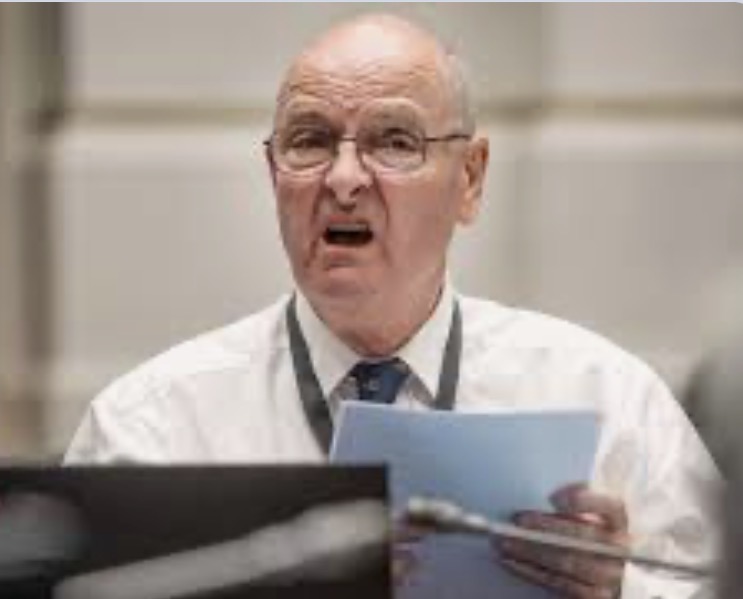
Mr Paul O’Sullivan appeared before the Ad Hoc Committee to give evidence concerning corruption, misconduct, and interference within the criminal justice system. The Chairperson explained that the purpose of the meeting was to hear his account and to allow members to question him on matters relevant to the Committee’s mandate. O’Sullivan presented a lengthy statement describing investigations he had conducted, individuals he believed were involved in wrongdoing, and cases he had opened against police officials and others. He argued that his actions had contributed to exposing corruption and initiating disciplinary or criminal processes against certain officials.
During the proceedings, Members raised concerns about the length and scope of his presentation, noting that much of his testimony appeared to focus on personal experiences rather than directly addressing allegations made against him by previous witnesses. Some members insisted that the session should concentrate on specific claims requiring his response and requested that he provide concise, evidence-based answers rather than extended narratives. There was also discussion about time management, with members emphasising that they needed sufficient opportunity to question him and scrutinise his claims.
Tension arose when O’Sullivan expressed concern that he was being treated as though he were under interrogation rather than giving evidence, and he warned that he might withdraw cooperation if the process became unfair. The Chairperson responded by clarifying the Committee’s procedure, explaining that questioning by Members formed part of the evidence-gathering process and assuring him he would have the opportunity to respond fully. The Committee ultimately resolved that he would be given a limited time the following day to conclude his presentation, after which Members would question him.
The meeting concluded with agreement on the schedule for the next session and an understanding that the inquiry would proceed with focused questioning aimed at clarifying contested allegations and assessing the credibility and relevance of his testimony.
Chairperson: Good morning, Honourable members, Mr Vuyani Pambo (EFF), Ms Hlengiwe Mkhaliphi(EFF), and Mr Sinawo Thambo (EFF). It is 11:00, and time to start the proceedings. Good morning, members, the staff of parliament, staff from political caucuses and members of the media. Mr Vhonani Ramaano, could we consider the apologies we have? Good morning, Mr Paul O’Sullivan.
Mr Paul O’Sullivan: Good morning, Chair.
Mr Ramaano (Committee Secretary): Mr A Sauls (PA), Mr M Mncwango (IFP) will be joining us late. I have been told Mr C Shongwe (MKP) will be joining us, and Mr S Nomvalo (MKP) is also running late.
Mr X Nqola (ANC): For the record, Chair, could we please record the apology of Ms K Sangoni (ANC). She will be joining, but a bit late. She will be joining us during the proceedings.
Chairperson: What is the reason for joining late?
Mr Nqola: Her travel logistics got delayed; she will be here in less than 30 minutes.
Chairperson: Here she is.
Mr Nqola: She just arrived after.
Chairperson: Good morning honourable Sangoni.
Ms Sangoni: Good morning, Chairperson.
Chairperson: Mr Ramaano, what are the reasons for the other apologies?
Mr Ramaano: Chair, Mr Sauls and Mr Mncwango are late. The same applies to Mr Nomvalo.
Chairperson: No, what are their reasons for being late?
Mr Ramaano: It is also related to their transport.
Chairperson: Ok, it is due to flight delays. Do you want to say something, Mr D Skosana (MKP)?
Mr Skosana: Yes, Chair. Mr Nomvalo will join us shortly, and Mr Shongwe will join us late because of the issue we discussed yesterday. He is grieving, so he is making some arrangements to come here, thank you.
Chairperson: I was saying, what is the reason for Mr Nomvalo joining us late?
Mr Skosana: It is because of the same reason for these flight delays.
Chairperson: Thank you. Honourable members, let me take this opportunity on your behalf. We were given this opportunity yesterday to learn about the passing away of the mother of Honourable Shongwe. On our behalf, let me express our deepest sympathies and our heartfelt condolences to Mr Shongwe and his family on the passing away of his beloved mother. I listened to you yesterday when all of you said that we will put the family in our prayers so that they can get the strength and courage to give their beloved mother a dignified send-off, and we hope that indeed that they will have that strength and we want to wish them all the best in the preparations for the interment of the remains of the beloved mother. Advocate Norman Arendse, may you please confirm that the witness who is here before us today is the witness that we expected?
Adv Arendse: Thank you, Honourable Chair and members. We have a present today, Mr Paul O’Sullivan. He has also produced an affidavit that has been commissioned and signed. We will hand the commissioned and signed affidavit once you have sworn him in.
Chairperson: Do you have any remarks that you want to make?
Adv Arendse: Just to thank Mr Paul O’Sullivan for being here, attending in person, and for cooperating fully with the evidence leaders over many consultations online, and for being here today and facilitating the work of this Honourable committee.
Chairperson: Good morning once again, Mr Paul O’Sullivan, and welcome. I want to take this opportunity to thank honourable members and the legal team, the office of the speaker and the speaker itself, and the secretariat team of parliament and yourself, Mr Paul O’Sullivan, for the engagements we had, which brought us to the situation we have now, having to have you arrive here without confrontation but through understanding. We want to thank you so much and hope that all of us will cooperate for two fruitful days with you, which will help the committee with its work. Before we swear you in, let me make the following remarks or read the following to you.
You have been invited to appear before this ad hoc committee, which is investigating the allegations that have been made by the KwaZulu-Natal provincial commissioner, Lieutenant General Nhlanhla Mkhwanazi. Our expectation is that you will assist the committee in its investigative and oversight roles. The allegations made by General Mkhwanazi include, amongst others, the alleged unlawful disbandment of the Political Killings Task Team, otherwise known as the PKTT or the NPKTT.
The allegations also include an alleged moratorium on the filling of vacancies within the South African Police Service, the SAPS, an alleged corrupt relationship between senior leadership of the SAPS and members of the public, and alleged political interference in the work of the SAPS.
Mr Paul O’Sullivan, in extending the invitation to you, the committee and the chairperson have indicated that you may provide such information to the committee, if you so wish, under oath in terms of the Powers, Privileges and Immunities of Parliament and Provincial Legislatures Act of 2004. Please be informed that, by law, you are required to answer fully and satisfactorily all questions lawfully put to you, or to produce any document you are required to produce in connection with the subject matter of the enquiry, even though the answer or document could incriminate you or expose you to criminal or civil proceedings or damages. You are, however, protected in that evidence given under oath or affirmation before a House or a committee of Parliament may not be used against you in any court or place outside Parliament, except in criminal proceedings concerning a charge of perjury or a charge relating to the evidence or documents required in these proceedings.
Please be aware that, in terms of Section 17, Subsection 2 of the Powers, Privileges and Immunities of Parliament and Provincial Legislatures Act, a person who wilfully furnishes a House or a committee of Parliament with information, or makes a statement before it that is false or misleading, commits an offence and is liable to a fine or to imprisonment for a period not exceeding two years. You will be required to take an oath or affirm that the evidence you shall give is truthful. Which one do you elect? May you please speak through the microphone?
Mr Paul O’Sullivan: Oath, please.
Chairperson: Now that you have elected to take an oath. Please follow me as I dictate. State your names in full.
Mr Paul O’Sullivan: Sorry, I did not quite catch that.
Chairperson: May you please say I and state your names in full.
Mr Paul O’Sullivan: I, Paul O’Sullivan.
Chairperson: Swear that the evidence I shall give
Mr Paul O’Sullivan: Swear that the evidence I shall
Chairperson: Shall be the truth
Mr Paul O’Sullivan: Shall be the truth,
Chairperson: The whole truth
Mr Paul O’Sullivan: The whole truth
Chairperson: And nothing but the truth.
Mr Paul O’Sullivan: And nothing but the truth
Chairperson: So, help me God.
Mr Paul O’Sullivan: So, help me God.
Chairperson: Thank you so much. We are going to have two days with you, today and tomorrow. Adv Arendse has advised me that the proceedings should not go beyond 19:00. He gave reasons why you requested that we finish before 19:00.
Mr Paul O’Sullivan: Chairman, I have been on a long flight to get here, and I spent the whole night, last night, in preparation for today, and I also have medical issues that need to be dealt with. I am 70 years old, and I am not the spring chicken I used to be. Unfortunately, I had spinal problems, and I have to stay a certain amount of my time lying flat, and I do not want to give evidence lying on the bed. By a certain time today, I will be in a lot of pain, and the best way to relieve that pain is for me to lie down. So that is basically it in a nutshell, Chairman.
Chairperson: I think it is a reasonable request we will allow the evidence leader to lead you in the presentation of evidence. Mr J Malema (EFF)?
Mr Malema: I thought you would ask if Mr Paul O’Sullivan has got company, the people who have accompanied him and if they are here and in which capacity, and introduce them.
Mr Paul O’Sullivan: I cannot hear.
Chairperson: Do you have people who have accompanied you today here?
Mr Paul O’Sullivan: Pardon?
Chairperson: Do you have people who have accompanied you today here?
Mr Paul O’Sullivan: Somebody here, yes.
Chairperson: Who is the person?
Mr Paul O’Sullivan: It is just somebody who is taking care of my security needs.
Chairperson: Ok, is the person inside the chambers?
Mr Paul O’Sullivan: Correct, Chairman.
Chairperson: Ok, where is the person?
Mr Paul O’Sullivan: I do not know, Chairman, I cannot see.
Chairperson: What is the name of the person?
Mr Paul O’Sullivan: Mr Paul Gibson.
Chairperson: Ok, and the security team of parliament.
Mr Paul O’Sullivan: The security team of parliament are also scattered around this room and outside. The police have provided me with additional escorts as well, so this was necessary because of the threats that have been made against me. And you know I am sadly…
Chairperson: Yes, I just want to know if the security team of parliament is aware that Mr Paul Gibson is here.
Mr Paul O’Sullivan: Yes, yesterday we had a dry run.
Chairperson: You made those security arrangements with them.
Mr Paul O’Sullivan: Sorry, Chairman?
Chairperson: You made those security arrangements with them.
Mr Paul O’Sullivan: Yes, we made the arrangements, and everything is in place. I am satisfied that everything is in place.
Chairperson: Mr Malema, are you satisfied? Mr Skosana?
Mr Skosana: I hope that the security personnel have done well on that by vetting that person as well. We do not need ducks in here. Last time we had someone sitting here who came with a general, we do not need that. We need someone with integrity; if it is security personnel, thank you, Chair.
Chairperson: Look, Mr Rudzani Mphilo is here and has always been here during our proceedings. Before these proceedings started, Honourable members, he came to me to brief me that they had met with our witness yesterday, and they also did a dry run here to satisfy each one of the parties that the arrangements are in place to everyone’s comfort. I think we should leave those details to the security. If we have any suspicions about any person who may be within the premises, I think we can always report that to the security to take care of that. Adv Arendse and Mr Paul O’Sullivan, I am going to give you this time for the presentation of evidence, and I want to wish you good luck in that exercise. Just before that, we have the apology of Mr D Klopper (DA), but this is not written. Mr Ramaano, if he is preparing for SONA ok, because it is just a letter saying an apology. Yes, Honourable Members, that is the DA’s arrangements; we cannot discuss if they say Mr Klopper is preparing for SONA, let us accept that it is an organisational commitment.
Adv G Breytenbach (DA): He is not preparing for the SONA, Chair. He is attending to a personal issue today that was arranged a long time ago.
Chairperson: Which apology should we accept, Honourable Breytenbach?
Adv Breytenbach: Mine, and while we are busy, I need to be excused at 13:15.
Chairperson: 13:15, ok. Adv Arendse, we will break at 13h00, Adv Arendse and Mr Paul O’Sullivan. Let us run now until 13:00.
Adv Arendse: Thank you honourable Chair and members. You are in a short time may have noticed that Mr Paul O’Sullivan is also hard of hearing. It is also for me to speak loudly and clearly when asking him questions and addressing him. Mr Paul O’Sullivan, you did dispose of an affidavit, the original of which has now been handed up to the Chairperson, and the copy which is before me and my colleagues and honourable members, that is a copy of the original affidavit?
Mr Paul O’Sullivan: That is correct, Chairman.
Adv Arendse: In paragraph 1, you referred to your current profession as a certified fraud investigator and that you founded a forensic investigation company, Paul O’Sullivan and Associates, which has since changed its name to O’Sullivan Brosnan and Associates. In 2015, you also formed a non-profit company, Forensics for Justice in 2015, and you also have other property and business interests in South Africa and overseas.
Mr Paul O’Sullivan: That is correct. If I could just stop one briefly. I have just realised that there is a typing mistake here where it says that I am currently a certified fraud investigator. Chairman, I am a certified fraud examiner; that is just a typo. But I am a certified fraud examiner since 20 or 21 years ago.
Adv Arendse: So, particularly in relation to your fraud examiner investigation interests, what does that entail …
Mr Malema: Chair, Chair, Chair?
Chairperson: Mr Malema?
Mr Malema: By now, the evidence leader should be mastering the mic. You know when he speaks, the mic is by his forehead, not by his mouth, and we do not hear.
Chairperson: Just less than two minutes ago, I requested Mr Ramaano that when we get a chance, he must lower the mic. Can we do better, Adv Arendse, with the microphone?
Adv Arendse: Mr Paul O’Sullivan, I asked, what does your business or work entail as a certified fraud examiner or investigator? The one company, O’Sullivan Brosnan and Associates and the other company, Forensics for Justice, what does that entail?
Mr Paul O’Sullivan: I formed O’Sullivan Brosnan and Associates in 2012. The purpose of that entity is a profit company, a normal business and the purpose of that company is to carry out forensic investigations. The company is made up of criminologists, certified fraud examiners, attorneys, and accountants. We carry out in-depth forensic investigations into fraud, mostly in the corporate sector. Some of those investigations will run into hundreds of millions of rands. Obviously, that is done through contracts that are entered into with the corporate client, and the intention is to make profits, and those profits are used to run the non-profit company called Forensics for Justice. Forensics for Justice was formed primarily to investigate state-sponsored corruption and particularly focus on corruption in the criminal justice system and state-owned entities or companies. In that regard, we investigate a lot of corruption in Transnet, Eskom, Passenger Rail Agency of South Africa(PRASA), and South African Airways (SAA), a number of state-owned companies. Obviously, we carried out a lot of investigations into the police and the prosecuting service, where there are some rogue police. We did not focus on constables and sergeants; we focused on the generals and deputy directors in the prosecuting service or directors in the prosecuting service.
Adv Arendse: What was the motivation or your motivation to enquire into these entities and to do this kind of work, or do you do that on behalf of your clients, your corporate clients or members of the public that require or request you to do this type of investigation?
Mr Paul O’Sullivan: No, if I turn the clock back, I was not really interested in the public sector at all. I was not really interested, when I say interested, I had no desire to investigate the police or the prosecution service, but in 2001, some criminals tried to murder me, and it was after I cancelled the security contract of R300 million, and they brought an urgent application in the high court to have the contract cancellation set aside. At that moment in time, for reasons I later found out were corruption reasons, the then commissioner of police, Jackie Selebi got involved, and he took steps to neutralise me from cancelling the contract. One thing led to another, and after a few years, I realised that he was actually engaged in corruption, so I decided that it would be in the public interest not have a chief of police who was corrupt. I assembled several lever arch files and handed them over to the scorpions, and they went and dealt with that matter. I think it is a matter of public record that Jackie Selebi was sentenced to 15 years for corruption. I can say I spent about 7 years of my life providing evidence for that investigation to the Scorpions.
Adv Arendse: That is dealt with a bit later on with the affidavit, and we will get nearer there. In your affidavit, you also mentioned that you hold citizenship in three countries. You discussed at paragraph 3 of your affidavit.
Mr Paul O’Sullivan: That is correct. I am a first citizen of Ireland, then I became a citizen of Great Britain and then a citizen of South Africa. When I became a citizen of South Africa, I already had citizenship of Ireland and the United Kingdom.
Adv Arendse: Where were you born?
Mr Paul O’Sullivan: I was actually born in England of Irish parents, but I was brought up in Ireland, so when I grew up, I considered myself Irish, I took an Irish passport, and then later I obtained a British passport because, having been born in Britain, I was entitled to have a British passport. And I saw no reason why I should not have these passports.
Adv Arendse: A question had been posed or asked whether the reason why you hold citizenship of three countries is that you are or might be an agent or foreign agent or doing work for foreign entities or countries.
Mr Paul O’Sullivan: I think with all respect, I have been in this country now for 40 years, and I can categorically state that I have not performed any foreign agent activities in those 40 years, and in fact, my loyalty is to South Africa. If we go back to 1995, as an example, one of my daughters, a young girl then, is obviously fully adult now. We were putting her on at work for the Rugby World Cup. I gave all my staff the afternoon off from 11h00. We got one of these big-screen TVs because LCDs did not exist then. I set up a competition amongst the staff that whoever came along as the best dressed rugby player could get a prize, and I said that they could invite their family or children to this function. I brought, at that stage, I only had two children; I now have seven. I brought my two daughters with me, [00:54:31], and she was a very strong rugby supporter, and she came along dressed as a Springbok and one of the guys there said you are Irish, so do you support Ireland or do you support South Africa? She said she supports three teams. First, South Africa, because I am South African. Secondly, Ireland, because I am Irish. Then the guy asked who the third team is. She said whoever is playing against England. That gives you the flavour, and that was in 1995. My maths is not… 31 years ago.
We all considered ourselves South African, and I have children who were born here and went to school here, and they consider themselves South African. I would consider it criminal for me to support a foreign government. It is very easy to have foreign passports because it is very convenient to travel around the world; unfortunately, because of the level of corruption in South Africa. The South African passport is not what it was supposed to be. An Irish passport gets you into any country in Europe, and a South African passport will not get you into any country in Europe without standing in queues, filling in forms and filling in visas and so forth. So, the multiple passport story, Chairman, is a convenience. And I have taken the oath a short while ago. And I want to remind everybody that, having taken that oath, I am stating clearly under oath that I have never acted as a foreign agent in this country.
Adv Arendse: And just while we are on that, you mentioned that your businesses in property development and also the forensic company of O’Sullivan Brosnan&Associates effectively cross-subsidise your NGO work for Forensics for Justice. Apart from that, do you receive any other funding, especially foreign funding?
Mr Paul O’Sullivan: Chairman, we do not receive any foreign funding. On the website, forensicsforjustice.org, we are fully transparent, and we publish our accounts. So, from 2015 until the present time, anybody can go on and look at our accounts. And when you see the amount of money that comes into our accounts, which is shown in those audited accounts, you will see actually run that on a shoestring.
And in most years, we are lucky if we get R100 000 in donations. And most of the donations we get, Chairman, are from a man in the street, R500 here, R500 there. We do not have any big donors. We had one big donor who paid us over a period of about a year, I think R700 000. And that was something that the company had chosen to do as a sponsorship. And that was a few years ago. But we have no, absolutely to our knowledge, no overseas donors.
Adv Arendse: Now, again, maybe just going a bit off script, but because we had the point about your businesses, Attorney Sarah-Jane Trent, her name has been mentioned. Tell us a little bit about her. Do you know her? Did she work for you? What was your relationship with her? Does she still work for you? What did she do when she worked for you?
Mr Paul O’Sullivan: Chairman, I cannot remember the year now, but it would probably have been about 2013 or 2014, somewhere like this. Sarah Jane Trent applied to the company for a position as an intern. She had completed a law degree, but she had not completed her articles, and she had not taken her board exams. And she applied for a position as an intern. So, we gave her a one-year contract.
Adv Arendse: And sorry, is this for O’Sullivan Brosnan&Associates?
Mr Paul O’Sullivan: Yes, at that time, it was the same company. But at that time, it was called Paul O’Sullivan and Associates. Because I am moving towards a pension, I decided to take on a partner a few years ago. And now it is called O’Sullivan Brosnan&Associates. So, my plan would be within the next year or two, that, if God gives me the grace to stay around until then, I will go on pension, and the company can still carry on running. But it was Paul O’Sullivan and Associates. She applied for a position as an intern doing legal research work.
We have an in-house corporate counsel who is a lawyer. And at that time, I gave her a one-year contract. At the end of the one-year contract, she wanted to continue working, and her work performance was acceptable. It was very good. And then I signed a permanent contract with her. So, she became a permanent employee as defined in the Labour Relations Act.
And the condition of employment was that within two years, she would complete her articles and be registered as an attorney and also complete and take her board exams to become a certified fraud examiner, which I already was. And she did that. So, she became an attorney and a certified fraud examiner.
And then that coincided with my decision to form this non-profit company, Forensics for Justice. So, I invited her to be the executive director. I was the founder of it, but I invited her to be the executive director of Forensics for Justice, which meant she was the person who would have to assist with those pro bono investigations that we would carry out. But she effectively reported to me, and she carried out my instructions.
Adv Arendse: And what is the current…
Chairperson: Just a moment, Ms L Mathys (EFF).
Mr Paul O’Sullivan: Pardon? I did not hear that.
Ms Mathys: Thank you, Chair. Can the evidence leader tell us on which page of the statement we are on, and particularly on the matter of Sarah Jane? Because I did not see it in the statement. Thanks.
Chairperson: You are welcome. Point taken.
Adv Arendse: As I respond, Chair. I did say it is not in the statement right now, but I said, I prefaced my remark by saying I am going a bit off script because we are talking about your company and the non-profit organisation, and the name of Sarah Trent has come up. Can you now, at this stage, just… And that is what the witness has been doing.
Chairperson: Well, thank you so much.
Adv Arendse: I will continue, Chair.
Ms Mathys: Chair, the evidence leader, since he started, has not even said we are on paragraph one, we are on paragraph two. He is not leading. He is always going off script. We do not know where we are following. I mean, this is just a basic thing on leading evidence. In paragraph two, you are talking about this. Can you expand? That is all we are asking, so we can follow properly. Thank you, Chair. And we raised this even last week, and he is doing the same thing again.
Chairperson: Adv Arendse, may you please repeat what you said?
Adv Arendse: So, we were still discussing your interests, your business interests, and your non-profit organisation, referring to one which is still in paragraph one of your statements.
Chairperson: Before you proceed, I just wanted you to explain to Honourable Mathys what you are doing, so that all of us are able to follow you.
Adv Arendse: Sorry, Chair?
Chairperson: Yes, I was saying that if you can explain to her the issue of Sarah Jane Trent, may you please explain to her so that she understands what you are doing.
Ms Mathys: It is not that I do not understand. I get that the senior counsel is even saying he is going off the beaten track. I am saying that since the senior counsel started, he has not even pointed us to a single paragraph. And I am just asking that he affords us so we can follow on the statement what it is we are dealing with. So, if he gets to a certain paragraph, I am on paragraph five, and I am going to ask also here about Sarah Jane. She does not appear anymore. If you go back and you look at hindsight, since the senior counsel started, he has not even indicated we are on paragraph one or two or three. We are just asking for that basic indulgence, please, Chair.
Chairperson: Yes, I think what he said was that he will go off script. And I think once he comes back to the statement, he will alert all of us. Let us proceed.
Adv Arendse: Honourable Chair, I referred to paragraph one. I did refer at the outset to paragraph one, and the witness can confirm that. And we were talking about his businesses and what he does.
Chairperson: Yes, no, it is fine. Let us do it like this.
Adv Arendse: So, in relation to what is in paragraph one.
Chairperson: Just one moment. Just a moment. Ok, we can proceed. We are on paragraph one now.
Adv Arendse: We are on paragraph one, where Mr Sullivan indicates that the company, Paul O’Sullivan and Associates, changed its name to O’Sullivan Brosnan and Associates. And he explained how that took place. He also indicated that he formed this company, Forensics for Justice, and explained how that took place. We discussed, which is not mentioned in paragraph one, about funding, sources of funding. Why? Because this issue has been raised before the Honourable Committee on previous occasions.
So, while I was there, I asked him about it, because he discussed the funding, and I asked the question about whether it is foreign funded and so on. And while we were there, he discussed people who work for him. So, I said, the name of Sarah Trent has come up in this committee. In fact, she has now been identified as a witness. So, can you just also tell us about her? And that is where we were.
Chairperson: That is sufficient, Advocate. Let us proceed.
Adv Arendse: Thank you. Mr O’Sullivan, so just what is Ms Sarah Jane Trent’s current position in relation to Forensics for Justice? Is she still the Executive Director?
Mr Paul O’Sullivan: Chairman, in March, about three, I think it is almost four years ago, actually, Ms Trent expressed the desire to move on. I think she had been with me at that stage for about seven years. And she expressed the desire to move on. So, she resigned as Executive Director in March 2022 of, is that four years ago? Almost four years ago. She resigned as Executive Director of Forensics for Justice.
She was also Director of what was still called Paul O’Sullivan Associates at that stage. She resigned as the Director of Paul O’Sullivan Associates. And she was also Director of one of my development companies. And she resigned as the Director of that company. And she went to work somewhere else, and I wished her good luck. And yes, so she has not been involved in my businesses for almost four years.
Adv Arendse: So, does she have any other association or relationship with you, either professional or otherwise?
Mr Paul O’Sullivan: None whatsoever, Chairman.
Adv Arendse: Now, in paragraphs four and five, you list several professional qualifications and commendations in your affidavit. Can you describe your experiences and how these recognitions and commendations have shaped your expertise in combating fraud and corruption?
Mr Paul O’Sullivan: Yes, if I can. And these are obviously; you could say qualifications or memberships or whatever. Perhaps it is back to front, because actually, I joined the police in 1990. So, the reason I joined the police, Chairman, it was quite simple. I was running a property development company at the time, and I had a secretary. And excuse me, my car got broken into. And somebody stole the radio out of my car. In those days, you had a radio with a tape, you know, you push a tape in and everything. And there was a craze of people breaking into cars and stealing those radios. My car got broken into and somebody stole the radio. And I told my secretary to get the company in to replace the window and put the new radio in.
And she said, have you opened the case? I said, you know, it is a few hundred grand for a car radio and a window, and the paperwork involved to open a case. I think I should just leave it. And she said, no, no, my husband is in the police. And he says every case should be opened. And in fact, you should meet him. And I met him. Very nice guy. I cannot remember his first name now, because a very long time ago. But he was a major in the police. Edwards, his name was. And he was the station commander at Halfway House Police Station. And I met him and I opened the docket.
And then, of course, I never caught anybody. But then he said to me, you know what, you can become a police reservist. So, he explained to me how it all worked and everything. You have to fill in forms and whatnot. And they have to check to make sure you do not have a criminal record. And then you do the training and you become a police reservist
So, I did that. And that was in 1990 – that is 36 years ago I became a police reservist. And I realised that it was important in this country, not just to be a taker, but to be a giver as well. So, I started contributing. My contribution was to work hard as a police reservist. And that is what I did.
And then I realised that it would be important to get relevant training and relevant skills for the work that I was doing. So, I went on a number of courses at my own expense. And eventually, I became a certified fraud examiner. I became a member of the American Society of Criminology. There is no South African Society of Criminology. I became a voice stress analyst, a certified voice stress analyst in 2001.
I became a certified aviation security specialist in 2001. And that related to my work at the time. I was a fellow at the Institute of Directors since 1991. In fact, I became a US Department of Justice certified document examiner since 2000. That flowed from the work I was doing in the Border Police. Because I was originally in the police embassies (sp) and in 1996, I got badly injured.
Adv Arendse: Mr Paul O’Sullivan, can I just interrupt you? You have now just jumped to, or if I could just indicate to the Honourable members. We were discussing, initially, I asked you about the recognition and the commendations, which are at paragraph four and five. And if you wish to highlight anything there. And then you had also jumped to paragraphs, your volunteer work, that is from paragraphs 14 through to 20.
Mr Paul O’Sullivan: Ok, so in paragraph five.
Adv Arendse: Yes, so at the moment, you have now jumped to paragraph six, your professional background.
Mr Paul O’Sullivan: Ok, let me go back to paragraph five. Yes. Sorry, Chairman. My mind sometimes is ahead of my eyes.
Adv Arendse: Is there anything you want to highlight there in paragraph four and five?
Chairperson: We can take Mr Malema.
Mr Paul O’Sullivan: So, I think I have dealt with paragraph four.
Mr Malema: Yes, I wanted to check. I am happy that the evidence leader is now referring us to paragraphs. Because I thought they were still going to come to paragraph three where the witness suggests that we cannot ask him questions about anything before 1990. I have never had a witness who gives an affidavit saying to us, you cannot ask me this or that. Because when he took an oath, he committed to answer all the questions and do so truthfully. And he cannot say to us. So how do we treat paragraph three? After he has taken an oath, how do we treat it? What is this paragraph worth of?
Chairperson: Are we on to that paragraph, Advocate? Or are we still going there?
Mr Malema: They were on paragraph four now.
Adv Arendse: Mr Paul O’Sullivan, in paragraph three, highlighted now by Honourable Malema is that for reasons of personal and family security, you will not engage in discussions concerning your family, background, education, or business interests in South Africa, or overseas prior to 1990.For what reason? Why do you mention that?
Mr Paul O’Sullivan: Chairman, just for personal security. Over the last 15 years, there have been 10 attempts on my life. In 1996, I was shot three times. There have been multiple attempts on my life. And Chairman, unfortunately, the criminal element, what they try to do is they try to find out things about you, which is of a personal nature. They want to know where your business interests are. Where are your children living? Where are your properties? So, I have made it clear that I am not going to be providing any of that information.
It is just not going to be advanced. And we can sit here all day, and you can ask me a million questions. I will not provide that information. I am entitled to protect my own personal interests and to protect my family interests. And I intend to do that, Chairman.
Adv Arendse: You have already mentioned that you have seven children.
Mr Paul O’Sullivan: Yes, I have seven children. But I am not giving all their names out. And I am not saying where they are and what they are doing. I have the right to protect my family and my interests and my personal interests. And the dirty games that are being played by the criminals that I have been exposing, as I have said prior to this, Chairman, there have been at least 10 recorded attempts on my life. There are people on trial at this moment in time for trying to murder me for nothing more than exposing their criminal conduct.
Chairperson: Let us just hold it. Before I take you, Honourable Malema, for a follow-up. Yes, I note your hands. I do not think that it will be fair. For you to make a statement that we can sit here for the whole day.
Mr Paul O’Sullivan: I cannot hear. Sorry, Chairman, I cannot hear what you are saying.
Chairperson: Yes, I am saying that I do not think it is fair. For you to make the statement that we can sit here for the whole day. Surely you could get a better way to say it, is it not?
Mr Paul O’Sullivan: But we do not have to sit here the whole day, Chairman. I prefer to just get on and give my evidence.
Chairperson: No, no, I am saying on the question, whether you are prepared to answer for matters before 1990. And then you say, no, we can sit here for the whole day. I am not going to say anything. I do not think it is a better way to say it. You could have found a polite way to make that statement. Do you agree with me?
Mr Paul O’Sullivan: Point taken, Chairman. Thank you.
Mr Malema: No, thanks, Chair. I do not think it is correct for the witness to write his own questions and answer them. He cannot say to us, we cannot ask him anything about things that happened before 1990. What if the business you are talking about started engaging in wrongdoing before 1990 and is still doing the same thing now? And want to refer back to where it started. What if there is an allegation that you are handling certain activists of the liberation movement that happened before 1990? And that is why you have got certain relationships. What happened before 1990, and that is why you have got certain relationships with them today? So, it cannot be correct, and that has got nothing to do with criminality. That has got everything to do with trying to demonstrate that you have captured the criminal justice system way before, even 1994. So, it cannot be correct, Chair, especially after taking an oath that he is going to answer every question here and answer it truthfully.
And therefore, we need to make it very clear as a committee that he is going to answer every question presented before him here. He is under oath, and he is not going to tell us here that we can sit here the whole day and ask him questions. He is not going to answer those questions. He is going to have to answer those questions. He has taken an oath to answer the questions, and that must be made very clear to him.
Chairperson: Honourable Skosana, Honourable Nomvalo, you are going to speak, Honourable members. There is no need for you to do that.
Mr Skosana: Thank you, Chair. Indeed, Paragraph 3 is problematic, because when you go to Paragraph 5, 5.1, a commendation from Scotland Yard for stopping a knife attack and arresting a suspect in 1978, and now in Paragraph 3, it says that we cannot ask him anything before that. He is contradicting his own statement as well here. And as well, I mean, when you look at Paragraph 3, background and education has nothing to do with criminality. I mean, it does not make sense here. Hence, I am just giving one example. Himself, what he said here, Scotland Yard in 1978, he stopped somebody’s knife attack, but here he is telling us that we cannot ask anything beyond 1990. It cannot be allowed, Chair. Thank you.
Mr Nqola: Chair, I think it is just a matter of echoing what the colleagues have been saying, that the oath you have just administered now does point out that the witness must answer fully and satisfactorily. And beyond that, Chair, I do not know how an education background can become a security hazard.
And also, in the body of the affidavit itself, there are a lot of events that the witness is telling us, which are pre-1990. On his post-course, Anna is talking about the 1978 thing, 76. He details on his life in 1986, 1987, 1989. Now, the nature of the paragraph itself is actually limiting us from diving down to what he is saying in the body also of the affidavit. So, I think we should not accept that there are matters before 1990 that should not be responded to. Thank you very much.
Chairperson: Yes. I think, Honourable members, it goes without a debate. The witness has deposed a statement with us. This committee has been mandated to investigate. So, any allegations that have been made or any information that members of the committee want to probe with you, they are going to do so. Let me remind you that you are under oath, and let us cooperate.
Mr Paul O’Sullivan: Thank you, Chairman. For the record, the oath I took was to tell the truth, the whole truth, and nothing but the truth. I did not take an oath to answer every single question, if it is going to violate my personal information and my family security. And if we take, Chairman, Paragraph 3, and we take Paragraph 5.1, Chairman, the two are not related.
Chairperson: Mr O’Sullivan, let us not go to the statement now.
Mr Paul O’Sullivan: Ok. Thank you, Chairman.
Chairperson: Listen to me. Look at me. You have the evidence leader in front of you. The evidence leader is going to lead you paragraph by paragraph.
Mr Paul O’Sullivan: Ok. Thank you, Chairman.
Chairperson: And then the oath that you have taken here says that, fully and satisfactorily, you are going to answer questions that have lawfully been put to you.
Mr Paul O’Sullivan: Thank you, Chairman.
Chairperson: So, if we, on your statement, you have deposed a paragraph that speaks about an event that happened prior 1990s on your statement, the Honourable members have the right to ask you about it. If there could have been any witness who came here and made a statement or an allegation about an event that happened before 1990 and you were involved or you are alleged to have been involved, you will have to respond to that. These members, if by chance they have any matter prior to 1990, they want to probe with you, please respond to those questions.
Mr Paul O’Sullivan: Thank you, Chairman.
Chairperson: But for now, I want you to follow the evidence leader. The points I am making here must not be points for debate.
Mr Paul O’Sullivan: Yes. Thank you, Chairman. And without sounding argumentative, the reality of the situation is that the qualification about prior to 1990 says, for personal and family security, I will not engage in discussions concerning my family, background, education, or business interests in South Africa or overseas prior to 1990. If any member has a question they want to put about any event that took place prior to 1990 and it does not impinge on my family security and my safety, I have no problem with that question.
Chairperson: Let me say this to you. Let us cross the bridge when we come to it.
Mr Paul O’Sullivan: Yes, I think that is a good idea, Chairman.
Chairperson: Because what we will not allow here is for you to prescribe what you should be asked and what you should not be asked. For now, there is no question that has been put to you. At that stage, when those questions are put to you, I want you and all of us to proceed with the same understanding that questions are going to be asked here. Questions have been asked of all of the witnesses that have appeared before this committee, and they have responded to those questions. There are witnesses, for instance, some of them were asked very, very sensitive questions, including their romantic relations.
Mr Paul O’Sullivan: Not only here, even in the commission outside here, or even in society out there, those questions have been asked. I do not want us to be agitated. I want us to understand that you are here before this committee. You are going to cooperate, all of us. We are going to cooperate with you. You are going to cooperate with us.
We are a committee probing allegations, and for us to successfully probe those allegations, you have to honestly come forward and respond to the questions that members are asking.
Mr Paul O’Sullivan: Thank you, Chairman. I want to confirm that I am here to cooperate, and I am definitely not agitated. Some of the members may be agitated, but I am not.
Chairperson: No, there is no member who is agitated.
Mr Paul O’Sullivan: Ok. Thank you, Chairman. It is me who will say that.
Chairperson: Honourable Malema.
Mr Malema: No, thanks, Chair. It is not about whether the question will arise or not. That statement, by its own nature, is wrong, and it must be removed. Before we proceed, we must agree Paragraph 3 must be expunged from that affidavit, because even if he had not written that in that statement, in the affidavit, and someone were to ask a question that is uncomfortable for him, he will bring that to attention and he will make that ruling. Now, if we allow him to proceed with this Paragraph 3, it means we allow him to tell us which questions to ask him and which questions not to ask him.
We know how we work. We cannot be told in an affidavit; you are not going to ask me questions that happened before 1990. If we allow that to happen, we are setting a wrong precedent. He cannot tell us that. He needs to remove that paragraph. We need that paragraph removed. He cannot tell us which questions to answer him, which questions not to answer him. If there is a question that is a security threat or incriminating or any other matter, you are well placed to deal with those matters. We cannot be told by a witness that you can do anything before 1990. I will not answer anything before 1990.
You can even sit here the whole day. I will not answer anything before 1990. We are going to come out of this committee looking like clowns that were told by witness which questions to ask him, which questions not to ask him. He is going to be speaking about other people here. He is going to be speaking about other people here and he does not want to be asked questions about himself. He must be asked questions about himself because he is also going to talk about other people and he already calls them criminals. So, he needs to remove this paragraph three. It is not about whether the question will come or not. This is just like a principle telling us that we must not go beyond 1990 on this textbook. It cannot be corrected. It has got everything else. It smells like supremacy and we cannot sit here with our clear conscience and allow it to proceed like that.
We need to be advised from evidence leader’s point of view. I may not know the law. In a situation like this, what do we do? Where this paragraph in a signed affidavit is very problematic. He tells us from right at the beginning, you are not going to ask me anything about 1990. Even if you try, we can sit here the whole day. I want to answer that. And then we say, let us proceed. That is a very disrespectful statement which must not be accepted by this honourable house. Thanks.
Chairperson: Adv Arendse.
Adv Arendse: Honourable Chair, Honourable members. In relation to no witness that has appeared before this honourable committee, including Mr O’Sullivan, are we bound by what a witness says in his or her affidavit that they place before the committee? In fact, I have already asked several questions which do not appear on the statement. And where Honourable Mathys had said, where is the reference to it in the statement? So, we are not bound by the four corners. As evidence leaders, we consult with a witness, all the witnesses thus far. Some of them insist that they want certain things said in an affidavit or removed from an affidavit.
We exchange drafts with them, and we settle the affidavit not on the basis that this is a document that has been agreed. Otherwise, you do not need us. You can just place the affidavit before the honourable committee and the witness can read it and ask questions. We place it before the committee to facilitate the leading of evidence. But in many instances, in some instances where I have been criticised, we go out of the affidavit because we tell the witnesses in consultation, including Mr O’Sullivan, that we will put to you contrary versions of other witnesses or other information or other evidence that we have gathered, and we will ask you about that. And again, it is not for them to agree that that is the case or not.
That is the nature of them giving evidence. The purpose of putting an affidavit before the honourable committee is to facilitate the interaction with the witness. What is important is the oral evidence given before the committee. I am glad Honourable Members raised the issue of what is contained in paragraph three, because I was going to ask Mr O’Sullivan, if it is one can understand and hopefully we all understand that issues of safety and security, especially regarding your family and your personal security, all of us would be concerned about that. But there seems to me no reason why we cannot ask Mr O’Sullivan about his life, his career, his qualifications preceding 1990, especially in the context of a question I have already asked him, which is not in his affidavit, is there is an allegation that you are funded by foreign agents. Are you a foreign agent? That is what people are curious about.
And because of his role in fighting crime prevention for some 36 years, he has become a prominent figure in South Africa. And it is entirely relevant that people want to know, where do you actually come from? And what have you done before you came to South Africa? So, with your leave, I want to ask him that and if he does not want to answer me, then I am sure honourable members will ask him when their turn comes to ask him questions.
Chairperson: I want you to proceed with the reading of oral evidence and we proceed by the decision that that paragraph does not belong here. We do not accept it.
Adv Arendse: Honourable Chair, just before you entertain other objections or questions from honourable members, we accept that. No witness can tell this honourable committee or the evidence leaders that certain questions are off limits. It is what he put in his affidavit, but we are not bound by it.
Chairperson: Okay. Can I see those who want to speak, can you raise your hand? Chief Whip, Skosana, Honourable Skosana, Honourable James.
Mr M Ntuli (ANC): No, thanks, Chair. Good morning to you and good morning to colleagues. No, Chair, the reason I am raising my hand is because I think we are now travelling to a wrong direction. We have had many witnesses in the past and many of them have said things that we do not agree with, some of which we objected, we engaged them on those issues, and some of those testimonies were written down in their affidavit. So, I do not think, Chair, it is going to be appropriate for us to amend an affidavit of a witness. I think we should not amend the affidavit while I agree with the sentiment that no witness should be permitted to tell us what we can and cannot ask him or her.
But I equally do not think that we will be acting rationally if we want to take a decision as a committee, that before we proceed now, we are amending the following paragraphs of your affidavit. So my own view, Chair, is that the ruling you made, and I think the decisions that were made by the senior counsel are adequate to confirm that we are going to delve into this affidavit and beyond it as we see it fit and the witness will be required to answer and respond to all questions. But I really would like to suggest that we should not make a call that there are certain paragraphs of his affidavit that we want to agree as a committee we do not recognise or that they do not exist.
They exist but we disagree with them and we will engage him in the way in which we see it fit as a committee. That is what I want to propose, Chair, because I am worried that if we take the line that says let us expand the paragraph, when we have expanded the paragraph, you are effectively saying that we must adjourn and allow him to relook at his affidavit so that he decides what is it that he is going to sign and bring back to us. So, my view is that I do not think we should take that, Chair.
I think it is sufficient to take a position that as he has also himself agreed, he will answer all the questions and in circumstances where we identify that he is refusing to answer certain questions, he cannot say I am not doing so because you have agreed with my affidavit. We do not have to agree with anybody’s affidavit here. All we are required to do is to receive a signed affidavit.
We engage people on their affidavits and beyond. So that is what I wanted to say, Chair. Thanks.
Mr Skosana: Thank you, Chair. I think we have to know about Mr Paul O’Sullivan, Robert O’Sullivan’s biography. Who is this man before us here? Who is this man sitting before? We do not know anything. This thing does not say anything here. There is no biography. We do not know him. He just said that he has got three passports, South Africa, Ireland, and UK. That is not enough, Chair. Who is he? The affidavit is before us here, but it is incomplete from the word go. I mean, paragraph one, I mean, other mail, the fraud, his data, and this and that. There is nothing here, Chair. There is nothing here, Chair.
We must know who he is. Educational backgrounds have got nothing to do with criminality or his origin. As he said, you know, he said he is from, he was born somewhere and, you know, he regarded himself. This is not enough, Chair. We cannot “thumb suck” here. Every witness who sat here, we know exactly from the beginning, the introduction is clear. As you sit there, Chair, you do not know as well. As you sit there, you do not know who the man is sitting before us. Besides that, is Paul Robert O’Sullivan. Where is he from? Educational background, I mean, Chair, no. You must tell us who he is.
Ms James: With all the other witnesses that have appeared before us, a precedent was set. We had a CV on record. Where is Mr Paul O’Sullivan’s CV? I want to echo the sentiments of MK.
We have jumped into his career and everything without a CV. Where is his CV? And he cannot come here and tell us that we must dance according to his tune. He basically said to this committee earlier on, I am here and I am here to only speak my truth. He made it clear to us, we cannot allow that and we will not accept it. Thank you.
Chairperson: Your hand was not up. No, it was not when I noted the hands. Chief Whip, I hear the point that you are saying on the affidavit and that paragraph, to my understanding, is that it is not a testimony. It is a condition for this committee.
If we allow such a condition in a statement and say, look, we cannot amend the statement. You know, a condition is something very difficult for us to continue with a statement that has a condition in it and if we say we disagree with this condition, I would be pleased to agree with you were a witness alleges something that, look, what you tell us we disagree with this, this may not be accurate. But where you have a condition that says you will not or you shall not ask me anything, it becomes very problematic.
And that is why, maybe for lack of a better word, I said the committee cannot accept a condition like that one. Maybe whether we expunge it or we do not expunge it, we disagree with it or we agree with it. Let us all agree that the committee does not accept this condition in its proceedings.
And where I stand, I strongly feel that we will be reduced into a mock-up if we are going to allow any witness to come before us and lay terms within which we are going to engage with him or her. And when I listen to you, Mr Paul O’Sullivan, maybe to come closer to where members are. You are saying there is sensitive information that you feel is very much important for the security of your children and your family. That is what I heard you say.
Mr Paul O’Sullivan: Chairman, if you can just let me explain.
Chairperson: Maybe if I can explain. Just wait a moment for me to conclude. So that you understand that the condition that says we cannot ask you questions on matters before 1990, it is not accepted in this committee proceedings.
Mr Paul O’Sullivan: It is not a condition, Chairman. I have stated very clearly that it is only for reasons of personal safety and family security. If you do not begin to my family or my personal safety, you can ask me any question you want.
Chairperson: Listen, there is no problem. We want these proceedings to go ahead. And the only way that they can go ahead, for instance, there have been witnesses that came here before us and said to us that they may not be able to disclose the following information with us because by law they are not allowed. And we are leaders in this country. We are aware, and it has also been brought to light, how citizens of this country found themselves endangered. Some even lost their lives.
Mr Paul O’Sullivan: I am sorry, I did not catch that. I did not hear what you said.
Chairperson: If there is any information that may endanger your security, you can tell this committee and say, there is information like this that I think is going to be dangerous to the security of my family or to my children. And we have been amenable as a committee to say information like that, for instance, if you have, we can decide if we create a platform for you to share with us if it does not have to be public. But what we are saying in the main, and which you do not have a problem with as I listened to you, is that we cannot have a condition that says you cannot ask me the following questions, except those for personal security.
Mr Paul O’Sullivan: That is it, Chairman. Only for personal security and safety of my family.
Chairperson: Yes. No, I think I wanted us to agree that that condition does not belong here. Honourable Nomvalo, do you still have something to say? And then Honourable Malema, we move forward.
Mr Nomvalo: No, thanks, Chair. If I wanted us to drive the point home from the onset, I was tempted to add to this point after the input that has been made by the Chief Whip, which I disagree with completely. Because one, this paragraph is problematic in the sense that one, it says he is not ready to talk about his business interest. And the same witness goes on in his statement. He talks about his business interest. So, he says indirectly, I can tell you about my business interest, but you cannot ask me about my business interest. That is problem number one.
Problem number two is that as members of this committee, when we probe, we do not necessarily confine ourselves to the statement of the witness. We probe being guided by allegations which have been made by various people from society regarding the witness before us. So we are not going to be confined to this statement when we do our work.
We will ask questions which we think are relevant at that particular time. And some of those questions, and most of them, we just want to make that promise that most of those questions are going to be your family. Some are going to be your business. Some are going to be your history. So, we are not going to take this thing, what is regarding it, because it is a silly prescription. That is how I can characterise it.
And we are not taking it. So, we cannot massage and try to put nice English and make it look better, whereas it is actually nonsense. It does not make sense. So we are not going to take it. This paragraph does not exist. We are not amending anything what is regarding. There is a difference between the two. We are not amending, we are disregarding, we are saying it does not exist, because it is a problematic directive.
Mr Malema: No, Chair, I fully agree with what you said, but it is entirely incorrect, if not a deliberate decision to lie to the public, that we have never asked a witness not to amend his affidavit. The first witness to appear here, General Mkhwanazi, was told to go and amend his affidavit, which he was calling a supplementary affidavit. We said there is no such a thing.
He left, he went to amend that affidavit. So it is not correct. Secondly, Mr Nkabinde, if I am not wrong, colleagues will correct me, we were adjourned here to go and amend the affidavit.
So if people say it will be irrational, what do they mean? Was it irrational when we asked General Mkhwanazi to amend the affidavit and asked Mr Nkabinde to amend the affidavit? But I am amenable to proceed in a manner you are suggesting, and not under the lie that was told here, but under the conclusion that you made, that this paragraph number three is not worth the paper written on it. We are going to ask questions beyond 1990, and they are going to be answered here.
Mr Ntuli: I think you will have to bear with us because it may be necessary that we have this debate. And I am not going to accept that I have lied. I am not going to accept that because I have not lied. When we asked Lieutenant General Mkhwanazi to sign the document that was presented before us, to go out and sign it, we took a break. The reason why we had to do that was because he had given us exactly the same document that is submitted to the Madlanga Commission of Enquiry, but he prefaced it with the word supplemental evidence or supplemental affidavit. So, what we were opposed to as a committee is that in terms of our records, history must discover that we were given an original affidavit, not a supplemental document from another process. That is what we were dealing with. We were not dealing with; we were not opposing the substance of his wording in terms of the presentation of the evidence before us. We were removing the word supplemental affidavit because that supplemental is referring, is suggesting that we are given a document as a secondary submission as opposed to being the primary recipient of the document.
So, I am not going to agree that therefore when I say we have been met as a committee with a witness, go through his or her affidavit and point to specific paragraphs that we want him or her to amend and got them amended. That has not happened. And I am not going to agree that therefore what I was saying earlier on was a lie.
And that is why I am saying to you, if we have to discuss this issue and not deal with what we have to deal with in the context of what you suggested as a summary, I think we should do so. But I really would not accept that I have lied when I have been lied with what I was explaining. So, I thought it is important for me to make that point.
Chairperson: That part during a break, I want you and you know, in a meeting we discuss outside of the meeting, we improve on our discussions. So, during the break yourself and Honourable Malema, you meet and improve on the discussions on this part. We are proceeding, Honourable Members, on the point that we do not accept this condition that is in the statement.
Adv Arendse, may we proceed? We have taken 20 minutes of your time. You are now left with 30 minutes before we break.
Adv Arendse: Thank you, Chair. Yes, just for the record, the problem identified and raised by Honourable Malema in relation to General Mkhwanazi statement was the heading to the statement that was called or described as a supplementary affidavit. And the objection was that this was a supplementary affidavit to his main affidavit in the Madlanga Commission of Enquiry.
We then adjourned and took out the supplementary affidavit, and we also took out the reference to that affidavit being supplementary to the Madlanga affidavit because it was in fact an original affidavit which we took from General Mkhwanazi after spending also many hours with him in consultation.
In relation to Mr Nkabinde, you remember during questioning, I think it was I was still questioning him, but then a point was raised. I forget who the Honourable Member was, but then he mentioned that this was a thumbs up.
And there was an outrage amongst committee members and at that point it was decided to adjourn, and he must go back and present us with another affidavit. So with respect, the two instances are very different. I think certainly as evidence leaders in this committee, we are all agreed that Mr O’Sullivan cannot tell us what he will answer and what he will not answer.
If he does, then obviously he will have to justify it and I think we all accept that when it comes to his personal safety and his family’s safety, that such questions subject to your discretion, Chair, you may decide. But I want to proceed to ask him some questions which are not related to or which would not impact on his family or his security, because I think as one of the Honourable Members pointed out, he already does in his affidavit, which is before you, in paragraph 5.1, he talks about the commendation from Scotland Yard for stopping a knife attack and arresting a suspect in 1978. And in paragraph 6, he also says that, in his professional background, that in 1984, I was engaged in property development and investment activities in the UK, and I invested in property in South Africa.
And then in 1989, due to investment in property, he successfully applied for permanent residency as a person of independent means. So there is already a reference, Mr O’Sullivan, to pre-1990. You also mentioned, which is not in the affidavit, that you were born in the UK of Irish parents. So that is a personal detail. So can I ask you, where did you go to school? Did you go to school in the UK or in Ireland?
Mr Paul O’Sullivan: Chairman, I went to school in Ireland and in the UK.
Adv Arendse: Okay. And after your schooling, did you go to any tertiary institution, any university, any college?
Mr Paul O’Sullivan: I studied in London and in Manchester.
Adv Arendse: What did you study?
Mr Paul O’Sullivan: Electrical engineering and electronic engineering.
Adv Arendse: Are you a qualified engineer?
Mr Paul O’Sullivan: Not anymore. You have to have what they call continuing professional development. I ceased engineering work probably 30 years ago. I stopped being involved in engineering activities about 30 years ago. I was registered with an institution in the UK, and I never registered in South Africa because actually I decided that engineering was not for me.
Adv Arendse: And from 1981 to 1984, you were a consulting building services engineer for International Business Machines Corporation (IBM) in the UK. What other work did you do whilst you were either in the UK or in Ireland?
Mr Paul O’Sullivan: Whilst I was in the UK or Ireland. After 1984, I was involved in property development.
Adv Arendse: Were you at any stage involved with the British Army?
Mr Paul O’Sullivan: With what?
Adv Arendse: With the British Army.
Mr Paul O’Sullivan: Chairman, I worked for the British government in counterterrorism and counterespionage activities. I cannot remember the exact years, from 1973, I think, to 1977.
Adv Arendse: And in what capacity, what role did you play, and what activities were you involved in?
Mr Paul O’Sullivan: Chairman, I played the role of counterterrorism activities and counterespionage, and counterespionage involves making sure, and countersurveillance, making sure that the people that would want to do harm to the country, you know, that they should be identified. So yes, I was involved in that work.
Adv Arendse: And in the course of that work, did you identify any person or persons or organisations from South Africa?
Mr Paul O’Sullivan: None whatsoever. I was not involved in anything of that nature.
Adv Arendse: Did you do any surveillance on any South Africans who were in exile?
Mr Paul O’Sullivan: None whatsoever, Chairman.
Adv Arendse: Because we know, I mean, it is just common knowledge that the African National Congress, for example, was declared a terrorist organisation. And even when our founding president was released from Robben Island, that designation, I think, was only removed subsequently. So, my question is, if that organisation had been designated as a terrorist organisation, presumably because it constitutes or would constitute a threat to the UK government or its security, why would you not have been involved in surveillance or espionage?
Mr Paul O’Sullivan: Chairman, my activities related to European environment, nothing to do with Africa whatsoever. My activities related to threats involving Irish terrorism. I am talking about the Irish Republican Army (IRA) and other Irish nationalist units.
Adv Arendse: Now, we also know now, and certainly came to know subsequently, that the IRA, which certainly in our country we regarded,
Mr Paul O’Sullivan: Chairman, I am just having trouble hearing.
Adv Arendse: Sorry. I said in relation to the IRA, certainly in our country amongst some of us, we regarded the IRA as freedom fighters. And they were also associated with the liberation movements, the ANC, the PAC. Why would you not have become interested in the links between the IRA and other liberation movements?
Mr Paul O’Sullivan: Chairman, I was far too low down the pecking order. I was not making any decisions about where I should be interested in and what I should not be interested in. My activities related to European activities, nothing more. So, I was not involved, for example, in deciding, oh, you know, I was a young man. I was in my 20s. I was not involved in deciding, oh, you know, let us do this. I was not involved in any of that, in any way, shape, or form.
Adv Arendse: And did you do this work on a full-time basis?
Mr Paul O’Sullivan: Yes.
Adv Arendse: So you were, I think you indicate, were you in the, did you serve at all in the Army from 1972 to 1976?
Mr Paul O’Sullivan: I served in the Army and in military intelligence.
Adv Arendse: Is military intelligence that part of the British Army, or was it separate?
Mr Paul O’Sullivan: Correct.
Adv Arendse: And that was up until 1976.
Mr Paul O’Sullivan: 1976, 1977, somewhere around there. It is a long time ago.
Adv Arendse: And did you leave voluntarily?
Mr Paul O’Sullivan: Yes, I did leave the Army.
Adv Arendse: And to do what?
Mr Paul O’Sullivan: I then went and studied engineering.
Adv Arendse: So, when you, did you join the Army or were you recruited?
Mr Paul O’Sullivan: I joined.
Adv Arendse: And was that shortly after you left college or school?
Mr Paul O’Sullivan: No, it was after I left school. I had not got any tertiary education at that stage. In fact, I started my tertiary education while I was serving. I realised that actually, you know, this type of work was not for me. And I started looking at other areas. And I took an interest in electronic engineering, and then I went into electrical engineering.
Adv Arendse: So, in that period, when you were in the Army in counterintelligence or intelligence, you were just a low-level operative?
Mr Paul O’Sullivan: Very low level.
Adv Arendse: And then subsequent to that, when you went, you then became involved, you went to college?
Mr Paul O’Sullivan: Correct.
Adv Arendse: And you studied engineering, you indicated?
Mr Paul O’Sullivan: Correct, Chairman.
Adv Arendse: And was it from 1984 that you became interested or took an interest or engaged in property development?
Mr Paul O’Sullivan: In fact, while I was at IBM, I was in property management at IBM, in building services. And IBM was expanding quite rapidly. So, we were in the process of buying properties for that expansion. And in about 1984, I realised that there were other opportunities in the property arena, and I decided to pursue those. And I left IBM.
Adv Arendse: Now, in 1989, that was pre-democracy, and we still had an apartheid government in place. Did you come to South Africa to only expand your property interest, or for what reason did you come to South Africa?
Mr Paul O’Sullivan: In fact, Chairman, in late 1988, the property market in the UK collapsed. And when the property market in the UK collapsed, I already had investments elsewhere in the world. And I had been to South Africa several times for holiday, and I liked the country, I liked the weather, I liked the people, and I decided I am going to invest in property here, and that is what I did.
Adv Arendse: Did you have any connection or relationship with any persons, organisations, or the army, or the police that were involved at that time in 1989 when you came here?
Mr Paul O’Sullivan: None whatsoever, Chairman.
Adv Arendse: Did you know or were you connected to anybody in any of the security forces at the time?
Mr Paul O’Sullivan: None whatsoever, Chairman.
Adv Arendse: Okay. Is there anything else you want to mention or indicate to us that does not involve your own personal background or your family, which you may think would jeopardise or compromise your safety, that you would want to mention to the Honourable Committee?
Mr Paul O’Sullivan: None, Chairman. I came here as a tourist, not a terrorist. I came as a tourist, I liked the country, I liked the people, I met people that I became friendly with, and I took a decision that it was a nice country, and a country where it would be good to invest, and that is what I did.
Adv Arendse: So, you came here purely for the reason that it was a good investment destination?
Mr Paul O’Sullivan: Correct, Chairman.
Adv Arendse: And to make money?
Mr Paul O’Sullivan: Well, you are always in business, you want to make money, but not always make money. I liked the country, and I wanted to live here. By that stage, I only had a couple of children, and we grew our family up.
Adv Arendse: Now, at paragraphs, if we could just go back to the affidavit, in paragraph six and seven, you described your professional background in property development, investment, and then you moved to South Africa in 1989.
Mr Paul O’Sullivan: Correct.
Adv Arendse: Okay. Is there anything specifically that you pick so that we can move on? In paragraph six or seven that you want to highlight.
Mr Paul O’Sullivan: I mean, by the time I came to live here, I already owned property here. I purchased property already, and it is pretty much what I have said in the statement.
Chairperson: Okay. Honourable Malema.
Mr Malema: No, it is just for clarity. When you say military intelligence, you mean military intelligence section six?
Mr Paul O’Sullivan: I cannot hear what is being said, Chairman.
Chairperson: He is asking you about military intelligence. He says it is section six.
Mr Paul O’Sullivan: I do not understand the question, Chairman.
Mr Malema: My question is, when you refer to military intelligence, you refer to MI6.
Mr Paul O’Sullivan: No, Chairman.
Mr Malema: So, you are never a member of MI6?
Mr Paul O’Sullivan: No, Chairman.
Mr Skosana: Chair, I guess the honourable member wants clarity on that, and I will make a follow-up. Or maybe, is it MI6 or MI5, which we are talking about?
Mr Paul O’Sullivan: It is military intelligence, Chairman.
Mr Skosana: Which one?
Mr Paul O’Sullivan: Military intelligence.
Mr Skosana: But which one? You mean which one? Where?
Mr Paul O’Sullivan: Military intelligence.
Mr Skosana: Where?
Mr Paul O’Sullivan: In the UK.
Mr Skosana: But is it MI5 or MI6, or is it something else?
Mr Paul O’Sullivan: Chairman, there is a complete misunderstanding in the members’ knowledge of how MI6 and MI5 are organisations which are separate entities to military intelligence altogether. So, yeah, it is not my job to come here and try and have a training course on how it all fits together.
Mr Skosana: No, no, no. In fact, Chair, I work in military intelligence. Chair, Chair, with due respect, we do our research, Mr Paul O’Sullivan, because really, we were talking about the issue, whether you attended university or college. In your biography, there is nothing. You can come here and lecture us about MI6. We know what we are talking about.
Adv Arendse: Thank you, Honourable Chair. Mr O’Sullivan, just before we move to another section, do you have any training, or did you know?
Mr Paul O’Sullivan: No, when you say forensic investigation, perhaps I should clarify that, because obviously, I had training in investigation, but not forensic investigation. I had training in investigation, but it was a different type of investigation, because you are investigating, for example, people’s backgrounds and stuff like that. I did not have any forensic training. I got the forensic training that I have now whilst I was living in South Africa.
Adv Arendse: So, the forensic, if you could describe it as such, training that you did have was while you were in the British Army or in the intelligence section of the Army?
Mr Paul O’Sullivan: Correct, Chairman.
Adv Arendse: Was that basically just to spy on people?
Mr Paul O’Sullivan: No, I was never a spy, Chairman. So, there is a complete misunderstanding if you think military.
Adv Arendse: No, no, I was just asking, you know, please help me. Surveillance and spying is different.
Mr Paul O’Sullivan: So, we were engaged in counter-terrorist activities and counter-surveillance. So, it was more like trying to find out people that were spies, rather than being a spy yourself. I was never a spy.
Adv Arendse: But you had to spy on those people to find out whether they are spying on you.
Mr Paul O’Sullivan: No, but you never spied on them, you see. You never had to spy on them to find out. You would get information and you would follow up on that information.
Adv Arendse: I think what, certainly speaking for ourselves as evidence leaders and perhaps also the Honourable Committee members, is that we are just curious to know what really gave you an appetite to investigate people and to enquire into their backgrounds and so on prior to coming to South Africa and making this your home?
Mr Paul O’Sullivan: So, I never really had that appetite, Chairman. The appetite was developed during my short-lived relationship with the then Commissioner of Police, Jackie Selebi, which we will come into later. But the reality is, before that incident, I never had any appetite whatsoever. Of course, I was a police reservist. And as a police reservist, Chairman, I did all the necessary training and became proficient in investigating murder and robberies and fraud.
And as a policeman, you are expected to be able to investigate these crimes and get to the bottom of it. And that set out in my commendations. In 1994, I received a Police Officer of the Year Award in Johannesburg, not for spying, for investigating crime and getting to the bottom of it.
Adv Arendse: But you did become a police reservist shortly after you arrived in the country in 1990.
Mr Paul O’Sullivan: Yeah, I think you are right.
Adv Arendse: You arrived in 1989. So just before we get to that section, which you have touched on already, on being a police reservist, which is from paragraphs 14 through to 20, you discuss it there. Just before that, you held a number of positions in property entities, portfolios, your role at SAGE Properties, then called Eastern Province Building Society. You managed property portfolio and security. And yeah, so just describe that to us briefly, just perhaps before we take the lunch break.
Mr Paul O’Sullivan: It was very simple. Property development is what it was. I think we developed a few hundred houses. So, you buy the land, you have to get it promulgated, you have to get the land rezoned, you have to get architects, what they call a site development plan drawn up. So, you use architects for that and land town planners and surveyors. You get all the approvals. And once you get the approvals, you go to market and you sell the houses and you build them. And I think we did one or two small shopping centres as well, and a few small office developments and a few what we call mini-industrial developments.
And you do that with the intention to make a profit. And then I ended up with SAGE Properties. And with SAGE Properties, we were involved in managing property portfolios, which by its very nature involved the managing of the building services, the architectural services, the refurbishment, replacing the elevators, all that sort of stuff which goes with property management.
And it complemented my work in the police, because one of the problems we had in downtown Johannesburg in those days was the spiralling levels of crime. And we started taking initiatives to reduce those levels of crime. And I got quite heavily involved in that. And that led to the formation of the Johannesburg Central Community Policing Forum, and with the new Police Service Act, the government had taken a view that there should be community policing forums. So, at that time, SAGE Properties were a substantial property owner in Johannesburg. And we got involved and we formed the community policing forum.
For my sins, I was elected the chairman of that community policing forum. And I set about, obviously voluntary work, but I set about doing it in a way that led to reduce crime in the city centre of Johannesburg. We did a number of initiatives. One was installing cameras in the streets. Another was we created a thing called the Crime Prevention Incentive Scheme, where there would be awards issued, not bribes, but awards issued in the form of shopping vouchers and stuff like that for the policing in certain sectors that were able to reduce their crime. And we employed a young man to help liaise with the community in those areas. And we were quite successful.
Adv Arendse: You described that at paragraph 17 of your affidavit. So, you just jumped a bit because I want to just briefly also deal with your volunteer work as a reservist, which you mentioned earlier that your secretary’s husband, a certain Major Edwards in SAPs, had heard of your background, persuaded you to join South African Police Reserve. And before we deal that, Honourable Chair, is this a convenient point to take the lunch adjournment?
Chairperson: I want us to recover 15 of the 20 minutes that we lost. So, it is until quarter past one.
Adv Arendse: Thank you, Chair. So, at paragraph 14, you talk about your joining the South African Police Service as a reservist. Can you just discuss that, that is from paragraph 14 onwards?
Mr Paul O’Sullivan: Yes, so I did my training at Halfway House, which is now Midland. And the reason I did my training there was because Major Edwards was the station commander at Halfway House. And after I finished my training there, they said there was a shortage of detectives in Booysens, and I was asked, would you mind working from Booysens? And I said, no, that is fine. So, I then went to work from Booysens, and I spent five or six years working at Booysens. And during that period, we got quite active.
I made some really good friendships with the other police officials there in Booysens. In 1993, I think it was, or 1994, all of a sudden one day the roof started leaking and the water came running in, destroyed all the carpets and everything. And we could not get public works to come and fix the roof.
So, I got a contractor that I knew to come and fix the roof. And then I got new carpets in and repainted the building, because, you know, we wanted to make the place nice. On a Friday afternoon, I used to go to King Pie and buy 48 pies, because you could buy the pies for three rand each, but if you bought a dozen, you could get a dozen. I think there were two rand each, but if you bought a dozen, they were R20. So, I would go and buy a few packets of these pies and share them out, you know. So, it was a bit of camaraderie.
And then after 1996, I got shot on duty. I was hit three times. I was quite badly injured. After 1996, I was shot on duty and sustained three gunshot wounds, resulting in serious injuries. These injuries required hospitalisation and part of my spine had to be reconstructed. For a period thereafter, I could not engage in physical policing, which meant I could not, for example, arrest a suspect who resisted.
Consequently, I transferred to what was then John Vorster Square, where I worked in the fraud unit. During this time, I became dissatisfied with the presence of a statue of John Vorster at the entrance. In 1997, I submitted a petition to the Gauteng provincial government to have the station renamed Johannesburg Central Police Station. Jessie Duarte, the provincial MEC for Safety and Security at the time, approved the change, and my name appears on the brass plaque as chairman of the Community Policing Forum.
By this stage, I had also been working at the police training centre, where I lectured in criminal law A and B, police administration, crime investigation, and preparation of sworn statements. These lectures continued for several years. In 1997, one of my students was Cyril Ramaphosa, now the President of South Africa, who at the time was a businessman and attended the training course I conducted. One of the modules I taught focused on the Constitution, which had been promulgated in 1996, to ensure police officials fully understood it.
Documentation confirms my role. Annexure A53 from the South African Reserve Police Service, Atenas Reserve Training Centre, dated 26 June 1997, states that I had been lecturing there and at external courses since 1993, covering subjects including the Constitution and police ethics, police administration and procedures, crime investigation and scenes of crime, the Criminal Procedures Act, criminal law A and B, and statement taking. Between 1993 and approximately 2000, I trained around 1 500 police reservists in Johannesburg.
Typically, each course consisted of 30 to 40 students, lasted about three months, and involved three evening sessions and one Saturday session per week. One day, I was surprised to see Cyril Ramaphosa among the trainees, though I had previously met him in Soweto. Lecturing, of course, involves active engagement rather than simply delivering material and leaving it there.
You give a lecture, and then you have to ask questions. You have to get interaction with the students. When I lectured these students, I would say, has anybody got any questions about this? One of the areas we lectured on, as is mentioned here, is the Constitution and police ethics.
The Constitution was new at that time. My area of interest, insofar as these students were concerned, was the Bill of Rights, because I wanted to make sure that we would not be training police reservists who would not understand the rights of citizens.
Adv Arendse: So what training did you yourself receive in the Constitution, or in relation to the Constitution, and lecturing on the Constitution and ethics?
Mr Paul O’Sullivan: I had been to the police training centre in Paarl. It is actually not far from here, where I did detective training and training of that nature. When the Constitution came out, I sat down, I cannot remember the guy’s name now, but I sat down with a constitutional lawyer in Johannesburg, because I wanted to understand the Constitution.
The reason I wanted to understand it was because I wanted to make sure that the new police officials we were training would understand that the citizens of the country had rights that they previously did not have. The sort of things that bothered me, as a policeman, would be when I saw a person being arrested, that they used to assault them. That worried me. It was not something I liked to see. In one case, I can remember in 1994, I arrested an individual who had murdered a woman. While he was in my custody, two police officials wanted to assault him.
I had to actually tell them that if they assault my prisoner, I am going to arrest them. That was problematic, but I decided to take a strong approach to that. When I trained the reservists, I made sure that those reservists understood that if they breached the constitutional rights of any suspect, they themselves could face criminal prosecution. I got myself up to speed on that. The point I was making was, when I lecture, I get feedback from the students to make sure they understand what I am saying.
I would give them an example, and I would say, if so-and-so happened, would that be correct? They would say yes or no, depending on what the example was. I would then say, have any of you got any queries now? Do you understand everything? Do you have any questions? One student popped out a question. I cannot remember what the question was, but it was about constitutional rights, because that was the only area we were looking at. We were not looking at the rest of the Constitution. We were primarily concerned with arrested and detained persons and the rights of prisoners.
He popped a question like that. I turned around and asked another student, what do you think the answer is to that? I then thought, but I have Cyril sitting here. I point to Cyril. I said, Cyril, do you agree with that? He said, why are you asking me? I said, because you were involved in the drafting of the Constitution.
Adv Arendse: That is him on the screen.
Mr Paul O’Sullivan: Pardon me?
Adv Arendse: Him on the screen.
Mr Paul O’Sullivan: Yes. I was a bit younger then. I had some hair. I asked Cyril, do you agree with his answer? Cyril said, yes, he is correct. That was the sort of thing that we used to deal with. At the end of that particular course, everybody gets what they are issued with, an appointment certificate, which says, OK, you are now a police constable. Cyril became a police constable. On every course, if you scroll up again, you can see that it has gone now.
There is a shield. I created that shield. I paid for it out of my own pocket. We used to have a little thing where you engrave the name of the best student. On each intake of students, I would invite the other lecturers to nominate a student for best student. Bearing in mind, in those days, Cyril was not involved in politics in any way, shape, or form. He was nominated, and it was agreed that he would be the best student on that particular course. When we gave him the shield, he kept it for a year, then he had to hand it back. When we gave him the shield, the media were there, and the picture was taken.
Chairperson: Honourable Nomvalo.
Mr Nomvalo: Yeah, no, thanks, Chair. I was interested in Mr Paul O’Sullivan’s response regarding the question that the senior counsel has asked. I think the question is, what official qualification did you get in order to qualify to train others about the Constitution? The response I heard is that he met a lawyer and then he asked about the Constitution because he was interested. So, is that the only qualification that he got? I think the question was about an official qualification that made him qualified.
Mr Paul O’Sullivan: Must I answer, Chairman? Chairman, at that stage, there were nobody in the country who had any qualifications in the Constitution. They did not exist. There were no constitutional lawyers. They did not exist. There was no Constitutional Court. It had not been formed. I just wanted to make sure because I did not want to train people in aspects of the Constitution, for example, the government and how it all fits together. I was only interested in the Bill of Rights, and I wanted to make sure that the students I was training, the students we were putting out after they had received their training, would not go out on the streets and abuse the constitutional rights of others.
Chairperson: Do you have a law degree? Mr Paul O’Sullivan, do you have a law degree?
Mr Paul O’Sullivan: No, Chairman. I just learned. I went and sat with a senior lawyer and went through the Constitution and understood for myself exactly how the Constitution would work. We worked through some examples. When I had Mr Ramaphosa, Cyril Ramaphosa, as a student, it was a great opportunity to canvass these issues.
Chairperson: Okay. Honourable Malema, Honourable Mathys, Honourable Skosana, is your hand still up?
Mr Malema: Mr Paul O’Sullivan, you do not have any qualification to train anyone about the Constitution, even at that time, correct?
Mr Paul O’Sullivan: I did not hear the question.
Mr Malema: You do not have any qualification, and you did not have any qualification to train anyone about the Constitution in 1997. We are talking about you, not everybody.
Mr Paul O’Sullivan: No, Chairman. I had no qualifications to train anybody in the Constitution.
Mr Malema: When was the Constitution adopted?
Mr Paul O’Sullivan: I did not train them in the Constitution. I trained them on the Bill of Rights.
Mr Malema: When was the Constitution adopted? The one you are training them on.
Mr Paul O’Sullivan: In 1996.
Mr Malema: Was Cyril not part of the people who were at the centre of developing that Constitution?
Mr Paul O’Sullivan: He was part of the group that drafted the Constitution.
Mr Malema: So you were training him on a Constitution that he had to draft?
Mr Paul O’Sullivan: Chairman, Cyril had to be trained as a police reservist. He chose to be trained as a police reservist. Ironically, that training included understanding the Bill of Rights. It did not… I think I have made it clear.
It does not deal with the whole Constitution. It dealt with the Bill of Rights and police ethics. We had a module on that. For that, we used different examples. It was ironic that Cyril had to listen to training on the Constitution. The good news is he agreed fully that the training that the people were getting was correct. I was quite comfortable with that because it endorsed the quality of the training that we were giving to the police students.
Mr Malema: Mr Paul O’Sullivan, are you suggesting that the President went to write the Bill of Rights collectively with others and only to be trained about the Bill of Rights after putting it into the Constitution?
Mr Paul O’Sullivan: Well, Chairman, I think we are playing word games here. The reality of the situation is that in order to be a police reservist, you have to go through a little tick box exercise. You have to get trained on this. You have to get trained on that. You have to get trained on this. You have to get trained on that. Even if you were part of the people that wrote it, you are now coming into a system where it has to be demonstrated that you have had that training. It was quite a strange situation for me because clearly Cyril Ramaphosa knew a lot more about the Constitution than I did.
Chairperson: Mr Paul O’Sullivan, is it difficult for you to say Mr Cyril Ramaphosa or President Cyril Ramaphosa?
Chairperson: I am sorry. Mr Cyril Ramaphosa. He is now the President. At that point in time, it was Mr Cyril Ramaphosa. He is now the Honourable President.
Ms Mathys: Even the training of the police reservists, I thought we should just get clarity. Mr O’Sullivan said he trained at the police academy or training centre in Paarl. When did he graduate from there? He is now training our reservists. Was the training to be able to train or he just got…
Mr Paul O’Sullivan: I do not hear what she said.
Ms Mathys: Okay, my question, Mr O’Sullivan, is this. You have indicated that you attended training at the police academy or the police training centre in Paarl. Am I correct?
Mr Paul O’Sullivan: Chairman, I went on a train the trainer course where we were trained to train.
Ms Mathys: Yes, so that is what I am asking. I am asking, when did you qualify? How long did it take? How long was that course?
Mr Paul O’Sullivan: Three-month course.
Ms Mathys: Okay, thank you. Then you were qualified after three months to train the reservists?
Mr Paul O’Sullivan: Train to train. The course was a train the trainer course. I was trained to train.
Ms Mathys: It was a three-month course at an academy in Paarl, at the SAPS academy in Pau. Is that what you are saying?
Mr Paul O’Sullivan: I do not know what the question is, Chairman.
Chairperson: The duration of your course was three months at the SAPS academy in Paarl?
Mr Paul O’Sullivan: That is correct, Chairman.
Mr Skosana: I just want to find out from Mr O’Sullivan. Training for three months made you qualify to train others to get a certificate or diploma. After you trained them, what were they getting?
Mr Paul O’Sullivan: Chairman, we are talking about the early 90s.
Mr Skosana: 1997, is not early.
Mr Paul O’Sullivan: I received a certificate that stated I had been on that course. I mean, where that is today, I do not know because we are talking about more than 30 years ago.
Mr Skosana: You trained students in 1997. After training, what certificate or diploma or nothing?
Mr Paul O’Sullivan: They got an appointment certificate to complete their training. They completed the modules and got an appointment certificate.
Mr Skosana: So, they were getting certificate awards? Is this like a daily seminar after attending you get thus certificate? So what I am saying, do you hear me?
Mr Paul O’Sullivan: I can hear noise, but I cannot make out what he is saying. I think it is coming across distorted. I have a hearing issue, and I cannot make out the actual words.
Mr Skosana: Yeah, I think you need to get some hearing. Otherwise, we are going to be repeating the same question over and over again. My issue for you was simple. You trained students, as you say, in 1997. Now after training, what certificate or diploma? Was it three months? Were you giving them something? Or what was the value of that training? Because yourself, you are not qualified as well. Do you agree?
Mr Paul O’Sullivan: What is the actual question? I do not understand.
Mr Skosana: No, it is simple. If you want to understand, the simple question is, those students you trained, were they awarded a certificate or a diploma?
Mr Paul O’Sullivan: I have answered, Chairman, that they were issued with a certificate that they had completed their training.
Mr Skosana: From the unqualified person like you?
Mr Paul O’Sullivan: By what?
Mr Skosana: You were not qualified to do that, am I right?
Mr Paul O’Sullivan: I was not issuing them the certificate.
Mr Skosana: Who was issuing them the certificate?
Mr Paul O’Sullivan: The training centre was issuing them the certificate.
Mr Skosana: But they were trained by you.
Mr Paul O’Sullivan: No, I only trained them in these areas. They had a lot more training. They had firearms training.
Mr Skosana: You said here you trained them. That is what you said.
Mr Paul O’Sullivan: No, what I am saying is, I participated in the training.
Mr Skosana: You are changing now. You never said you participated.
Chairperson: Let us do this, honourable members.
Mr Skosana: For clarity, Chair, on record, he said he trained them, not participated.
Chairperson: He said that he attended a training, the trainer’s course in Paarl. From there, together with other trainers, they went to train the attendees. Some would have been trained by other trainers on firearms. He was training on conditional law.
Mr Skosana: Thank you, Chair. I am saying he said himself he trained them, not participated. Now he is changing. He said he participated.
Mr Paul O’Sullivan: Chairman, it is the same thing. I trained 1 500 reservists. I did not give them firearms training. I did not train them on how to wear their uniform. I did not train them on how to salute. I did not train them on how to march. I did not train them on how to arrest somebody. I trained them on the administrative items.
Chairperson: You had specific themes that you were training on.
Mr Paul O’Sullivan: I trained them on the areas that I was trained to train them on. And I trained 1 500 of them.
Chairperson: When we come back from break, there is a hearing device there. You can try it and see if it will not help you.
Honourable James?
Mr Paul O’Sullivan: What did he say?
Ms James: Mr O’Sullivan? Can you hear me? Can you hear me?
Mr Paul O’Sullivan: Yes, ma’am.
Ms James: We are asking you, was the training accredited? Is what we are asking you. We are not asking you if they have received a certificate of attendance. It is like going to school for 12 years and getting a certificate of attendance.
We are asking you, was the training that you provided accredited? That is what we are asking you. Can you answer that, please?
Mr Paul O’Sullivan: Was the training clear? I hear her.
Ms James: Was it accredited?
Mr Paul O’Sullivan: Credited?
Ms James: Yes.
Mr Paul O’Sullivan: It was accredited by the police.
Ms James: By the police?
Mr Paul O’Sullivan: Yes. It was police training. There was a syllabus that was set there, a set of books. Chairman, we are talking about 30 years ago. But there was a set of books which we had to work through.
And the books were issued by the police. And they were a syllabus. And you had to take them through the syllabus. And at the end of it, they got a certificate stating that they completed the training. They had to have exams. They passed the exams. If they failed the exams, the training was terminated.
Chairperson: Okay.
Mr Paul O’Sullivan: And by the way, Chairman, I did not write the books. You know, I just trained them.
Chairperson: Honourable Malema.
Mr Malema: I am just clarifying that the story that he says he has not trained people, and the way you were summarising it is incorrect. It is in paragraph 16, where he explains how he was training people. And then he concludes by saying that a total of approximately 1 500 students were trained by me. Not trained by us; trained by me. In his own ways. In his own affidavit. “Me”.
Mr Paul O’Sullivan: But I do not think you trained them. I trained them. I trained them in the subjects of constitutional police ethics, police administration procedures, crime investigation, scenes of crime, criminal law procedures, criminal law A and B, and statement taking. I trained 1 500 reservists in that training.
Mr Malema: I agree with you. Unqualified as you are, you trained 1 500. I agree with you. You said that – in crime investigation.
Chairperson: OK. May honourable members, may we rise and take a break. We will come back at 14:00.
[Break]
Chairperson: Welcome. Welcome. Thank you so much. Are we resuming Adv Arendse? Let us resume. What is the approach? Honourable members, we have released Honourable Adv Breytenbach. She requested to be released at 13:15 And Mr Klopper, where he is, he is following the proceedings. He says the apology should read that due to logistics and travelling arrangements, not preparations for the SONA. Okay. We are back in action. Adv Arendse, may we proceed together with Mr Sauls.
Mr Sauls: Chair, I just want clarity quickly around our seating arrangement. My seat is occupied by MP from the Economic Freedom Fighters. I did not want to bring it to you. So, I showed courtesy and brought it to the leadership. But now I am not listened to. So now I am bringing it to the house. I cannot be in my seat here.
Chairperson: You know, I know Honourable Malema to be very sociable.
Mr Sauls: And maybe it is only when it comes to me.
Chairperson: And a kind neighbour. And maybe it is only when it comes to me. So may I just request you to apply the laws of good neighbourliness.
Mr Malema: No, Chair, it was never brought to our attention. There is no problem. It was never brought to attention.
Mr Sauls: Ask your Deputy Secretary-General (DSG).
Mr Malema: Yeah, DSG did not tell me. I did not know there was a problem.
Mr Sauls: I thought the commander is very strict. There is no glitch. Now we will deal with him.
Chairperson: All right. Also, you feel relegated there. You are in the lower.
Mr Sauls: Are we sorted now?
Chairperson: Yeah, I do not know. I understand that there is…
Mr Sauls: May I take my seat next to the…
Chairperson: I understand…
Mr Sauls: Next to the commanding chief. And my seat will never be occupied again. Yeah, all right.
Chairperson: That proximity is good for you. No, no, no. Okay. Thank you. Thank you so much. Advocate, are we ready? Mr Paul O’Sullivan, welcome back
Mr Paul O’Sullivan: Thank you, Honourable Chairman.
Mr Nqola: If he is not willing to use the hearing aid, it was part of what we have observed, that he takes time to hear some of the questions. Hence, he was advised to use the device in front of him. So, can you establish if he is not willing to use it?
Mr Paul O’Sullivan: I am going to try it, Chairman, but I am not sure it will work. I will explain to you why. Okay. The year before last, somebody tried to murder me. And when that happened, I was left hospitalised due to what they call TBI, which is traumatic brain injury. And as a result, it is not the volume of the noise. It is my ability to understand the words that are coming into my ears. And I am happy to share, without going into too much detail, I am happy to share a photograph in private and the medical report, which explained what happened to my brain. It did not affect the functionalities of my brain other than the hearing. So sometimes if a person talks clearly and slowly, I can make out what they are saying. But if the voice is distorted or too loud, I cannot hear what they are saying. I can hear noise, but I cannot make out what the words are. So that is why sometimes I have to ask people to… And those that know me are used to it. I say, what did he say? And unfortunately, that is the way it is. They never caught the person that tried to kill me, but I am still living with whatever happened about it. So, I must just go like this. Or how must I do it?
Chairperson: Now you can hear silence.
Mr Paul O’Sullivan: No, I can hear you, Chairman.
Chairperson: Oh, you hear me now. Okay. Adv Arendse?
Adv Arendse: Honourable Chair, may I proceed?
Ms James: Excuse me, Chair. Should not the earpiece be turned in? It does not look like it is fitted properly. It is on the side of his…
Chairperson: You can get closer and help.
Ms James: I must what?
Chairperson: Honourable Pambo, you see Honourable Solis is all smiles. I can see Honourable Solis is happy now.
Mr Sauls: Seniority prevails, Chair.
Chairperson: Okay. Thank you so much for that understanding.
Mr Sauls: It is correct, Chair. Seniority is prevailing.
Adv Arendse: I proceed, Chair. Thank you. Mr O’Sullivan, are you ready?
Mr Paul O’Sullivan: All good, thank you.
Adv Arendse: Just to recap and maybe to summarise from the line of questioning about your credentials as a police reservist trainer and more particularly as a lecturer, because you said you lectured in subjects of police administration, crime investigation, criminal law, and also the Constitution, and probably the most important part of our Constitution, which is human rights. Yes, the Bill of Rights and human rights is the same thing. But do you accept that you did not have any formal training or qualifications to give lectures or to teach people in these subjects?
Mr Paul O’Sullivan: As I said, I went on a trainer trainer’s course. Now, the…
Adv Arendse: Is that the one in Paarl?
Mr Paul O’Sullivan: Yes. And the manuals, if you put them on a table, they would probably sit up to about there. And there would be about 30 books or 20 books, a lot of them. And there were different colours depending on the subject. And the trainer was how to take people through those manuals.
Adv Arendse: So, you went on trainer course?
Mr Paul O’Sullivan: Correct.
Adv Arendse: And were you accredited for that?
Mr Paul O’Sullivan: I was issued a certificate that I was authorised to provide this training.
Adv Arendse: And who paid for this training?
Mr Paul O’Sullivan: It was the government, obviously, that paid for it.
Adv Arendse: The police?
Mr Paul O’Sullivan: Yes.
Adv Arendse: And you volunteered this training? You did not get…
Mr Paul O’Sullivan: I was asked to go on the course. They were looking for people that would go on the course. And I was asked and I went on it.
Adv Arendse: Okay. Now, did you… I just want to just ask some questions about your entry into this country. Because it was not the first time in 1989. You had been here previously.
Mr Paul O’Sullivan: Oh, yes. I have been…
Adv Arendse: When did you first come into South Africa?
Mr Paul O’Sullivan: I cannot remember the year, but it would have been in the 70s as a tourist. Yeah. So, I mean, I remember going to Kruger Park. I remember staying… Some of it you can still remember. I remember staying at the Fig Tree Hotel in Nelspruit, which was R7 a night or R7.50 if you had breakfast. So, it is a long time ago. And I enjoyed it. I came here for holidays. And I probably came once or twice a year for holidays.
Adv Arendse: And did you visit what was then Rhodesia before it became Zimbabwe?
Mr Paul O’Sullivan: I did indeed, yes.
Adv Arendse: And what was your purpose for going to then Rhodesia?
Mr Paul O’Sullivan: I spent a two-month holiday at a place called… It is now called Wangi. It was then called Wankie, which was a very large game park. And we cruised on the Kariba Dam. We went fishing on the Kariba Dam. Yeah.
Adv Arendse: You did not interact there with the Rhodesian police, their special forces, or the army?
Mr Paul O’Sullivan: None whatsoever, no. Well, when I say none whatsoever, when you went into certain areas, you were forced to interact with them because they used to have roadblocks and things. So, yeah, you had that interaction. But I never had any official interaction.
Adv Arendse: Yeah, no, I mean even unofficial. Because often in the kind of undercover COVID world, these things are never official. They are unofficial.
Mr Paul O’Sullivan: Yes, no, I never had any unofficial interaction. My interaction would have been, for example, you get stopped at a roadblock and they search your car, that sort of thing.
Adv Arendse: Yeah. Now, I shared with you, and we will make this letter or a copy of this letter available to the committee, the Honourable Committee. It is a letter which I shared with you.
Mr Paul O’Sullivan: Yes.
Adv Arendse: It is now during the lunch break. It is dated the 23rd of November 1982.
And it is addressed to a Mr S.S. van der Merwe. Initials are quite unfortunate. And Mr S.S. van der Merwe, Director General, Department of Internal Affairs. And the author of this letter is D.W. Watterson, MP. Now, I do because, well, not because. Because I am a bit older than most in this room. But I do remember a Member of Parliament, Watterson. Do you know or did you know a Mr Watterson?
Mr Paul O’Sullivan: It is not a name that I remember. So, unfortunately, I do not know or did not know Mr Watterson. But in one of the documents there, the name Frank Martin was mentioned. Frank Martin spent some time in the-
Adv Arendse: Yeah, I will get to Frank Martin.
Chairperson: If you can please speak closer to the microphone.
Mr Paul O’Sullivan: Sorry, Chair?
Chairperson: Closer to the microphone, Mr Paul O’Sullivan.
Adv Arendse: So, Mr O’Sullivan, this letter reads, and you have got a copy of the letter. It is from Mr Watterson to Mr van der Merwe, who was then the Director-General (DG) of Internal Affairs. “Dear Sir, enclosed herewith are documents for a Mr P.R. O’Sullivan, who holds a Republic of Ireland passport but has been brought up largely in England and now wishes to settle permanently in South Africa. I first met Mr O’Sullivan in the U.K. in an ex-serviceman’s club with Mr Frank Martin, senior Member of the Executive Council (MEC) in Natal about two years ago. He was very keen to settle in South Africa. We were both impressed with him as a suitable settler for South Africa. Intelligent, well educated, and of a very conservative political attitude, I believe he would be a very useful addition to the white community of our country. Upon conversation with him, it appears that he has voluntarily undergone military service overseas and is very familiar with modern armoured weaponry. If allowed to remain in South Africa, he would be very willing to undertake military service. I regret having to worry you with another of these immigrant cases, but I believe this one is well worth the effort. His visitor’s permit expires at the end of January 1983. Therefore, it would be appreciated if the matter could be handled with some expedition. Kind regards and best wishes for Christmas and the New Year.”
This is written on the 23rd of November 1982. There is some handwriting and it seems to have been received around about the 26th of November 1982. Then there is a handwritten letter which is dated 20 November 1982. It comes from you, and I think you confirmed that this was your handwriting. And this is what it says. “Dear Sir, I know that you are very busy.” I will ask Adv Mkhizeto read it.
Adv Mkhize:“Dear sir, I know that you are very busy and I am sorry to have to take up your time. However, I am in a predicament and can think of no one else to turn to. The last time I came to South Africa nearly two years ago, I obtained a work permit without any bother at all. I foolishly assumed that the same would apply on this occasion. I was offered good employment by Mr Jim Powell, whom I know from the UK. I sold my house in London and came to South Africa with the intention of settling here. My fiancé is due here in January when we hope to get married. Alas, though, my work permit was refused and without a work permit, I cannot start work and apply for permanent residency. This puts me in a bit of a quandary.” I think. Is that what it says? “As I so want to stay in this country, which I love so much and believe in it, as there are few countries left in the world that is not riddled with communist-inspired unions and unsettlement, I so believe that this is still a good Christian country. And as a Christian, I feel it is the ideal environment to raise a family. I have already applied for a course in Afrikaans as I want to completely integrate with the South African way of life. Sir, it will break my heart if I now have to return to the UK. I beg you humbly to speak on my behalf to someone to consider me as an immigrant. I hope you will forgive me for troubling you in this way. But when I met you in the UK with Frank Martin, you appeared to me to be a reasonable gentleman that would listen to reason. I enclose for your information the details concerning my application that was refused. Here are some details about myself and copies of my certificates and references. I will pray that you will find an ear somewhere that will listen to you on my behalf as it means so much to me. I have also sent a copy of this letter to Frank Martin, who has been a friend of mine for some years now. Humbly yours, P.R. O’Sullivan.”
Adv Arendse: Thank you Adv Mkhize. So, this letter appears to have been addressed to, I think it was Mr Watterson, Member of Parliament. I am not sure whether at the time he was a National Party or United Party MP. So, Mr O’Sullivan, is this accurate? Is this true?
Mr Paul O’Sullivan: Well, Chairman, the top part of it, the first time I saw this letter was, I think, last week. Somebody showed it to me. It had been published on social media by a person by the name of Colin or Colleen Makhubele from MK Party, along with a lot of defamatory comments. The bottom part of it, which is a handwritten note, the circumstances surrounding that were that Frank Martin was a member of the club that I used to attend in the UK, which was an ex-serviceman’s club.
Frank Martin wanted me to come and work and live in South Africa at that time. And I cannot remember exactly what took place, because we are talking 40-something years ago. I am being interrupted, or not. Am I allowed to finish? Okay. So, it was like 42 years ago. I was in my 20s.
And what happened was Frank Martin said, you can get this position, it will be a good position. I cannot even remember what the position entailed. But you would have to fill in an application form. And actually, he filled the form in for me. And he said, you need to write this letter. And he told me what to write. And I wrote the letter. And after that, I never heard about it again. But I was here. I came here on a regular basis. In fact, I subsequently got married in 1984. And I had my honeymoon here.
And I never sold any house, of course. As was stated there, I wrote what Frank told me to write 42 years ago. And after that, I cannot recall what happened about the matter. But I had never seen, and I do not recall having met this fellow, Watterson. If I met him, I do not recall meeting him. It is not a name that I know.
Adv Arendse: He says your handwritten letter appears to be addressed to him, although he is not mentioned in the handwritten letter. Because he then references that he met with you in the UK in an ex-serviceman club with Mr Frank Martin about two years ago.
Mr Paul O’Sullivan: I do not recall that. Frank Martin was definitely a member of my club. Frank Martin was in a prisoner of war camp with my late father.
Chairperson: Honourable Nomvalo?
Mr Nomvalo: I could not hear properly. He spoke about Colleen of the MK party. I just missed that part. If you can explain what he meant.
Chairperson: He says the letter that it has been referred to was posted on social media by a certain Ms Colleen Makhubele from the MKP.
Mr Nomvalo: Okay.
Mr Paul O’Sullivan: Along with a lot of defamatory comments.
Chairperson: Along with a lot of defamatory comments. Can we proceed?
Adv Arendse: Can we accept that this letter that was addressed by Mr Watterson to the DG then of Internal Affairs in 1982, it appears to be an authentic letter?
Mr Paul O’Sullivan: It certainly appears to be. But as I have said, the first time I have seen that letter, I think it was either last week or the week before when somebody forwarded it to me and showed me the post on whatever it is, either Facebook or TokTik or what is this other one called? Twitter.
It was on one of these and the person, it may be somebody that is not Ms Colleen Makhubele, but the person that appeared to have been posting it was using the name Colleen Makube-Ela from the MKP and stating that I cannot remember the defamatory words now, but this is a racist pig and he needs to go or something like that. I cannot remember the word.
Adv Arendse: I am not really concerned about that. I am sure the honourable members from the MKP will ask about that. What I want to know is whether following Watterson MP’s letter to the then Director General of what was Internal Affairs, we regarded them as notorious, but he writes to him and he says that your visitor’s permit was expiring at the end of January 1983, the letter is written in November 1982, essentially seeking a favour to either extend your visitor’s permit or in fact requesting that one can infer from the letter be accorded some permanent status. So, my question to you is, after you wrote the letter in November 1982, on the 20th of November, it looks like to Mr Watterson, did your status change after January 1983?
Mr Paul O’Sullivan: No. In fact, Chairman, if I recall correctly, I was on a vacation in November in South Africa. I was not here until January the next year and I met with Frank Martin who I knew because, as I previously stated, he was in a prisoner of war camp with my late father, and we used to call him “Uncle Frank” because we were children when he used to visit.
And while I was on vacation in 1982, he said there was some position, a very important position for me in the building services or whatever department or something like that in Natal province and I could get a good job and would I like the job? And you know, I was 20-something years old. It sounded like a good idea at the time. I said, yeah, it will be all right. But I mean, I have a tourist permit, you know, they call it a visitor’s permit.
Adv Arendse: And why do you record in your letter that you are in a predicament and can think of no one else to turn to? If you were on a visitor’s permit, which was now going to expire in January 1983, then presumably you would just leave before the visitor’s permit expires and you go back to the UK or Ireland.
Mr Paul O’Sullivan: In fact, I spent three weeks there, not three months. But when you enter the country, and it is still the case today, you are given a visitor’s permit for 90 days. So, I came here for holiday, you get a visitor’s permit for 90 days. I met with Frank in Durban and Frank offered me a position. Actually, I did not meet him in Durban, I met him in Pietermaritzburg. And he offered me a position, an engineering job, and it would be good pay. And I said, yeah, but I do not have a work permit or anything like that.
He said, I filled in these forms. He filled them in for me. He said, just sign this and here, write the letter in your own handwriting. And he told me what to write, so I wrote it. And as I say, it is 42 years ago, I cannot even remember. I would have completely forgotten about it if somebody had not sent it to me last week.
Adv Arendse: Well, did you forget, you forgot to mention it in your evidence and in your affidavit? Did you not think it was material?
Mr Paul O’Sullivan: No, I did not think it was material.
Adv Arendse: You worked here according to your own letter; you had obtained a work permit without any bother. And you foolishly assumed, I am reading from your letter, that the same would apply on this occasion. You were offered good employment by Mr Jim Powell, whom you knew from the UK. You sold the house in London with the intention of settling here. Now you write and you say you are in a predicament because you are sitting with a visitor’s permit and you had intention of going back.
Mr Paul O’Sullivan: Chairman, as I said, I came on holiday. I just wrote what Frank suggested I should write. I cannot remember now what happened 42 years ago. But you know, I wrote what Frank suggested I should write and I gave it to him. I did not send it anywhere. He handled it. And this letter that is attached to it, I see it for the first time.
Adv Arendse: But this seems to be your predicament recorded in your own letter.
Mr Paul O’Sullivan: So, I wrote what Frank suggested I should write. Yes, I wrote from your letter.
Adv Arendse: Alas, though my work permit was refused and without a work permit, I cannot start work and apply for permanent residence. So, this is the predicament you say, because this puts me in a bit of a quandary as I want to stay in this country, which I love so much. And I believe is one of the few countries in the world that is not riddled with communist-inspired unions. And yeah, many go on to say that this is a good Christian country. So, this is an appeal to a politician to help you to obtain a work permit and permanent residence. This is not a casual visitor who is coming here. The visitor’s permit expires and now you know you must leave the country.
Mr Paul O’Sullivan: I had left the country before that letter even was typed, because I was in Durban. I had had two weeks holiday. I had another week to go, I think. And Frank suggested, I can get you a job here. You can become a resident here and whatnot. And it sounded like a good idea at the time. I was, as I said, I was 20-something years old. I am 70 now, you know. So, he did the forms and he suggested I write the letter. He told me what to write and he said, I will handle it. Off you go back. We did not have mobile phones and stuff then. I never heard from him again. In fact, I heard from him again, I think two, three months later. And he said, no, that position was filled by somebody else. So, it is a, what do you call it, storm in a teacup. And it was 42 years ago. But it is absolutely, and I mean, I have just read again now that handwritten letter.
Adv Arendse: So, what are you saying that you were not in fact in a predicament or in a quandary?
Mr Paul O’Sullivan: Not in a predicament.
Adv Arendse: You wrote what he wrote, what he told you to?
Mr Paul O’Sullivan: Yes, at the time I was fully employed.
Adv Arendse: So, you wrote an untruth in a letter addressed to the Director General of this country in 1982, in order to influence that Director General to issue you either with a work permit or permanent residence.
Mr Paul O’Sullivan: Well, I will not say it was an untruth. Frank said, if you write this letter.
Adv Arendse: Well, was it not an untruth?
Mr Paul O’Sullivan: Well, I suppose.
Adv Arendse: When you now say 50 years later.
Mr Paul O’Sullivan: It would have been a predicament, I suppose, if I was given the job, but I was not given the job. So, it became a non-event. But you know, in the 20s, you will do things that perhaps you would not do.
Adv Arendse: Well, it would have been, it is a pity that you know, you give this explanation, the extent to which I do not know whether it will persuade anybody. But it is because I disclosed this letter to you. And I can assure you that I am not on social media. I did not pull it from social media, neither did any of my colleagues. I mean, we get this information on good authority. And you did not disclose it in your affidavit.
I think, not I think, I know that my colleague, Adv Mkhize did raise it with you. So are you sorry, sorry, you raised it with her and said that it is this has now been brought to my attention.
Mr Paul O’Sullivan: That is correct. Yes, I brought it to her attention last week, when it was brought to my attention.
Adv Arendse: On Sunday.
Mr Paul O’Sullivan: Yeah. And I finalised my affidavit, I think on Friday or Saturday. So, it was brought to my attention. I said, but there is so much other stuff on social media. Why should I put all that in your affidavit? There is stuff on social media, which is completely fake.
Adv Arendse: Mr O’Sullivan, you know, I am always pressed for time. So, I do not worry about social media. I want to ask about this letter. Because you also write your work permit was refused. In other words, what I am trying to understand, and you must please help us, is that this is not some casual letter written by a 20-year-old on the advice or guidance of a more senior person, presumably Mr Frank Martin, or an MP to say, just write this down. This is serious. You say you had applied for a work permit, but it was refused. And your intention is not to holiday here. It is, and I am paraphrasing your letter, it is to start work and to apply for permanent residence. And for the reasons that you have given, this is a Christian country. It does not have these communist unions here. You like the people here. You even want to learn to speak Afrikaans.
Mr Paul O’Sullivan: Well, unfortunately, if you are offered an opportunity, I thought it would be a good opportunity at the time. And I went along with it. The reality of it is, I do not remember getting a work permit or being refused a work permit. I never came to work here in pursuit of that. And seven years later, I applied for a residence permit on the basis of being a person of independent means. So, I did not see it as being anything other than that.
Adv Arendse: Well, we now know from your evidence that we accept that these letters are authentic. Because you see, this changes the reasons why you came to South Africa in 1989. The impression you create in your affidavit and the early part of your evidence is that, in fact, the market or the property market, I forget now, but you can correct me, in the UK had collapsed, and you were looking for business opportunities, and you came to South Africa in 1989. So, the impression you create is that you are entirely disinterested in this country, other than this is an opportunity to invest and to make money. You said, of course, if you invest, you want to make money. But that is the extent of your interest. Now we read a letter that you wrote to a Member of Parliament to say, look, I am in a predicament, I am in a country, in a quandary.
This is some seven years before you eventually came here in 1989. And that you had already applied then for a work permit. You had already applied, and I am paraphrasing from your letter, for a course in Afrikaans, as I want to completely integrate with the South African work. Do you accept that this puts a different narrative or background to why you entered South Africa in 1989?
Mr Paul O’Sullivan: No, I do not. And the reason for that, Chairman, I did not just come here to invest and make money. I had been coming here every year for a holiday for many years, and I invested in property here before I took a decision to come and live here. I had already acquired property in 1987, but I did not apply for permanent residence then. I bought another property in 1988. It was in 1989 that I decided, you know what, I like this country, we must go and live there. And then I applied, and my application was granted.
Adv Arendse: Yes, but let us deal with that in 1989 and after that. Because unless, again, you were told to write this and you did not really mean it, in other words, it is not true, you say, sir, and I quote from your letter, it will break my heart if I now have to return to the UK. You are actually desperate to stay here because, as you say, you are in a quandary, you are in a predicament. And then you go on to say, I beg you humbly to speak on my behalf to someone in a position to consider me as an immigrant. So, in 1982, November, you expressed a desire, you pleaded, you want to stay here as an immigrant. You did not want to return to the UK or to England.
Mr Paul O’Sullivan: It was probably an exaggeration. The reality of it is…
Adv Arendse: But you exaggerated. You wrote some untruths.
Mr Paul O’Sullivan: I would not say untruths.
Adv Arendse: You exaggerated.
Mr Paul O’Sullivan: I exaggerated.
Chairperson: Can we take Mr Nomvalo?
Mr Nomvalo: Yes, thanks, Chair. No, we just wanted to make a request on record that the witness, even if it is during lunch or after hours, produces evidence showing that a Member of Parliament, Honourable Colleen, posted some defamatory something about him. We stated on the record that our member has never done that. She has never posted anything on any social media platform. But we request that you provide that proof to us, even if you can provide it after today’s session. You can ask for your team, from your team, to look for it now.
Mr Paul O’Sullivan: Can I answer, Chairman?
Chairperson: Yes.
Mr Paul O’Sullivan: Chairman, I do not have social media. Somebody showed it to me on the phone. And it looked, I mean, from what I can remember, it showed the person as being Colleen Makhubele. And that is why I cannot remember if it was on Twitter or TokTik or whatever. I cannot remember.
Ms James: It is TikTok.
Mr Paul O’Sullivan: TikTok. Yes. Somebody showed it to me. And, yes, I cannot really, I cannot go back and look for something that I do not have.
Chairperson: The person is from the MKP.
Mr Paul O’Sullivan: And I think I pointed this out earlier, that it appeared to be a person called Colleen or Collin Makhubele from the MK Party. So, yes, if I cannot find that, then I cannot find it. But it appeared to me. So, I am trying to do the best I can, but I do not have social media. So, yes.
Chairperson: Honourable Nomvalo, your question has been responded to.
Mr Nomvalo: No, unfortunately, Chair, he is not sure of what he is talking about. Then I think we are helpless under the circumstances, because our member has never posted anything of that nature. Hence, we make a request that he provides proof to us, because our member is even ready to depose to an affidavit. She has never posted anything of that nature.
Chairperson: You confirm to him that you have a member called Colleen Makhubele? Do you have a member called…
Mr Nomvalo: The former chief whip of the MK Party? I think she is all known to us, but she has never posted anything of that nature. So, I think it is wrong and unfair for the witness to say something that is untrue about her, while she is not even here to respond for herself.
Chairperson: Honourable Mr Skosana.
Mr Skosana: Thank you, Chair. I guess this issue of casting aspersions without evidence, I always question witnesses. We had witnesses last week. When you ask for evidence, they are evasive. Now, Mr O’Sullivan says he saw from someone on his phone. Now, it is hearsay. You saw that alone. We want evidence here. Because now we are painting someone, you know, and without any substantiated evidence to the honourable members here. We cannot give gossip here.
Chairperson: Can you just say you disagree with that statement and we move forward? Honourable Malema.
Mr Malema: No, Chair. They are raising a serious issue. If the witness is not sure, instead of you asking them to say they disagree with the statement, you should ask the witness to withdraw that. Because he cannot just come here and then say thumb-sucked things here. If he is not sure, the only way to close this matter is that he withdraws that and then we move forward. Because he is not sure if it is Honourable Colleen who posted that. And to cast suspicion on our fellow member, and then we just pass like that.
It is unfair. So, if the witness is not prepared to produce any evidence to that effect, and he is not sure, can we please request him to withdraw that allegation?
Mr Paul O’Sullivan: Chairman, I am going to go back to the person who showed me and see if I can get a screen grab or something of that nature. And if I cannot get that, I withdraw the statement I made. Is that acceptable?
Chairperson: No, the statement is withdrawn. What you are sharing with us now is information. It is not evidence.
Mr Paul O’Sullivan: Okay. The statement is withdrawn.
Chairperson: It only becomes evidence when you can substantiate it. Adv Arendse.
Adv Arendse: Thank you, Honourable Chair. So, Mr O’Sullivan, your application for a work permit had been refused.
Mr Paul O’Sullivan: I do not even remember.
Adv Arendse: Well, that is what you say in your letter. Yes, but I cannot be talking about 42 years ago. I just cannot remember. As good and everything as my memory is, I cannot remember what happened 42 years ago. And you had then given some details of yourself and copies of your certificates and references.
Mr Paul O’Sullivan: I cannot remember.
Adv Arendse: So, can we have sight of these certificates and references that you enclosed with this application at the time?
Mr Paul O’Sullivan: If we can get them from the person who supplied these documents, I would be happy to do so. But I cannot remember, Chairman, what certificates and application or whatever the case may be. So, I really cannot assist if I cannot remember.
Adv Arendse: Now, when were you given South African permanent residency?
Mr Paul O’Sullivan: I think it was 1989, November or December. Or October, it was late 1989.
Adv Arendse: And at the time, of course, we were then still not a democratic country. And would what you have said in your letter that we discussed, would it have still been the case that you love this country because it is a Christian country? No, there are no communists.
Mr Paul O’Sullivan: Chairman, I love the country. In 1989, I loved the country because of the nature of the people in the country. And I had some good friends here. And I liked the weather. And there were business opportunities.
Adv Arendse: Now, I asked you earlier about whether you said you had been to then Rhodesia, but you had no interaction or connection or association with the Rhodesian police or security forces.
Chairperson: Before we move to Rhodesia, may we take Mr Nqola.
Mr Nqola: Thank you very much, Chair. I consider the year that Mr O’Sullivan became a citizen very important for the proceedings of this Ad Hoc Committee. It is quite astonishing that he does not seem to be remembering anything. Because the SC is trying to bring to his attention a letter where some Mr Watterson wrote to the Internal Affairs in respect of his application for citizenship in 1982. But he seems not to remember even the fact that they said it is going to be useful to the white community in South Africa.
I want to propose, Chair, that can the committee take on its accord to write to the Director General of the Department of Home Affairs, just for a confirmation of the year in which Mr O’Sullivan became a citizen of the Republic of South Africa. So that we can be able to draw it closer to where he perhaps made applications to be permanent.
Chairperson: Honourable Malema.
Mr Malema: Yes, I fully agree with that suggestion. But also, we must be given the motivation why he was given that citizenship. We must check if learning Afrikaans was the only criteria which was followed or what.
Chairperson: Yes, I remember Honourable Waterson at the time also motivated that he will be of good use to the white community in the Republic. So, we will write that letter to check what was the motivation that was made for his acquisition of citizenship and enquire whether the Afrikaans qualification was and how important was that Afrikaans qualification? I am not seeing any further hands. Honourable members, my assumption is that you want us to proceed. Are you done with your consultations of the two advocates? You are very quiet today, Advocate Mkhize. Okay. I miss your voice.
Adv Arendse: He is agreeing with us.
Chairperson: Okay, can we proceed?
Adv Arendse: Mr O’Sullivan, was Mr Frank Martin a Bureau of State Security operative?
Mr Paul O’Sullivan: No, Chairman. He was an MEC for Transport and Horse Racing in Natal, what was then called Natal.
Adv Arendse: So you do remember that clearly?
Mr Paul O’Sullivan: Yes, he was a friend, but I do not recall this fellow, Waterson. I have never seen that letter before in my life. By the way, I never said to anybody, I will be a useful contribution to the white community. I would never have made such a statement.
Adv Arendse: But you did.
Mr Paul O’Sullivan: I did not.
Adv Arendse: No, in your handwritten letter.
Mr Paul O’Sullivan: I did. I do not recall having said that. I do not recall having said that.
Adv Arendse: You certainly mentioned that you want to learn to speak Afrikaans.
Mr Paul O’Sullivan: Yes, I may have said that, but I do not recall having said that I would like to contribute to the white community.
Adv Arendse: You said you had already applied for a course in Afrikaans, and I want to completely integrate with the South African way of life.
Mr Paul O’Sullivan: Yes, but did I say that I wanted to contribute to the white community? I would not have said that and the reason I would not have said that is because I am firmly anti-racist. So, there is no way I would have said I want to contribute to the white community. It just would not have happened.
Adv Arendse: Well, you said that you want to completely integrate into the South African way of life. What was the South African way of life in 1982? For us, what we have today, and I am not giving evidence, it is just a fact, was seemingly light years away. And for most of us, we said it will never happen in our lifetime.
Mr Paul O’Sullivan: Yes, I was not.
Adv Arendse: So, you were thinking specifically of a white, racist-dominated society at the time, and you wanted to integrate into this way of life by specifically learning to speak Afrikaans, when arguably, I remember, I do remember, I am old enough to remember MP Watterson was an English, one of the English MPs.
Mr Paul O’Sullivan: So, in my view, the South African way of life in those days was nice weather, outside activities, boating, swimming, rugby, that sort of stuff.
Adv Arendse: Braai vleis.
Mr Paul O’Sullivan: Yes, but I was not interested in contributing to, for example, apartheid or anything of that nature. That would not have been anything that I would have been interested in.
Adv Arendse: No, no, no. Mr O’Sullivan, that is directly in contradiction to your own handwritten letter, which says that it would break your heart if you were not granted the status because you want to integrate into this society.
Mr Paul O’Sullivan: So, I think, you know.
Adv Arendse: Then a white-dominated society, apartheid, separate development, forced removals, separate education, group areas, homelands.
Mr Paul O’Sullivan: Now, in my 20s, at that stage of my life, I did not even understand all of that. I had, what was that? In those days, I did not understand all of that. I did not understand. I did not even know the existence of the group areas. Of course, I know about it now. I had no knowledge. I had some knowledge, but I did not have full knowledge of all the things that were going on. And had I have become a citizen at that stage; I would have helped contribute.
Adv Arendse: Are you saying you were naive?
Mr Paul O’Sullivan: Pardon?
Adv Arendse: Are you saying that you were naive?
Mr Paul O’Sullivan: No, I am not saying I was naive. But had I have.
Adv Arendse: Well, then it is worse.
Mr Paul O’Sullivan: What do you mean it is worse?
Adv Arendse: If you would not. If you can say, you know, I am young and naive. I did not really understand politics. I just wanted to do.
Mr Paul O’Sullivan: I am not now naive. I thought you meant, are you naive? Then I probably was naive.
Adv Arendse: Well, but in 1982, you were already an electrical engineer. You were a learned person. Certainly, more learned than the average person, I would say, I would think, even in England.
Mr Paul O’Sullivan: Yes, possibly so. But when you are in your 20s, you have a different view on life as you would have later in life.
Adv Arendse: So, what I want to drive to is that you were, at this stage, then recruited.
Mr Paul O’Sullivan: By whom?
Adv Arendse: By the security agency of this country at the time.
Mr Paul O’Sullivan: Not a chance. Absolutely none whatsoever. Frank Martin was not involved. I mean, actually, you know, I knew Frank Martin very well. He was a train driver before the war. And then during the war, he became a prisoner of war, and he shared space with my late father. And after the war, he got back into driving trains.
Adv Arendse: But you. And then. Mr O’Sullivan, sorry. You are now trying to minimise and trivialise what is really a serious situation that the letters even address, which seems to be based on information given, false information, to the Director General of the Interior Ministry of this country at the time. Now you are trivialising it. Oh, you know, Frank Martin was just a train driver, met you in the ex-serviceman’s club, presumably just to drink beer, and you were a young 20-odd-year-old naive.
Mr Paul O’Sullivan: I am not trivialising.
Adv Arendse: But this is the completely different impression we got from your affidavit, in the early part of your affidavit, and the narrative that you have given us. Certainly, when consulting and when reading it, oh, well, this is a fairly well-heeled, well-educated person coming from the UK. You know, we cannot complain when people want to invest their money in our country, buying property, hopefully, you know, creating jobs for our people. But that is not the impression that one now gets when you read this letter, and the application for permanent residence, or even to become an immigrant.
Mr Paul O’Sullivan: I do not even remember at the time filling in any forms. So, I wrote a two-page handwritten letter, the typewritten letter I had never seen before in my life. Yes, it is what it is.
Adv Arendse: And you know what also then strikes one with looking at your background from this viewpoint and different viewpoint is, within the space of a year, you decide to become a police reservist.
Mr Paul O’Sullivan: I was asked to become a police reservist.
Adv Arendse: Who is this Major Edwards?
Mr Paul O’Sullivan: He was the husband of my then secretary. I mean, if I could track him down, I do not even know him now.
Adv Arendse: Do you not look at his background? Well, it could be because this is one that reads about or sees in a movie. He could have been involved in the security services. He could have been a Bureau of State Security (BOSS). You remember that word, BOSS? Bureau of State Security?
Mr Paul O’Sullivan: Yes.
Adv Arendse: So, he could have been such an operative.
Mr Paul O’Sullivan: So, his wife was my secretary. He was the station commander at Halfway House Police Station. And this suggestion that I should become a police reservist took place after the democratisation process had started in South Africa. And that democratisation process is what triggered me to take a decision to apply for permanent residence, because I felt that I did not want to live in a country where apartheid existed. I took up the opportunity or the request to become a police reservist after Nelson Mandela had been released from prison and the ANC had been unbanned. And I saw opportunities. I thought there will be good opportunities to help make a democratic country. And I played my part. In fact, you can get on the phone now and speak to the erstwhile president, KgalemaPetrusMotlanthe, and ask him who came to see him in Shell House, which was then the headquarters of the ANC. Ask him who came to see him in Shell House to notify him of the existence of a game farm in the North West province, where some very strange things were going on. You can phone him and ask him.
Adv Arendse: Well, I am not going to do that.
Mr Paul O’Sullivan: And that game farm, by the way, is now known as.
Adv Arendse: I am not going to ask you that, because I do not want to be distracted from what I am asking you. Because this could easily fit into the narrative of someone who has infiltrated. Either the security forces or other intelligence forces in a country that you would have had such meetings. You would have gone to Shell House. You would have met these important persons whose names you are dropping. But what I want to ask you about, because this is not what you say in your affidavit. Can I take you to paragraph 14 of your affidavit? In 1990, my secretary’s husband, a certain Major Edwards in the SAPS, having heard of my background, persuaded me to join the South African Police Reserve. I took the view that if a country is good enough to live in, it is good enough to serve.
In 1990, I joined SAPS as a reserve at the Halfway House, now Midrand, where I completed training as a detective. As a reservist, I was required to donate approximately eight hours per week of my time at no cost to the SAPS. Now, this is some eight years later, after you wrote a letter to a Member of Parliament at the time, who in turn wrote to the Director General of Internal Affairs, pleading for this young person, this young man, to be given immigrant status. Because it will break his heart if he must go back to England. He wants to stay here and learn Afrikaans. He wants to integrate with a Christian white community.
Mr Paul O’Sullivan: I never said I wanted to integrate with the Christian white community.
Adv Arendse: That is what your letter says. I am paraphrasing, but that is what it says.
Mr Paul O’Sullivan: My letter does not say that.
Adv Arendse: Then I will be disciplined if I am misrepresenting what you are saying.
Mr Paul O’Sullivan: It is a misunderstanding of what I am saying. I never stated that I wanted to integrate into a Christian white community.
Adv Arendse: Well, it is clearly to be inferred from what you are saying, from the language that you use. And I do not want to waste further time reading back.
Mr Paul O’Sullivan: Chairman, at the time I emigrated to the country, I had completely forgotten about this letter of eight years or nine years earlier. It was gone from my mind. In fact, I cannot remember the year, but it was either 1987 or 1988 when my dear Frank Martin, God rest his soul, passed away. And it was the furthest thing from my mind.
Adv Arendse: You see, what will also strike one, and obviously the honourable committee members and members of the public will make up their own mind, but certainly what struck me is that your role as a police reservist and what you did is one of two things. It is highly commendable for the time and effort that you have given to assisting our regular police in doing their law enforcement job.
It is either that, or on the other hand, this is most extraordinary for a police reservist to be trained as a detective, to achieve an award for the most arrests, to be trained to do a train-the-trainer course and train 1 000, what did you say, 1 500 other reservists to graduate and to get their certificate, including our honourable president. So, you have quite some notable students under your belt. You walked, sorry, you worked, and I am looking at paragraph 16, you worked in the fraud unit at the then John Vorster Square, as you know was notorious.
You lectured; you were elected chairman of the community policing forum. Paragraph 17, you formed Johannesburg Watch. So, at all times, you were involved in policing, you were close to the action, and of course, by doing so, you are also close to other law enforcement people, immigrant, sorry, intelligence officers involved in law enforcement in our country.
Mr Paul O’Sullivan: As a police reservist?
Adv Arendse: Yes, because of the extraordinary things, those are the extraordinary things you did as a police reservist. I know a very, very good colleague of mine; he is actually one of our best advocates. He is a police reservist. You know, at night, in his own time, he goes with the police, and they do neighbourhood watch, they do patrols and all that. And his life is often in danger; he has been shot a few times or shot at a few times. That is the extent of what he does, and he is a highly intelligent person.
Mr Paul O’Sullivan: I was doing the same. I was going out on the streets with police officials, doing crime prevention work, attending to crime scenes, carrying out investigations because I was a detective, and making the necessary arrests. I worked with full-time detectives.
At all times, I had no dealings whatsoever with the intelligence services. The crime intelligence, in my knowledge, was something that happened somewhere else. I have not been involved in it whatsoever. Later, later that changed. After the year 2000 or after 2002 or 2003, I started to understand what crime intelligence was and where it fitted into the big picture. But up until then, I had no idea about it.
Adv Arendse: Now, it is only because I am old enough to remember this. But do you know, do you recall that the same Mr Powell that you referred to was, in fact, a security policeman?
Mr Paul O’Sullivan: I do not know who Powell is. That name, I do not remember. I have no knowledge of who that person is.
Adv Arendse: It was referenced in the letter.
Mr Paul O’Sullivan: Yes, but I have no knowledge of who that person is.
Adv Arendse: And do you know that he was involved in, at the time, in KwaZulu-Natal? I do not want to unfairly, unnecessarily, or in a defamatory way, attribute it to Inkatha. But at the time, he was connected with Inkatha in KZN. Were you not aware of that?
Mr Paul O’Sullivan: None whatsoever. In fact, until I saw this, because I never kept a copy of any letter back 42 years ago, until I saw this last week. If you would have said to me, who is Jim Powell? I had no idea. No idea whatsoever.
Adv Arendse: So, before we move on or forward, Mr O’Sullivan, is it your evidence today that you have, at no stage, ever been involved with the security police, either the one before 1994, before 1992, when things started to change in this country, or afterwards?
Mr Paul O’Sullivan: As God is my witness, I was never involved with the security police in South Africa. And I am stating that, again, under oath, never once in my life was, I involved. And if anybody wants to make enquiries at Booysens Police Station, and by the way, I have a lot more press cuttings than what you have seen there. There is another document there. I cannot remember the page, but it is included. And if you have a look at it, Chairman, either just before or just after that picture of handing Mr Cyril Ramaphosa the award. I am just looking for it now. I will give you the page number.
Adv Arendse: By the way, we…
Mr Paul O’Sullivan: But it is important evidence. If one looks at page 55 of your affidavit, of the A-55. Okay.
Adv Arendse: That is after the picture with the President.
Mr Paul O’Sullivan: Yes. Okay. That is an article that appeared in the Citizen newspaper in 1977. It says millions in forged post orders claim. And it refers to forged R100 postal orders, which were circulating in Johannesburg. And we got approached at the fraud unit. We got approached. And by the way, that would no longer have been John Foster Square. It would have been Johannesburg Central Police Station.
We got approached with a view to trying to find out where these forged postal orders were coming from. And I spent time, my time and energy, and we tracked down who was printing and issuing these forged postal orders. And this details the court case in respect of that. And if you go back to the page before the letter that we dealt with, which was 53. If we go to page 52, that is an article dated July 27, 1995, Chairman. It is the Southern Courier, which is a newspaper that deals with the southern suburbs of Johannesburg.
And the headline is the highs and lows of drugs. And if you have a look there, you can see the whole story is about people that are buying drugs on the street. And if you look at the bottom of the story, it says, the technical aspects of this article were prepared for the Southern Courier by Detective Sergeant Paul O’Sullivan of the SAPS. Seen in the picture is Detective Sergeant O’Sullivan together with female Constable Vermaak making an arrest of two suspects with dagga and cocaine. And that is far removed from being involved with intelligence services.
Adv Arendse: Before I ask Honourable Chair for my colleague Adv Mkhize just to take over for a short while, I want to please be excused. I just want to say that it is also the perfect front to have these awards, meet all these important people, current president, former president, drop their names, and to continue some other undercover covert work.
So, on the face of it, yes, I have said to you it is impressive. And one can get a lot of credit for that kind of work. But it does not dispel or put paid to any theory that you have been or are involved also with other intelligence activity.
Mr Paul O’Sullivan: Is that a question? The reality of the situation is, I have stated a few minutes ago, and I am stating again, while I was a police reservist, I was never involved in any way, shape or form with any intelligence activity of any nature whatsoever. And since living in this country, I have not been involved in any way, shape or form with any intelligence activity whatsoever. And that is it in a nutshell.
Chairperson: Honourable James.
Ms James: Thank you, Chair. I am just a bit concerned because it would appear that the witness has done quite a lot under the previous dispensation. We know that reservists are only allowed to operate in the visible policing environment. Mr Paul O’Sullivan, you did fraud. You worked in the fraud unit. You made the most arrests. You were on active crime scenes. Do you have anyone that can vouch for this, like a commander that you must have worked under because you were doing duties of a SAPS member?
Mr Paul O’Sullivan: Chairman, the regulations changed. In those days, a reservist could work with a unit, whichever unit he went to work with. And I was asked to work with the detective branch at Booysens Police Station, which I did. And after an incident that took place in 1996 where I was shot, I was no longer able to carry out possible physical work relating to if you had to arrest somebody that became violent or something like that.
So, I then changed. I was said, you know, you are very good at what you are doing. You can go and work in the fraud unit. And that is what I did. And as for going back 30 years to find somebody that may be able to come and tell you, I can look, but it might not be that I can find somebody today or tomorrow that can come and say, by the way, he did this and that and what, what, what. But I can try.
Chairperson: Your title was Detective Sergeant.
Mr Paul O’Sullivan: I was a Detective Sergeant, Chairman. And that article that I have just referred you to refers to me as a Detective Inspector. But that was a, what do you call it, a misunderstanding about a journalist. I was a Detective Sergeant. That is it. Short and sweet.
Chairperson: Were you a reservist Detective Sergeant?
Mr Paul O’Sullivan: Correct. Now, now the regulations in the police today for the reservists are different than where they were in the 1990s. Now, the reservists, from what I understand, are in uniform. I worked, by the way, when I finished working as a Detective Sergeant at Johannesburg Central Police Station, I then relocated to the border police, OR Tambo Airport.
Chairperson: Honourable James.
Ms James: So just to wrap up, just so that I can be clear on this. So, you are a forensic investigator, meaning that you dig deeper, you get information, and you are not able to tell this committee and give us evidence in terms of the time you worked as a SAPS detective. Am I correct? You are not able to give us anything that can justify everything that you have told this committee here today.
Mr Paul O’Sullivan: No, Chairman, that is not.
Ms James: You are not. Did you have a force number?
Mr Paul O’Sullivan: Yes.
Ms James: So, you cannot go back onto the system and track your force number and give us some form of evidence that this is what you have done, because even we can go and query that.
Mr Paul O’Sullivan: Chairman, I do not have access to the system. My force number.
Ms James: No, we will get it.
Mr Paul O’Sullivan: That is fine. Sorry, I am being asked a question and then I am being given the answer. On page 53, A53, Chairman, there is a letter there dated 26th of June 1997. And it says, Detective Sergeant Paul Robert O’Sullivan, force number 0245296-1. There is my force number. You know, anybody can go on the system through the necessary channels and find out. I was a police reservist until Jackie Selebi cancelled my work as a police reservist.
Chairperson: We will come to the Jackie Selebi matter. May his soul rest in peace. Honourable Mathys.
Ms Mathys: Also, on a point of clarity, when Mr O’Sullivan joined this police reservist, were you a South African citizen then?
Mr Paul O’Sullivan: Chairman, I was not a South African citizen.
Ms James: OK, that is fine.
Mr Paul O’Sullivan: I was a permanent resident. But in those days, the regulations required that you be either a citizen or a permanent resident.
Chairperson: You were a citizen at that time?
Mr Paul O’Sullivan: No, Chairman. I was a permanent resident. The regulations were changed in 2000 or 2000.
Ms Mathys: Mr O’Sullivan, you answered that already. And then just on the second point, a check. So, we need to do back-office work here and get the regulations of what was happening with the police reservist unit during that. So, we can just be workshopped on that. Because I do not know which country would allow a non-South African to be this involved in our system.
Chairperson: Let us not debate on that.
Ms Mathys: No, we are not. Just so we make sure we follow up.
Chairperson: The point has been made.
Adv Mkhize: Thank you, Mr O’Sullivan. We are at paragraph 18 of your statement. And we are still paragraph 18, page 7. And we are just about to wrap up your time as a reservist. At paragraph 18, this is now 10 years since you started as a reservist. And you were based at the airport, Johannesburg. At the time, it was Johannesburg International Airport.
Mr Paul O’Sullivan: That is correct.
Adv Mkhize: And you say in your statement that you were, at that point, part of a national team in the border police of Johannesburg. What was your specific role?
Mr Paul O’Sullivan: So, the role of the border police, we worked together at the airport in two or three areas. One area was to prevent drug trafficking through the international port. Another area would be to make sure that people were not coming through with forged documentation.
For example, a fake passport. People that were involved in human trafficking. So actually, I was very successful in helping to stamp out human trafficking. We achieved quite a bit of work there. The other area we worked on was counterfeit goods. What is that noise?
Adv Mkhize: You can continue.
Mr Paul O’Sullivan: Is it just in my ear?
Adv Mkhize: Yes.
Mr Paul O’Sullivan: There would be importation of counterfeit goods. So we would go and do random checks together with the customs officers to identify counterfeit goods.
Adv Mkhize: Could you name the specific successes that you were able to achieve in that period?
Mr Paul O’Sullivan: Yes, we had quite a few successes. Chairman, may I refer to some documents to help expand on that? I would like to go to paragraph, not paragraph, page A62. By the way, at that stage, I was a police reservist, and I was a group executive for aviation security.
Adv Mkhize: Yes, but I have not reached the point at which you were an executive at A62. I am still just finalising the point at which you were a reservist, specifically at the airport.
Mr Paul O’Sullivan: Yes, so we would have made quite a few arrests on the human trafficking side, in particular labour human trafficking. We would have made quite a few arrests on drug trafficking. We made quite a few arrests on people with forged travel documents. And I am talking about passports. You would have what we call returned trafficked individuals. So, some people that were trafficked, they knew they were being trafficked, and they wanted to be trafficked. And they were trafficked for labour.
And certain countries in the, I do not want to name the countries in case I am accused of defining them, but certain countries in the East, in Asia area, they would traffic individuals here who would come voluntarily so that they could then go and work in sweatshops or in spaza shops out in the bush. And they would spend three years here. Their passports would be taken by their employers.
And when they left, you could see that they had overstayed their visa or their visitor’s permit. And they could not leave the country now because their passport, they would hide it in their luggage. And they would go to the embassy and say that they came on such and such a date, and their passport was stolen.
And they would be issued with what is known as a temporary travel document.
Adv Mkhize: Thank you, Mr O’Sullivan.
Mr Paul O’Sullivan: Valid for a one-way trip.
Adv Mkhize: Thank you. You mentioned that at the time, as a reservist, it was volunteer work. And you were not receiving any pay for the work that you were doing. What work were you doing at the time that was not volunteer work, your full-time job? What was your job at the time?
Mr Paul O’Sullivan: When I started working at the airport.
Adv Mkhize: At the airport, yes.
Mr Paul O’Sullivan: In the border police.
Adv Mkhize: Yes.
Mr Paul O’Sullivan: I was involved in property development.
Adv Mkhize: You were in property development, okay. You also mentioned in paragraph 18 that you worked in excess of 40 hours a week, which is the equivalent of what one would work in full-time employment. How did you manage to work 40 hours a week on volunteer work and still run your own property development entity?
Mr Paul O’Sullivan: Yes, so it is quite easy to explain, Chairman. In those days, I was a lot younger than I am now. I was also hyperactive. So, I would start work early in the morning, finish in the afternoon, and then go and put five hours in at the airport. And then on Saturday and Sunday, I used to work, because I enjoyed the work. So, and I say average, I did not work 40 hours every week. But sometimes I was able to work in excess of 40 hours. When I was having the opportunity to do so, I would do it.
Mr Malema: Mr O’Sullivan, it is actually incorrect and unbelievable that you will say you want to come to South Africa and be integrated into the way of living without knowing what was happening in South Africa in the 80s because the 80s were the most volatile years of our time. There were killings; there were states of emergency declared. If I am not wrong, in 1986, I think it was declared twice. The youth were on the streets, people being killed. Even at your 20s, there is no way you can escape that point and come here and say, no, I did not know what was happening. Maybe I was naive. That is incorrect. And then the only thing you are telling us is weather. You call the bodies of our people on the floor weather. But that was what was happening at the time. People were being killed. And you wanted to come and join that kind of lifestyle of killing people. Are you not aware that people were being killed at that time when you were applying to become a citizen in South Africa?
Mr Paul O’Sullivan: I only applied to become a citizen in South Africa in 1994. And I became a citizen in 1995. So, it is a reality that I had not applied to become a citizen. And it is also a reality that I have not stated that I did not know what was going on in the country at the time. I knew what was going on, but I did not know the level of detail that I later found out because as you spend more time in a country, you find out more. So that is my evidence.
Mr Malema: But in the letter, you wrote, Mr O’Sullivan, you spoke about the 80s. And that you were just 20, and you had no idea. And we can still say maybe you were naive at that time. It can be correct that you are talking about 1995. There was an interest in the 1980s. And you were interested in the weather in the 80s. And I am saying to you, it can be correct. And worse, you did not have to stay in South Africa to know what was happening in South Africa. There was a big anti-apartheid movement in Britain, in London.
Surely you knew the Release of Nelson Mandela’s campaign – very prominent in Britain. And you come here and tell us you wanted to come and settle in a country where people are demanding the release of Nelson Mandela, where children are being killed, and all of that. Because you were naive, you knew a little bit of what was happening. That is unacceptable. I do not think it is an acceptable explanation. You came to our country to become part of the privileged at the expense of the exploited. Will I be correct to make that observation?
Mr Paul O’Sullivan: Chairman, definitely not correct.
Mr Malema: I did not hear the answer, Chair.
Chairperson: May I request that when an honourable member asks you a question, you look at them and respond to the question.
Mr Paul O’Sullivan: Chairman, I am not able to turn and look without moving my chair. I do not have, because of my spine, I do not have the ability to turn and look that way. Unless I am given a chair that has wheels on and I can move it easily. I do not have the ability to turn and look in that direction. So, if somebody can provide me with a chair with wheels on that I can move easily, I will be able to turn and look.
Mr Paul O’Sullivan: Yes, thank you, Chair. Now I can look.
Chairperson: Yes, I was worried about that, because for the earlier part of the morning, you could imagine when honourable members ask you questions and…
Mr Paul O’Sullivan: Now we have a problem, Chair. I have to have a firm back behind me and this thing is moving. I cannot lean; I have to be able to lean back without the chair moving.
Chairperson: The chair does not have to move.
Mr Paul O’Sullivan: Hang on, whoops. Yes, yes, there. If somebody that understands these chairs is able to fix it so that the… When I lean back, it does not go away like that.
Chairperson: Mr Mphilo, let us assist.
Mr Paul O’Sullivan: No, no, I do not want to go down. I will put it back up again. Ah, that is it, thank you. Now it is fixed.
Chairperson: Is it fine now?
Mr Paul O’Sullivan: Thank you, Chairman, yes.
Mr Paul O’Sullivan: I can lean like this without it going over like that.
Chairperson: Can you turn it to my side? Let us see.
Mr Paul O’Sullivan: Thank you, Chairman.
Chairperson: Can you turn it to that side? Let us see. Okay, thank you, thank you so much. Yes, look at honourable Malema and talk to him.
Mr Paul O’Sullivan: Good afternoon.
Chairperson: Were you done, honourable Malema?
Mr Malema: I had asked a question and then he gave an answer. That is when I said I did not hear the answer.
Chairperson: Can we proceed? I did not get the answer.
Mr Paul O’Sullivan: Okay. The answer was that what you said, would that be correct? My answer, Chairman, was that would not be correct.
Mr Malema: Thank you. And then the handwritten letter, do you recognise your handwriting there?
Mr Paul O’Sullivan: Chairman, I feel that is my handwriting. But as I said, 42 years ago, I had completely forgotten about it until somebody showed it to me the other day. So, yes, I believe it is my handwriting.
Mr Malema: Let us put it differently. Is that your handwriting on that letter?
Mr Paul O’Sullivan: I believe it is, Chairman.
Mr Malema: Okay, what is the answer now?
Chairperson: There is no answer.
Mr Malema: Is that your handwriting on that letter?
Mr Paul O’Sullivan: I believe that is my handwriting on that letter.
Mr Malema: No, no, I am not asking about belief. I am asking about whether that letter is authentic and it is your handwriting that you see on that. You may not remember the content, but surely all of us remember our handwriting.
Mr Paul O’Sullivan: So, I would probably say that is my handwriting.
Mr Malema: Thank you. And then lastly, how do you say to us you do not remember who was your commander is probably 30 years ago and all of that? Because obviously, every police station in a particular year has a station commander, has this, has that. And those people that we worked with for such a long time and then giving people certificates that are not recognised by any institution and giving them awards, which you bought from a shop or disco or something like that.
You should remember those people. There is no way you can work with people and achieve these things that you said you have achieved. And you do not remember under whose command as a person who is trained in military intelligence, a person who has been a reservist without being a citizen in South Africa and having served for such a long time. There is no way you cannot remember who a commander of these operations was because the discipline of what you are doing actually requires that you know your commanders.
Mr Paul O’Sullivan: Thank you, Chairman. I did not say I do not know who my commander was. The station commander in those days was Director Vermaak and the detective branch commander was a Colonel Badenhorst. But I have never said, nobody said to me, who am your commander? And I have never said, I do not remember who my commander was.
Mr Malema: No, the question was, these things that you are telling us, is there a person who was commanding you who we can make contact with, who can confirm that indeed these achievements were made? And you said, no, I cannot remember. It is 30 years ago or plus. I think it was asked by Honourable James.
Mr Paul O’Sullivan: Sorry, Chairman. The reality is that I did not say I cannot remember who my commander was. I said, I would have to look into it and find out. And if you go back on the record and play it again, you will hear that I said I will have to go and find out who. I do not even know if Director Vermaak is still alive. Our Colonel, Colonel Badenhorst, I cannot say whether or not he is still around. We caught 30 years ago. And with all due respect, I was a lot younger then and they were a lot older than me.
So, if I can find somebody, but in the meantime, what I have done to try and evidence what I have said in my affidavit is I have attached some, just some, by the way, there are a lot more newspaper cuttings about the work that we did. And not one of those newspaper cuttings, Chairman, mentioned anything about intelligence services or anything like that. It was all about the successful work that we did and what we achieved in proper policing. Thank you, Chairman.
Mr Malema: You see, the problem is going to be when you ask yourself questions and answer your own questions. No one asked you if those people were still alive or not. Whether you are dead or alive, if you have been my commander, I will still mention you as being my commander and the files will dictate that, of course, the person is still alive or not alive. We did not ask if your commanders are still alive or not. We asked who we can reference this thing with, that these things that you are telling us to confirm maybe your commander or any of the people that might have supervised some of your activities.
And I am happy that without referencing anything, contrary to what you said, I have to reference and check because some of these people, you were able to give us some names, and we can work from there.
Mr Paul O’Sullivan: And Chairman, it is clear if you look at the letters, which is page A53, it is addressed to the station commissioner at Booysens SAPS. It says, for the attention of Director Vermaak.
And it is signed by J. Schultz [05:10:13], Senior Superintendent, Head of Training. Now, I can go away and find out if there is somebody that still has knowledge of the work that we did back then that can come and say, yes, he did this, or no, he did not do that, he did this and what, what, what. But it was not put to me until now that I should be able to find such a person.
Mr Ntuli: Thanks, Chair. I was very interested in the question that was raised earlier on by honourable Malema. And I wanted to make a follow-up on it, but in this particular way, Mr O’Sullivan. My own understanding, and I may be wrong, is that most of us largely have the value system that defines who we are, imparted on us at a very young age. And I mean, really in the 10, 15 years, at 20 years from where you were in the 80s, from what I am hearing, you were already formed as a citizen. You – that is why you could even want to travel to another country – you were well formed; you understand the environment within which you live in. Now, in the light of the question that Mr Malema was raising about what appears to have been a level of ignorance or naivety on your part about the country that you were beginning to have a very keen interest to go work, which is South Africa. How do we reconcile that part? How do we reconcile that with what is said in your statement? Your statement is littered with examples of how you have over a period of time, 20, 30 years, made interventions to fight against injustice.
How do we reconcile that? Because I think you becoming a proponent or a fighter for justice could not have been something that just occurred after 1994. In the early 80s, the way in which injustices were perpetrated in the country, which is what Mr Malema was raising, should have really said something to you as you were about to decide that I am travelling to South Africa in a country where the overwhelming majority of the people, especially from the black community, were major victims of a widespread perpetrated system of injustice. How do we reconcile that? If somebody listens to you today and the 20-year-old you then, who, as I said, by that time at 20 years, should have already been imbued with a particular value system about what is right and wrong and what to stand for. That is what I wanted to hear your comment on in relation to that question and that matter.
Mr Paul O’Sullivan: Chairman, that is quiet, I would say, a good question. And in some regards, I took a decision probably in my early 30s that actually what I wanted to do was to improve the life of South Africans. And I am not talking about the white African colonists and the white people, but I wanted to improve the lives of black people in South Africa. Because I felt that that was the type of contribution I wanted to make. And I absolutely have some evidence of that here, which we will come to.
And I am satisfied that, well, I am maybe not satisfied, but I accept that in my 20s, my views were perhaps naive. But as life went on, I realised, no, we can improve the lives of people in South Africa, and I can demonstrate that that is exactly what I have done. And I do not want to take away from the evidence leaders, but we will come to that at some point in time.
But, you know, every person in their life realises that no matter what you do in life, sometimes your life is not perfect. Sometimes what you do, you think, hmm, maybe I should not have done that. Or maybe I should not have felt that way. Maybe I should not have done that. Or maybe I should not have done that. But you cannot change history, but you can change the future.
And what I do with my life, certainly over the last 36 years, is I have tried to make South Africa a better country for all its people, especially the previously disadvantaged people. And in that regard, I can demonstrate that I spend a lot of my time and energy and my own personal money in doing that.
Mr Ntuli: I wanted to say that the answer has not been adequate, but I am prepared to live with what has been provided now. And during my turn, I can expand on this issue so that I do not completely divert the proceedings as led by the evidence leaders. Thanks.
Mr Malema: I am sorry to do this to you, Chair, but also to put it on record that in his affidavit, paragraph six, he says, I came from the UK to live in South Africa in 1989 because he was trying to create a different impression that he came here in 1995. He came to live here in 1989, and he had business interests here way before 1989. It is in his own affidavit.
Chairperson: Yes, we will come to that.
Just note it down, Mr O’Sullivan, because…
Mr Paul O’Sullivan: Yes, Chairman, I did not say…
Chairperson: No, no, no, do not respond. I am just saying note it down because we now have three dates. We have 1982, the year of the application of your handwritten letter and the letter of Mr Waterson. There is 1989, there is 1995. Honourable Skosana.
Mr Skosana: I just wanted to emphasise that as well. Hence, when we started, when the Evidence Leader was asking Mr O’Sullivan that we agreed that we are disregarding that 1990 issue. Hence, the letter was read for us here that in 1982, he applied for a work permit, and the work permit was rejected. And I just wanted to remind him quickly that you remember that, you know, the friend who was an MP, Mr Waterson, what you said just now is contrary to what he, when he made an application trying to help you to get a work permit in this country for you to, in fact, a permanent resident, for you to settle permanently in South Africa. That he said that you are the most educated, intelligent and a very consecutive political attitude which you can add to white community in this country. Now, the letter was written to Director-General van der Merwe. Do you remember that?
Mr Paul O’Sullivan: Chairman, I think I have made it clear earlier. During intense questioning by the Evidence Leader that I saw this letter for the very first time the other day.
Mr Skosana: But do you agree that the letter is legitimate?
Mr Paul O’Sullivan: The letter is what?
Mr Skosana: Is legitimate.
Chairperson: Is legitimate. It is an authentic document.
Mr Paul O’Sullivan: I am not disputing it, but I cannot say anything about it because I never saw it before in my life.
Mr Skosana: So in other words, the context of that letter, do you have any problem with it? That you were in an ex-serviceman club; that is where you met in the UK with Mr Frank Martin.
Mr Paul O’Sullivan: When I saw the letter, I never, we have called this fellow Waterston. Never. When I saw the letter, I immediately raised it with Adv Mkhize. And I said, oh, somebody showed me this, but I did not have a copy of it to show her. And I said, oh, this is probably going to come up.
Mr Skosana: No, thank you, Chair. When our time comes, we will really traverse on these matters because really, they are very important. You know, we cannot be misled. And I mean, Mr O’Sullivan knows exactly what we are talking about here. Since 1982, not 1997 or 1996 or 1990.
Chairperson: Thank you. Honourable Skosana, Mr Paul O’Sullivan, he asked you whether you are happy with the motivation that is made in that letter for you to get a permanent residence. There is a motivation that you are educated, you are intelligent, you are a conservative, and you are an ex-service officer. You can be very useful to the wider community of this country. Are you happy with that motivation?
Mr Paul O’Sullivan: No, Chairman.
Chairperson: Okay. Honourable Nqola?
Mr Nqola: No, Chair, I was actually coming to the very same point that I find the evidence by the witness very much gravely contradictory. You would have made an example of the 1982 thing. And I miss that. He completely lost his memory when asked and pressed on the issue of the citizenship. When pressed by the evidence leader, he then moved on and spoke about 1987, November. In paragraph six, it is 1989. Then when asked by Advocate Mkhize, it is now 1994 and 1995. So, I think it suffices that we follow up that process we said we would undergo, because if we take what has been accused before us, it is gravely contradictory and it actually puts a particular image about the credibility of the witness in front of us. But I think we will endure and try to get to the bottom of it. Thank you very much.
Mr Paul O’Sullivan: Chairman, I can respond immediately to that.
I never said in my affidavit that I became a citizen in 1989. I applied for permanent residence. I only got my citizenship in 1995. And I probably did not bother putting that in the affidavit or I forgot to put it in the affidavit. But I can assure you I was a permanent resident. I never became a citizen in 1989. I never had a South African passport until 1995.
Mr Nqola: Maybe let us take Mr O’Sullivan on what he has written in his affidavit. The English here is very simple. In 1989, due to my investment in property, I successfully applied for permanent residence as a person of independent means. Successfully applied. That is what the English in your affidavit is saying.
Mr Paul O’Sullivan: For permanent residence, not for citizenship, for permanent residence. There is a big difference between the two. When you get your ID book, Chairman, your last three digits in the ID book, if you are a permanent resident, my ID number then ended in 185. It now ends in 085 because I am a citizen.
Chairperson: Let us proceed.
Adv Mkhize: Thank you, Chair. You have shown us the patience of a mother. Thank you, Chair. Mr O’Sullivan, Chair, I would just like to confirm and also just for the purposes of the record that Mr O’Sullivan on Sunday evening did contact me to say that there may be a letter, a letter which he did not have in his possession, which I did not have sight of and certainly did not know the contents of the letter. But he did mention that there is a letter in circulation on social media, but we could not do anything about that letter until we got possession of it this morning. So, I confirm that for the record that you did contact me.
Mr Paul O’Sullivan: Yes, I contacted you because it made me realise, oh, there is something going on here. I have already done my affidavit. If I had recalled what happened 42 years ago, Chairman, I would have included it in my affidavit. But I never expected, but I immediately contacted the evidence leader and discussed it with her. Okay.
Adv Mkhize: So, Mr O’Sullivan, we are now at paragraph 21 of your affidavit. Could you explain how you came to be appointed as the group executive aviation security at Airports Company South Africa, AXA, in early 2001?
Mr Paul O’Sullivan: Yes, thank you, Chairman. I was working in the border police and at the same time I was working in the border police, I was a director of Tourism Johannesburg, and I was also a director of an entity which I had formed called Johannesburg Big Five Tourist Destinations. And I was also a director of the Tourism Business Council of South Africa.
And the reason for that was I was involved in the tourist industry, in what we call tourism plant. And I am talking about hotels and properties with a tourist inclination on them. And while I was working at the airport in the border police, I had recognised some issues involving tourists that were getting victims of crime.
After arriving in the country and having issues outside the airport. So, I sat with the tourism police unit that I was a member of and I pulled our resources. I said, guys, we have got to do something to stop this nonsense. So, what we started doing, we involved the permanent police members. We were a reservist unit of about 35 members, but there were permanent members at the airport as well, Chairman. And we involved them and we sat down and we had a think tank.
And we came up with the idea of swapping shifts and moving things around so that we could make the airport a safe environment. And that fitted in quite nicely with the other activities we were involved in, which was to prevent human trafficking. So, what happened was, we needed additional facilities because there were not some facilities that we needed.
So, I made the representation to the general manager of the airport, a gentleman by the name of Bongani Maseko. And I said, Bongani, we need some additional facilities here. Can you help us? And he said, no, we will have to have a meeting and what, what, what. So, we had another meeting and they said, no, this is going to cost money; I will have to get it approved by the board. And he asked me to come and do a presentation to the board of AXA as to why we wanted these changes at the airport. And the board approved the plan and we implemented those changes.
And then about three or four months later, we were able to demonstrate that we had taken crime down at the airport by 35 per cent in one year. And then I was approached by the chairman of AXA, a gentleman by the name of Mashudu Ramaano. And he said to me, he wanted to have a meeting with me and Dullah Omar.
Adv Mkhize: Now, is that Minister Dullah Omar?
Mr Paul O’Sullivan: At the time he was a minister of transport. Okay.
Adv Mkhize: So if you could just maybe mention him in his official capacity. Thank you.
Mr Paul O’Sullivan: I knew Minister Omar from previous engagements with him because there had been some problems with… At that stage, he was a minister of justice.
And while he was minister of justice, we had had some problems with the policing at Johannesburg Central Police Station. There was some leakage with suspects, where suspects would come into the cells, at least the magistrate’s court, and they would have to go upstairs.
Adv Mkhize: I am sorry to interject, Mr O’Sullivan, but I am now referring to your time at AXA. We have passed the time as a reservist.
Mr Paul O’Sullivan: So then… Mashudu Ramaano said to me that he wanted me to meet with Minister Dala Oma. And he said the reason he wanted me to meet with him was he wanted me… They were going to create a position on the board of Airports Company South Africa.
And that position would be Group Executive Aviation Security. And he had given an undertaking to Minister Omar that when he was appointed chairman of AXA, Minister Omar had asked him to ensure that if he made any new appointments at a senior level within AXA, that the appointments should not be white people. So, he then introduced me to who I already knew, Minister Omar.
And we had a coffee at the airport. And he explained to Minister Omar the things that we had been able to achieve with bringing down crime at the airport. And then both he and Minister Omar invited me to apply for a new position which they were going to create, which was this position, Group Executive Aviation Security.
Adv Mkhize: Did you interview for the position?
Mr Paul O’Sullivan: Yes, Chairman. They published an article, what do you call it, an advertisement in the Sunday Times. And they told me I would have to apply for it, which I did. And I was shortlisted with two other persons. And then there was an interview, and they took a decision to appoint me. Okay.
Adv Mkhize: At paragraph 22, you talk about the normal hiring process. Is that what you are referring to after you were invited to apply for this newly created role?
Mr Paul O’Sullivan: That is correct, Chairman.
Adv Mkhize: Which coincidentally, you also were the successful candidate.
Mr Paul O’Sullivan: That is correct.
Adv Mkhize: What was your mandate at AXA? My mandate was, before I change, sorry.
Chairperson: There are two hands here, Honourable Skosana, Honourable Malema
Mr Skosana: Thank you, Chair. It is very short. I wanted to find out the issue of parallel.
What do you mean parallel? You were approached before the job was advertised, am I right?
Mr Paul O’Sullivan: They told me that they intended to create such a position and they would be placing an advertisement in the Sunday Times. And that when they place the advertisement in the Sunday Times, they would like me to apply for it because they liked the work that I had done at the airports with the border police.
Mr Skosana: Yeah, if I hear you well, you said that they did not want to appoint a white person, am I right? That is what you said earlier?
Mr Paul O’Sullivan: No, I did not say they did not want to appoint a white person. I said that when Mashudu Ramaano was made the chairman of Airports Company, he had agreed with the Minister of Transport that he would not appoint a white person into any senior position on the board of ACCEP.
Mr Skosana: Right, now my last one on that clarity on this parallel. When you said to the evidence leader, when she asked you about the parallelism of that advertisement, I did not hear you well. What is parallel there on that? There was another candidate or what was it?
Mr Paul O’Sullivan: Do not remember using the word parallel, but there were other candidates and there were interviews.
Mr Skosana: So, it was a formality, the job was created for you?
Mr Paul O’Sullivan: No, Chairman, the job was not created for me. They had a panel of people that did the interview.
Mr Skosana: Did you disclose that the minister and the chairman should approach you before that job was advertised?
Mr Paul O’Sullivan: My understanding is that they had taken a decision to advertise the position, but they had not advertised it and the advertisement was coming out either the next week or the week after.
Mr Skosana: My question is, did you disclose during the interview that the minister, Dullah Omar and Mashudu Ramaano, that they had approached you, that they were going to create a group executive for aviation and security at AXA?
Mr Paul O’Sullivan: Yes, I did disclose it in the interview. In fact, the interview panel included the chairman.
Mr Skosana: The same person who asked you to, that you advertise that.
Mr Paul O’Sullivan: That is correct. Thank you, Chair.
Mr Malema: No, Chair, thanks. When the advert was taken out for this position, what were the requirements in terms of qualifications?
Mr Paul O’Sullivan: Oh, I cannot remember, Chairman. We are going back over a quarter of a century. I did not keep a copy of the advertisement.
Mr Malema: Do you have a degree or equivalent yourself?
Mr Paul O’Sullivan: No, that was not a requirement.
Mr Malema: Do you have a degree or an equivalent? You?
Mr Paul O’Sullivan: No.
Mr Malema: So that post, Group Executive Aviation and Security, will not have required a degree?
Mr Paul O’Sullivan: No, there was no degree required in the advertisement.
Mr Malema: It was designed to suit you.
Mr Paul O’Sullivan: I do not agree with that. The advertisement came out the week after I had that meeting.
Mr Malema: Who was in the panel? How many were there and who were there?
Mr Paul O’Sullivan: I think there were four or five directors of Airports Company. The chairman and three or four other directors.
Mr Malema: Was there no one representing the minister at the panel?
Mr Paul O’Sullivan: Chairman, I cannot remember. I think it was 26 years ago or 25 years ago. But there were people seated there. There were directors of the Airports Company and there was the chairman of the Airports Company. I think the group executive HR was there.
Mr Malema: Mr O’Sullivan, everything good about you, you remember it. For sure, we even remember the flight number you came with here. But if something is not of your favour or interest, all of a sudden, we are told, yes, it is 26 years ago, it is 30 years ago. But you have detailed every achievement you have made. You remember everything that suits you. That is good about you. There is a panel you are being interviewed for such a senior position.
The advertisement came out the week after I had that meeting. Who was in the panel? How many were there and who were there? I think there were four or five directors of Airports Company. The chairman and three or four other directors. Was there no one representing the minister at the panel?
Mr Paul O’Sullivan: Chairman, I cannot remember. I think it was 26 years ago or 25 years ago. But there were people seated there. There were directors of the Airports Company and there was the chairman of the Airports Company. I think the group executive HR was there.
Mr Malema: Mr O’Sullivan, everything good about you, you remember it. For sure, we even remember the flight number you came with here. But if something is not of your favour or interest, all of a sudden we are told, yes, it is 26 years ago, it is 30 years ago. But you have detailed every achievement you have made. You remember everything that suits you. That is good about you. There is a panel you are being interviewed for such a senior position. Was there no one there representing a minister?
Mr Paul O’Sullivan: Chairman, when I went in for the interview, I did not ask, where are you from? There were four or five people there. I cannot, I can remember the name of Mashudu Ramaano. There was another gentleman who was a white person. He was a director of the Airports Company, representing Aeroporti di Roma, who was a shareholder. And to my knowledge, there was somebody there, but I do not remember who, who was representing the other shareholder, which was the government of South Africa. And then there was the HR director. And that is it. I cannot, you know, I mean…
Mr Malema: Did you have any qualification or any practical experience that has to do with aviation?
Mr Paul O’Sullivan: I have been a pilot for 40 years. And I have been a pilot for 40 years.
Mr Malema: For 40 years?
Mr Paul O’Sullivan: Yes.
Mr Malema: So you are a qualified pilot?
Mr Paul O’Sullivan: Forty years.
Mr Malema: I am asking, are you a qualified pilot?
Mr Paul O’Sullivan: I have been a qualified pilot for 40 years.
Mr Malema: You went to school to be a pilot?
Mr Paul O’Sullivan: Yes. I own my own aircraft.
Mr Malema: I live that, that I understand. But school, because those people of pilots go to school and then they have to do some hours. Have you done all of that?
Mr Paul O’Sullivan: I have done all of that.
Mr Malema: And then you had a security experience, because it is aviation and security.
Mr Paul O’Sullivan: I have that experience. I went on a course in the United States to learn specifically about aviation security, because I wanted to understand. There is an organisation called ICAO, which is the International Civil Aviation Organisation. And they have a training centre where they train people, and they qualify them as aviation security specialists.
Mr Malema: So, will you be able to give us a certificate of that aviation security that you went to America for, and your pilot certificate?
Mr Paul O’Sullivan: Well, I can show you my pilot’s licence right now.
Mr Malema: No, no, not licence, school, the school. Where you attended school, obviously. When you finish, they give you a qualification. Will you attach it? Will we get it tomorrow? What do you mean tomorrow?
Mr Paul O’Sullivan: If I can find it.
Mr Malema: Who thinks, please try to find them. One of the aviation security institutions that you attended in America. And the qualification, not licence. Because there is a certificate that you get, which will tell us if, where did you go and do your training? And then how many hours did you serve before you qualified to become a pilot?
Mr Paul O’Sullivan: Chairman, I would not have any. I did not fly to Cape Town with all these documents, knowing that I would be asked these types of questions from 40 years ago. The reality of the situation is, and here is my pilot’s licence. I have a pilot’s licence. I did not buy it on the street corner. I did my training. I have my own aircraft. I fly my own aircraft on a regular basis.
Mr Malema: I would not know if you bought it at your own street corner if you do not give me the qualification. The ticket does not say anything. When it comes to academic qualifications, that ticket you are showing me does not mean anything. I want certified documents that come from a recognisable institution that confirm that you went for training to become a pilot and you passed the certain levels of the requirements and the institution in America, one, to check if that institution is a recognisable institution and its qualification is recognisable. We need both, even if it is not tomorrow, Chair. We need to, because here is a post, we are being told he cannot remember what the requirements were. He does not have a degree or post-metric qualification.
It says he went to aviation security, some institution and all of that. We need to see all of that to see if indeed there was some element of qualification closer to this post that was specifically created for him.
Mr Nomvalo: I just want to confirm one or two things. So, Mr O’Sullivan, you said you were approached by Ramaano and Mr Dullah Omar, correct?
Mr Paul O’Sullivan: No, I did not say that. I said I was approached by Mr Ramaano who wanted a meeting with the minister. And then I met them.
Chairperson: Mr Vhonani Ramaano said they are not related.
Mr Nomvalo: No, I know he is not talking about the Ramaano we have here, but what I want to check is, so then they persuaded you to apply, correct? They said you must concede.
Mr Paul O’Sullivan: They invited me to apply.
Mr Nomvalo: To apply.
Mr Paul O’Sullivan: Yes.
Mr Nomvalo: And then were you vetted before you were considered for the job? Were you vetted?
Mr Paul O’Sullivan: I do not know what their internal mechanisms were, but I am assuming they carried out the normal…
Mr Nomvalo: No, my question I think should start like this. The first job that you did was being a detective at the airport, which was a national key point, correct?
Mr Paul O’Sullivan: Correct.
Mr Nomvalo: The airport was the national key point. What was your responsibility?
Mr Paul O’Sullivan: Worked in the border police there.
Mr Nomvalo: As a police officer?
Mr Paul O’Sullivan: Yes.
Mr Nomvalo: Were you vetted?
Mr Paul O’Sullivan: No.
Mr Nomvalo: So, you worked as a police officer at the airport, which was a national key point, without being vetted?
Mr Paul O’Sullivan: They may have vetted me, I do not know, but I was a reservist.
Mr Nomvalo: So, you had no clearance certificate?
Mr Paul O’Sullivan: My knowledge, no.
Chairperson: Thank you, sir. Honourable James, you will be the last.
Ms James: Thank you, Chair. I will save my questions for later, but I just need clarity. In 1997, when you got this paid job, was it as the group executive or was it at border control management?
Mr Paul O’Sullivan: I did not hear what job?
Ms James: The job when you started, you said earlier on in 1997, was your paid job at the airport. You were dealing with drug-related trafficking and working at border control. I am trying to understand, was it a paid job via CEPs, or was it this group executive job?
Mr Paul O’Sullivan: No, Chair. I was a police reservist.
Ms James: You were a police reservist.
Mr Paul O’Sullivan: I was a police reservist at the airport.
Ms James: Working at border control.
Mr Paul O’Sullivan: Border police, not border control. Border control was carried out by the immigration department.
Ms James: You were a police reservist responsible for drug trafficking?
Mr Paul O’Sullivan: No, Chairman. I was not a police reservist responsible for drug trafficking. I was a police reservist in the border police, and we were involved in a lot of activities, which included human trafficking, drug prevention. It was crime prevention.
Ms James: Okay, I am going to leave it for later. Then also, just to make 100 per cent certain, you have no other qualifications, nothing? You do not have any law qualifications, engineering, nothing?
Mr Paul O’Sullivan: No, completely unqualified.
Ms James: Completely, nothing in law, nothing in engineering?
Mr Paul O’Sullivan: That is correct.
Ms James: I will get back to this later. Matric, do you have a matric?
Mr Paul O’Sullivan: We did not have matric where I went to school. That is a South African qualification.
Ms James: Anything equivalent to a matric?
Mr Paul O’Sullivan: Of course I have.
Ms James: What is that?
Mr Paul O’Sullivan:
Ms James: We call it O-levels and A-levels; we are talking about 40 years ago or 50 years ago. You were a group executive, no qualifications?
Mr Paul O’Sullivan: Of course I had qualifications. With all respect, Chairman, regarding, and by the way, I was also at some point an aviation security auditor. I was a person that carried out aviation security audits. I had all that training and all those skills.
Ms James: I am going to leave it at that, Mr O’Sullivan. You must remember what you told this committee now when I come back later. And this is why it was very important for you to have a CV as part of your statement. Then you would not have been having this.
Adv Mkhize: Thank you, Chair. Mr O’Sullivan, just for purposes of my clarity, you have just testified that you have no degree.
Mr Paul O’Sullivan: That is correct.
Adv Mkhize: Okay. Earlier, you testified that you have an electrical engineering degree.
Mr Paul O’Sullivan: No, I never said I had a degree. I had a high national certificate, which is just one step below the degree.
Adv Mkhize: So, you do have a post O-levels qualification?
Mr Paul O’Sullivan: Absolutely, yes.
Adv Mkhize: And what is that qualification?
Mr Paul O’Sullivan: Engineering. Electronic engineering. Electronic engineering. It is a high national certificate.
Adv Mkhize: Where did you obtain it?
Mr Paul O’Sullivan: Manchester.
Adv Mkhize: Manchester, Technicon.
Mr Paul O’Sullivan: Correct. Electrical. Manchester, Technicon.
Adv Mkhize: Electrical. It is called electrical engineering.
Mr Paul O’Sullivan: Electrical and electronic engineering.
Adv Mkhize: Okay. And that is your post O- and A-level qualification?
Mr Paul O’Sullivan: Correct.
Adv Mkhize: We were at paragraph 23 of your statement. And there it reads, I had carte blanche to make radical changes and to review all security contracts in place. My question that I had posed to you was, what was your mandate at AXA? And what did your initial assessment reveal regarding the security? Perhaps let me take it one step at a time. What was your mandate at AXA?
Mr Paul O’Sullivan: My mandate at AXA, Chairman, was to improve security. Not just at Johannesburg Airport, but at all the airports.
Adv Mkhize: And what did your initial assessment, once you joined, reveal regarding security at all the airports in South Africa?
Mr Paul O’Sullivan: My initial assessment, Chair, revealed that the security was not up to the standard it should be. And that there was corruption within the service provider environment. For example, bribes were being paid to AXA employees to sign worksheets to say that people had performed certain jobs that had not been performed. And equipment tenders were going out in a corrupt fashion. I assessed all of this. I then went to speak to the Chairman. I explained to the Chairman that we had these problems. He said we need to fix it. And that was what we did. We went about to fix it.
Adv Mkhize: Could you elaborate on what you mean by having carte blanche to make radical changes?
Mr Paul O’Sullivan: Okay. So, for example, they had just completed a tender before I joined for the replacement of all the archway metal detectors and the pre-flight screening equipment of passengers. Where you put your bag on a conveyor belt, it passes through.
At the other end, they can have a picture and see what is in your bag. And the replacement of all that equipment at 10 airports, I cannot remember the exact figure now, but it was millions of rands. And when I joined, in the first month I was there, I was brought the tender documents and told we need to place this order now. And you have to sign this that we are going to buy all this equipment. So, I said, okay, let me have a look at all that. And I asked some questions.
And I had a problem because the lowest bidder was not the contractor that they planned to issue the contract to. And there was a difference of several million grand. So, I then decided to look into that further. And I phoned the lowest bidder. And I asked him, you tendered for this equipment, but they have disqualified you from receiving the contract because your equipment does not do exactly what the specification says. And the tenderer told me, he said, no, our equipment cannot do that because the specification has been written for the winning tender’s bid equipment.
In other words, it would appear that the winning tender contractor had assisted AXA to write the specification because it would suit the equipment that he would have been supplying. And when I saw this, I went and had another look at the document, the specification. And then I started doing a comparison between all the tenders who submitted a tender.
And I found out that, in fact, only one person could have won that tender. And that was the highest-priced tender. So, I went back to Mashudu Ramaano and Dullah Omar. And I said, we have a problem here. My suggestion would be that we re-tender. And instead of tendering exactly what the equipment should be, we should re-tender on the basis of what the equipment should be able to do.
In other words, it should comply with these relevant international standards, and it should be guaranteed, and it should not break down, and blah, blah, blah. And he agreed with that. So we re-tendered, and I think we saved some in the region of five or six million rand on that tender.
And the same applied to the manpower contract. We had 10 airports. And for some reason, all of the security employees for the 10 airports were from one contractor. And when I analysed the scope of the tender and the work that was being performed, I found discrepancies. And discrepancies I found where I would go there, for example, out of hours, not during normal working hours. I would go there outside normal working hours.
And we had the tender documents, so we knew how many security personnel we should expect to find at each security checkpoint in the airport. And when I went to validate how many people were there, every time I went there, I found that there were people missing, which meant the contractors who had won the contract were doing what they call short posting. So, you might have a security checkpoint where there are supposed to be five people on duty, and there were only two people on duty.
But the Airports Company was paying for five people to be there. So, over a period of, I think, two months or three months, I think we sent 22 breach letters, or 21 or 22 breach letters to the contractor. And the breach letter stipulated what the tender said, what the contract said. And it said, by the way, on this date at this time, we found the following. And we listed the defects in the supply. Then what we did, we carried out an audit of the personnel that they had employed.
And the specification stated that the workforce had to consist of a certain grade of security officer. You have what they call grade A, grade B, grade C, grade D, grade E, like this. And at certain positions, the person would have to be a grade C. At certain positions, it would have to be a grade B. At another position, it would be acceptable to have a grade D. And when we did an audit of the security staff that they had, not only did we find people missing from their posts, and they were not missing because they had gone away, they were missing because they had never been there in the first place.
And then we found that their qualifications were not in keeping. And some of them were not even registered as security guards at all.
Adv Mkhize: To that end, you actually, in your affidavit, at paragraph 23 and 24, mention a specific contract and contractor as an example.
Mr Paul O’Sullivan: That is correct, Chairman. A company called Khuselani Security and Risk Management.
Adv Mkhize: How did you deal with that contract?
Mr Paul O’Sullivan: This is the company that supplied approximately 5 000 heads around the 10 airports. And we issued them with 21 or 22 breach letters. And the breach letters we kept issuing more or less every two or three days there was a breach letter being issued. So, I was really getting on top of these people.
And then I happened to be in the United States when 9-1-1 took place. And I was shocked at what could happen if aviation security did not go according to plan. So, when I came back, I met with the chairman and I said, look here, I think what we do not need in South Africa right now is a 9-1-1 or something of that equivalent.
We need to get rid of this contractor. And instead of having one contractor doing all the airports, my suggestion is that we have a different contractor at every airport, so we do not have all our eggs in one basket. The chairman agreed and then we started the process to cancel the contract and to bring in new contractors.
Adv Mkhize: Okay, following the cancellation of the Khuselani contract, you opened a criminal docket.
Mr Paul O’Sullivan: Correct.
Adv Mkhize: What did the investigation uncover regarding payments to senior employees? Why did you open a criminal docket?
Mr Paul O’Sullivan: We opened the criminal docket because Chairman, I invited the contractor to supply us with proof of their VAT registration and proof of their VAT payments, and they refused to supply it. So, we then, I opened the criminal docket not only for that, but some of the employees of the contractor had come to me privately and told us that their employer was deducting UIF and pension contributions and when they asked for a certificate to show that their pensions had been paid up, they could not provide such a certificate. So, I opened the docket alleging fraud in respect of VAT, UIF and pension contributions and the investigation resulted in the CEO of the company going on trial and he ended up getting five years in prison.
Adv Mkhize: We are at paragraph 25 of your statement. What did this investigation, for which you opened dockets, uncover regarding the payments to senior AXA employees?
Mr Paul O’Sullivan: Okay, so Chairman, we found that within the security environment, the security department of Airports Company, we found one or two people that approached me and they said to me, listen, you know, I even took sworn statements from them because they said on such and such a date, they were given an envelope which they had to pass on to this person and so on and so forth. So I went to the chairman, Mashudu. I said, Mashudu, we have a problem here. We need to get into this. He authorised us to appoint an outside company to come in and do an investigation and that company, we pointed them in the right direction. That company provided evidence of bribes that were being paid to AXA employees to sign off worksheets that people had been at work when they had not been at work, what we call ghost employees, and the bribes had been paid. So, all those people ended up getting suspended and then dismissed. In those days, Chairman, Act 12 of 2004, which is Prevention and Combating of Corrupt Activities Act, did not exist. It had only been promulgated in 2004. So, we just dismissed them based on the fact that they were dishonest.
Adv Mkhize: In the same vein that you speak about what the investigations uncovered, you also mentioned the late national commissioner, police commissioner, Mr Jackie Selebi.
Mr Paul O’Sullivan: Yes.
Adv Mkhize: Could you expand on why you mentioned him particularly at this paragraph?
Mr Paul O’Sullivan: Yes. So, Chairman, I mentioned Jackie Selebi because after we took a decision to cancel the contract, and when I say we, I am talking about myself and Mashudu Romano. And then what Mashudu Romano did was he called an urgent executive board meeting where the whole executive group of AXA endorsed our decision before we issued the cancellation letter. After we issued the cancellation letter, strange things started happening. The first thing that happened was I got a phone call from the then deputy national commissioner of police, a gentleman by the name of André Pruis. And he wanted an urgent meeting between me and Jackie Selebi and himself at the airport.
And the purpose of that meeting was to inform me that the National Key Points Act was going to be changed. And the change to the National Key Points Act would result in National Key Points no longer falling under the army, but they would fall under the police. And therefore, they did not want me to cancel any contracts until they had changed the National Key Points Act. And when we discussed that internally in AXA, we considered that request to be unlawful. We asked for it to be put in writing. It was put in writing.
After we issued the cancellation letter, strange things started happening. The first thing that happened was I got a phone call from the then deputy national commissioner of police, a gentleman by the name of André Pruis. And he wanted an urgent meeting between me and Jackie Selebi and himself at the airport.
The purpose of that meeting was to inform me that the National Key Points Act was going to be changed. The change to the National Key Points Act would result in National Key Points no longer falling under the army, but under the police. Therefore, they did not want me to cancel any contracts until they had changed the National Key Points Act.
When we discussed that internally at AXA, we considered that request to be unlawful. We asked for it to be put in writing. It was put in writing. We still took the decision to cancel the contract because, although they were asking us not to cancel it, the contractor was in constant breach and was unable to perform adequately. To give you an example, Chairman.
Adv Mkhize: Mr O’Sullivan, I am sorry to interrupt. We are just running behind with time. My question was quite specific, and it had to do with the late National Commissioner. Could you expand specifically on what you uncovered in the investigation in relation to him?
Chairman, what I uncovered was that he was a friend of the CEO of Khuselani Security, a very close friend. I did not obtain any prima facie evidence at that stage, but I had received information that he was also a friend of the head of security at the airport, and that together they were looking after the contractor, who in turn was looking after them.
After we issued the cancellation letter, strange things started happening. The first incident that took place was that somebody tried to shoot me, and I had a bullet hole in my car. I had a small chunk taken out of my tie; the bullet actually singed my tie, smashed the window, and went through the door.
On the same night, Mashudu Ramaano had a house in Northcliffe. He was at a function, and two men arrived in a motor vehicle without number plates. They attempted to enter his property, but his bodyguards were there, and a shootout took place with the bodyguards.
I advised Mashudu that he should not stay at home until the contract was dealt with and resolved. Two or three days before that, Khuselani Security had launched an urgent application in the High Court to interdict the cancellation. In that application, they indicated that they had been informed by the Commissioner of Police that the police would be taking over the security management of the National Key Points. The National Key Points comprised ten airports, but only three of them were National Key Points. I had become the National Key Points officer for the owner of the National Key Points, which was AXA.
Adv Mkhize: Mr O’Sullivan, do you have a copy of these documents? We do not have a copy of that court order.
Mr Paul O’Sullivan: Unfortunately, Chair, I tried to obtain a copy of that court order. I phoned the attorneys, either in your presence or in the advocate’s presence, and they said that they would look for it, but it was about twenty-five years ago.
Adv Mkhize: Do you remember the outcome of the order?
Mr Paul O’Sullivan: The order was that their urgent application was dismissed with costs, and the contract was cancelled.
Adv Mkhize: I have here an article from a newspaper from twenty-three years ago entitled “Airport Security Boss Faces Vet Fraud.” It states that Khuselani Security settled with the airport, and its contract ran its course, but it was not renewed. What is your comment to that?
Mr Paul O’Sullivan: The contract was cancelled. In fact, we brought in a number of other companies. To my memory, one of the companies was Fidelity. There was another company called Protea Security. I still remember that somebody accused me of being a shareholder of Protea Security, which at the time was owned by the Tokyo Sexwale and the Mvelaphanda Group. We replaced Khuselani completely, and they were removed from the airports.
Adv Mkhize: I would like to return to my previous question. It remains unclear how the late former National Commissioner featured in this specific contract. To that end, I can refer you to paragraph 26 of your statement.
Mr Paul O’Sullivan: Yes.
Adv Mkhize: Before paragraph 26, you mentioned that he was one of the people against whom you conducted an investigation and found that he had been somewhat involved with Khuselani.
Mr Paul O’Sullivan: Correct.
Adv Mkhize: At paragraph 26, you then mentioned that whilst Mr Mashudu Ramaano was in hiding during October 2001, which is the incident you have just described, there was a shootout outside his house.
Mr Paul O’Sullivan: Chair, that is not correct. The shootouts took place before he went into hiding.
Adv Mkhize: That is what I am indicating: whilst he was in hiding after the shootout.
Mr Paul O’Sullivan: After the shootout. Yes.
Adv Mkhize: Whilst he was in hiding after the shootout during October 2001, police officials reporting to Selebi tracked Ramaano to the hotel where he was staying. Could you expand on that statement?
Mr Paul O’Sullivan: Chairman, he was arrested and detained as allegedly being an illegal immigrant. I was unaware that he had been arrested. In the afternoon, a journalist from the Mail and Guardian, who used to publish on a Friday or Thursday, phoned me and stated that they were going to ask me some questions. I asked what the questions were. The journalist asked if I knew that my chairman was an illegal immigrant. I replied that this could not possibly be true; I knew his family because, after becoming friends with him, I had flown to his mother’s funeral.
In fact, I had flown him in my plane to his mother’s funeral in Thohoyandou. I knew that he was not an illegal immigrant. However, his ID book had a misspelling: Romango instead of Ramaano. He explained that when he was born, his mother went to the police station to register his birth, and the policeman wrote Romango instead of Ramaano. He knew he was a Ramaano, not a Romango. He had to rectify this issue.
In the meantime, the reporter accused me of being a shareholder of Protea Security or Mvelaphanda. I stated that this was false. The journalist said they had my bank statements showing a payment of half a million rand from Mvelaphanda.
Adv Mkhize: Did you receive a half a million rand in funding?
Mr Paul O’Sullivan: I did not receive any money from Mvelaphanda. I had sold some unit trusts, buy and sell that is how it works. I had nothing to do with Mvelaphanda. I explained this to the journalist. The next day, there was a headline in the Mail and Guardian stating that Mashudu Ramaano was arrested and detained for being an illegal immigrant. In the morning, I received a phone call from Mashudu, who confirmed he had been released.
Adv Mkhize: This was about 23 years ago?
Mr Paul O’Sullivan: Yes. Well, hang on, that was 2001. Yes, about 25 years ago. Or 24 years ago, because it was, I think, October 2001. And he said they had just released me. And I said, thank God, I have been trying to get hold of you. I said, thank God, I have been trying to get hold of you. What happened? And then he gave me this explanation that I have just given you now about the Romango, Ramaano, and so on and so forth.
Adv Mkhize: Your role at this point, you had been now at AXA for a couple of months. How involved was your role? You started, you have testified that you cancelled, you basically did an audit of all the contracts. And you found that there were irregularities. You cancelled a number of the contracts.
Mr Paul O’Sullivan: So, it was one big contract.
Adv Mkhize: But you mentioned a number of others that were also quiet.
Mr Paul O’Sullivan: That was equipment then. That was not a contract; that was a tender.
Adv Mkhize: My question, Mr O’Sullivan, is basically leading to your role. How involved was your role at EXA? How much time did you require in order to execute all the things that you were doing?
Mr Paul O’Sullivan: Well, I hit the ground running, and I spent literally seven days a week there doing this. And unfortunately, the airports regrettably were in a mess. If I had to tell you, in the first four months of my being at Airports Company, we had multiple robberies, including airside robberies, where bandits came into the airport and held up people that were unloading cash and diamonds from a KLM flight. 26 million dollars was stolen from a Swiss Air flight.
This was causing chaos because people in the outside world were starting to say, well, hang on a minute, look at all these heists going on at the airport. And of course, unfortunately, they were all happening at Joburg Airport.
Adv Mkhize: And this was during your role specifically at AXA as head of security. At paragraph 29 of your statement, you say that by 2001, although I was a senior executive at AXA, I still maintained my role as a reservist at the border police as the work was complementary. You have just testified that your role was seven days a week and it was very involved. You hit the ground running. How did you manage to balance your role as an executive at AXA and still provide volunteer work as a reservist at the border police?
Mr Paul O’Sullivan: Well, probably that is easy to explain because my border police work was at Johannesburg Airport. And 99%, so we kept the records of where the security incidents took place over the 10 airports. And 99% of all the security incidents were taking place at Johannesburg Airport. So, I knew that if I could fix Johannesburg Airport, I would fix the problems at all the airports. And I suppose you can say this. In fact, I have used the expression the work was complementary. So being a police reservist, I am wearing two hats now because I am also seeing through two sets of eyes.
I am seeing what I would see as a policeman. I am also seeing now as a security specialist. And I am now starting to say, aha, one way to solve this problem is we put security controls on these doors with card readers. And now people will not be able to open and close those doors without having proper identity systems in place. So, it complemented itself like that.
Mr Skosana: Chair, thank you. Mr Paul O’Sullivan, I just want you to clear this up. Earlier you said that you were appointed as well because three airports were national key points, am I right?
Mr Paul O’Sullivan: Right.
Mr Skosana: And you are now a national key point official.
Mr Paul O’Sullivan: Correct.
Mr Skosana: Without being vetted.
Mr Paul O’Sullivan: Well, I think at that stage they did not require vetting. It only came later.
Mr Skosana: National key point?
Mr Paul O’Sullivan: Yes. At that time the National Key Points Act did not require people to be vetted.
Mr Skosana: Anyway, I will not be surprised. I will just make a comment on that. I mean, you had no qualification, formal education, when you were appointed as a group executive, am I right?
Mr Paul O’Sullivan: Well, there were no qualifications in the field of aviation security other than the International Civil Aviation Organization (ICAO) certificate, which I had.
Mr Skosana: Yes, no, no, because it is a clarity question. I will ask you tomorrow. What I am saying is, remember, we agreed earlier that the post was advertised. That is what you said.
Mr Paul O’Sullivan: Correct.
Mr Skosana: And the requirements, you do not know, you do not remember what the requirements were.
Mr Paul O’Sullivan: 26 years ago, there was an advertisement. A person had to be competent at the job and had to demonstrate a proven knowledge of aviation security. I cannot remember what else.
Mr Skosana: Yes, it is fine. Because remember that they recruited you from property development and a tourism company. You had no experience of that. And as well, earlier, you had no experience of security.
Mr Paul O’Sullivan: Yes, I had experience of security.
Mr Skosana: That foreign security you are talking about, your company.
Mr Paul O’Sullivan: Pardon?
Mr Skosana: Your company. The experience was from your company.
Mr Paul O’Sullivan: Airports Company, you mean?
Mr Skosana: No, no, no. I am saying the experience you had, was it from your own company?
Mr Paul O’Sullivan: But Chairman, I had worked as a country manager for Chubb Security.
Mr Skosana: Yes, I am aware. They say so, yes. Yes, and you were running your property development company and the tourism company at the same time.
Mr Paul O’Sullivan: Well, the tourism companies, Chairman, were non-executive positions. Yes. I was not running those companies. They would have had executives who ran those companies. I had a non-executive position where I was invited to contribute because of my knowledge in the tourism industry.
Mr Skosana: Yes, no, it is fine. We are talking more about this. What I am saying to you, what I want to put to you, when I want clarity on this one. Remember you said to us that some of your people you trained, the 1 500 people, some went to Paarl, a college, am I right?
Mr Paul O’Sullivan: No, I went to Paarl.
Mr Skosana: Only you?
Mr Paul O’Sullivan: It might have been some of the others who went there, but they did their training in Johannesburg.
Mr Skosana: Yes, yes, but at a later stage. I wanted that only for you to say to us that each which is asking you. Now, I think one paragraph 29, where you said you put up 70 hours and 80 hours at border policing between port roads, it does not make sense.
Mr Paul O’Sullivan: Why not?
Mr Skosana: You said there were 13 airports, am I right?
Mr Paul O’Sullivan: No, 10 airports.
Mr Skosana: 10 airports, yes, the three-way, way, way. And now you were able to run that as well in the border.
Mr Paul O’Sullivan: I worked 70 to 80 hours a week. By the way, still do.
Mr Skosana: When?
Chairperson: Honourable member, let us proceed.
Mr Skosana: It is fine, we will see tomorrow. Thanks, Chair.
Mr Malema: The evidence leader is leading a very important point. He is trying, she tried to ask you about Jackie Selebi in relation to the cancellation of that big contract. And you have not said anything, except those funny things started happening to you. And the men, policemen who are reporting to him, I would imagine, it is a commissioner, commissioner police report to him, went to arrest Ramaano and they said no, it is an illegal forum. So, I do not know, I do not see, where does Jackie Selebi get in, in relation to this cancellation of this contract?
Mr Paul O’Sullivan: Okay, I will repeat what I said earlier, Chairman, which is that Jackie Selebi attended a meeting which had been arranged by Andre Price, who at the time was the Deputy National Commissioner for Operations. And the purpose of the meeting was to inform AXA that this is after we sent a letter of cancellation to Khuselani Security. It was like three days later.
The purpose of the meeting was to inform us that he, Jackie Selebi, was going to arrange for the Cabinet to take a decision to move the National Key Points Act responsibility from the army to the police. And because of that, he wanted a situation where the current incumbent, namely Khuselani Security, would not be fired, but they would still be in place. Their contract would not be terminated.
So, as a result of that, as I said earlier, we had a meeting internally in AXA, and a decision was taken that we could not accede to that request for a number of reasons. And the main reason being that they were undersupplying on the posts, they were committing fraud, they were committing corruption, and they were leaving gates open, and they were allowing major security issues to take place.
Mr Malema: I understand that. I want to know, did Jackie Selebi say with his mouth not to cancel Khuselani Security contract in that meeting?
Mr Paul O’Sullivan: Yes.
Mr Malema: What evidence do we have about that?
Mr Paul O’Sullivan: It was a meeting. I did not record it.
Mr Malema: The minutes?
Mr Paul O’Sullivan: Pardon?
Mr Malema: The minutes of that meeting.
Mr Paul O’Sullivan: There were letters sent. I mean, 25 years ago, I do not have those letters now.
Mr Malema: No, not letters.
Mr Paul O’Sullivan: There were letters sent confirming what he had said, and confirming that AXA had taken a decision to go ahead and cancel the contract anyway.
Mr Malema: And then the last question from me, you never had a vetting certificate to be such a senior person dealing with aviation security at the national key point.
Mr Paul O’Sullivan: There was no legal requirement for a vetting certificate at that time.
Mr Malema: That is fine, but you never had a vetting?
Mr Paul O’Sullivan: I never had one because there was no legal requirement for one.
Mr Malema: No, no, that is fine, whether legal requirement or not, you never had a vetting.
Mr Paul O’Sullivan: As I said. You were never vetted in your entire life. As I said, I never had a vetting because there was no legal requirement. Okay.
Chairperson: Okay. Can we proceed?
Adv Mkhize: We are at paragraph 33 of your statement. You say that subsequently your contract was terminated from AXA. What was the reason for the termination of your contract?
Mr Paul O’Sullivan: Because Jackie Selebi had intimated, well, he had gone to National Intelligence Co-ordinating Committee (NICOC), I do not know how you say it, and they had changed the rules, and anybody who sat on the National Aviation Security Committee would have to have a security clearance of secret. And I would not be able to get such a security clearance because I had dual nationalities.
So, I could no longer sit on the National Aviation Security Committee, and as a result of no longer being able to sit on the National Aviation Security Committee, and as a result of the representations that Mr Selebi made to the new CEO of AXA, a decision was taken, not by the chairman. The chairman tried to stop the decision from being taken, but he was now non-executive because we had a CEO now. A decision was taken to give me three months’ notice and terminate my position.
Adv Mkhize: So, you were terminated, your contract was terminated, because you did not have security clearance.
Mr Paul O’Sullivan: Yes, and because Jackie Selebi had had secret meetings with the new CEO and agreed, they looked at my contract. She got a lawyer involved, and the lawyer advised her that there is a clause in his contract that says you can give him three months’ notice, and that is what happened.
Adv Mkhize: But the reason was due to you not having top security, to not having security clearance.
Mr Paul O’Sullivan: Correct.
Adv Mkhize: We can move on. After leaving AXA, how did your understanding of Mr Selebi’s corrupt relationship with Mr Glenn Agliotti develop?
Mr Paul O’Sullivan: So, whilst we were in the Border Police, this is before I joined AXA, so I remember an incident. It must have been.
Adv Mkhize: Just specifically the relationship between Mr Selebi and.
Mr Paul O’Sullivan: That is what I am talking about.
Adv Mkhize: Glenn Agliotti, if we can just limit it to that.
Mr Paul O’Sullivan: While I was in the Border Police, we had a consignment of counterfeit goods that came in, and the consignment of counterfeit goods was being brought in by Glenn Agliotti.
Adv Mkhize: If you could be specific about what those counterfeit goods were?
Mr Paul O’Sullivan: They were. I call them tackies, but they are running shoes. Converse was the manufacturer’s name, but they were counterfeit. They were not real Converse, and they were polo shirts, golf shirts. And they were listed on the waybill as being second-hand clothing for charitable distribution to previously disadvantaged communities. But when the container was opened, it was found to be brand new.
Converse shoes and polo shirts, which were allegedly second-hand clothing from China.
Adv Mkhize: Okay. Besides the clothing, was there any involvement of narcotics, drugs, along the lines of the things that you were specifically looking after at the airport, which you have mentioned?
Mr Paul O’Sullivan: No. No. Later I found out about that, but that would have been a few years later. Okay.
Adv Mkhize: So, you were still describing the relationship and how you uncovered it?
Mr Paul O’Sullivan: Yes. So, what happened was, after my role at AXA had been terminated, I became aware of the fact, in fact I became aware of the fact before my role was terminated, I laid a formal complaint with what was then called the ICD, which stood for the Independent Complaints Directorate. And I laid a formal complaint with the ICD whilst I was still working at AXA against Jackie Selebi for interfering in the contractual relationships between AXA and the contractor.
And when the new CEO started, I was called in and told I must withdraw that complaint.
Adv Mkhize: Did you withdraw it?
Mr Paul O’Sullivan: No, I refused to withdraw the complaint. And the reason I refused to withdraw the complaint was because I believed the complaint was valid. I was then unlawfully suspended.
Adv Mkhize: But at this point, Mr Sullivan, with all due respect, you have now been terminated. Your contract has been terminated.
Mr Paul O’Sullivan: Before I was terminated, I was unlawfully suspended.
Adv Mkhize: Okay, but we are now at the point, I am sorry to interject, I do not mean to rush you, it is just time is not on our side. In the timeline of where we are in the testimony, you have left AXA and you are now investigating Mr Selebi, even though you have left AXA. That is where we are in the testimony. If you could just expand on that.
Mr Paul O’Sullivan: Okay, so Chairman, after I left AXA, I went back and carried on with my property developments. Actually, I was still involved with that anyway. I started building houses for sale again. This developed, I think, two developments in Bedford View, and I built some houses in Kempton Park and some others in Dainfern.
But while I was doing all that, I decided to look into Jackie Selebi because I was aware, I had no evidence, but I was aware of this relationship between him and Noel Ngwenya.
Adv Mkhize: Him and?
Mr Paul O’Sullivan: Noel Ngwenya.
Adv Mkhize: Okay.
Mr Paul O’Sullivan: He was the CEO of Khuselani Security, and I considered that a corrupt relationship. So, I arranged a meeting with. I had made this complaint with ICD, first of all. Secondly, after leaving AXA, I lodged a formal complaint with what was then called the Scorpions.
I had a meeting with the Scorpions in Silverton, in Pretoria, and I provided them with all the information that I had, and they told me yes, it does not look good, but there is no prima facie evidence there. If you find any evidence, come back and tell us, and we will have another look. So, I decided to go out and look for evidence, and I got that evidence.
The first evidence I got was that I got a phone call from a captain in the police at Sandton Police Station, and he told me that there had been a robbery at a house, like a townhouse, a luxury townhouse in School Road, in Morningside, and that the person who had been robbed, his next-door neighbour, was a guy called Glenn Agliotti. And when this captain went there, he went into the next-door neighbour’s house, which was Glenn Agliotti’s house, because the house where the robbery had taken place was being treated as a crime scene.
So, the captain went into that house, and he met with this person, and then while he was talking to this person and taking a sworn statement from him, Glenn Agliotti was talking to somebody on the phone, and he handed this captain the phone. He said, here, it is the commissioner of police, he wants to speak to you. And the captain in question spoke on the phone with the commissioner of police, who was Jackie Selebi, and Jackie Selebi told him, and that is what he put into a sworn statement.
Adv Mkhize: What was the name of the captain?
Mr Paul O’Sullivan: Sure, I cannot remember.
Adv Mkhize: Do we have any supporting evidence?
Mr Paul O’Sullivan: Yes, I do not know, but it is on the docket.
So, the Scorpions obviously ran with the investigation, because it was not just that, there were a number of things that came together. So, we had, first of all, that situation.
Adv Mkhize: That is what you uncovered, basically, in the investigation, that he was involved with Agliotti? That was the first thing.
Mr Paul O’Sullivan: So, what Jackie Selebi told the captain was, look after this fellow, Glenn Agliotti, he is a close personal friend of mine. I then remembered that several years earlier, when I was in the border police before joining AXA, that we had had this consignment of clothing, this.
Adv Mkhize: What you described earlier?
Mr Paul O’Sullivan: Yes, the counterfeit goods. And we had detained the goods, and I had arrested Glenn Agliotti. And, you know, you then leave it, and the next thing.
Adv Mkhize: You had arrested him as a reservist?
Mr Paul O’Sullivan: I am just. Yes.
Adv Mkhize: In that capacity?
Adv Mkhize: Yes. Okay.
Mr Paul O’Sullivan: And I, yes.
Mr Nomvalo: No, thanks, Chair. No, Mr O’Sullivan, may you please extricate me from this confusion? Earlier, when I asked you about a security clearance, you confirmed that you did not have it. And then when the counsel asked you about your dismissal, you said. Should I wait for you? Can I proceed? Thank you. When the counsel asked you about your dismissal, and then you confirmed that you were dismissed by Mr Jackie Selebi, because you had no security clearance, and the justification, according to your logic, for not having a clearance, a security clearance, is that there was no legal requirement at the time. Is that correct?
Mr Paul O’Sullivan: So, almost correct.
Mr Nomvalo: Now, what precipitates my confusion here is that I find it very ironic that Mr Jackie Selebi can dismiss you on the basis of a requirement which is not prescribed by the law.
Mr Paul O’Sullivan: So, Chairman, I can explain that. First of all, Jackie Selebi did not dismiss me.
Mr Nomvalo: No, terminated your contract.
Mr Paul O’Sullivan: He did not terminate my contract. My contract was not a contract with the police. My contract was a contract with Airports Company South Africa. And what happened was Jackie Selebi first attempted to have the National Key Points Act changed so that the national key points would report to the police. And the next thing he did, he went to NICOC, and he got them to change the regulations so that everybody that sat on the National Aviation Security Committee would have to have security clearance. So, they brought in a new regulation. And I could not meet that regulation because I did not have security clearance.
Mr Nomvalo: So, it became a requirement at a later stage?
Mr Paul O’Sullivan: Yes, after me.
Mr Nomvalo: So, at the time when you were appointed, it was not a requirement?
Mr Paul O’Sullivan: Right.
Mr Nomvalo: That is your logic?
Mr Paul O’Sullivan: That is a fact.
Chairperson: Thank you, Chair. Thank you. I want us to take a break. What time?
Adv Mkhize: I think this part is almost done. So, I think we should be done by half past to take a break. Mr O’Sullivan, if I can just then maybe, just to wrap up this part of your evidence. You say that, I will just read it into the record. Under Selebi, this is at paragraph 37.
Under Selebi, the police were effectively captured by the criminal underworld. I will give you an opportunity to just give your final comment. With many criminals having friends in the police to keep them out of prison, the growing trail of evidence and media exposés were starting to take their toll on the relationship between Selebi and President Thabo Mbeki .
This is very similar to what has been testified regarding the events that led up to the 6th of July. The narrative is quite similar. However, in 2006 and 2007, President Thabo Mbeki tried to help Selebi in the return of securing his own political future in Polokwane.
And it goes on; it can be read into the record. The question that I have, specifically in relation to that paragraph, oh, just to be, for the sake of completion, you then go on to say that prior to December 2007, there was a coordinated effort by President Thabo Mbeki and an overseas-based agent, Mr Andre Pienaar, to save Selebi on the one hand, yet arrest and charge Zuma on the other hand, they failed. President Thabo Mbeki and Pienaar’s plans fell apart at the ANC elective conference in Polokwane.
And you complete your paragraph by stating that the disbanding of Scorpions was intended to curtail high-profile corruption investigations, particularly with regard to those near and dear to the senior politicians. My question for you in relation, in respect of that paragraph that you said, and it is quite convoluted and a lot can be said about that paragraph, is how did your, in your view, what was the impact of Mr Selebi’s tenure as Commissioner on the integrity of police and services?
Mr Paul O’Sullivan: Chairman, I became aware of appointments that were being made in the police of individuals being promoted into positions that they were not suitable for. For example, Richard Mdluli was made the National Head of Crime Intelligence.
There were other appointments, I cannot remember the names of the people now, but people were being appointed that were not qualified. And I think it became apparent that, from the evidence and the statements I took, that these things were happening because we had a corrupt Chief of Police. So, I intensified my, I did not believe that South Africa would benefit from having a corrupt Chief of Police.
And I also did not believe it would be in the interest of South Africa to have a corrupt Police of Chief allowed to continue in return for arresting and charging a person that had aspirations to become a president of the country, for example, Jacob Zuma. And I felt that this kind of activity cried out for intervention. So, I stepped up my investigations and the rest is history.
I managed to get sworn statements from witnesses linking Glenn Agliotti to drug trafficking, linking Glenn Agliotti to counterfeit cigarette importation from Zimbabwe, and linking Glenn Agliotti to payments being made to Jackie Selebi.
Adv Mkhize: How did you specifically uncover the drug trafficking that Glenn Agliotti was involved with? Could you expand?
Mr Malema: Sorry, Chair, before that. On a point of correction, Richard Mdluli became head of Crime Intelligence under President Zuma in 1932, not under President Mbeki.
Mr Paul O’Sullivan: Sorry, Chairman, Richard Mdluli was appointed not National Head of Crime Intelligence. Thank you for assisting me there. He was appointed Provincial Head of Crime Intelligence in Gauteng by Jackie Selebi.
Adv Mkhize: Thank you for pointing that out to me. Just for the purposes of the committee, at page 74 of the annextures, it is B74, you have enclosed a report which details the specific persons that you say were involved in the various criminal activities. However, my question to you at this stage is, you say that you uncovered drugs, drug trafficking.
Mr Paul O’Sullivan: Correct.
Adv Mkhize: In the timeline where we are, you have left your role as Head of Security at AXA. You are now back in business and also doing reservist work.
Mr Paul O’Sullivan: No. Yes. I was no longer a reservist, Chair, because Jackie Selebi terminated my role as a police reservist. And he inspired the need to terminate my role as Head of Aviation Security. So, I had no police work after that.
Adv Mkhize: What were you doing at the time?
Mr Paul O’Sullivan: Property development.
Adv Mkhize: You say that you were investigating various things. Why were you investigating as a property developer?
Mr Paul O’Sullivan: Because I wanted to live in a country where there was a rule of law. I wanted to live in a country where a person who did his job well would not be fired because somebody wants to commit the offence of corruption without being caught.
I wanted to live in a country where security contracts were not given to the person that paid the highest bribe, but they were given to the company best suited to provide the service. And that would make the airport safe. I did not want to live in a country where something tragic should happen, for example, like 9-1-1.
I did not want to live in a country where you could go to the police station to open a case and the criminal that committed the offence would get away with it because he paid a bribe to the police. I realised by 2003 that we were on a slippery slope and the best way to get off that slippery slope was to bring back some ethics into the police.
Adv Mkhize: You were at the point, I actually derailed you by asking a different question, but you were about to explain what you uncovered, how you uncovered, it is not necessarily specifically about Glenn Agliotti, but it is more about your investigative work into drug trafficking. And you were about to expand on how you managed to uncover drug trafficking, which Glenn Aglioti had been involved in.
Mr Paul O’Sullivan: Yes, Chairman. Obviously, somebody phones you, gives you information. I think it became common knowledge that I was looking into Jackie Selebi. And you sniff around and you get information, but you cannot prove anything. But somebody gave me a tip-off that actually, if you want information, this fellow, Glenn Aglioti, is involved in drug trafficking and this is how he does it.
But I had no evidence. So, I decided to go and get that evidence. And I was given the name of the company and the name of the person that managed the company that imported the narcotics and distributed the narcotics. So, once I had that information, I then realised, well, hang on a minute, I can go to that company and see if they can provide evidence. So, I arranged a meeting. It just coincidentally happened.
Adv Mkhize: It sounds like you stumbled upon that evidence, but in fact, you were investigating the former commissioner.
Mr Paul O’Sullivan: Correct. So, it just so happened that when I was a police reservist, I had been running a drug-free schools project in my spare time. And that drug-free schools project resulted in a team of us going around all the schools and explaining to the children how drugs are bad for you.
Adv Mkhize: When did you start that project?
Mr Paul O’Sullivan: That would have been the mid-90s.
Adv Mkhize: Whilst you were a reservist.
Mr Paul O’Sullivan: Correct. And one of the schools I went to was Houghton Primary School. We went to a lot of schools.
We felt it was important, not just to focus on high schools, but to also focus on primary schools because primary school leavers become high school students. And whilst there are probably not many drugs being sold at primary schools, once they get to a high school, the drugs are being sold there. And we decided that the best thing to do is start with one level of education for the primary schools and another one for the high schools.
And obviously, the education for the high schools was more age relevant. And the education for the primary schools was also age relevant. And as a result of this interaction with the primary schools, one of the schools I went to, I mentioned, was Houghton Primary School.
And the headmaster there happened to be the brother of the father of the guy that was running the transport company that was moving Glenn Agliotti’s drugs around.
Adv Mkhize: What was the name of the person who was moving the drugs around?
Mr Paul O’Sullivan: Anthony Dormehl. So, I arranged a meeting with Anthony Dormehl’s father, which is Chris Dormehl. And we had a meeting at their house maybe about 20 years ago, maybe more. And we had a meeting at the house. And when I had that first meeting, I suggested that I would like to have a meeting with the son.
And I explained to them exactly why, that I would want this son to understand what was happening with the stuff that he was moving around. Now, we had that meeting, and he agreed that actually, he always suspected that there was something wrong, but he did not know what. And he agreed to set out chapter and verse.
And as a result, we went to a shipment that he had stored at a warehouse on the East Rand. And there was about R200 million worth of drugs there.
Adv Mkhize: What did you do with that information? Once you got to the scene, what was your first reaction?
Mr Paul O’Sullivan: My first reaction was to take a sworn statement with the guy, because what you always like to do is make sure you get something in writing.
Adv Mkhize: Okay, so you got a sworn statement, and what was the next step?
Mr Paul O’Sullivan: Then I went back to the Scorpions, who I had met with a couple of years earlier, and I said, listen, I think we have now got something.
Adv Mkhize: So you reported this drug bust to the Scorpions?
Mr Paul O’Sullivan: They did the drug bust. I did not do the drug bust.
Adv Mkhize: Okay. You accompanied the Scorpions to a venue where there was an operation undergoing.
Mr Paul O’Sullivan: No, I did not do that either. What I did was I showed them the sworn statement I had from this individual, and I asked them, would they be prepared to meet with this individual and take this matter over? And they agreed to do that. And then I introduced them.
We had a meeting at McDonald’s in Bruma, not Bruma, East Rand Mall. We had a meeting at McDonald’s in East Rand Mall, and that would have been about 1995, maybe 1996. I cannot remember the exact year. And we had a meeting there, and we sat there for four and a half hours where they interrogated this fellow.
Adv Mkhize: And what is the outcome?
Mr Paul O’Sullivan: They made a decision to mount an operation, and the operation they mounted lasted for a month or two. And then they busted them and they arrested them all. And then they arrested Glenn Agliotti.
Adv Mkhize: And what was the ultimate consequence for Mr Selebi?
Mr Paul O’Sullivan: The ultimate consequence for Mr Selebi was that he was convicted of six counts of corruption and sentenced to 15 years in prison.
Adv Mkhize: From the investigations that you would have conducted, what did you actually discover?
Mr Paul O’Sullivan: What do you mean?
Adv Mkhize: What came out of the investigations? You said that all of these things that you have been testifying about are things that were almost on the side. It is not what you were necessarily investigating. The person that you were after was Selebi. But we have spoken about the various things that have come out of the investigations, but not specifically linking to Commissioner Selebi.
Mr Paul O’Sullivan: Yes, so what happened was I was getting some challenges, shall we say. I got a tip-off that there would be an attempt on my life, that I would be murdered. So, I started taking more precautions. And then I got a tip-off that actually, you know, they decided they could not get to me, so they would murder my family. So, I moved my family out of the country. And that was in 1996.
And then the Scorpions, through their investigation, had dealt with the drugs, the R200 million worth of drugs. They had arrested a number of people. Some of them pleaded guilty and went to prison. They arrested and charged Glenn Aglioti, and they arrested and charged another gentleman by the name of Clinton Nassif. And they entered into plea bargain agreements where they agreed to plead guilty in terms of Section 105A of the Criminal Procedures Act. They agreed to plead guilty and get a suspended sentence and then give evidence about other activities. And the other activities they gave evidence about were the payments that they had made to Jackie Selebi.
Adv Mkhize: Okay. At page 14, at the top of your statement, you say, based on the case I had assembled against him, speaking about Selebi, the then-President Kgalema Petrus Motlanthe terminated Selebi’s contract. In 2010, Selebi was convicted and sentenced to 15 years. This sentence, this paragraph implies that it was as a result of the investigation that you had conducted against Mr Selebi. Is that correct?
Mr Paul O’Sullivan: Perhaps that is a little bit too much, because in fact, what I had done, I carried out an investigation which triggered the production of the evidence which led to Jackie Selebi being arrested and charged. So, if I, you know, it is like anything else, I had started work which became the catalyst for the criminal charges which he faced.
Adv Mkhize: What was the motivation for you investigating him?
Mr Paul O’Sullivan: As I said earlier, Chairman, I wanted to live in a country where there is a rule of law. I did not want to live in a country where a Chief of Police could be so corrupt that he could enter into an agreement that would assist a sitting President to arrest and charge a future possible President. Because I felt that that was like completely wrong, regardless of what I am, and at the time, I did not know, the then, who became President soon, I did not know him from the bar of sight. So, I had no knowledge.
Adv Mkhize: Would it be fair to say that as a result of Mr Selebi not granting you security clearance, you then investigated him? What would your comment be to that statement?
Mr Paul O’Sullivan: Yes, I think that is not correct. And the reason it is not correct is because it is like a domino effect, is it not? If you do not do this, this will happen, then that will happen, and that will happen, and that will happen. He was going behind my back and having secret meetings with a view to having me dismissed. Why? Because we refuse to kowtow to this idea of allowing his friend.
In fact, I went a step further. The criminal case I opened against his friend resulted in his friend going to prison for five years. So, he just badly wanted me out of the way.
And because of the lawlessness of that conduct over two or three years, I just decided, no, the country does not need a commissioner of police who is involved in that type of criminal activity. So, I took it upon myself to do the preliminary investigations. And when I handed it to the Scorpions on a plate in 1995 or 1996, there were prima facie evidence, but there was more than that.
Adv Mkhize: Would you say there is a relationship between Commissioner Selebi’s arrest and the disbandment of the Scorpions?
Mr Paul O’Sullivan: I would say absolutely, without a doubt. Part of the problem, Chairman, is that the Police Service Act makes it clear that no police official may be an active politician. And at the time, Jackie Selebi, who was the Commissioner of Police, he was also a member of the National Executive Committee of the ANC.
So now suddenly the rules relating to the Police Service Act were being flouted. And not only that, you heard about all these so-called spy tapes. And the spy tapes make it clear that there was a concerted effort on the part of certain persons, one of them being the then head of the Scorpions, a chap by the name of Leonard McCarthy.
Because the spy tapes show his conversations with a person by the name of André Pienaar, who was based in London. It demonstrated that their plan, and they used code words, but it was all unpacked quite nicely. And they used these code words to show that actually we must get Selebi off the hook and get Zuma on the hook.
And in the process, the problem they had was this individual by the name of O’Sullivan. And in those spy tapes, it states categorically, let us not worry about O’Sullivan. We will bring somebody in that will deal with him decisively. Now, I thought, wow, you know, this is heavy stuff. So, I made it, I made it, I felt that, no, I did the right thing. The country should benefit from a police service with an honest chief of police.
And that is what I expected to see, because if you have an honest chief of police and a hardworking chief of police, you expect that the people, the whole thing ripples down and you have a good police service.
Adv Mkhize: Thank you, Mr O’Sullivan. Lastly, you say that you got this information from spy tapes, but you were no longer a police reservist. You were also no longer the head of security at AXA. In what capacity were you able to access these spy tapes?
Mr Paul O’Sullivan: No, I did not access the spy tapes. What happened was, I am trying to remember her name now, Nomgcobo Jiba. She was the acting National Director of Public Prosecutions. And after Jackie Selebi had been arrested, she was suspended. And she was suspended before his trial had got cracking.
She had been suspended. Now, let us turn the clock back a little bit, because before Jackie Selebi had been criminally charged, they had gone to see the president. Scorpions had gone to see the president to say, we have a warrant of arrest for the commissioner of police. It was not the Scorpions, sorry. It was the National Director of Public Prosecutions, a gentleman by the name of Vusi Pikoli. And he went to see the president, together with Gerrie Nel, who was the provincial head of the Scorpions.
And they went to see the president, and they said, we have this warrant, which has been issued. And before we execute the warrant, we wanted to inform you as a courtesy, that we intend to arrest the commissioner of police. And Thabo Mbeki then had a meeting with Bridget Mabandla, who was the minister for justice. And the minister of justice immediately suspended Vusi Pikoli. And then after this suspension, the provincial head of crime intelligence was instructed by Jackie Selebi to start tapping the phones.
Adv Mkhize: Mr O’Sullivan, I really apologise for interrupting you. Where can I find this information? Do we have evidence to that effect where these meetings took place? Do you have minutes to that effect?
Mr Paul O’Sullivan: So, Chairman, it is common cause. I am sorry to have to say, but if you go back in time, it was all over the newspapers. It is common cause that Vusi Pikoli was suspended, pending an enquiry to determine his fitness to be in office.
It is common cause that this all happened in a very short period of time. You had the Polokwane conference. Then you had the, immediately after the Polokwane conference, President Mbeki was still the president.
Adv Mkhize: Thank you, Mr O’Sullivan. Just to bring you back to what the question actually was. The question was, how did you get to know about the conversations that were, where you, spyware was used? That was the specific question.
Mr Paul O’Sullivan: They were published in the media.
Adv Mkhize: Okay, thank you.
Mr Paul O’Sullivan: I think either the Mail and Guardian or the Times. They were published and they quoted from it. So, you read them in the media? And not only that, I spoke to the journalist, and he sent me a copy of the tapes, not the tapes, but the transcript of the tapes. Because they.
Adv Mkhize: But that your source basically was the media. That was the reason. Thank you. Thank you, Chairperson.
Chairperson: Thank you so much. I was, honourable members, let me take this opportunity to recognise the following honourable members who have joined us, who have come to support the work that the committee is doing. Honourable Maotwe, the Chief Whip of the EFF in the National Assembly. Honourable Nontando Nolutshungu, Honourable HlengiweMkhaliphi, Honourable Willie Madisha, Honourable Neuhaus, Honourable Elsabe Ntlangwini, and Honourable Mandisa Makesini, the Chief Whip of the EFF in the NCOP. I recognise you, Honourable Malebo Kobe from Action SA, and we want to thank you so much for the support that you are giving to the committee. Honourable members, you were with us in the morning. Honourable Mkhaliphi, you still found it reasonable to come back in the afternoon. We want to thank you so much. We are going to take a break now, and thank you so much, Adv Mkhize, for leading evidence in the latter part of this session.
We are going to take a break and we will come back for the final session which will run from 18:00 until 19:00, and I am going to plead with honourable members that you can see that we are moving at a snail’s pace, and what this does is it reduces our time for interaction with the witness tomorrow. We are still on paragraph 38 of 175 paragraphs statement, and this does not bode well for us if we can still try and allow the evidence leaders to run through the statement so that tomorrow, we have sufficient time to engage with the witness. May we please rise and leave the chambers and come back at 18:00.
[Break]
Chairperson: Welcome back all of you. Adv Mkhize and Mr Paul O’Sullivan. It is now your time.
Adv Arendse: Chair, honourable chair, may I proceed?
Chairperson: Yes, I have long announced that the time is now yours.
Adv Arendse: Thank you. Thank you, honourable chair, honourable members.
Mr O’Sullivan, just in the sessions we have had thus far, in summary, you have undergone a remarkable transformation from a naive young man in his 20s, not quite knowing, not quite remembering what he said, what he did, to someone that has become involved deeply in South African politics of the day and where we now ended in the last session with the arrest and conviction of former National Police Commissioner Selebi. So, would you agree with me that that has been quite remarkable from where you started or wanted to start by coming into our country and where you were after the conviction of former National Commissioner Selebi?
Mr Paul O’Sullivan: Chair, I suppose so. As you get older, you get wiser and you become more experienced and you learn as you go along. Nobody is a perfect human being, but you try to do what you do, and that is why I decided to get involved in empowerment projects in the way I did and created lots of jobs for previously disadvantaged people in South Africa.
Adv Arendse: So, was this as a result of just a remarkable set of coincidences or is it entirely your initiative and your work and your determination and vision for what you would see as a corruption-free South Africa?
Mr Paul O’Sullivan: So, some of the work, Chairman, was not related to corruption or anything of the kind. I did a lot of work in the tourism development arena which, yes, I committed myself in a very strong way to opening up tourism in Soweto by sitting down with owners of tourism plant in Soweto and by generating increased footfall. I think, between 98 and 99 per cent, between 1998 and 1999, we were able to increase tourist traffic to Soweto by 47 per cent, and I felt that part of the solution to the problems in South Africa was to create lots more work for, but quality work, for people that previously were disadvantaged. And even though I myself had never been involved in this tragic event called apartheid, I believe that as a white person I could and should try to do something that will improve the lives of all South Africans, and I think that my record in that regard speaks for itself.
Adv Arendse: Now, as I indicated, it is either by design or it is a remarkable set of coincidences, because we now also know that, yes, you had gone to school, you had some post-school, like we would say post-matric qualifications, but you do not have any tertiary education, university qualifications, so was it just on the job that you learned to become a crime buster?
Mr Paul O’Sullivan: I had no tertiary qualifications in the, what you call, crime busting field, however, I did study the necessary training to become a certified fraud examiner, which…
Adv Arendse: You went to the States also to…
Mr Paul O’Sullivan: I did some of the training here and some of the training in the States, so there were a few courses that you could do in the States, but then you can do a lot of it online, and to become a certified fraud examiner, the exams and everything are recognised as NQF Level 7, which is the equivalent of a bachelor’s degree, and the staff that worked for me, they have gone through that same process.
Adv Arendse: And to write that you either need just a matric or O Levels?
Mr Paul O’Sullivan: Yes, you need, and you need to have been able to demonstrate that you have worked in that arena. You cannot just go and sit the exams without having worked in that field, and I had been working in the fraud investigation field for a number of years.
Adv Arendse: Okay, you were not a witness in the Jackie Selebi trial.
Mr Paul O’Sullivan: No, I was not a witness because I did not witness any of the corruption that took place or I did not witness the drug trafficking that took place. What I did was I got information about it and I was able to get the witness.
Adv Arendse: Yes, you kick-started the investigation.
Mr Paul O’Sullivan: Correct.
Adv Arendse: You took your file or folder to the then NPA and I think to Harry Nel, and did they then complete or conclude the investigation?
Mr Paul O’Sullivan: That is correct. In fact, when I first went to them, they sent me packing. They said, no, you need to come back with some evidence. If you cannot give us any evidence, we cannot just work on the basis that you suspect this or you suspect that. So, you need to go away and get evidence. So, I went away and I got that evidence. When I came back to them, I did not have just the drug trafficking.
I also had a sworn statement from the captain in the police in Sandton who had interacted with Glenn Agliotti. I also had the details of the counterfeit goods which I had previously been involved in, but I did not have a case number or anything, but I knew that he was involved in the counterfeit goods. And then, of course, I had managed to get the transport company that was moving the goods around.
I also managed to get a jeweller, a person that manufactures jewellery. And I managed to get this jeweller who was living in another country. He had left South Africa. I managed to get this jeweller, and I flew to see him. And he gave a sworn statement about a particular person that went into his shop and paid for watches that Jackie Selebi then came and picked up. So, I managed to get all that sort of information.
Adv Arendse: So, you gave the leads to the prosecutors, they followed up and then collected other corroborating evidence and witnesses. Yes, but you yourself, you were not involved in that further investigation or at the trial itself.
Mr Paul O’Sullivan: No, you see, Chairman, I do not have the ability, for example, like they would have, to pull cellular phone records that shows who was talking to who and when they were talking and where they were and all that sort of stuff. Only the police have that ability. I do not have the ability to pull the bank records of those people. They need Section 205 subpoenas to be able to pull those bank records.
So, they were able to go and they were able to go and put all the pieces of the jigsaw together based on the evidence that I supplied to them. And obviously, there was a lot of work involved in that. I believe they had a team of people working on it for a very long time. And they were able to actually do a raid and seize the R200 million worth of drugs.
Adv Arendse: So clearly on your own, with your own or on your own devices or with their own team, you would not have been able to secure the conviction of the former National Commissioner.
Mr Paul O’Sullivan: Not at all. It would have been impossible because I do not have, I am not a prosecutor. I do not have access to the state’s machinery to go and do those things.
Adv Arendse: So, the reason why I ask those questions by way of background or entry into the next section that we are going to look at is on page 14, paragraph 39, your investigative work into the SAPS and the NPA. Because you then say that on or about 2011, 2012, I am reading from paragraph 39, in the aftermath of the Selebi trial and for several years thereafter, you have attempted a mopping up exercise, whereby you identified and opened cases against senior persons in the criminal justice system that I could see had engaged in criminal activity and would reduce the rule of law. And in the next paragraph, you name certain people that you had identified and then subsequently also multiple prosecutors and senior corrupt officials. And so, you then embark on this so-called mopping up exercise.
So you went on a crusade, and did you go do that on your own? Were you assisted by persons both inside the criminal justice system and outside? How did you go about doing that? Can you just summarise for us?
Mr Paul O’Sullivan: Chairman, opening a docket is just one step. After you open the docket, that is not the end of it. Somebody has to take that forward and then adduce further evidence and make a decision as to whether or not there will be a prosecution. And what I noted was that during the Selebi trial, a number of people got hands on involved to try and prevent the successful trial and conviction of Jackie Selebi. And I will not say it was a crusade, but I realised that after the Jackie Selebi trial, the Scorpions were disbanded and then those people were still in their jobs. And I thought, wow, nobody seems to be taking any action against them. So, I decided to open dockets against them. And I…
Adv Arendse: So just repeat that and clarify. No, you have jumped from… The Scorpions were disbanded.
We know that that was 2008, 2009?
Mr Paul O’Sullivan: I think 2010. 20…
Adv Arendse: Was it effective 2010?
Mr Paul O’Sullivan: Yes.
Adv Arendse: And then those people are still in their jobs? You are not referring to people who were actually the Scorpions?
Mr Paul O’Sullivan: No.
Adv Arendse: You are talking to other officials?
Mr Paul O’Sullivan: Yes, so I have named them here. So, what I saw, Chairman, was that, for example, some of these people gave evidence at the trial of Jackie Selebi, but they did not give evidence for the state. They gave evidence for the defence. And I was quite shocked to see this. And then we had, while all this is going on, you have these investigative journalists of, for example, Sunday Times, Mail and Guardian, News 24, IOL, you know, the Star newspaper, and so on and so forth. And what had started happening was stuff was coming out of the woodwork which clearly implicated those people.
And the catalyst for that was the so-called spy tapes, which I was shocked when I saw what was being published in the Mail and Guardian. And I reached out to the journalist and I asked him, is it possible for me to get these transcripts to have a look at them? And in the story, they wrote, my name was not mentioned at all. But when I got the transcripts, I saw my name was in there.
And they were talking about dealing decisively with the O’Sullivan factor. So, I thought, wow, somebody has a plan to deal decisively with the O’Sullivan factor.
Adv Arendse: And what were these persons that you heard on the tapes?
Mr Paul O’Sullivan: So, the persons talking on the tapes from memory was a person by the name, well, actually, they never named him in the tapes. They gave him a code word. I cannot remember what the code word is now, but if you get the spy tapes, I will point it out to you. Not the tapes themselves, but the transcript.
And the code word, “Luciano”, I think it was something like that, “Luciano” or something like that, was his code name. And the other person he was speaking to was, what was the name of the head of the Scorpions?
Adv Arendse: Leonard McCarthy,
Mr Paul O’Sullivan: That is it. Sorry, just trying to remember. So, it was Leonard McCarthy and this Luciano, who I later found out was Andre Pienaar. And I also found out that Andre Pienaar had previously, apparently, been a boss, an agent during the apartheid era. So, and he was living in London.
So, I reached out to him and I said, hey, what has been going on here? And he denied everything, of course. But the journalist published that it was him. And he was the one that said do not worry about the O’Sullivan factor.
Because what Leonard McCarthy had said was… because what André Pienaar, who is not a state employee at all in any way, shape, or form, he was referencing number one. And number one, he gave him a code name. Now, I cannot remember which was which, but there were two code names.
One was O’Wood, another one was O’Young. And one of them was the president, the then president, Thabo Mbeki. And the other one was Jackie Selebi.
And then they had another name for Jacob Zuma. And they talked about how they were going to manipulate things. And their plan was to get Jackie Selebi off the hook and get Jacob Zuma on the hook.
And this would never have been found out, except for when Vusi Pikoli was suspended, Jackie Selebi, the Minister of Justice then Minister Brigitte Mabandla.
Adv Arendse: Brigitte Mabandla.
Mr Paul O’Sullivan: She gave instructions to a person called Mokotedi Mpshe, who became the Acting NDPP. She gave instructions to Mokotedi Mpshe to make sure that the warrants of arrest for Jackie Selebi would be withdrawn. Now, this is before Polokwane.
And my understanding is that the magistrate that had signed the warrants refused to unsign them. He said you cannot come to me and ask me to issue a warrant of arrest and then tell me we have changed our mind, we need to cancel it. He said you need to bring an application to court to cancel it.
And then what happened, Jackie Selebi allegedly was worried that the Scorpions might go rogue and execute the warrant of arrest and arrest him anyway. So, they started an investigation. When I say they, the police, they started an investigation.
This DPCI did not exist then. This was in 2007, late 2007. They started an investigation.
And in order to get wiretaps, they made an application in terms of the legislation to tap the phone of Leonard McCarthy. And while they were tapping the phones, under the auspices that they wanted to arrest and charge the Gauteng head of Scorpions, Gerrie Nel, who actually in January 2008 was arrested. And we will come back to the people that were involved in that later because that is another very interesting story.
But what happened was, those spy tapes were put in place by Richard Mdluli, and nobody knew about the spy tapes at all. But after Polokwane, they now needed, they had a problem. And when I say they, I am talking about civil servants because they wanted to ingratiate themselves with the new leader of the ANC.
That would mean they would need to – Kgalema Motlanthe had been appointed President after Thabo Mbeki had been recalled by the ANC. And then what they wanted to do was to clear the smoke relating to Jacob Zuma. So, Gough, not Gough, I am trying to remember his name, his surname was Hulley, Zuma’s lawyer.
Adv Arendse: Yes, I know who you are talking about.
Mr Paul O’Sullivan: Is it Richard Hulley? Michael Hulley.
Adv Arendse: Michael Hulley.
Mr Paul O’Sullivan: So, Michael Hulley called a meeting with Mokotedi Mpshe. And he sat there and he played the voice recordings and gave him a copy of the transcripts of the voice recordings. And Mokotedi Mpshe, took a decision that the conduct in pursuing criminal charges against Jacob Zuma was unlawful.
And he withdrew and set aside the criminal charges against Jacob Zuma. Now, that was from those spy tapes. But the spy tapes played another role because Nomgcobo Jiba, had been suspended for giving evidence in favour of the defenders in the prosecution of Jackie Selebi.
So, she managed to persuade Richard Mdluli to come and testify at her disciplinary enquiry. And he produced the same transcripts and said that the decision to suspend both her and Lawrence Mrwebi were unlawful. And these spy tapes proved it.
But then the problem was Mokotedi Mpshe, had now withdrawn criminal charges. As a result of the withdrawal of the criminal charges, if history is looked at, a year later Jacob Zuma became the President because now there were no longer a cloud hanging over his head. So now you had this situation where after that happened, I cannot remember if it was the DA or somebody else, but somebody then brought an application.
Adv Arendse: Yes, there were several applications relating to this. But can we just fast forward? Because, you know, I was starting at 2011, 2012 when you sort of embarked on this.
Mr Paul O’Sullivan: Yes, that happened then. And then I opened dockets. In 2012, I opened the criminal docket against Nomgcobo Jiba, Lawrence Mrwebi, Prince Mokotedi, who was at that stage an employee at the National Prosecuting Authority.
And there were one or two others, but they were the principal people that I opened the docket against. And I alleged that they had committed the offence of perjury and that they committed an offence in terms of Section 32 of the National Prosecuting Authority Act in that they had interfered unlawfully. Ah, another person’s name was Manzini. Another person’s name was… He was the head of Crime Intelligence. He was Richard Mdluli’s boss. Anyway, I opened docket against all of these people, a single docket.
Because I felt that it would be appropriate that they would have to explain their conduct during the Selebi trial and the latter end of the investigation, the Selebi investigation. And as a result of opening that docket, I then found out that actually they had opened the docket against me. So now they say, we are now going to open the docket against you.
And that is what they did. And for some reason, both dockets were kind of set off. And I thought, wow. I knew that the charges against me were fake. But I knew that the allegations I made against them were not fake. But the prosecution service decided, you know, it is tit for tat.
We are going to cancel your docket, and we are going to cancel their docket. So now you can carry on. And I was not happy with that. And the reason I was not happy with it was because I could see that the criminal conduct was still carrying on. So, I thought, wow. So, they all get off Scot free. And I decided, no, that cannot be right. I must carry on pushing. So, I opened another docket in either 2013 or 2014 against some of them. By now, I had further information. And I supplemented the prior docket. And I said, no, this.
Adv Arendse: And you mentioned persons at paragraph 42.
Mr Paul O’Sullivan: Yes, that is right. Thank you. So, by that stage, I had become aware of the conduct of the late Ms Dudu Myeni, at South African Airways. I had also become aware of, in 2014, of the conduct, or at that stage it was just alleged conduct, of Lieutenant General Phahlane. And what had happened was we had a commissioner of police, another civilian, a lady by the name of Riah Phiyega.
And I sent a number of emails to Riah Phiyega setting out what I believed to be serious challenges that the police were facing in terms of corruption within the police. And I named some of the people concerned. And most regrettably, she passed my emails on to them. And that left me in a position now where they opened counter investigations against me. And so, I then discovered that there were cops following me. And there were cops going around talking to people and asking questions about them.
And so, I thought, no, I had to take the fight back to them. So, I started doing that.
Adv Arendse: So, is that the difficult years that you referred to a paragraph 43 between 2014 and 2018?
Mr Paul O’Sullivan: That is correct.
So, lots of things started happening to me at that stage.
Adv Arendse: Are you able to summarise them with reference to the annexes, that one of the annexes that is the next to your affidavit?
Mr Paul O’Sullivan: So that would probably be this document that I refer to as joining the dots, which is a page B74.
Adv Arendse: Yes. That document is from.
Mr Paul O’Sullivan: June 2017. But it deals with the years prior to June 17. It does not deal with what happened after June 2017. And what that document does is it names a number of the individuals which I believed at that stage had infiltrated the criminal justice system. And I named them and I explained where I believe they fitted in to this infiltration process.
Adv Arendse: Just pause there. See the report, Joining the Dots Confidential Report on page 74, dated June 2017. It was published in conjunction with AFRI Forum in the late 20s.
Mr Paul O’Sullivan: That is correct. In fact, it had been updated by June 2017. So, I had produced, together with AfriForum, another report called Joining the Dots. And that would have been six months or seven months earlier. But by June 2017, we had more information. We had more understanding of what I considered to be, well, I was not on my own in considering it. By that stage, the then Public Protector had issued a report.
And the report was called State of Capture. And I looked at the aspects of that report, State of Capture, and how that interleaved, how it fitted in with what I was seeing going on in the criminal justice system.
Adv Arendse: And is that then, that then results in a, what you called a special report from State Capture?
Mr Paul O’Sullivan: I did. I did a further report.
Adv Arendse: That is on page 95.
Mr Paul O’Sullivan: Yes. But I produced that report in June 2019. Yes. So that is like two years later. So, what had happened was, I had set out the persons that I believe were involved in criminal conduct in this report. I then set out what I believed they had done. By the way, this was published, and not a single one of them ever came and said, we are issuing you with a summons for defamation. And then I named the people that I believed they were protecting. And I am talking about people in the criminal justice system protecting criminals.
Adv Arendse: And so in this period, post Jackie Selebi, and his conviction and prosecution and conviction, and you now embark on also pursuing the persons that you have mentioned in your affidavit, quite a number of them senior officials in the criminal justice system, prosecutors, officials. Was there any successful prosecution subsequently? For the period 2011 to 2012, through to June 2019.
Mr Paul O’Sullivan: There were arrests, and trials commenced. And by 2020, I think a total of 12 generals had been arrested and or suspended and or dismissed from the police, and were facing criminal charges, as well as a number of brigadiers and colonels.
And this, you can say, played out in the criminal charges that were brought against the people I have named. And it appeared to lead to what I would have considered to be a clean-up of the police. And most of these people were in the police.
Adv Arendse: So, was this as a direct result of the work you were doing? And the cases that you were opening?
Mr Paul O’Sullivan: It was partially as a result of that. Because after I opened these cases, for example, the cases I opened against the late Dudu Myeni, after I opened these cases, I then had interactions with prosecutors and police, and further investigations took place. And then after I opened cases against Phahlane, I opened that case with IPID, because he is the acting commissioner of police. So, you cannot go to a police station and open a case. In the same way, when it came to Jackie Selebi, I opened the case with ICD.
Adv Arendse: What triggered you opening a case or laying a complaint with IPID in respect of General Phahlane?
Mr Paul O’Sullivan: Chairman, I got a tip off. And the tip off came from a person who worked in the police. He was the head of forensics. He worked in the Eastern Cape. And he approached me…
Adv Arendse: Moonsamy?
Mr Paul O’Sullivan: That is it, yes. Colonel Moonsamy. He has gone on pension now. He later was promoted to brigadier. But he approached me in, I think, August 2014. No, sorry, August 2015. And he approached me and told me, listen, I would like to give you some information about corruption with General Phahlane, who at the time was not the acting commissioner of police. He was the divisional commissioner of forensic services. So, I invited him, next time you are in Johannesburg come and see me.
And then about a month later, I had not heard from him. So, I sent him an email. I said, are we on? Are you going to do something or what is the story? He wrote back and he said, no, I have decided I am going to handle this internally. And because the police are investigating my complaint. And then I thought, okay, well, you know, there is nothing I can do there. And then about six or eight weeks later, Phahlane was no longer the divisional commissioner of forensics.
He was appointed as the acting commissioner of police. So, after he was appointed the acting commissioner of police, I thought, wow, this is the guy that this fellow Moonsamy had reached out to me six months earlier and said was corrupt. Now, he was appointed after RiahPhiyega was suspended and she was suspended pending an investigation to determine her fitness to hold office as a result of the tragic events that took place at Marikana where it was alleged.
And I never looked into all that, but it was alleged that it was her leadership in the police that caused that. I did not look into that. That was not something I was looking at. I was more interested, not in mismanagement of the police, but more in corruption within the police. That became my focus of attention. I think it is fair to say by then it was in my DNA to not stand idly by and see rampant corruption going on.
So, I decided that the best thing to do was to focus on all of these individuals. And lo and behold, at the time that I had, or at the time that General Phahlane was appointed commissioner of police, I thought to myself, okay, let us try out to see is he a good cop or a bad cop? So, I sent him an email explaining to him that I had previously supplied information to Riah Phiyega, which I believe implicated a certain other general in corruption. I had opened dockets against that general as well.
This general had appointed a person to lead a mini project in looking into me. It is what happens, unfortunately, when you investigate corrupt cops. They use the resources of the state to investigate you. And trust me, at one stage there was a team of 30 cops who were doing nothing else all day long for about a year. And trying to find something that could take Paul O’Sullivan down on. But be that as it is, my approach to Phahlane, I gradually ramped up.
Mr Nomvalo: Chair, it is not a follow up question. There is a decorum in this house. He has been saying Phahlane, Phahlane. We do not have Phahlane here.
Mr Paul O’Sullivan: Okay, sorry. We have Mr Phahlane. Sorry, Mr Phahlane. Sorry, General Phahlane, all right, sorry. You know, I am just thinking out of my brain. Mr Phahlane, he is not the general. He was the general. Anyway, Mr Phahlane.
Now, the problem with that interruption is he has broken my chain of thought. What was I saying? Oh, yes, yes. So, what had happened was I had asked Mr Phahlane, he was a general then, I asked General Phahlane to take action, to pick up where General Riah Phiyega had left off and carry on with this investigation into what I consider to be corrupt senior police officials.
Adv Arendse: Just pause. There is a letter, I think, that your attorneys wrote to then General Riah Phiyega. And it is that letter, you say, that was passed on to, is it General or Brigadier Moonoo?
Mr Paul O’Sullivan: Moonoo, Lieutenant General Moonoo. Can you, Chairman, can you ask, or sorry, can you point me in the direction of that document?
Adv Arendse: I just hope it is that common letter. Yeah, the letter that General Phiyega wrote to General Riah Phiyega. Okay, you can continue in the meantime. We will get some help to find it. It is not in the reference.
Mr Paul O’Sullivan: Okay. I, in fact, serialised everything on my computer.
Adv Arendse: Um, no, the only reason why I asked you for that, because that.
Mr Paul O’Sullivan: Yeah, it is a very good letter.
Adv Arendse: I, I, I recall, uh, captured all the complaints that you had, which were then referred to General Phiyega. No, it is, it is, it is a, it is the, so perhaps while, while we also try and find it, Mr O’Sullivan, just continue with your evidence.
Mr Paul O’Sullivan: Okay, so, um, what happened, Chairman, was the letter that was sent to General Phiyega set out chapter and verse as to what, and it did it in a chronological order.
It set out chapter and verse as to what General Moonoo had been doing, and General Phiyega gave the letter to General Munu, and that became a bit of a problem, because the effect of that was that I think the letter is included in the Vlok docket. It is an annex to the Vlok docket. 3143. Pardon me? 3143. B3143 is the docket. It was probably about B184 somewhere. Here we go. Luck out. Okay, it is page B184.
Yes, 184. Now, Chairman, the whole of this can be read into the record, because it sets out chapter and verse of exactly what was going on. In a chronological fashion, and this is the letter that was sent to General Phiyega by my attorneys, and it starts with events that took place in 2012, and leads right up to the date of the letter, and the letter is dated 26 of May 2015, and it talks about the dockets that I had opened.
It talks about opening a docket in Silverton against Adv Mrwebi, Adv Jiba, General Mdluli. It talks about a letter I sent to then head of DPCI, which was General Dramat, to notify him that I believed General Moonoo was engaged in what I could at that time describe as questionable activity. I then talk about a docket I opened in 2014 involving alleged corruption.
Then I talk about an email I sent to General Phiyega canvassing allegations of misconduct against General Moonoo in October 2014. I wrote to again that I became aware of information because, Chairman, if you have got stuff like this going on, it is better to have it on the record before it happens. So, I wrote and I informed General Phiyega that I believed that General Moonoo was planning to have me arrested on trumped up charges.
So, I wrote and told of that. I then wrote again on the 13th to advise her that I would be increasing my focus on corrupt police officers and by implication, I meant General Munu. I then received a response on the 25th of October 2014 from General Phiyega informing me that she had forwarded my complaint to General Moonoo and I considered that to be, shall we say, defeating the ends of justice because here you are making a complaint against a general that you consider to be possibly corrupt and the next thing, the person you complain to, which is that general, the boss, supplies him with a copy of the complaint.
I then wrote to her again and this time I now started involving IPID because I thought to myself, well, if I am just going to complain to the Commissioner of Police and she is going to share my complaint with the person of interest, I must now involve IPID. So, I wrote to her again and I copied IPID and that was at the beginning of 2015.
Adv Arendse: Is that at the time when Robert McBride was the Executive Director of IPID?
Mr Paul O’Sullivan: That is correct. So, I think he had been just about appointed around about that time or just before then. I cannot remember.
Adv Arendse: And when you referred the complaints to IPID, and McBride was the Executive Director, did you know him at the time?
Mr Paul O’Sullivan: No, I did not know him before I referred these complaints to him. In fact, I only get to know him after he was appointed. I got a phone call from a journalist one day telling me that IPID had issued an apology to me and then I went on the website and I found that apology and the apology was from IPID which had previously been known as ICD, which was the Independent Complaints Directorate. And while it was ICD, I brought a court application against the ICD because they failed and or refused to do any investigation into my allegations against General Selebi, Jackie Selebi, the late Jackie Selebi.
So, because I issued a court application against ICD, by the way, we settled on an agreed court order, and the agreed court order was that they agreed to carry out the proper investigation. But by that stage, I had more or less given up. That was probably 2006 or 2007 or something like that. By that stage, I had handed everything I had to the Scorpions, but they issued a report stating that they could find no wrongdoing on the part of Jackie Selebi and a year later, of course, he was charged criminally. So, I felt that I was vindicated because of their failure or refusal to investigate Jackie Selebi. But I was still not happy that they still had on their website a statement from ICD, which had now become IPID.
On their website, they had a letter stating that they carried out the investigation, and they could find no evidence of wrongdoing on the part of Jackie Selebi. So, I wrote to them. I did not write to Robert McBride, I wrote to IPID and I said, look, this is on your website. He has now been convicted. Do not you think it would be more appropriate if you take that down from your website? And they then took it down. I asked for an apology, but they did not give me the apology.
But after Robert McBride was appointed, without any conversation with me and by that stage, Jackie Selebi was in prison, or hospital prison, because he did not actually serve a day in prison. He was in a hospital, but sort of a hospital prison. What happened was I got this call from a journalist saying that IPID had issued an apology to me for the conduct of ICD in forcing me to go to court, to launch a court application, to make them do an investigation and then to carry out an investigation and issue a report that they could not find any wrongdoing.
In fact, their report was a bit more than that. They accused me of sour grapes. They said that actually they believed that I had pursued this matter because Jackie Selebi had been involved in the cancellation of my contract at AXA and they believed that, therefore, I had done this as a result of sour grapes. And they apologised for this. So, after they apologised for that, I then decided, okay, well, since they are apologising, there seems to be some goodwill there. So, I then dragged them into my email exchanges with General Riah Phiyega and lo and behold, she was then suspended.
But before she was suspended, I had meetings then with IPID. And I had the meeting at IPID and that was the first time I met Robert McBride. And when I had the meeting with him, I sat down and explained to him everything that had been going on with these various emails to General Riah Phiyega and what I believed to be the criminal conduct of all these other inter related parties.
And he then indicated that he would carry out an investigation. But I just left my – I did not do any further work on it – I left my Lever Arch files with him. And that would have been late 2014, early 2015. I think probably January 2015, something like that. And then what happened, if I recall correctly, it was either February or March 2015. Oh, I should mention that by this stage, I had also had meetings with Anwa Dramat, General Dramat, who was the head of DPCI. And I had brought to him documentation that implicated a gentleman by the name of RadovanKrejčíř, in unlawful conduct.
Adv Arendse: So, Mr Sullivan, so how do you get these or procure these appointments with high level officials, in the police, with the Hawks, with IPID?
Mr Paul O’Sullivan: I reach out to them and I say, listen, I would like to have a meeting with you. And, you know, obviously they have the right to say, no, we do not want to meet with you. But in this case, they agreed to meet with me. So, I did not say I want a meeting with you. You know, it is nothing cagey about it at all. I just say, listen, there is stuff going on. You are the head of DPCI, and I think you need to know.
You need to know the relationship between this fellow, RadovanKrejčíř, and certain generals in crime intelligence. And I met with him and I explained to him what was going on. And then I explained to him where I believed General Moonoo fitted into the picture.
And I need to point out that I had a motive for doing this because RadovanKrejčíř had tried to murder me several times, actually. On the 9th of January 2014, RadovanKrejčíř was in jail and he was bringing a bail application. And I had heard that he was bringing a bail application.
So I put some evidence together and I went to see the prosecutor. And I said, listen, I think, you know, it is not the job of a citizen to oppose bail. But I think you should know that I believe this man has been involved in quite a lot of murders.
And I produced the evidence that I believed was appropriate, which included a statement I had taken from a person living in Prague in the Czech Republic. I had tracked this person down. He had previously been working for Radovan Krejčíř.
And he gave me a sworn statement setting out chapter and verse about how Radovan Krejčíř killed certain people. And not only that, he explained in detail how Radovan Krejčíř had hired him to kill me. And on the 9th of January, 2014, there was an attempt on my life. And the people were arrested outside my house. Actually, at a hotel, the Road Lodge in Sandton, close to my house. But I have video footage of them surveilled my house. And the chap by the name of, I cannot remember his first name, but he had a nickname, “Killer Kimber”. “Killer Kimber” came to my house and told me, listen, they are going to kill you this morning. I said, yeah, I know about it.
I have got a process in place to protect myself from that from happening. So what happened was they ran an operation. I had already a person inside that crime syndicate who did not want to be involved in what they were doing, and had come to me and told me what was going on.
They arrested all of them. And when they arrested all of them, this person later gave me a sworn statement, which that sworn statement was supplied to General Phahlane, implicating General Moonoo because the individual that had been arrested, who was, in fact, a 204 witness, had implicated General Moonoo.
Because one of the co accused of him with Radovan Krejčíř had told to him, because after they had been arrested, General Moonoo came on the crime scene and started taking their photographs with his cell phone. And the 204 witness was told by one of the accused, a chap by the name of Mir, listen, keep it to yourself, but that general is going to get us all out of here. If they book you out for investigation, just say nothing. But when they told him that, they did not realise that he was actually a 204 witness. He was already working with the police. So, this guy told them, he told the police that this fellow had told him, do not worry, we are all going to be taken care of.
Radovan Krejčíř has got that guy in his pocket; he is going to look after us. So all of this started going on at the same time. And the end result was, the then Deputy National Commissioner of Police was a person by the name of Khehla Sithole.
So, I sent a detailed, I got my lawyer to send a detailed letter to him. General Khehla Sithole replaced General Phahlane. Yes, but while General Phahlane was Acting Chief of Police, General Khehla Sithole was the Deputy National Commissioner for Police on the detective side.
So, he just moved up one level when he became Commissioner of Police. But at the time, and I had no issues with General Khehla Sithole, except those things moved very quickly around that time. And eventually what happened was, my investigations into Phahlane led to lots of things happening to me.
And when I say lots of things happening to me, I am talking about unlawful arrests, detention, torture, assault, having my officers raided multiple times, having staff kidnapped, a lot of things, and it is all documented.
Adv Arendse: Yeah, perhaps can we just go to that annexure where these events are catalogued, and then we can conclude.
Mr Paul O’Sullivan: So that would be the one.
Adv Arendse: For today.
Mr Paul O’Sullivan: 143.
Adv Arendse: That is the Vlok.
Mr Paul O’Sullivan: Yes, 143. So, if we go to 143, Chairman, this sets out chapter and verse in a chronological order as to what all was going on. And obviously it is a lengthy document, so I want to start actually with page 139. So, if we start with page 139, page 139 is the charge sheet, because in 2019, Vlok was arrested and charged. On the dockets that I opened against him. And that was like seven years ago, and that trial still has not started. But he was arrested and charged, and this is the charge sheet that was issued. It was updated slightly.
So, this is actually, I think, the 2024 version or 23 version but these were essentially the same charges. And count one was attempted extortion. And if you read this attempted extortion, what Vlok is alleged to have done is he had gone to the lawyers of a divorcee, a female divorcee, and he told her that she would be arrested on charges of possession of unlicensed firearms and racketeering, and she would not be granted bail and did by means of the said threat, attempt to induce or pressure unlawfully and intentionally obtain an advantage not due to him, to wit, to get this lady to allow her husband access to their minor daughter, who was a subject of a custody battle, and to become a witness against Paul O’Sullivan.
Now, we had taken on, in respect of that matter, I had taken on, well, Forensics for Justice had taken on a pro bono case. So, we would act for some people that needed help. We have acted, for example, for some community property associations where corruption has taken place and they have lost their land and stuff like that. We tried to help these people. And in this case, we tried to help her because she considered herself to be an abused wife or ex-wife.
Adv Arendse: That is Ms Fliess?
Mr Paul O’Sullivan: Yes.
Adv Arendse: So, the charges count one, two, and three?
Mr Paul O’Sullivan: Yeah, if you look at charge three, Chairman, relate to her? Yes. All these charges relate to her. But if you look at charge three, that the accused of crime of defeating or obstructing the course of justice and there at that place on that date and what, what, what. The accused had wrongfully and intentionally performed the following act. Threatened to arrest Lynn Fliess on charges of possession of unlicensed firearm and racketeering and keep her in custody unless she assisted with an investigation against Paul O’Sullivan.
Now, charge four is even worse because charge four, the same Warrant Officer Vlok was charged with, in that on or about the 29th of November 2017 and at or near Brooklyn in the regional division of Gauteng. The accused had wrongfully and intentionally performed the following acts – deposed to an affidavit that the docket on the Alberton cash 799/11/2012 was stolen and that he had to open a duplicate docket for purposes of investigation.
And whereas the accused, when he acted aforesaid, well knew that he signed for the original docket and that by opening a duplicate docket, he intended that his actions would have the following results or consequence. That a different decision be made than what was initially decided by the prosecution and thus so doing, the accused defeated, obstructed the administration of justice. In fact, that docket was a case that was opened against myself and one of my staff.
We carried out the investigation in 2011, 2012, and that investigation was for deceased estate and the allegation was that the person of interest had stolen R6.5 million from the deceased estate. And during the course of our investigation, we had caused to go and visit the person of interest to say that, look, we have these allegations, we would like to get your version of event, of events. And, you know, if you did not steal the money, it is fine.
But if you did steal the money, maybe you should put it back because you would face criminal charges. So, as I mentioned to you earlier, if you are investigating criminals, quite a lot of them like to think, oh, I can get this guy off my back, I will open a counter investigation. So, he opened a docket in Alberton in November under that number 799/11/2012. And that accused person alleged that I had said to him, if you pay me R3 million, we will let the case go away. But he was a bit silly because I had one of my staff with me. A forensic specialist was with me, a lady by the name of Melissa Naidoo.
And as a standard procedure, we tape recorded the discussion. So, nothing of the kind was said. So, I did a warning statement because the, or I did a statement because the investigating officer of the case from Alberton Police Station phoned me and said, listen, this guy has opened a case against you, we need to get your statement. So, I said, no problem. And I went and I gave him a copy of the docket we had opened against that person of interest, alleging theft of R6.5 million. And the prosecutor took a decision not to prosecute on the docket, the counter investigation that had been opened against us.
But Vlok was not happy with that. And he worked with another prosecutor, and they took a decision based on a new docket that had been created on the basis that the old docket had gone missing. Meanwhile, it had not gone missing. So, they were able to get evidence that he had gone and taken that docket and made a sworn statement saying that the docket had been stolen. In fact, in his sworn statement, he alleged that I had stolen the docket, but he had forgotten that when he went to the police station, he refused to sign for it. And they said, no, you must sign.
He said, then you must phone the commissioner, which at the time was General Phahlane. They said, no, if you want me to sign for it, you must phone the commissioner. And the guy, instead of phoning the commissioner, he just entered on the system that this fellow had come along and taken the docket and refused to sign for it, but it was on the system. So now they knew he had taken that docket.
Adv Arendse: Yes, then in the annexure that it follows. It follows at 143, your sworn statement, you then also catalogue.
Mr Paul O’Sullivan: I catalogue everything in detail. So, we talk about this, this, this fellow Vlok. And then if I go to page 146, because obviously anybody can read the whole thing, but I just want to Yeah, no, I just want us to highlight the important areas.
If I go to page 146,
Adv Arendse: paragraph 146 or 156?
Mr Paul O’Sullivan: 146. Page 146, paragraph 9. I have said Krejčíř shot Jackson dead on 2010-05-03 at Smith’s house, rented in Kempton Park and together with a corrupt general in crime intelligence. And the importance of this is very important because I found out who that corrupt general was and I opened the docket against him. And his name is not mentioned in here. I think he is deceased now. His name was Joey Mabasa.
So, then what happened was this fellow, Cyril Beeka, was murdered. Then we go to page 148, paragraph 14. I explain in detail here where General Moonoo fits in, in the relationship with RadovanKrejčíř. And we talk about the undercover agent who was arrested with the people that were trying to kill me on the 9th of January 2020. So they were, they walked into a trap. They were all caught.
Now, after that, I explain the link between Vlok and Moonoo because at the time, Vlok was working in Moonoo’s offices. And if you go to paragraph 18, which is on page 149, I subsequently got a statement in 2016 from who was then a policeman, a warrant officer or captain, I cannot remember, at Hartbeespoort Dam. His name was Gysbert Coetzee.
And he gave me a statement in October 2016. And the statement is available if anybody wants to see it, but it says, you know, during late 2014, I was working what was then known as the National Intervention Unit. This is a group of detectives that operated under direct control and management of then Divisional Commissioner for Detectives, Lieutenant General Moonoo.
It was whilst working under Moonoo that I first came across Warrant Officer Vlok. I could see that his conduct in late 2014 appeared to be directed towards finding any information he could find that would incriminate Paul O’Sullivan in any crimes at all. It was not as if there was a specific complaint.
It was more like he was on a fishing expedition. I say this because he asked me several times if I could help him find any dirt on Paul O’Sullivan. I made it clear that I had previously worked with Paul O’Sullivan’s office and he was professional at all times.
Now, we had done an investigation in 20 plus minus 2011 or 2012 involving an attempted murder or shootings. And that took place in the police, the policing area near Hartbeespoort Dam. And that was my first dealings with him, this fellow called Coetzee.
He was the investigating officer of that case and the person that had not been murdered but believed he was going to be murdered had come to us and asked us to help. So, this then led to me meeting Coetzee and Coetzee then gave me the statement.
Adv Arendse: So, Mr O’Sullivan, these are all catalogued?
Mr Paul O’Sullivan: Yes, it is very well catalogued. And if I go now to page 155.
Adv Arendse: So, you then at one stage, and we were, we were, we started the interaction, cataloguing the difficulties, problems that you were experiencing in the period after 2011 into 2014, 2015. And these are all contained in these documents and they are dated and signed almost contemporaneously during that period. So, it is not documents that you have now constructed after the event. No, in fact, Chairman. And then you were also then forced, as you described, you were forced into exile because of threats on your life and so on.
Mr Paul O’Sullivan: No, I was not forced into exile, Chairman, no. What happened was in.
Adv Arendse: But you went back to the UK?
Mr Paul O’Sullivan: No, I would go up and down all the time. I did not go back to the UK. That was in 2006.
Adv Arendse: Oh, it was earlier. Yes. Okay, then I am mistaken.
Mr Paul O’Sullivan: In 2006, I got intelligence that there was, I was going to be murdered. And then after a while, nothing happened. And then I got further intelligence that they were planning to kill my family. Yeah. So, I moved the family out. Now, what took place round about this time was I had opened a docket in 2015, in March 2015 against Duduzile “Dudu” Cynthia Myeni, the then Chairman of South African Airways. And the docket I opened against her resulted in a raid being carried out on my offices at the instructions of Moonoo by this fellow Warrant Officer Vlok. And they had a search warrant and they seized my computer. And that took place on the 15th of April 2015.
So, I launched an urgent application, and I had the warrant set aside and the court issued an order that my computer had to be handed back to me and that if they had any copy of any information that they downloaded from my computer, that it must be destroyed. But unfortunately, they did not comply with that order. So, in fact, what they did was they copied my computer, handed me back my computer and then kept the copy and started going through it to look, to see if they could find something that they could use.
It is what we would call the fruit of a poisoned tree. And in this process of going through my computer, they then came up with a whole of dockets against me. But the witnesses or the complainants, whatever you want to call it in the cases against me, were criminals that we had investigated and we had opened dockets against in the forensic practise. And now suddenly, all the people, and I said, this is very strange. The first incident that took place.
Adv Arendse: So, none of these cases went to court, to be prosecuted?
Mr Paul O’Sullivan: Oh, yes. They went to court. So, what happened was the first case was on the 1st of April 2016. And I was on the way to fly to London, and I had two of my children with me. And their ages at that stage were eight years old and nine years old. And just after boarding the plane, as the doors were closing, there was a bang, bang, bang on the door. And the door was opened.
And I know because I was sitting very close to the door. And they opened the door and it was the police. And they said, no, we have a warrant of arrest for Paul O’Sullivan. He needs to get off the plane. Now, I have got an eight-year-old and a nine-year-old daughter with me. So, I said, no, let them fly. I will get their mother to meet them at the other end. And they said, no, the airline said, no, they cannot fly without the adult. They will have to come off the plane with you.
Adv Arendse: And the warrant is in relation to which matter?
Mr Paul O’Sullivan: They did not have a warrant. They lied. There was no warrant. And then after we got.
Adv Arendse: You asked for them to show you the.
Mr Paul O’Sullivan: I asked them to show me.
Adv Arendse: And you are sitting on the plane.
Mr Paul O’Sullivan: Yes.
Adv Arendse: And the doors have closed already?
Mr Paul O’Sullivan: They have opened the doors again. So, the doors were closing. There was a knock on the door. And they opened the door.
Adv Arendse: And this is an international flight?
Mr Paul O’Sullivan: This is the South African Airways flight to London. Yeah. So, by this stage, my eight and nine-year-old daughter were sitting comfortably in their seat across the aisle from me. And they got their little colouring-in books, and they are busy colouring in as children do. And now, suddenly, I am dragged off the plane with my two children. And after we get dragged off the plane. And remember, we have gone through passport control. So, we have gone out of the country already. But we have now. They insist on taking us back through passport control to stamp us back into the country. And then, in front of my children, they put handcuffs on me. Eight-year-old and a nine-year-old daughter. And then they assault me in front of my children. Then I call my wife to come and collect the children.
After I call my wife to come and collect the children, my wife came there. Then they took my phone off me. And then they took the children away. My wife took the children away. Then they took me at 230 kilometres an hour to Pretoria Central Police Station. And they kept me in a rat-infested cell with excrement and sewage running across the floor.
I could not sit down because there was no chair in the cell. There was nowhere to sit. And there is all this raw sewage on the floor. And I was kept there until the following afternoon. So, it is now the 2nd of April. This is all very well documented, by the way. Extremely well documented in court papers. Because then what happened was, I was moved from Pretoria Central.
Adv Arendse: You are referring to the court papers in the application for your release?
Mr Paul O’Sullivan: Not at that time. So, what happened was, Chairman, after this, I was moved to another police station. And then I was moved to another police station. So, they kept moving me. And the last police station I was at was Kempton Park. Now, the 1st of April in 2016 was a Friday. So, I ended up at Kempton Park Police Station on the Monday. And my lawyers have now come there to bring an application for bail.
And I am told that I am being charged with a breach of Section 26B of the Citizenship Act. And in that, I used my Irish passport.
Ms James: Thank you, Chair. Chair, please help me understand. We brought this witness before us here today to respond to allegations that have been made by all the previous witnesses, like we have seen with all our other witnesses. They came here to respond to that. Mr Paul O’Sullivan has come here today and is basically pushing his agenda of all his success stories that we have to listen to hear the entire day. Not responding to anything that was levelled against him by any of the other witnesses.
We are sitting here today, listening to his success stories and dancing according to his music. Until what time do we intend sitting here when he has back issues and he has to leave at seven o’clock? Tomorrow, we are never, ever going to get through the statement. This is a book that he has given to us based on what he thinks we should hear.
And we are not here; we are not here to be sitting and listening to him all day and night for two days. We are here to probe the allegations that have been levelled against him. For how much longer are we going to allow this? We cannot have this. I am looking at this long index that he has given us, miscellaneous matter, taxpayers, fund for Japan, all this stuff. He is sitting here, most of the stuff is not relevant. We do not want to know about his journey in life.
Mr Skosana: At last, Chair. I just want to anchor, Honourable James as well. When I raised my hand, Chair, it was, I remember to the seven o’clock. So, I do not want you to close before I say this to Mr O’Sullivan, that all what we have, this bundle which we are having here, please, tomorrow, Chair, we need to have evidence. Because there is a lot of, I do not want to put it there, let me put it nicely. There are a lot of nonsensical papers on this thing. We need evidence tomorrow, Chair, not what we were traumatised last week.
We cannot be traumatised going forward from now, Chair. We need evidence, not gossiping, evidence. Thank you, Chair.
Mr Malema: Chair, I think that we might want to blame the witness, but the evidence leader is responsible for all of this. Because the evidence leader must be able to refer the witness to a relevant paragraph. And if the witness takes forever, the evidence leader who knows that I am working within a limited time must be able to remind the witness. And she was doing that earlier on. And then now we are back to the same problem we are having here in this committee. So please, the evidence leader must lead.
I mean, Mr Paul O’Sullivan, everybody, if you are given a platform to speak… [vernacular from 08:51:04 to 08:51:14]. So, if the evidence leader is not going to interrupt him and say, no, come back here, let us proceed this way, he is just going to speak. It is like we are in a podcast now.
Adv Arendse: Honourable Chair, honourable members. The terms of reference of this honourable committee relate to police misconduct, political interference. The evidence thus far, and it is evidence, it is not a story made up by the witness that resulted in the successful prosecution and conviction of a former National Police Commissioner. In the last while, and yes, it has also quite frankly annoyed me a bit because it has taken too long. Yes, I have tried to push Mr O’Sullivan to summarise or just refer us to a document where his own experiences are summarised and it is on the record and the honourable members may not be interested in it, but they can read it for themselves.
This is a result of his lodging several cases, opening several dockets against senior police. What we have just heard is, one would not wish on anybody. It is the most egregious or one of the most egregious acts imaginable, sitting on an aeroplane with your children, police officers coming on board without a warrant, hauling you off an aircraft and putting you into a cell.
Now, there is nothing that indicates that this is not what has happened, but we will tomorrow attempt to curtail what is left of Mr O’Sullivan’s affidavit so that we can conform to the time restrictions that we do have. Thank you.
Chairperson: How much time do you want tomorrow?
Adv Arendse: Are we going to start slightly earlier, honourable Chair? Or are we starting at 11?
Chairperson: We can make that determination if we know how much time you need to conclude the presentation.
Adv Arendse: We would need at least three hours.
Chairperson: It is not going to be possible. Let me tell you why I say it is not going to be possible. If we are going to finish at 19:00 tomorrow, it means we are going to start allowing members to ask questions at 14:00. And that is five hours. It means only 10 members of this committee are going to speak unless if the members agree that the alternates will not have anything to say tomorrow.
Because if you divide five hours by 10, it means you allocate each member 30 minutes from 14:00 until 19:00. Those will only be the 10 members of the committee who will speak. Honourable Nomvalo?
Mr Nomvalo: Yeah, no Chair, I am very worried. After listening to the reaction of the evidence leader, I think it is being defensive. Because yeah, we are trying to help the situation. And if he responds like this, it means tomorrow we are going to face the same situation. Chair, we have been saying this on numerous occasions, and it is on our terms of reference. That this session, this committee belongs to members, not to the evidence leader.
The evidence leader has taken more than a day from 11:00 while complaining about his pace because his role here is to lead evidence. And he can apply many mechanisms to ensure that he moves at a very fast pace. Now, he allows the witness to speak and to dwell on peripheral issues which are not even related to questions that have been asked by him.
That is what we are reprimanding, Chair, to say he is not giving proper guidance to a witness. And that is why we are having a lot of time. So, he must not do that. At least, Chair, he must be given an hour tomorrow, not three hours. Because there are members here, we do not want to be told that we have limited time tomorrow. We also want to make a submission, Chair, that let us go back to a proposition that was made by Honourable Mathys and Honourable Sauls that our time must not include questions by a witness.
Because we have a lot of interest in the witness before us, and we think that we require more time for our questions. So, our 30 minutes must not include his responses because you can see how he responds. So, if our 30 minutes includes his responses, it means we might spend five minutes, and he spends 25 minutes because he gives long answers to a greater extent, which are peripheral and out of context. So, it must not be defensive, Adv Arendse. We are not doing justice to ourselves as members of this committee, and we are encouraging you to improve. This is not an attack. You must view it as constructive criticism. Thank you.
Mr Malema: Thanks, Chair. We support one hour tomorrow for the advocate because you can have a day and a half, and then we have a half, and then still go around and say, this is our committee. It cannot happen like that. That is a lack of consideration. He must do his work in such a way that he also allows us to do our work. We allow Mr Paul O’Sullivan to answer the way he has done if he takes his time and allows him to do what he is doing. It cannot be on us. His time is exhausted today. Tomorrow is our day. We are giving him an hour. Then from there, we are coming in. The story that Mr O’Sullivan is telling us about his achievement is for today because he is speaking alone. We are coming tomorrow. This thing of telling us our achievement ends today. Tomorrow, we are going to have to answer the allegations that were made against him.
So, we will make sure he answers those allegations that were made against him. Tomorrow is our day, please. One hour is enough to summarise the leading evidence, and then we must also have an opportunity. We cannot look for Mr Paul O’Sullivan when he arrives here. We are being denied an opportunity to question him because a process is being deliberately prolonged to an extent that when our time comes, we do not have an opportunity to ask proper questions, because we are being rushed. Thanks.
Chairperson: Do we still have members who want to speak before I close the meeting? Okay. We are going to start at 10:00 tomorrow. The presentation of evidence will be concluded by 11:00 tomorrow. One hour will be allocated and then we are going to allocate full members. Each of the full members will have 40 minutes and the alternates will have 15 minutes. That will be the order of proceedings tomorrow. And each of the members will be responsible for keeping their own time. Once we allocate, we start the clock. At the end of 40 minutes, the next speaker takes the microphone.
There is nobody who will blame the Chair to say, it is like you are sleeping on that chair. Once you see that it is your time to speak, you just say, Mr Paul O’Sullivan, look at me. It is me now. Then you ask questions. I want to thank you so much, honourable members, for your patience. It has been a very long day. Thank our evidence leaders. Thank you once again, Mr Paul O’Sullivan, and the staff of Parliament, and the staff coming from political caucuses, and members of the media. We have come to the end of today’s proceedings. We want to thank those members of Parliament who have come to join us here and supported us all the way for the better part of the day. We also invite you to come back tomorrow if you are available. Members.
Mr Malema: I am very sorry to do this. Can we, I do not know how fast we can get that. Can we get AXA to give us the advert of that position? Because it is a public document. Surely it must be somewhere. Our secretariat or the legal team must go and ask in between now and 10, where is the advert of the position Mr Paul O’Sullivan occupies? Because it is very important.
Chairperson: Thank you so much, Mr Paul O’Sullivan.
Mr Paul O’Sullivan: Chairman, am I to understand that instead of coming here to give evidence, I have come here to be interrogated on allegations made against me by criminals. Is that why I am here? Because if that is why I am here, I am going to withdraw my cooperation. I am not going to assist in a kangaroo court. I came here to give evidence about the corruption in the criminal justice system, which has resulted in the mess that we have in the criminal justice system today.
And the false allegations that have been made against me will take, I do not know, a lot more than an hour to go through. And if it is going to be curtailed because people do not want to hear the truth, it means what we are actually doing is we are not allowing a witness to explain why this happened and why that happened. What I cannot contemplate is that everyone should think I woke up one day and decided to infiltrate IPID, and infiltrate the police, and infiltrate the National Prosecuting Authority, because that pack of lies has been peddled in this House by multiple witnesses who belong in prison.
And because I have taken steps, as I am entitled to do according to the law, to ensure that they face up to the criminal charges that have been opened against them, not just by me, but by others as well. It is imperative, in my opinion, Chairman, that the full story be given, not half the story, or I did not come here just to defend myself against the allegations of these criminals. And if that is the only thing that this committee wants to hear, it is a problem. Because the reality is that those allegations were only made against me because I took steps to hold them accountable for their criminal conduct. Thank you, Chair.
Chairperson: Okay, let us do it like this. Our Mr Paul O’Sullivan, our dearest witness, we have invited you here to come and have a conversation with you. And yourself, together with the evidence leaders, have been given an opportunity to make a presentation before the committee. This committee is made up of members of Parliament, and they have given you an opportunity to make a presentation.
But you also have more opportunities tomorrow when individual members will be asking you questions for you to clarify whatever you may want to clarify, or to give more information that you may want to share with them. The proceedings in this committee take that form. First, you deposit a statement. And then second, the evidence leaders will come and lead you here in the presentation of the statement. And thirdly, the members are going to pose questions to you. And when you respond to those questions, it is part of presenting evidence before this committee.
The presentation of evidence is not one-legged, where the evidence leader just leads you and you present, and the next thing, when we wake up tomorrow, you have taken two days presenting evidence. So, you must not be worried. You are going to be afforded enough time tomorrow to respond to the questions that the honourable members are raising. If there is anything that you want to clarify, you will clarify during that time when you have that opportunity. So do not be worried that you will come here and leave. If there are allegations made about your involvement in IPID, whoever asks you about those allegations, you say, let me tell you what happened at IPID. This is what happened. Then you explain.
If somebody says there were the following allegations, like Honourable Malema requested that the advert must be brought here in case there is something found in the advert which you will not have shared with us today. They are going to ask you those questions. But this advert required the following as minimum qualifications. And you have said to us that what you have is a higher certificate in electronics. How were you a suitable candidate? And then you explain the way you know it or how the decisions were arrived at. And look, I still believe in your courage.
You know, when you say to us that I will withdraw my cooperation, I am looking at you. And when I look at you, you are old enough to be my father. Yes, I am 51 years old. I will be 52 in April, and you are 70.
Mr Paul O’Sullivan: I would have been a normal teenager.
Chairperson: So, listen to me, my elder. As the Chairperson of this committee, I want to learn best practises from you. We must learn the best values from you. There is no pulling out here. We work this together. And because we have very much faith in your abilities, in your skills, in your experience, we will expect you to lead us tomorrow until we reach the finishing line. So let us cooperate. We are young. We want to learn from those who have experience. We want to learn from the best like you. So, help us to walk this path, asseblief.
Mr Paul O’Sullivan: Chairman, if it were a simple matter of my involvement in one or two little things that happened over two months or three months or four months, we are talking about 36 years that I have spent fighting crime in this country for the benefit of all the people in South Africa. 36 years of my life must now be condensed into one hour.
Or the things I only want to focus on so that this committee may understand how so many people involved in corruption within the police targeted me to stop me from exposing their corruption, right down to the people that came and sat there and lied through their teeth about my involvement in capturing IPID.
Mr Malema: Yes, point of order. You know, Mr Paul O’Sullivan, when we started here, you tried those things with us, wanting to tell us how we must conduct our business.
You are not a first witness here. We have been running this process and running it smoothly and in a respectful way. So, you are not going to come here and disrespect us and say we want to give you one hour to tell us your side of the story of fighting crime for 36 years when we have given you the whole day, and we are adding another hour the following day.
The same way the Chairperson is pleading with you, we are pleading with you to respect us, treat us with respect. We are honourable members here. We are running these proceedings. You are not running these proceedings. And we are governing how these proceedings are going to be run. Today, it was you and the evidence leaders.
Tomorrow, the Chairperson says you will have an hour. And when members ask you questions, and you think there is an issue that you have not sufficiently addressed, you still have a right to speak to that issue in responding to a member’s question. It is as simple as that. So, these threats of withdrawing cooperation and also saying to us, I cannot be made to tell a story of 36 years in one hour. How many days do we have? We have a limitation. We need to finish this work.
Please respect us and respect the Chairperson. He has made a ruling. Tomorrow, at 10:00, we are all here. Your hour starts at 10:00. At 11:00, you will finish. And then members take over. We will proceed until 19:00 I think that is the understanding, Chair.
Mr Paul O’Sullivan: With all due respect, Chairman.
Mr Skosana: Yes, thank you, Chair. Mr O’Sullivan, before you speak, the Chair must give you a chance. Okay, thank you. Now, Chair, we have been listening. We have been reading. We have been reading all these stories for the last 36 years. We have stories to talk about here.
He is saying other people came here and lied. Others are saying he is lying here. Now, tomorrow is our time, Chair. He will have ample time to respond to our question. Hence, I said earlier, with evidence. Gossiping, we have listened to a lot of gossip in our lifetime. Tomorrow, we want evidence. Because this document, look at this document, it is thick. We need evidence, Chair.
We do not want to go out tomorrow here without getting evidence.
Chairperson: That is the most voluminous statement ever. Mr Paul O’Sullivan?
Mr Paul O’Sullivan: Chairman, what I have done today is I have started the process to explain how the criminal justice system was captured, not just by criminals, but also by politicians and people who should, in fact, be held accountable for the capture of the criminal justice system. Now, I have remained calm.
I am not shouting. I am not being belligerent. And I expect, if my cooperation is going to continue, I do not expect people to start shouting at me. I expect to be shown courtesy and respect. Do not ask for respect if you are going to shout at me. If you are going to do that, I am not going to respect you.
I want to make it clear that Parliament, and I am not talking about this committee, I am talking about the whole of Parliament, Parliament has a duty. And the duty of Parliament, not only is to run the country and make laws and legislation, but Parliament also has the power and authority to hold the.
Mr Nqola: Chair, on a point of order.
Mr Paul O’Sullivan: Executive authority.
Mr Nqola: Can I rise?
Mr Malema: No, you are making him undermine us. He is abusing us now.
Mr Nqola: Can I rise on a point of order? They are tearing us now. No, this is white supremacy at play, man.
Chairperson: No, we must not do this, honourable members. We must not do this. Let us allow the witness to conclude. May you conclude your statement.
Chairperson: Mr Paul O’Sullivan, Chairman, before I complete my statement, I need to point out that I will not accept my words being described as a display of white supremacy.
I will not accept that. The honourable members may have privileges to say these things, but that does not mean I must accept those insults, and I will not. The reality is, as I was trying to say, is that Parliament has the power and authority to hold the executive, including Cabinet ministers and organs of the state, accountable to it, in terms of section 55.2 of the Constitution.
Chairperson: Okay, I know. It is fine. I heard you. This is how we are going to conclude the meeting.
Mr Malema: No, he is trying to do that training in detail without qualifications.
Chairperson: No, let us not go there, honourable members. Mr Paul O’Sullivan has done a consultation with our evidence leaders, and one of the aspects that we are investigating as this committee is public interference in the work of the SAPS, or the criminal justice system.
And your name has been mentioned, or has been alleged to have been involved in one or two of the aspects that we are investigating. And I very much agree with you that Parliament has a right to play its oversight role, bring the executive here. We practise what you call a parliamentary executive system in this country.
We can call any member of the executive, but we can also call any member of the public to appear before us if there is any conversation we want to have with him or her or if we want them to present any evidence before a committee of Parliament. So, this is exactly what we are doing with you. It is not war talk. We had very good, very smooth proceedings today. We allowed you to present whatever evidence you wanted to present with us. We are going to conclude the presentation of evidence tomorrow at 11:00.
And then from 12:00, we are going to take questions from members. We break at one, we come back, and we continue with the questions until we conclude the proceedings. I do not foresee any difficulty. You are here, all of us, you are also here. We give you an opportunity to present the issues that you think we must know, which can help us to reform or to improve the justice system in the country. For instance, what you say, that there has been political involvement or any other allegation that you want to bring here.
I still say to you that there is no need for any one of us to be agitated. But where I am standing personally, I am looking at you as the eldest in this room to help us to walk this road and come to the end of the proceedings tomorrow. And you can do it.
You have those abilities. When you were presenting here, you were telling us you have been almost everywhere. So, I strongly believe that you can help us, share with us your experiences, but very importantly, give us the evidence and the recommendations that can help this country move forward. In the same way, you have declared here that the first time you came to South Africa, you fell in love with this country and wanted to be its citizen. Now we are joining hands as the citizens of this country to build it and make it a better place for its citizens. All the best. Let us meet here again tomorrow and have a very good conversation that we had in today’s proceedings. Honourable members, thank you. Honourable Sangoni?
Ms Sangoni: Sorry, Chair, you just confused me. You said we are going to start, give them an hour. We start asking questions at 12:00. So, are we starting at 11:00?
Chairperson: We are starting at 10:00 tomorrow.
Ms Sangoni: At 10:00.
Chairperson: One hour will end at 11:00. So, we have two hours before lunch.
Ms Sangoni: Okay. Thank you, Chair.
Chairperson: Thank you so much.
The meeting was adjourned.