
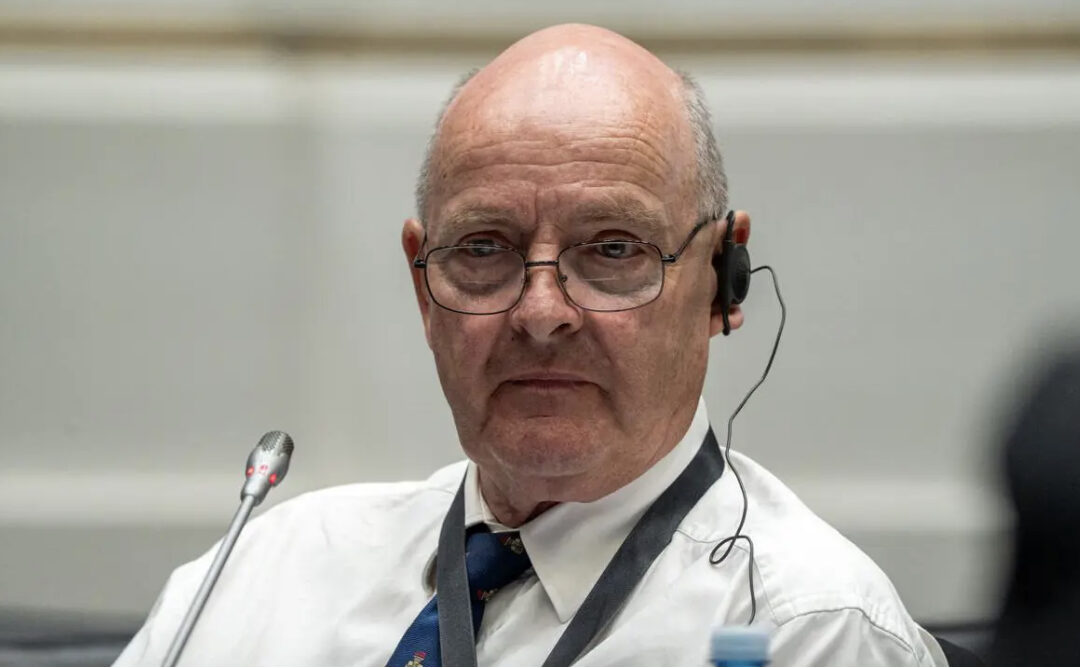
Meeting Summary
Ad Hoc Committee on Gen Mkhwanazi’s Allegations
The Ad Hoc Committee met to conclude the oral evidence of Mr Paul O’Sullivan. The Evidence Leader indicated that the focus would be on four main themes. These were the alleged infiltration of the Independent Police Investigative Directorate and the South African Police Service, the Crime Intelligence Secret Service Account, the aftermath of General Mkhwanazi’s 6 July media briefing, and related allegations involving senior officials.
A central issue was the allegation that Mr O’Sullivan had infiltrated the Independent Police Investigative Directorate and improperly influenced investigations. Under oath, he denied this claim. He testified that he opened a criminal complaint against General Phahlane in early 2016. He stated that IPID initially failed to investigate the matter while its head was suspended. He said that once Mr Robert McBride was reinstated, he met with investigators to brief them on work already completed. He maintained that he did not become part of IPID and that he stepped back once the task team assumed responsibility. The Committee questioned if his involvement went beyond that of a complainant and if his participation created a perception of undue influence.
The Committee also examined the visit to General Phahlane’s residence at Sable Hills Estate. Mr O’Sullivan explained that the IPID investigators asked him to show them the property because he had prior knowledge of building plans and photographic material. He stated that an official drove the vehicle and identified himself at the entrance. The Committee questioned the appropriateness of a civilian accompanying investigators during an active inquiry and whether this blurred institutional boundaries.
Serious allegations were raised about the Crime Intelligence Secret Service Account. Mr O’Sullivan described the fund as a major source of corruption within the police. He stated that the budget had increased substantially over the years without any measurable reduction in serious crime. He alleged that secrecy surrounding the fund enabled abuse and theft of public money. He questioned how General Mkhwanazi could claim to manage informers without the required security clearance or formal authority within Crime Intelligence. The Committee engaged him on the evidentiary basis for these claims and asked if he could substantiate allegations against named officials.
The meeting also addressed a sworn statement from a confidential informant who alleged the existence of an unlawful task team operating in KwaZulu-Natal. According to Mr O’Sullivan, the informant described being recruited, trained, and paid in cash to conduct operations while wearing SAPS uniforms despite not being a police member. The informant alleged extrajudicial killings and the planting of evidence at crime scenes. Mr O’Sullivan stated that the unredacted statement had been submitted to the Investigating Directorate Against Corruption and to IPID. The Committee noted the seriousness of these allegations and questioned how such evidence, based largely on hearsay, could be properly tested.
The Committee also scrutinised documents presented by a Member which purported to show that Mr O’Sullivan had received R100 000 from confidential funds. Mr O’Sullivan denied receiving money from the Crime Intelligence Secret Service Account. He stated that any payment received was a reimbursement from the Directorate of Special Operations for security and operational expenses. The Committee debated the authenticity and evidentiary weight of the documents.
Members further questioned Mr O’Sullivan about messages he sent to Mr Nkabinde during parliamentary proceedings. He acknowledged sending messages describing Mr Nkabinde as a criminal and warning him about the consequences of lying under oath. The Committee expressed concern that such conduct could be interpreted as intimidation of a parliamentary witness.
The proceedings were brought to a close prematurely after Mr O’Sullivan indicated that he was facing physical discomfort due to a pre-existing medical condition. The Committee agreed to adjourn the meeting and indicated that the outstanding matters would be addressed at a later stage.
Meeting report
Chairperson: Good morning to the staff of Parliament, to the staff in the political caucuses, and the members of the media. We are going to allocate this time to Adv Arendse and Mr Paul O’Sullivan to conclude the presentation. The way we ended the meeting yesterday did not give South Africans comfort. There were question marks. There were worries. We are here, all of us today. And let us show the people of South Africa that we are a winning nation.
Adv Norman Arendse (Evidence Leader): Good morning, Mr O’Sullivan.
Mr Paul O’Sullivan (Witness): Good morning.
Adv Arendse: We have got a limited time available. So some of the questions that I am going to put to you, I would appreciate just a yes or no answer, unless you want to elaborate here and there. I also just want to assure you that you have deposed to a sworn affidavit. It is part of the record. It would have / should have been read by everybody here today. And when it comes to the evaluation or assessment of the evidence, both written and oral, it will be taken into account. So to the extent that you might be or might have been concerned that you did not get an opportunity to go through all the allegations that you make in your affidavit, they will be considered. And of course, there will still be questions from the Honourable (Hon) Members. And to the extent that you refer to your affidavit and the annexures, I cannot predict that. But you obviously had liberty to do that. The topics that we almost certainly will not get through; there is criminal activity within the Political Killings Task Team (PKTT), the slush funds, the Secret Service account, taxpayer-funded trip to Japan for a “friend” of Khumalo, Mkhwanazi’s alleged role in kidnap and torture. Commissioner Masemola is part of the problem. You allege allegations of state-sponsored squads at work in KwaZulu-Natal (KZN). You question that adverse effect of Khumalo’s conduct on the crime intelligence (CI), Mkhwanazi’s, what you describe as, lies to the Commission and Parliament. Mkhwanazi’s secret business dealings, outlandish lies, you allege by Nkabinde and Phahlane. The criminal syndicate against you, claims of infiltration by you of the Independent Police Investigative Directorate (IPID) and other organs of state. Some miscellaneous matters. You ask the question and you answer the question, who is ultimately to blame for the – what you describe as – mess we are in today and how the criminal justice system be fixed. What we want to focus on are really four big topics. General Mkhwanazi’s statement on 6 July and the aftermath of that. The so-called slush fund, then IPID and the South African Police Services (SAPS) infiltration as alleged. And the spyware grabbers issue, which actually has been addressed by quite a few witnesses. So perhaps we should not, unless you have anything to add there. So perhaps let me kick off with the alleged IPID infiltration and SAPS. Do you know who the current Executive Director of IPID is?
Mr O’Sullivan: No.
Adv Arendse: Who is the last Executive Director of IPID that you interacted with?
Mr O’Sullivan: Since 2018, I have not interacted with any Executive Director of IPID.
Adv Arendse: Put another way, when is the last time that you referred any complaints to IPID?
Mr O’Sullivan: It was the complaint which I laid against General Phahlane in January or February 2016.
Adv Arendse: And you have not laid any complaint with IPID since?
Mr O’Sullivan: That is correct.
Adv Arendse: Is it your evidence today under oath that you have had no contact or interaction with IPID since 2016?
Mr O’Sullivan: No, I had interactions with them until 2018.
Adv Arendse: What is your response of allegations that you have infiltrated IPID?
Mr O’Sullivan: Well, it is a blatant lie. I have not infiltrated IPID. What happened, Chairman, very simply, very shortly, was that I opened the docket against Phahlane in February 2016. For 10 months, IPID flatly refused to investigate that docket, and the reason they flatly refused to investigate it was because IPID was part of the State Capture project at that stage. When McBride was reinstated after the Constitutional Court found his suspension unlawful, I immediately had a meeting with him and I said to him, ‘I opened this docket 10 months ago. Nothing has been done about it. We have a corrupt Acting Commissioner of Police.’ And over the next two, three months, we brought IPID up to speed with the investigation that we had done in the previous 10 months when IPID refused to investigate. And then we left them to get on with it.
Adv Arendse: Now, one of the burning issues that has cropped up in our hearings has been the visit by you and members of IPID to the Sable Hills Estate, the house of General Phahlane. Firstly, did you visit the estate? I think it is a fact you did.
Mr O’Sullivan: I visited the estate first time in February 2016. I went there to look at the property. I did that because I had information about the house that had been built. I had been on Google Earth. And I had Google Earth history and I downloaded Google Earth history. And that is all contained within my statement, which I gave to IPID in February 2016. And I had the dates of the photographs under each.
Adv Arendse: But just to get to the point, you visited the estate with some members of IPID.
Mr O’Sullivan: I did that in November 2016, after Robert McBride came back.
Adv Arendse: So under whose direction or authority did you visit the estate with IPID members?
Mr O’Sullivan: So Chairman, what happened was they asked me to show them what I knew. And I said to them, ‘If you get the building plans…’
Adv Arendse: Who is “them”?
Mr O’Sullivan: The lead investigator is the late Mandla Mahlangu.
Adv Arendse: Yes, he subsequently was murdered.
Mr O’Sullivan: He was murdered. In fact, they threatened to kill him and me at the same time. That is in my evidence.
Adv Arendse: Let us just get back to Sable Estate.
Mr O’Sullivan: He said ‘We would like to meet you at the estate.’ So we met just down… there is like a SPAR shopping centre over the street. So we met there and they had a single cab IPID vehicle. I said ‘If we go with this, it means we are going to have to take two cars.’ And I have got a SUV. I said, ‘Why do we not go in my SUV and we can all sit in it?’ Because he wanted me to go and show him the house. And he asked me to go and he said, ‘You drive the car.’ I said, ‘No, I am not the IPID official. You are the IPID official. You drive the car and you show security, your badge and whatnot.’ And then we went in and then I showed them where the house.
Adv Arendse: So is that what happened? You went in your vehicle because it was bigger.
Mr O’Sullivan: Yes, but he drove the car.
Adv Arendse: And he drove the vehicle?
Mr O’Sullivan: Correct.
Adv Arendse: And when he entered the gate of the estate, he showed to the security, his badge, his identification document (ID). And he went in on that basis.
Mr O’Sullivan: That is correct.
Adv Arendse: So the gatekeeper or the security person there would have assumed that you were also part of the IPID contingent?
Mr O’Sullivan: I do not know what the gatekeeper assumed. I did not speak to him. But what happened was we then went to the estate manager’s office. Now, because I have been involved in a lot of property development, I understand how it works. None of the IPID officials have ever been involved in property development. So they asked me to accompany them to the estate manager’s office to obtain the drawings. And they asked the estate manager for the drawings of the house, because I said, ‘If you get the drawings, we will be able to get the exact square footage.’
Adv Arendse: Did you take photographs of the house?
Mr O’Sullivan: I already had those photographs from when I had been there with the estate agent.
Adv Arendse: So you had been there previously?
Mr O’Sullivan: In February 2016.
Adv Arendse: And that was on your own?
Mr O’Sullivan: On my own.
Adv Arendse: With the estate agent? Or did you meet the estate agent?
Mr O’Sullivan: No, because you cannot get into the estate. The estate agent took me in his car. And then I asked him to drive me around to see how the estate looks. Of course, I was there for a reason. And I said, ‘Oh, that is a nice house. Let me have a look.’ And I took a picture. And that is the picture that I used in my complaint.
Adv Arendse: And now, subsequently, you were charged.
Mr O’Sullivan: Yes, the Mabula team unlawfully arrested us. And in fact, they charged the IPID members as well. And I think that is very well documented, because in fact, what happened was IPID went to court and obtained a court order to stop the counter-investigation being carried out by the Mabula team. And they succeeded. They got an order to that effect. And that put a stop to the counter-investigation. But in the meantime, I was not only arrested and charged. I was detained again. My assistant, she was my corporate counsel, Sarah Trent, she was arrested and detained for two nights in appalling conditions. They took her cell phone. One of the members of the North West team flew to Israel with her cell phone, because she would not give them the PIN code, and they broke the cell phone open to download the contents of the cell phone, which was all unlawful.
Adv Arendse: How do you know the official flew to Israel?
Mr O’Sullivan: Because they had to prove how they got the contents of the phone. And they submitted what they call a chain of evidence affidavit.
Adv Arendse: We need to close off on this topic. When you get a charge sheet, you ask for further particulars, and your counsel would then be entitled for the state to demonstrate the chain of evidence, to be satisfied that it is genuine, authentic, or whatever.
Mr O’Sullivan: Not only that, they submitted the same documentation to the Zondo Commission, because they tried to show the Zondo Commission that they had not done anything wrong.
Adv Arendse: Did that document demonstrate that they actually went to Israel?
Mr O’Sullivan: Correct.
Adv Arendse: Why Israel?
Mr O’Sullivan: Because there is a company in Israel, which works for Mossad, which is the secret service of Israel. And that company specialises in cracking cell phones. So they are able to open a cell phone if you refuse.
Adv Arendse: So at that stage, when they decided to go to Israel and to Mossad, who would have been the executive there? Who would have authorised that trip, assuming it was authorised?
Mr O’Sullivan: I am assuming it was General Mabula. He was the head of this team, this North West team. If it was not General Mabula, it would have been General Phahlane.
Adv Arendse: So these messages were retrieved. And so just to conclude, I am sure you will get some questions on this aspect later, but what happened to the case that was brought against you?
Mr O’Sullivan: I think after seven or eight months, after repeated appearances in court, it was struck from the roll. But not only was it struck from the roll, IPID launched a high court application to have the Mabula team investigation declared unlawful. And the court issued an order to that effect, that the Mabula team were no longer allowed to be involved in that investigation.
Adv Arendse: Yeah, but the matter was struck from the roll. Of course, it is still alive, potentially. It can still be re-enrolled. You were not acquitted or found not guilty.
Mr O’Sullivan: It was struck from the roll, and 10 years later, nothing has happened.
Adv Arendse: Let us not get too technical. It is still possible that it may be reinstated anyway. The other aspect relating to IPID I want to raise with you is that 147.9. There is a reference there to R200 000 of your own money, you say, that was contributed towards the fees of his lawyers.
Mr O’Sullivan: That is correct.
Adv Arendse: He was represented by…
Mr O’Sullivan: Adams and Adams.
Adv Arendse: The Helen Suzman Foundation.
Mr O’Sullivan: No, Adams and Adams.
Adv Arendse: Oh, Adams and Adams. Yeah, they represented the amicus in that case. I do not think McBride was represented by…
Mr O’Sullivan: No, the Helen Suzman Foundation were amicus and they were represented by Weber Wentzel. So McBride was represented by Adams and Adams. And the reason I made the donation was because, having opened the docket in 2016, in February, by the middle of the year, nothing had happened. No investigation was taking place. And I was satisfied that the country’s police service was being run by a corrupt commissioner of police.
Adv Arendse: Okay. So would Mr McBride have been aware of your contribution? Was the contribution to him personally, or did it go to the lawyers representing him?
Mr O’Sullivan: I paid Adams and Adams. I did not discuss it with Mr McBride. I paid the Value Added Tax (VAT) as well.
Adv Arendse: Yes, if my memory serves, he was not aware of a personal contribution made by you to his legal fees?
Mr O’Sullivan: No.
Adv Arendse: Alright. In brief, what was your relationship with Mr McBride? Did you, in effect, without being officially designated, become part of IPID, investigating people like General Phahlane?
Mr O’Sullivan: The only work we did, in terms of investigation, was between February 2016, and the period when IPID took a decision to carry on with the investigation, because from February 2016 till November 2016, no work had been done on the investigation whatsoever. So once they decided to carry on with the investigation, we spent the next four to six weeks to bring them up to speed, and then we stood back and left them to get on with it.
Adv Arendse: Subsequent to that, you say, or certainly in recent years, you have not had any contact with IPID, interacted with IPID?
Mr O’Sullivan: No, no dealings whatsoever. There might have been one or two cases where we dealt with regional offices of IPID, for example, in Mpumalanga. There was a case there where we found that there was allegations of a police official receiving bribes, but it was not the chief of police, it was a captain. So we helped the complainant open a case with IPID there, but that would have been three or four years ago. I was not involved in that, it was one of my staff.
Adv Arendse: So in relation to General Phahlane. The allegation is that you and Mr McBride targeted General Phahlane deliberately, the purpose being that McBride, and you presumably, wanted McBride to become the National Commissioner of Police.
Mr O’Sullivan: That is the false narrative of both Phahlane and Nkabinde.
Adv Arendse: So subsequent to McBride’s tenure at IPID, and your evidence that you say for the one or two instances where you have referred complaints at provincial offices, were you involved in any of the investigations against General Phahlane?
Mr O’Sullivan: No. In fact, if you look at page 52 of my statement, “I explain over the next four weeks, at the request of Mahlangu”, that would be the late Mandla Mahlangu, “I brought the task team up to date and then stood back and let them get on with it. During those four weeks, I took the task team and pointed out where evidence could be obtained from, which included assisting them identify the building contractor who built Phahlane’s house, paid with bags of cash taken from the boot of his car.” I tape recorded that conversation with the contractor, where he explained in detail how a Checkers bag with R350 000 was taken out of the boot of the car.
Adv Arendse: That is all recorded in your affidavit, and I am sure everyone has read it. But I just wanted to ask, you have not subsequently been required or called upon as a witness in any of the matters? As you know, I think it’s common cause, General Phahlane was dismissed, there was an arbitration, he took it on review to the Labour Court, that was lost. He took the Labour Court decision on appeal to the Labour Appeal Court recently, that was also dismissed.
Mr O’Sullivan: That is correct.
Adv Arendse: So were you involved in any of those legal developments?
Mr O’Sullivan: No, not at all.
Adv Arendse: Questions are asked, given your, as it were, appetite to investigate the corruption at high levels. Why have you not investigated Phala Phala? You have known about it, you have read about it; there has been lots of media attention given to that issue?
Mr O’Sullivan: The first I knew of Phala Phala was in June, I cannot remember, ’23 or ’24, whenever, an article surfaced in the media written by Arthur Fraser. And Arthur Fraser falsely alleged, under oath, that I had helped the current President of South Africa to track down the people that allegedly stole money from his couch. But I never even knew about any money being stolen from the couch until I read about it in the media. And I subsequently managed to get from the journalist who wrote the story, a copy of the affidavit, because Arthur Fraser, having made the affidavit, published it. So when I got a copy of that affidavit, I then went and opened the case at Rosebank because he deposed that affidavit at Rosebank Police Station. So I then went and opened the perjury docket against Arthur Fraser at Rosebank Police Station. And once again, nothing has happened to that case.
Adv Arendse: If we can just move to the allegations you make in relation to the PKTT. You say in your affidavit, “During his testimony, both at Madlanga and at the Ad Hoc Committee of Parliament, Lieutenant-General (Lt Gen) Mkhwanazi remained totally silent about the rampant criminal activity within the PKTT. In that regard, I have been anonymously supplied with the following copies of four sworn statements by Sergeant Mokoena, dated 16 September 2024, Captain Oor (sp), dated 30 September 2024, Lieutenant-Colonel Khumalo, dated 24 August 2024, and Constable Ndlovu, dated 9 October. Do you want to highlight one of those specific affidavits?
Mr O’Sullivan: Well, there is four statements there. I would say the most compelling statement is the statement of Lieutenant-Colonel Khumalo, who admits to having received R10 000 from a person by the name of Plaatjies. Plaatjies was the head of security at the university.
Adv Arendse: So all four of these affidavits relate to the PKTT University of Fort Hare investigation?
Mr O’Sullivan: That is correct. And the person within University of Hare that the PKTT was liaising with, they had been instructed to liaise with this person, was a person by the name of Plaatjies. And all of them admitted receiving gratification, as defined in Act 12 of 2004. And in particular, the leader of this small team was this Lieutenant-Colonel Khumalo, who admitted receiving R10 000 allegedly for purchase of honey, because apparently Colonel Khumalo was selling honey. Plaatjies bought sixty bottles, but he paid for a hundred and fifty bottles of honey. And no honey was delivered to him. And in fact, the money was not refunded, which meant Colonel Khumalo received R10 000 gratification. Plaatjies was subsequently arrested and charged. He in fact was the main suspect.
Adv Arendse: I think that is common knowledge. Can I just refer you to paragraph 96. You say that in the week following General Mkhwanazi’s media conference, Forensics For Justice were approached by an informer.
Mr O’Sullivan: That is correct.
Adv Arendse: “This informer made shocking allegations. As a result, the informer was interviewed over several days, and a sworn statement taken from him. To protect the identity of this informer, I have redacted his sworn statement. I have also redacted the transcript of my interview.” You say unredacted versions will be made available to the Commission of Enquiry. You attached the statement and it is J638 to 644. There, the deponent, whose name is redacted, says, “On 8 July 2025, following the allegations made by Lt Gen Nhlanhla Lucky Mkhwanazi in the national media briefing on the 6th of July, I decided to call Mr Paul O’Sullivan of Forensics for Justice. The reason I reached out to Mr O’Sullivan was because I knew of Mr O’Sullivan and his prior investigations into corrupt police officials. I am sick of what I am taking part in, and I desperately want to get out. And I am fearful that if I leave on my own, I will be killed to silence me, because I know too much. In and around 2019, when I was around – age is deleted – I was approached by a tall, black, Zulu man, who seemed to be in his early 70s, whom I called Baba Ndlovu, approached me. Ndlovu and Mkhwanazi both reside in Pietermaritzburg. I was informed that Mkhwanazi was looking for bright young men, whom he could train to be what was referred to as an arm of the police service. I understood this to mean that we would be trained to support services to the police. I, along with at least 40 other young black males, took part in rigorous training for approximately seven months. We were told that we would not be paid for our time of training, but we were guaranteed work when the training was over. When the training was over, we were all given R50 000 in cash by Mr Mthethwa and told to return home and await further instructions. A week or two after being back home, I received a phone call from Mthethwa. He told me to collect a package. Upon my arrival, I would meet some man. I never knew his name, but he knew who I was and what I looked like, and he handed me a further R50 000 cash, which was held together by an elastic band. A few weeks later, I received another R20 000 cash in the same manner. In total, I received, after the training was there, R420 000. In and around the end of 2019, early 2020, there was civil unrest in Kwa-Dukuza, KZN, and I received a phone call from Mthethwa telling me to go to the same meeting spot. I was collected by prior arrangement by bus, and the driver was the same man who would hand me the cash every time. We were transported to a meeting spot near the Rainbow Chicken Farm in Hammarsdale. By the time of our arrival, there were about 19 or 20 of us in the bus. We were all given suit bags with our names on it, with blue SAPS uniform inside them. The SAPS uniform did not have any ranks on them and nor our names on the pocket, but they look exactly like blue SAPS uniforms. Later on, and in our time with the task team, our SAPS uniforms were given rank badges. None of us were actual police officers or SAPS members. The first mission in Kwa-Dukuza was a crowd control mission, where we were told to fire rubber bullets at a crowd of people that were protesting. It was made clear to me and the other members of the task team, our main purpose according to Mkhwanazi was to ‘clean the streets’. I later realised this meant we would be killing criminals instead of arresting them. In about mid-2022, there was a mission which I referred to as the ‘West Boys drug bust’. We were told that we would be required to do a ‘drug bust’. And when we arrived at the location, the so-called drug lab in Umlazi, a shootout ensued between us”, who was described by him as an extrajudicial task team, “real legitimate police officers and suspects. It ended with at least 15 suspects being shot dead. Many times during our missions, no arrests were ever made of any suspects. And a lot of the time, the suspect or civilians were shot in the back as if they were running away. We would often ‘Shoot to kill’. The next mission I will speak about in and around August 2024 in Section 8 Umlazi. We were told by Mthethwa there was an abandoned house in Section 8 Umlazi where people were using the abandoned house for a drug syndicate and we needed to get rid of them. I understood this to mean they were dangerous and we needed to eliminate them.
When we arrived, we split into two groups and went in kicking the doors front and back and immediately shot everyone inside. When we noticed that 16 teenagers had been shot and killed, we knew there would be trouble. Ndlovu phoned Mkhwanazi to come to the scene. Just before Mkhwanazi came to the scene, we were told by Ndlovu that some of us had to leave and 9mm weapons with dead teenagers and some weapons were left next to their bodies. So it could be said that these kids shot at us. This is the second mission where kids were fatally shot, yet they were unarmed. Mkhwanazi had evidence planted to cover up what had actually happened. I was not involved in the first incidents, it must have been one of the other groups. I also wish to mention that Mkhwanazi always arrived at these missions with other police officers to basically clean up the mess, which either meant that they would remove evidence of the task team ever being there or planting evidence to change the narrative. None of us had firearm licences for the weapons we were using, whilst in police uniform. Whilst working for the task team, I received R20 000 in cash per month. Considering there were at least three or four groups or task teams each receiving R20 000 in cash, this would mean that the total cash payment made of all these members in the task team was between R1.2 million and R1.6 million per month. It seems to me there were three groups of 20 people, none of them cops. We were all promised that after we had been doing this work for five years, we would each receive R5 million in cash.” These allegations [are] clearly very serious? What has happened to this? Has a case been opened? Is it being investigated? What is the status of these allegations?
Mr O’Sullivan: We supplied the original of this in terms of section 27 of the National Prosecuting Authority (NPA) Act to the Investigating Directorate Against Corruption (IDAC). We supplied a copy of this to a senior investigator who works for IPID and is based in KZN. We have left them to get on with it. We would have probably pursued it a bit further, but given the fact that I was being accused of having captured IPID and having captured the NPA and having run the country, we decided just to file these complaints and leave them to get on with it. I do not know what has been done about it.
Adv Arendse: When is the last time that you made any follow-up or enquiries?
Mr O’Sullivan: In August last year.
Adv Arendse: And this person who deposited this affidavit approached you?
Mr O’Sullivan: Yeah, we did not know him from the start. In fact, we have a toll-free number. It is 0800 118 118. That is the toll-free number for Forensics for Justice. And it’s an unmanned phone, but people phone and leave messages. And he phoned there, and we have got a tape recording of that as well, and said that he wanted an urgent meeting. And then I spoke to him on the phone, and I tape recorded that as well. And in the tape recording, he said that he was involved in killing people, and it was getting to his conscience. And him and another person wanted to come and see me. So I met with him first, and the other person was supposed to see me afterwards, but the other person allegedly shot and killed himself the day before he was supposed to come and see me, which only left this person. So that is why I have redacted everything that can be used to identify his name.
Adv Arendse: Do you know where this person is or what the whereabouts given?
Mr O’Sullivan: Yes, we do. We have passed that information on. [The] unredacted version of this is with IDAC, the original of it. And if you have a look, there is a whole interview of 60 or 70 pages. It is a redacted transcript.
Adv Arendse: Of your interview?
Mr O’Sullivan: Yes, it was like a four-hour interview over a long period of time. I think we stopped, and then we carried on again.
Adv Arendse: And who was with you when you conducted the interview?
Mr O’Sullivan: The person that was with me, that name has been redacted. One of my staff from Forensics for Justice and a person who I call ‘Peter Piper’, because I wanted somebody that was not involved with Forensics for Justice to be present. So I have just called that person Peter Piper, but that is not his real name. And that person was present. And that person is a Zulu-speaking individual because the person we were interviewing spoke English quite well, actually. The person that was with us knows about these areas in KZN, so he was able to ask questions about this and that and what not.
Adv Arendse: Our time is really limited. I want to deal with the slush fund, the Secret Service Account. We have also heard some evidence, obviously, the extent to which we accepted as evidence and corroborated and confirmed of Mr Hlongwane. But you make several allegations about General Mkhwanazi and his alleged conduct regarding the slush fund. You raised questions about Crime Intelligence’s involvement in operational functions, and so on.
Mr O’Sullivan: Yeah, so during his testimony at the Madlanga Commission and at this Ad Hoc Committee, General Mkhwanazi repeatedly talked about informers that were supplying him with information. Now, it is not the function of somebody that does not have security clearance to manage informers. General Mkhwanazi had no security clearance. Plus, he was not working in Crime Intelligence. It is a function of Crime Intelligence to manage informers. And that is the purpose of the Slush Fund. The Slush Fund, actually, it’s real name is the Secret Service Account. And that money is supposed to be used to pay the informers to get information pertaining to criminal activity. And then if the information is good, and it results in arrests, the informers get paid. Now, what I could not understand is how General Mkhwanazi was able to claim at the Madlanga Commission and in Parliament that he was managing informers. And I have made the suggestion that if the Committee wants to get to the bottom of the root of all evil in the police, it needs to start with the Slush Fund because if they can stop the wanton theft of millions of rand, which is stolen in secret and spent in secret, with zero accountability. In fact, the loose strings around the purse of the Slush Fund results in inside factional battles within the police, because many senior police officials want to get their hands on these taxpayer funds. And it is a fact of life that in 2012-2013 financial year, the slush fund budget was R98 million a year. In the 13 years since then, it has grown to R600 million a year, which is a 500% increase. During the same period, Chairman, we’ve had inflation of 113%. So we have not seen a concomitant drop in serious crime. In fact, we have seen the opposite. We have seen crime increase in the last 13 years.
Adv Arendse: Okay, there is just another two topics I need to cover with you quickly. The one is the now infamous notorious braai that you had at what used to be Krejčíř’s house. What was that gathering? Did you conspire there? Who was there? Did you conspire there to do anything, to frame anyone?
Mr O’Sullivan: No. I was, in fact, flying overseas. I was flying to Vienna on the night of that braai. And it was the end of the year. The people that are stated to be at the braai by Nkabinde and General Mokotedi. Cedric Nkabinde was not invited to the braai, but he turned up. The persons that were invited to the braai, and it was just an informal braai of two hours, was Robert McBride, General Sibiya, who by that stage was no longer in the police – he was, I think, working for the Johannesburg City Council – and there were some of my staff there. The late Mandla Mahlangu was there. There was a journalist there. But the journalist was there to talk about a new book that she just published about Radovan Krejčíř’. And that is why we decided to have the braai at Radovan Krejčíř’s house, because she was launching the book that she had written about Radovan Krejčíř. I asked the person who owned the house if we could have a braai there. That is what we did.
Adv Arendse: And what did you discuss? Was it just an end-of-year braai? Was it just a social gathering, or did you meet for any particular purpose?
Mr O’Sullivan: It was a two-hour social gathering. And I was quite surprised to see the number of people that turned up, because from IPID, there were probably six or seven. I invited the late Mandla Mahlangu, and I invited Robert McBride. I invited Matthews Sesoko, but he did not come. And there were one or two others, but I cannot remember their names now, plus Cedric Nkabinde. And actually, if things that happened afterwards had not happened, I would not have even remembered Cedric Nkabinde’s name. He alleged that there were people there from Afriforum and the DA. There were nobody there from Afriforum, and there were nobody there from the DA. So, all these things were fabricated.
Adv Arendse: Any journalists there?
Mr O’Sullivan: Angelique Serrao, she published a book then, that same week, about Radovan Krejčíř’. She gave everybody a copy of the book.
Adv Arendse: So that was now your house. You bought it from Krejčíř’?
Mr O’Sullivan: No, it was not my house.
Adv Arendse: Is it Krejčíř’s house?
Mr O’Sullivan: No, it was never Radovan Krejčíř’s house. So I do not really know. There is a whole fabrication that was Radovan Krejčíř’s house. It was never Radovan Krejčíř’s house. The house in question is owned by a company, and the owner of that company, I asked him, ‘Can we use the house?’ Radovan Krejčíř’ used to live there.
Adv Arendse: Oh, I see. Now, the July 6 press conference held by General Mkhwanazi, you deal with it from paragraph 91 onwards. “On 1 July 2025, following the arrest and appearance in court, where five generals and two brigadiers, all from Crime Intelligence, based on complaints laid by myself and others pertaining to nepotistic corruption within Crime Intelligence, I caused my attorney to write a letter of demand to General Masemola, demanding the suspension of these seven Crime Intelligence people. Within hours, General Masemola responded to the letter of demand, fobbing me off with a doubtful response, thereby removing the urgency.” When did you lay those complaints?
Mr O’Sullivan: I met with the Office for the Inspector General of Intelligence in January of 2025, and we carried out some research, and we were able to identify the company which had bought these properties. We received the tip-off. It is probably the same tip-off that the Hon Fadiel Adams and Hon Kohler-Barnard received. We also got it. We have an anonymous email address that we use. We got this tip-off, and I decided to carry out some research. I wrote to the Inspector-General of Intelligence. They asked me for a meeting, and I handed it over.
Adv Arendse: Sorry, just repeat the dates. I just missed it.
Mr O’Sullivan: One of the annexes is my email to the Inspector General of Intelligence. I am not quite sure which of them it is, without looking at the annex list. The email is the 16th of February, 2025, but we had the meeting in January. He asked me to do further research, which I did. I supplied him with that information. I then sent him an email on the 16th of February. He wrote back on the 3rd of March, and he said, “Thank you for this valuable information. We will be in KZN from 10 to 11 of March, 2025.” After that, I had no further interaction with him, but I supplied him with all that information. The most critical point that we discovered was the fact that the properties were purchased at the full asking price. In fact, they paid more than the asking price.
Adv Arendse: If I can just move on from there, just back to the braai quickly. The person who was there from the City of Johannesburg had also mentioned to you the procurement of spyware by Sibiya.
Mr O’Sullivan: Never. I never had any discussion with him. I do not have the ability to procure spyware.
Adv Arendse: No, I am not putting that to you. I am saying it had been mentioned to you.
Mr O’Sullivan: No.
Adv Arendse: Okay. What was your relationship, if any, with Sibiya?
Mr O’Sullivan: My relationship with Sibiya first came about in respect of Radovan Krejčíř, who is a Czech fugitive. He was wanted in the Czech Republic. He was living here unlawfully. He entered the country on fake passports, and he should have been deported, but he managed to play the game and stay here.
Adv Arendse: So when was your last interaction with General Sibiya?
Mr O’Sullivan: General Sibiya then got dismissed from the Directorate for Priority Crime Investigations (DPCI). He took it to the Labour Court, and he was later reinstated. After he was reinstated, he became the Deputy National Commissioner, Detective Services. After he became Deputy National Commissioner, Detective Services, we probably had four or five meetings with him – maybe six – to hand him copies of dockets which we had open relating to corrupt police officials and corrupt prosecutors. He then handed that to subordinates of his, and we then worked with those people. Those police officials were arrested, and so were the prosecutors, and they are currently on trial.
Adv Arendse: When last was that?
Mr O’Sullivan: That would have been ‘24, ‘25.
Adv Arendse: Subsequently, have you had any contact with General Sibiya?
Mr O’Sullivan: I have had contact with him, because when this media release took place of General Mkhwanazi on 6 July last year, he made allegations about Shadrack Sibiya. So I phoned him and I said, ‘Listen, what is going on now? Are you involved in all this? What is going on?’ Of course, he denied everything. I said to him, ‘Well, I hope you have got your version of events to put forward’, and he assured me that he would be putting his events forward. It has been alleged that I am his friend. I want to just place it on record. I do not know where he lives. I have never been to his house. I have never been to a restaurant for a meal with him. I have never had any dealings [with him]. The only time we ever had a meal together was the braai at the house in Bedfordview in December 2016. I have had no other interactions with him other than work-related.
Adv Arendse: Let me just deal with this aspect quickly in the remaining few minutes I have left. You say that on the 5th of July, “In the early hours of the morning, someone dropped a brown envelope off at my office, which I saw when I arrived at 16:30. I was truly shocked by the contents, which included the following documents, which I felt to send to Masemola to share with the National Director for Public Prosecutions (NDPP), the head of IDAC, and the President, as the documents allege a national scandal being perpetrated by General Masemola.” Why do you mention that this is just the day before the 6th of July, when the press announcement was made? You also allege that you received information that on the 3rd and 4th of July at the police college in Pretoria, Generals Masemola and Mkhwanazi put the finishing touches to the presentation that General Mkhwanazi would use to shock the nation on the 6th.
Mr O’Sullivan: That is correct. Although it is in chronological order there, I only found out about that after the 6th of July, because after the media conference of General Mkhwanazi, he apparently did a presentation on PowerPoint, and some of the journalists there said, ‘That is a nice presentation. Can we get a copy of it, please?’ So, he instructed his or spokesman, or whatever you call it, to supply it to the journalists. And when they supplied that presentation to the journalists, they did it on their computer by converting the PowerPoint presentation to PDF, and then emailing it to the journalists. And one of the journalists, because I did not know about this 6th of July conference until it actually happened, phoned me and said, ‘Listen, this conference took place, blah, blah, blah, blah. What can you comment?’ I said, ‘Well, I have not seen it. Can you send me something?’ And he sent me this presentation. And when I got it, I was shocked. I read it. I am like, ‘Wow’, it is like 40 or 50 pages of presentation that went up.
Adv Arendse: But you are not mentioned specifically in the presentation?
Mr O’Sullivan: I am. He does not mention my name, but he refers to a member of the public that called for the suspension.
Adv Arendse: So you inferred it could only be referring to you?
Mr O’Sullivan: Can only be, because he not only says a member of the public has called for the suspension, but he says the member of the public wants the National Commissioner to bypass the human resources (HR) regulations of the police and just suspend these people. So clearly he was talking about me. But more importantly, this PDF file, we have software which can analyse documents, and we can extract the metadata from the documents. So I decided to run a quick metadata check on this document that had been sent to me. As a result, I was able to identify the computer on which the PDF was created.
Adv Arendse: And the location where the computer is?
Mr O’Sullivan: A head office computer. So a police head office computer. And we have supplied the information to the Madlanga Commission with a suggestion that they enquire from the police to find out who is using that computer. We have got the details on the user number, because we extracted from the metadata.
Adv Arendse: Okay. Just lastly to round off. You called for General Khumalo’s suspension. Were you responsible for his arrest by IDAC?
Mr O’Sullivan: No. In no way, shape, or form. I did not even know he was being arrested. But when he was arrested, I thought, ‘Wow, you know, this is good.’ Now, I put the copy of the charge sheet in here – once you have been arrested and charged, it is a public document.
Adv Arendse: Was it based on the information that was provided by Hon Adams, MP.
Mr O’Sullivan: From what I can understand, Hon Adams, and Hon Kohler-Barnard, and this Hon Paul O’Sullivan, all laid complaints in different directions, and they somehow merged. They found themselves together. I did not lay a complaint with IDAC. I laid my complaint with the Office for the Inspector-General of Intelligence because of the nature of the complaint which related to the Crime Intelligence Secret Service Account. As far as I am aware, Hon Adams laid a complaint with the police. So I think these complaints all ended up with IDAC. And IDAC obviously investigated and chose to make the arrest. But I was not involved in any way, shape, or form.
Adv Arendse: Thank you, Mr O’Sullivan. Perhaps I will get another opportunity at the end.
Chairperson: Are you ready, Hon James?
Ms D James (ActionSA): I think so. Good morning, Mr O’Sullivan.
Mr O’Sullivan: Good morning.
Ms James: Mr Paul O’Sullivan, you said yesterday that you came to South Africa because of the good weather and you wanted to learn Afrikaans. We have just proven that you have not learned any Afrikaans.
Mr O’Sullivan: So, with all due respect, I could at one stage speak Afrikaans fluently. But the year before last, there was an attempt to murder me. And that attempt resulted in brain injury. And I have photographs which I can show to demonstrate that, in fact, I was nearly killed. I had a broken neck and a fractured skull.
Ms James: Thank you very much. I want to move to a very important topic. And you start with it. And I want to fully agree. In such cases, we need to track the money, because where there is money, there is chaos. You mentioned that the Secret Service Fund’s root of all evil, cause of our unhappiness and why we find ourselves here today. Am I correct?
Mr O’Sullivan: No, I did not say it is why we find ourselves here today.
Ms James: You said it is the root of all evil.
Mr O’Sullivan: Yes, that is correct.
Ms James: That is correct. Let us stay there. I want to turn to Crime Intelligence Slush Fund, right? It is also known as the C-Fund and in your affidavit, you refer to it as a Secret Service Account, right? You state that “theft and abuse of this fund have been prevalent for 20 years.” That correct?
Mr O’Sullivan: Yes, that is correct.
Ms James: Are you therefore saying since 2006, the Slush Fund has operated as a vehicle for corruption and theft financed by South African taxpayers?
Mr O’Sullivan: Well, the Slush Fund is taxpayer’s funds.
Ms James: Thank you. You identify the extreme secrecy that surrounds and governs the Slush Fund as one of the fund’s primary weaknesses. That correct?
Mr O’Sullivan: Correct.
Ms James: Is it your testimony that this veil of secrecy has enabled and encouraged ongoing abuse of the slush fund for illegal activities?
Mr O’Sullivan: Without a doubt.
Ms James: Without a doubt, right? You describe the Slush Fund as a “manna from heaven for criminals.”
Mr O’Sullivan: It means a gift.
Ms James: Okay. You have also repeatedly stated that you have done a lot of good work for South Africa, and you have never really benefited from any of it.
Mr O’Sullivan: That is correct.
Ms James: You have stated that you have not received any payments, not rewards or gratification for the so-called forensic work you undertook, correct?
Mr O’Sullivan: I have never received anything for the public interest work I have done in this country. In fact, quite the opposite.
Ms James: You have also claimed that you have had a conversation with Hon Trollip.
Mr O’Sullivan: Hon who?
Ms James: Hon Athol Trollip.
Mr O’Sullivan: What paragraph is that?
Ms James: No, it is not there. I am just saying I believe that you have been in conversation. I have the copies of the WhatsApps.
Mr O’Sullivan: I have never spoken to Hon Trollip in my life.
Ms James: What?
Mr O’Sullivan: Yes, never spoken to him. I sent him WhatsApp messages.
Ms James: Yes.
Mr O’Sullivan: But I have never spoken to him in my life. Never.
Ms James: Okay, but I have got proof that you sent him WhatsApp messages and in your WhatsApp messages there, you have also said that you have never received any funds or gratification.
Mr O’Sullivan: Correct.
Ms James: In my possession are internal memorandum dated the 7th of May, 2007, and subsequent proof of payment dated the 16th of May, 2007, reflecting a payment of R100 000 to Mr Paul O’Sullivan, originating from the Slush Fund: “Mr O’Sullivan, request for an advance from the Directorate of Special Operations (DSO) Confidential Funds”, for work pertaining to the Krejčíř case that you mentioned. Here is the application, Mr O’Sullivan. Here is the cheque made out to you, R100 000, from the very root of all evil that you have received. You too have benefited from the “Manna of heaven.”
Mr O’Sullivan: Not true.
Ms James: Mr O’Sullivan – and I can provide this – “Request for advance reimbursement.” Here is the application. Here is the money you have deposited into your Nedbank account.
Mr O’Sullivan: Can I answer, or are you going to carry on talking?
Ms James: I am showing you the proof.
Mr O’Sullivan: You are not showing me the proof. I cannot read what you have put in front of yourself there.
Ms James: You can take it.
Chairperson: Can you also make copies for Hon Members.
Ms James: I want to conclude that you have repeatedly stated that you did not receive any money, Mr Paul O’Sullivan. And today, I have brought receipts to prove to you that you have lied to this House under oath. And because you have lied to this House under oath, and we do have the evidence, as ActionSA, after this meeting, we will be opening up and laying criminal charges against you. I leave it at that.
Mr O’Sullivan: Am I allowed to respond, or am I just going to sit here and listen to the lies being peddled by the Hon Member?
Chairperson: Listen to me. She has raised matters with you, and she has also given you what she says is proof. So now, like we promised you yesterday, now is your time to speak to the document that she has put before you, and any other answer that you may want to give from what she has said.
Mr O’Sullivan: Thank you. This payment of R100 000 did not come from the Crime Intelligence Slush Fund. It came from the DSO’s C Fund, and it is not in 2007. It was in 2006, and it was a refund for monies that I spent. Sorry, if I have to sit here and have somebody making body language faces at me while I’m giving an explanation, I will then have to turn and look at you, and not the Hon Member.
Ms James: You only spent R22 500. It is on the application form. You said you did not receive any funds, ever.
Chairperson: Hon James, may we please allow the witness to give him a chance to respond to your questions.
Mr O’Sullivan: It is a refund of expenses I have incurred at the request of the DSO, which was then called the Scorpions, for two things. The one was for additional security arrangements put in place for a witness who was afraid for his life, and this is in connection with the Scorpions investigation carried out in respect of the late Jackie Selebi. And they agreed to refund me the monies I spent, which also included the use of my aircraft, and they, not me, chose to refund it in this format. And in fact, the amount of money I spent was in excess of R500 000, of which they contributed R100 000. And it wasn’t paid from the Crime Intelligence Slush Fund; it was paid from the NPA account. So the Hon Member is wrong when she says that I lied when I denied receiving monies from the Slush Fund.
Chairperson: Yeah, I do not want you or any other Member to use the word lies or wrong. We can choose to use the word inaccurate. Maybe before, still on this question, the reimbursements that you received, was there a prior agreement between yourself and the DSO that you were going to start investigations on the affairs of Mr Selebi, or the alleged corruption against Mr Selebi? ‘We are the DSO, this is the capacity we have, these are our limit agents, who are now going to source external services from Mr Paul O’Sullivan. This is how far he can go, and this is how much we will pay him after the work has been done.’ Was there that kind of an agreement?
Mr O’Sullivan: It was an oral agreement, and the agreement was that they would assist with the expenses I was incurring. It was not just in the respect of Jackie Selebi. I do not know what the project was about, but they had a drug project that they were busy with, where they were tracking people that were transporting drugs. And I took two members of the DSO in my plane, I supplied a radio to members of the DSO in cars on the ground, and we flew over, and we watched and followed a car going from different places to different places. I was not involved in that project. I just allowed them to use my plane.
Chairperson: Who were those two members that were in your craft?
Mr O’Sullivan: The one was Adv Gerrie Nel. I do not remember the name of the other person because I did not know him. He came with Adv Gerrie Nel.
Chairperson: You say the agreement was oral?
Mr O’Sullivan: Oral agreement. They needed my urgent assistance. And in addition to that, there was an attempt to murder one of the witnesses in the Jackie Selebi matter.
Chairperson: Who was the person who approved these payments that were made to you?
Mr O’Sullivan: I am assuming it was Adv Gerrie Nel. I do not know who approved it.
Ms James: Mr O’Sullivan, in your testimony, you have said that you have never received any funds, no reimbursement, nothing. It is there. You were reimbursed for the aircraft, R6 000. It is on the application. Your total reimbursement amounted to R22 000. The entire application I have circulated to the Members. It clearly outlines the project named COFFEE.
Mr O’Sullivan: I do not have any of these.
Ms James: It clearly outlines the work you have done. It clearly outlines the reason for your payment. It is all in the application and the motivation. And unfortunately, my time does not permit me to go through the application. And hence, I have circulated it to all the Members. It is all there. So the hogwash you are telling us contradicts what is in the application. The documents, the proof speaks for itself.
Chairperson: Is there anything you want? I want you to be calm, both of you, yourself and Hon James.
Mr O’Sullivan: Well, unlike the Honourable Member, I will remain calm. First of all, I am not in the business of providing hogwash. I have stated there, and I am going to read it, “For the avoidance of doubt, I have never been remunerated for any of my public interest work over the last 25 years. Quite the opposite, I have spent vast sums of my own funds in the interest of making South Africa a safer country for all its inhabitants.” However, when I was requested to provide extra services, not something I chose to do with my own account, I was requested to pay for the security enhancements of a witness. And unfortunately, these documents from 20 years ago, I do not have in my possession. And it would be appropriate for them to be in my possession before these wild allegations are being made against me. It would absolutely be appropriate to put the documents in front of me and say, ‘Can you explain that?’ And that is not what has happened here.
Ms T Sokanyile (ANC): Morning, Mr Paul O’Sullivan.
Mr O’Sullivan: How are you?
Ms Sokanyile: I am great, Sir. I am looking at your statement, you are talking about monies that were intended for Crime Intelligence informants that were removed from the system, and you are accusing General Khumalo that they were removed during his time. Can you provide evidence that sources of information under Khumalo that have dried up, that you are referring to in paragraph 102?
Mr O’Sullivan: I want to refer to page 792. 792 is a transcript of a telephone call I had on the 22nd of September 2025 from a confidential informant who was employed in Crime Intelligence. He reached out to me. I did not know this person from a bar of soap.
Ms Sokanyile: Is this informant from Mpumalanga?
Mr O’Sullivan: That is what it says. And then I asked him to send me documentation, which he subsequently sent. And that documentation is attached. And the documentation is a list of people that were employed in Crime Intelligence.
Ms Sokanyile: There is a follow-up question on what you are going to say. What is written on your telephonic conversation with the informant, you are saying that the informant must go to General Sibiya. You do not want him talking to General Mkhwanazi, General Masemola, [and] General Khumalo because after the appearance of General Masemola, they are all going to jail – the three. You are planning about that. He must give you that information. So that after Masemola on that day, coming out of the Madlanga Commission, you are taking them all to jail – he must talk to Sibiya. Why do you have an informant to talk to someone else [and] not to talk to the people at the helm of SAPS? For instance, in the Crime Intelligence is General Khumalo. And then General Masemola is the National Commissioner. Can I check with you? Why do you refer your informant to General Sibiya in your telephonical conversation?
Mr O’Sullivan: I have not finished responding to the first question. If you look at page 810, it is an explanatory note about all of the documentation. And it says “The transcription. This is the 20 minute call with the informer who is employed at Crime Intelligence Mpumalanga.” It is mostly self explanatory and alludes to micromanagement by Khumalo. The complainant in this case is a member of Crime Intelligence, and he is complaining about General Khumalo. The Hon Member is asking why I did not instruct him to go and complain to General Khumalo.
Ms Sokanyile: To Sibiya. You are saying he must go to General Sibiya. Why?
Mr O’Sullivan: Because General Sibiya at the time was the Deputy National Commissioner of Police. Should I have told him to go and speak to General Khumalo, he would have probably been suspended by now because he was complaining about General Khumalo.
Ms Sokanyile: Just leave it. Let us leave that. You made it clear that the person in SAPS whom you regarded as the person who must be at the helm is General Sibiya. It is clear. It is written down. You are telling the informant. Mr Paul O’Sullivan, can you tell me why you decided to disinvest in property in South Africa, and you decided in 2025. Why?
Mr O’Sullivan: I have not finished answering the other question. And what I am not prepared to do is to sit here. Start answering a question. Then be stopped, and told ‘I do not want to hear your answer. I want to ask you another question.’
Chairperson: Can we do this? She asked you a question about the conversation that you had with your informant. Are you able to respond to that question?
Mr O’Sullivan: Absolutely. And I am trying to explain it. And while I am trying to explain it, the Hon Member starts interrupting me.
Chairperson: Listen here. The time that is allocated it is not the Chairperson’s time. It is the time of the Hon Member. You and the Hon Member must have a cordial conversation. Help each other and have that conversation succeeded.
Mr O’Sullivan: Chairman, how can we have a cordial conversation if I am trying to…
Chairperson: Let us not do that. May you please respond to the question on your informant? That is what she wants to hear.
Mr O’Sullivan: I was trying to explain that. Can I explain without being interrupted?
Chairperson: Yes, I will give you the time to explain.
Mr O’Sullivan: Thank you. I explain on the explanatory note exactly what happened, and why I decided to record it and make a transcript. It is a request for assistance. It is not a request for assistance I have solicited. It is a request for assistance that a person has unilaterally decided to reach out to me. Before that person contacted me, I did not know him at all. I knew nothing about him. He explains that he was busy with an investigation involving theft of R74 million from a community property association. He chose to bypass Khumalo and go and speak to General Sibiya. It was not me that told him. I did not even know he had been to speak to General Sibiya. If there is an allegation that I told him to [speak to General Sibiya]; he had already spoken to General Sibiya. And if you read the transcript it makes it clear that he is telling he decided to bypass General Khumalo. We are having a complete misunderstanding of what is being said in the transcript. My submission to Parliament – and you can deduct this from the Hon Member’s time if it is necessary – includes over a thousand pages of evidence. It is necessary if I am going to be asked questions about the evidence that is included that I have an opportunity to look at the relevant pages of that thousand pages, so that I can answer the question properly, because otherwise I am going to be put in a position where I will have to say ‘I am sorry, I do not have time to answer that question.’ Either I must be able to give a proper answer, which means consulting my documents, or I must be allowed to say ‘I am sorry, I do not have time to answer that question.’ Or we can agree that we are not going to get anywhere with this process. And as Chairman I respectfully request you to ensure that when a question is asked. I will undertake to provide the answer as quickly as possible, but not in a way where I am answering the question and I am told ‘No, I have heard enough. I do not want to hear anymore.’ That is the reality. So, the allegation is I am asked to explain why I told him to go to Sibiya. In fact, if you look at page 799 and 800, this is the Crime Intelligence that is doing the talking, “My name is Paul. We are talking about millions”, now, I think it is billions already, “I personally went to the Hawke’s office in Pretoria, the forensic department, and I had a meeting with some of the generals there presenting this case, and they were happy. ‘Oh this is a good case. We are going to make a difference.’ “ This is the informant telling me, not me saying it. “I knew already Khumalo was corrupt, so I did not want to go via him, but I went to the forensic department, and I said ‘hmm’. Then when we were back, I did all the applications I was supposed to put in. I sent them there. And the applications went to – who is this guy now, this guy… This Sibiya… Is it Sibiya, that one who is in charge of forensic and stuff?” And I said, “Sibiya is the Div Com: Detectives”, “Yeah, the one that is fighting with Khumalo and Masemola.” Then he says “Who is Mkhwanazi fighting with a lot?”, he is saying it, not me, “Is it Sibiya?” I said, “Yeah, Mkhwanazi, Khumalo, and Masemola, they are all fighting with Sibiya.” Then he says “Yes, Sibiya. Someone told me that Sibiya and Khumalo, they are fighting.” Then he says, “I went to the Forensics Department because Sibiya is in charge of the Forensics Department.” So it is not me telling him ‘Do not go to Khumalo, go to Sibiya.’ He took the decision to go to Sibiya.
Ms Sokanyile: I am just asking a question, because it is written. You are reading other lines, leaving out a line that you are saying “Sibiya can be trusted because he is against Masemola.” I got your answer, and I got your attitude that you do not want General Masemola, General Khumalo, and General Mkhwanazi. You are saying Sibiya can be trusted. You are saying that to the informant.
Mr O’Sullivan: Where have I said that?
Ms Sokanyile: No, no, no. I am going to another question now. My fifteen minutes are going. I will give you all those lines that is from your mouth. Let me go to another question: Why did you suddenly disinvest in property development here in South Africa, especially in 2025?
Mr O’Sullivan: Actually, it was in 2024 I started the process. And the reason was because of two factors. The first factor is the July riots that took place in KZN and the damage to the economy of R100 billion. And the second factor is the inability of Eskom, due to corruption, to constantly supply electricity. And those two factors caused a marked decrease in the value of property in South Africa. So in 2025, I sold assets and I moved the money offshore, for the simple reason that keeping the money onshore was costing more in the long run. And on the properties that I disposed of, I probably lost somewhere in the region of R10 million. That is why I disinvested.
Ms Sokanyile: But in your statement, you are talking about COVID-19 and talking about Masemola [and] Khumalo using the Slush Fund to get properties.
Mr O’Sullivan: That is a misunderstanding.
Ms Sokanyile: They know nothing about those things, and here, you have given it to us as this Committee. Just leave it out. You did not know that we are going to read that, surely? You know, to me, coming here in South Africa under the pretence of saying that you are coming for property development, but you looked at the loophole in our SAPS and then you entered whereby you made yourself the messiah. And you have removed many generals in our SAPS under the pretence that you are assisting South Africa to fight crime through your companies. If you can go to what is written, your discussions with Sarah Jane Trent, it leaves a lot to be desired. But let me go straight to another.
Mr O’Sullivan: Chair, what is the question there? Is it a statement or a question?
Chairperson: Yes, she has not asked a question. She was just making a statement.
Ms Sokanyile: I am just ventilating.
Mr O’Sullivan: I can see that.
Ms Sokanyile: You know, Mr Nkabinde, when he was here in the Committee, read out a text being threatened by you. Why did you do that?
Mr O’Sullivan: I did not.
Ms Sokanyile: You did not want Mr Nkabinde to talk to us. Why? What were you afraid of? What was the reason of threatening Mr Nkabinde?
Mr O’Sullivan: In the first place, I did not threaten him. I told him that it was a criminal offence to lie under oath and you can go to prison for that. And I said to him, ‘You are a lying crook and you belong in prison.’ I received a WhatsApp. I was not watching.
Chairperson: You confirm that message was yours?
Mr O’Sullivan: No, I did not threaten him. I told him it is an offence to lie under oath in Parliament.
Chairperson: Do you confirm that you sent that message to Mr Nkabinde?
Mr O’Sullivan: I sent that message to him.
Mr X Nqola (ANC): Let us quickly pick up from where Hon Sokanyile left. Let us go straight to the message. You were reading the message. Read the message.
Mr O’Sullivan: The message says, “Get ready, you lying crook. I am going to make sure you spend some years in prison. You were bribed by Mkhwanazi and Mabula. Now you will pay for your crimes, guaranteed.”
Mr Nqola: And you consider that not a threat?
Mr O’Sullivan: It is a statement of fact.
Mr Nqola: No, it is a threat.
Mr O’Sullivan: You may consider it a threat.
Mr Nqola: No, no, no, Mr O’Sullivan, that is a threat. Mr Nkabinde is within his testimony in Parliament. You send him an SMS while he is still giving testimony in Parliament, and you say he must “Get ready, you lying crook”. That is not a statement of fact. That is a threat. And that is a deliberate undermining of the work of Parliament. What do you think?
Mr O’Sullivan: I then go on to say “lying under oath to Parliament is a very serious offence. Newton’s third law for every action, there is an equal and opposite reaction.” If certain Members determine it to be a threat, that may be their opinion. I had several years of experience of the criminal conduct of Cedric Nkabinde.
Mr Nqola: So the lying under oath part is a second SMS you sent?
Mr O’Sullivan: Correct.
Mr Nqola: What time was it sent?
Mr O’Sullivan: So, what happened was I received a message from somebody else.
Mr Nqola: No, Mr O’Sullivan, please. What time was the second message sent?
Mr O’Sullivan: The first message was 18:43, the second message was 20:15.
Mr Nqola: That is exactly when we would have finished the business of the day. So would I be correct when I say you saw that you messed up and you were trying to clean your mess?
Mr O’Sullivan: No, somebody sent me a screenshot of what Cedric Nkabinde was saying at Parliament. And that prompted me to send that message.
Mr Nqola: You said, “Get ready, you lying crook”?
Mr O’Sullivan: Correct.
Mr Nqola: “You are going to jail. It is your time to pay for your crimes.” Is that not a threat to a witness of Parliament?
Mr O’Sullivan: I do not believe it is.
Mr Nqola: It is a threat, and it is undermining the people’s Parliament.
Mr O’Sullivan: I do not believe that it is a threat.
Mr Nqola: Let us pass this part. You firmly communicated to Parliament your intention of not willing to come and participate in these proceedings before the 20th of February, citing a lot of reasons.
Mr O’Sullivan: Before the 20th of February?
Mr Nqola: Yes, citing a lot of reasons. Amongst those reasons, you write a letter to us saying if we are to take a decision to subpoena you, let us go forward. You are ready to take us to court. What convinced you now to come all of a sudden?
Mr O’Sullivan: I raised my concerns with attending this Committee on the 27th of November and again on the 2nd of December, where I set out several factors. The one factor is that I was overseas. The other factor is…
Mr Nqola: Mr O’Sullivan, I do not want to interrupt. No, I have said in my question, with a lot of reason. The question is what then convinced you to change the decision not to come and come to Parliament? Now, you are taking us back on the reasons you sent us. We know the reasons you raised with us. Now, we are taking us back now on why and this and that and that. The question is, what then convinced you otherwise to change your decision of not coming and suddenly come? That is what we want to know. We know the reasons you raised. Do not repeat that.
Mr O’Sullivan: And I was trying to explain what convinced me. So the issues were, first of all, I was not in the country. Secondly, I was not planning to be back in the country until the end of February. And then the concerns I raised, I wanted to receive a summons. And the reason I wanted to receive a summons was because I had a legal team standing by to go to the High Court and get an order that would allow me to testify virtually, but I did not receive a summons. Instead, I received a letter, I think it was last week, from the Chairman stating that they would assist me with the arrangements for my personal security. So I took a decision: Rather than not be able to place these important facts before this Committee, that I would come and attend in person because the summons was not issued. And I wanted to come here and provide this information. And I need to point out that I sent my first draft of my statement in December. So I made it clear that I wanted to come here.
Mr Nqola: Mr O’Sullivan, are you a habitual liar?
Mr O’Sullivan: Of course not.
Mr Nqola: Are you a name peddler?
Mr O’Sullivan: Of course not.
Mr Nqola: Are you an information peddler?
Mr O’Sullivan: Absolutely not.
Mr Nqola: Do you hold Mr George Fivaz in high regard?
Mr O’Sullivan: I have never met him. I think I probably met him 25 years ago.
Mr Nqola: But in the statement you say he was the best commissioner. So after him, there was no proper commissioner appointment.
Mr O’Sullivan: I did not say in my statement that he was the best commissioner. I never said that. If you can point that out to me, I would be very happy.
Mr Nqola: We will take you there. Do you know that Commissioner Fivaz recognises you as an information peddler, a liar, and a name dropper, who went to his office, who asked to leave with him to Ireland when he was headhunted by the Irish government to go and be a commissioner in Ireland?
Mr O’Sullivan: This is the very first I am hearing of it. I never went to his office. I did not even know he was headhunted to go to Ireland. So I think somebody is fabricating these stories and passing it on to you, and I am guessing it is probably people in Crime Intelligence.
Mr Nqola: No, your guess is wrong.
Mr O’Sullivan: Who is it?
Mr Nqola: Commissioner George Fivaz said it himself in a public platform called African Renaissance Podcast. He is not Crime Intelligence.
Mr O’Sullivan: I have never seen that.
Mr Nqola: So he is lying?
Mr O’Sullivan: S I suggest that possibly you have been misinformed. I have never gone to see George Fivaz and asked him to go and work in Ireland.
Mr Nqola: So he is lying?
Mr O’Sullivan: Can you produce the evidence that he said these things?
Mr Nqola: I can send you a video. It is available. But I am saying if he said it, he is lying, according to you?
Mr O’Sullivan: If he said that, he is lying, yeah.
Mr Nqola: So everyone else is lying except you?
Mr O’Sullivan: Who is everyone else?
Mr Nqola: There a lot of people you are mentioning in your statement that they are lying. That is everyone else. That includes Masemola. That includes Khumalo. That includes Mkhwanazi. It includes everyone else. So everyone else in South Africa in the world is lying except Mr Paul O’Sullivan?
Mr O’Sullivan: You’re making that statement.
Mr Nqola: We can pass it. It is fine. So there is an accusation against you that you captured IPID through Mr Robert McBride in an attempt to do your own things within the criminal justice system, of course, focusing on SAPS. You confirmed here that you would have assisted Mr Robert McBride to get his job back. You went to an extent of popping out and provoked R200 000 to pay for his legal fees. Mr McBride came here under oath and said he has actually used some of your information, if not most of your information, in conducting investigations at IPID. Do you think that any rank and file citizen of South Africa can believe that you have not captured IPID at this rate?
Mr O’Sullivan: I can state categorically on the record that I did not capture IPID. And anybody that believes that to be the case is living in a different world, a dream world.
Mr Nqola: And these facts that I have just provided to you mean nothing to you?
Mr O’Sullivan: Which facts?
Mr Nqola: The facts that under oath Mr McBride said he has used a lot of information to conduct investigations at IPID. You have under oath confirmed in this Parliament that you have paid Mr McBride legal fees to get him reinstated at IPID. Are you saying these two particular facts mean nothing to you? Is that what you are saying?
Mr O’Sullivan: I do not understand what you mean by it means nothing to me. The reality of the situation…
Mr Nqola: No, you are saying anyone who believes that you have captured IPID is dreaming. I am putting facts before you that were actually used under oath. So you are saying these facts are dreaming? Are these two facts a dream to you?
Mr O’Sullivan: If you have a situation where the criminal justice system is captured by criminals and a person such as myself, and I was not alone, by the way, there were others, decides to come and assist in uncapturing the criminal justice system, are all of those people now to be accused of capturing the criminal justice system? That is your analogy of it. And the reality of the situation is quite simple. In 2015 or 2016, I cannot remember the year now, Robert McBride was unlawfully suspended. And after he was unlawfully suspended, a number of people got together, not as part of a strategy or anything like that. I found out that the Helen Suzman Foundation wanted to join as an amicus in an application that was being brought to set aside his suspension. I also found out that he had hired attorneys, a company called Adams and Adams, a very reputable firm in Pretoria. And I contacted the partner of that firm. And I asked him, would it be acceptable to make a contribution towards the legal fees? I did not ask for anything in return. What I wanted to see was McBride back in his job. I wanted to see Ntlemeza out of his job.
Mr Nqola: What do you stand to benefit when he is back at his job?
Mr O’Sullivan: I do not stand to benefit anything. It is what the country stands to benefit. What had happened, I had opened a criminal docket against the then acting commissioner of police. And instead of carrying out an investigation, I shelved it, and they shared a copy of it with General Phahlane. General Phahlane then arranged for other police officials to come and unlawfully arrest me, drag me off a plane, assault me, torture me, and then start a process to arrest me and charge me on no fewer than… And I had to go to court on six different trials. And I spent 88 days in trial.
Mr Nqola: And out of six different trials, how many were withdrawn?
Mr O’Sullivan: Three were withdrawn. I was acquitted on three.
Mr Nqola: Okay, let us proceed on this aspect. Is it correct that the British military intelligence works closely with the MI5 for domestic operation and with MI6 for foreign operations?
Mr O’Sullivan: Now, I think they do. But 40 years ago, I do not think they did.
Mr Nqola: So you are not aware that at the time you were there, the MI5 and MI6 was working with the British military intelligence?
Mr O’Sullivan: 40 years ago they were not.
Mr Nqola: Okay. So you are a property developer in UK in 1985. You suddenly become a tourist in South Africa and Africa at large. You identify an interest of property development. As a former military agent of a battalion, you enter the public service through being a reservist, when you have actually acquired citizenship within a very short space of time. In 1995, you were given your citizenship. In 1997, you were training people as a reservist. Now, you enter through some unexplained, probably, ways of being at the airport and stuff. You get into the country. You open a forensic investigation company. You also open an NGO, Justice what-what, which is one of the features, actually, foreign intelligence infiltrates foreign countries. So with this explanation of your history and your trajectory in South Africa, would you blame anyone who accuses you of being a foreign spy?
Mr O’Sullivan: That is the narrative of the corrupt generals in Crime Intelligence and the police service.
Mr Nqola: But do you blame them, given these facts I am putting to you?
Mr O’Sullivan: Yes, I do. It is not a new narrative. It was first started by the late Jackie Selebi. It was peddled again by General Phahlane. And it has been peddled recently again by General Phahlane and by his comrade, Cedric Nkabinde. And it was peddled again in this house by General Mkhwanazi. So there is this strategy to discredit the good work I have done in this country over the last 36 years.
Mr Nqola: Okay. Who funded your property development business in South Africa?
Mr O’Sullivan: I did.
Mr Nqola: You did?
Mr O’Sullivan: Yeah.
Mr Nqola: But your company was still new, because you established in 1985 in the United Kingdom (UK). So are you saying you amassed necessary profit to restart a property development business in a foreign country?
Mr O’Sullivan: Before I came to live here, I had made property investments here. Those property investments were made with cash from the UK because I was busy with property developments there and I made a profit. And in 1989, when I applied for permanent residence, I was granted approval. And that approval enabled me to bring in funds for further investment. That is what I did.
Mr Nqola: So IPID investigators are appointed in accordance to IPID Act Section 22. What business were you doing at Phahlane’s house with IPID officials?
Mr O’Sullivan: I think I explained that in some detail, but I am happy to explain it again. It is covered in my statement in some detail. I opened the docket in February 2016. After I opened the docket, the acting head of IPID, because Mr McBride was on unlawful suspension, was a gentleman by the name of Israel Kgamanyane. And while he was acting head of IPID, instead of carrying out or instructing the carrying out of the investigation, he passed a copy of the docket to General Phahlane. For 10 months, no investigation was carried out. When Mr McBride came back to his office at the end of October, I met with him and a team of his investigators at the beginning of November. And after that meeting, I was informed by Mr McBride that he was putting Mandla Mahlangu as the lead investigator on this investigation into General Phahlane. And Mandla Mahlangu, I met with him in the spa shopping centre across the road, and he asked me to show…
Mr Nqola: Mr O’Sullivan could you go back to the site at the Sable Hills Estate, where you were there with IPID officials?
Mr O’Sullivan: That is what I am talking about. We met at the shopping centre across the road, and he said, ‘Can you show me the house?’ I said, ‘Yes, I can.’
Mr Nqola: So it was a coincidence that you were around and they did not know the house?
Mr O’Sullivan: No, they asked me to meet there, to show them the house.
Mr Nqola: On what capacity were you part of the investigation?
Mr O’Sullivan: I was not part of the investigation.
Mr Nqola: No, you were. If they are going to check something that is alleged to be from the proceeds of crime, and they want to go and do site viewing as part of collecting evidence, and they call you to go with you, you were an investigator, obviously.
Mr O’Sullivan: No.
Mr Nqola: You were a complainant, and then a bogus investigator as well.
Mr O’Sullivan: Oh, no. So unfortunately, you have got the wrong end of the stick. What happened was, I was asked to point out, and it happens all the time, where an investigator will invite somebody to come and point out where evidence can be found.
Mr Nqola: Did you ask how many cars General Phahlane is using from the security at the estate?
Mr O’Sullivan: I cannot remember. It is like 10 years ago.
Mr Nqola: Did you ask how many bodyguards he has from the security?
Mr O’Sullivan: Definitely not.
Mr Nqola: Did you ask about the guns they are carrying?
Mr O’Sullivan: Definitely not.
Mr Nqola: You remember that?
Mr O’Sullivan: I would absolutely remember that.
Mr Nqola: You do not remember about the cars, you remember about the bodyguards and the guns?
Mr O’Sullivan: So I think we were interested in a particular car, and I think one of the questions asked was, ‘Does he have a BMW i8?’
Mr Nqola: Asked by whom?
Mr O’Sullivan: He was seen driving a BMW i8, and we were able to get the registration number and find that actually that car belonged…
Mr Nqola: When you say “we”, you mean yourself and the IPID officials?
Mr O’Sullivan: In fact, I.
Mr Nqola: No, you say “we”. So it means you are a part of the investigation. You are a complainant and the investigator at the same time – bogusly.
Mr O’Sullivan: No. I got the details of the car and I passed it to IPID.
Mr Nqola: So you were part of the investigation?
Mr O’Sullivan: No.
Mr Nqola: So you complain, then you direct the outcome through feeding them with information. Let us pass it. Do you have a grabber?
Mr O’Sullivan: No. I would not know one if somebody put one in front of it. I have never seen a grabber.
Mr Nqola: What is your response to the allegation that you have a grabber and you are illegally intercepting information from individuals?
Mr O’Sullivan: That is a complete lie.
Mr Nqola: It is your evidence that is a lie?
Mr O’Sullivan: One hundred percent, it is a lie. And the person that is stating that, I invite that person to take a polygraph test.
Mr Nqola: What is your relationship with General Shadrack Sibiya?
Mr O’Sullivan: Again, I explained that in some detail earlier. It is only a professional relationship. I have explained that I do not know where he lives. I have never been to his house. I do not know any of his family members. I have never met any of his family members. The only time ever that I had any social interaction with him at all was in December 2016 when we had a braai, and it was a year-end braai, and he was invited. And at that stage, he was no longer working.
Mr Nqola: Who did the braai? At whose house were you?
Mr O’Sullivan: At a house in Bedfordview.
Mr Nqola: Whose house?
Mr O’Sullivan: It is owned by a company.
Mr Nqola: Whose company?
Mr O’Sullivan: It is not my company.
Mr Nqola: Whose company?
Mr O’Sullivan: A friend of mine owns that company.
Mr Nqola: So your friend invited General Sibiya in a social braai?
Mr O’Sullivan: My friend was not in the country. I asked a friend if we could use the house, and there was a specific reason. The reason was that one of the tenants in the house a few years earlier had been Radovan Krejčíř’. He was a tenant in the house. It was not his house.
Mr Nqola: Radovan Krejčíř’ is a drug lord, according to you?
Mr O’Sullivan: I am saying he is absolutely a drug lord.
Mr Nqola: So you coincidentally found yourself and General Sibiya socialising with a drug lord in a braai session?
Mr O’Sullivan: He was in prison. He had lived in the house 10 years earlier.
Mr Nqola: So he was no longer in the house?
Mr O’Sullivan: He was in prison. In fact, he was in prison on charges which I laid against him.
Mr Nqola: Okay, that is fine. How many years have you been a forensic investigator?
Mr O’Sullivan: Well, we can say 25 years.
Mr Nqola: And amongst other things you have been investigating are close to the operations of the criminal justice system, SAPS, and all that?
Mr O’Sullivan: No, so we investigate fraud. We investigate – that is my firm – various offences, mostly corporate fraud. When there is criminal dockets open, we expect the police and the prosecution service to comply with the necessary legislation and to prosecute the people involved. But when you have corruption within the police, which we have in South Africa, the problem is that the people do not get prosecuted. They get away with the crimes. And unfortunately, although we mainly investigate fraud, there is a lot of other crimes going on, including murder, drug trafficking, rape. And the people that commit those crimes also do not get prosecuted. And that fault lies not necessarily with the NPA, but with corrupt police officials who take backhanders to make the docket vanish. The docket is sold at court, or they are released on bail and they are never seen again. And those defects in the criminal justice system is what results in 88 murders a day in South Africa. And I decided many, many years ago that if I could do something to reduce the level of crime in this country, it would not only be to my benefit, it would be to the benefit of all South Africans. But in order for that to happen, we need a criminal justice system that works. And it does not work if the people at the helm are corrupt.
Mr Nqola: So in these 25 years of being a forensic investigator, have you ever picked up any existence of any drug cartel that has got a corrupt relationship with SAPS authorities?
Mr O’Sullivan: Yes.
Mr Nqola: You can elaborate.
Mr O’Sullivan: Well, there is a number of samples. There was one drug syndicate when I was working for ACSA, which is 25 years ago, by the way. We were able to get video footage of drug mills arriving from places like Brazil. And instead of passing through the customs area where they could be liable to being searched, when they arrived into the country, they were met by police officials. And the police officials were wearing reflective jackets with their details on, and you could see there were police officials. And these police officials would escort the drug mules, pretending that they have arrested them. But in fact, what they did was they escorted them through customs, and then they took them to a vehicle that was waiting outside, and they were allowed into the country. So those are clearly drug traffickers who are working with corrupt police officials. We found in the case of Radovan Krejčíř’ that he was working with a guy called Michael Arsiotis, who is a Greek Cypriot. And they were peddling drugs that were coming in to South Africa and then being shipped to parts of Europe. So this area, the drugs were being shipped up there. And then Radovan Krejčíř’ entered into a corrupt relationship with a general in the police, in fact, Crime Intelligence. His name was General Joey Mabasa. I discovered that General Joey Mabasa’s wife was in business – a company had been formed – with Radovan Krejčíř’s wife. So that was how General Mabasa was getting funded. Then we had the situation of the Paparas family, Stefanos Paparas and Dimitri Paparas. And their corrupt relationship was with Glenn Agliotti and Jackie Selebi.
Mr Nqola: Okay, I think those scenarios are enough. You have actually met what I was expecting. Now, you speak about also the fluctuating budgeting of both the PKTT and the Crime Intelligence.
Mr O’Sullivan: I have no knowledge of the budget of PKTT. In fact, I did not even know of the existence of PKTT until the 6th of July last year.
Mr Nqola: Okay, so you have no comment whether it was appropriate at this stage to disband it or not?
Mr O’Sullivan: No knowledge whatsoever. I knew nothing. As I said, I did not even know of the PKTT. I had no knowledge and still do not have any knowledge of the budget and what they do. Only what I have seen in the media since the 6th of July last year.
Mr Nqola: Okay, you also make mention of what is wrongly done within the Crime Intelligence. And amongst other things, you speak about the inappropriate hiring of relatives, talk about buying of firms that are not used for the operations of crime intelligence, speak about buying houses and all that. Are you able to share with us who is doing that? Who are these people who have hired relatives? Do you have the actual proof of the firms and the houses that you can share with us, even if it is after the session, if you want to?
Mr O’Sullivan: What we need to do is to turn the clock back to 2000. In the year 2000, which is 26 years ago, the provincial head of crime intelligence… Sorry, I think it is 2005. The provincial head of crime intelligence was Major General Richard Mdluli. And Major General Richard Mdluli was promoted and became the Divisional Commander of Crime Intelligence. And after he became the Divisional Commander of Crime Intelligence, he gave somewhere in the region of about a dozen jobs to family members. They bought properties – he bought privately and took bonds out for those properties. And then he rented those properties to Crime Intelligence using slush funds to pay the rent, which he then used to pay the bond on his house. And more recently, like in the last few years, we have had houses in Cape Town that would be rented out during the holiday season. Instead of using them as safe houses, they would be rented out so that cash could be paid for rent to holidaymakers, and the rent money would be received by them. So a lot of misuse of funds. And if we go back to 2012, when General Masemola was the Acting Head of Crime Intelligence, and General Mkhwanazi was the Acting Commissioner of Police, in 2012, R35 million was spent on purchase of luxury vehicles, one of which was a Mercedes M350, which was supplied to the then Minister of Police – unlawfully, of course. So you have all these things going on. And then, of course, we have refurbishment works carried out at safe houses. And the refurbishment works were the production of invoices. I think General Ntlemeza was arrested and charged for fabricating invoices and sharing the money he got from the Crime Intelligence Slush Fund with the person that fabricated the invoice with him. So you have all this abuse of the Slush Fund. And during the same period, the Slush Fund rises by 500% when inflation was only 113%.
Mr Nqola: Thank you. You say at paragraph 57 that there is a third force in the Crime Intelligence of South Africa. Can you describe the nature of that third force?
Mr O’Sullivan: Yes, so during the period, what we can call State Capture, this third force became quite active. We had an intelligence minister by the name of David Mahlobo, who worked together with people from Crime Intelligence and National Intelligence Agency, which at the time, I believe, was being run by a gentleman by the name of Arthur Fraser. And what they did was they created a parallel intelligence infrastructure. And this is all set out in a very detailed affidavit, which we took. It is not included in these papers because I did not know you would pop out and ask a question. But we took a very detailed affidavit and we supplied it to the committee of enquiry that was set up by President Ramaphosa in 2018 to look into the intelligence services. And in there, it explained how the phones of political opponents were being tapped. And that was now the National Intelligence Agency and Crime Intelligence doing that. And if we look at the example of Crime Intelligence officials putting documents together, what we could say were manufactured using artificial intelligence (AI) and laying down false evidence trials and paying public funds. We believe, in fact, I now have the details of the person involved, who is running a social media campaign and he is being paid out of Crime Intelligence slush funds. And I expect we will be finalising that investigation within the next week or two and we’ll be providing that information in terms of Section 27 of the NPA Act to IDAC.
Mr Nqola: Can we please request you to provide the Ad Hoc Committee with that information as well
Mr O’Sullivan: The investigation is still ongoing, but we have the information and we are still investigating it.
Mr Nqola: Okay, you say in paragraph 113 that General Nhlanhla Mkhwanazi bought a company from a convicted fraudster.
Mr O’Sullivan: That is correct.
Mr Nqola: Can you identify to us who is this convicted fraudster?
Mr O’Sullivan: Yes, if you just bear with me a second.
Chairperson: May you please stop speaking and pass the microphone to the next speaker?
Mr S Nomvalo (MKP): Good afternoon, Mr O’Sullivan.
Mr O’Sullivan: Good afternoon.
Mr Nomvalo: Let us start here. On paragraph 37 of your statement, you are saying “Thabo Mbeki tried to influence Selebi to arrest Zuma.” Should I understand this to be suggestive of a proposition that President Mbeki used state institutions to circle political scores?
Mr O’Sullivan: It would certainly appear to be the case.
Mr Nomvalo: So that is your evidence?
Mr O’Sullivan: I explained it yesterday. This is based on the information which was available on the so-called spy tapes, which is the conversations that took place between Andre Pienaar and Leonard McCarthy.
Mr Nomvalo: Do you know Afriforum?
Mr O’Sullivan: I do.
Mr Nomvalo: Do you have a relationship with Afriforum?
Mr O’Sullivan: Absolutely, I do. I am a member of Afriforum.
Mr Nomvalo: When you were arrested, I think amongst the charges that were preferred against you was a charge of impersonating IPID. Where were you arrested?
Mr O’Sullivan: I was arrested in Lyttelton.
Mr Nomvalo: Is that your residence?
Mr O’Sullivan: No, I had been to visit attorneys.
Mr Nomvalo: Were you not arrested in Afriforum offices?
Mr O’Sullivan: Their offices just happened to be next door to the offices of the attorney. That is a coincidence. I had come out of the offices of the attorney.
Mr Nomvalo: So you were not within the precinct of Afriforum?
Mr O’Sullivan: No, I did not have a meeting with Afriforum. My meeting was with my attorney.
Mr Nomvalo: When you appear on the media, they say you are a forensic expert. Do you agree with them when they name you as such?
Mr O’Sullivan: I consider myself to be an expert.
Mr Nomvalo: What does it take for one to be an expert?
Mr O’Sullivan: Well, I am a certified fraud examiner. I have sat the exams and as I explained yesterday, that is the equivalent of an NQF7, which is a bachelor’s degree. You have to study for two years.
Mr Nomvalo: When you are talking about studying, are you talking about the causes that you have alluded to on paragraph four?
Mr O’Sullivan: It is a very set structure of courses.
Mr Nomvalo: No, no, but the question is, are you talking about the studies that you have alluded to on paragraph four?
Mr O’Sullivan: Yes.
Mr Nomvalo: And that is all?
Mr O’Sullivan: Yes.
Mr Nomvalo: So that makes you to be a forensic expert?
Mr O’Sullivan: In the respect of fraud. So you have got forensic experts that specialise in ballistics. You have forensic experts that specialise in medical.
Mr Nomvalo: Okay, let me test the authenticity of what you are saying. How do you conduct your forensic work?
Mr O’Sullivan: To answer that question, we are going to be here for about two or three hours.
Mr Nomvalo: Let me break it down like this. Do you work with private citizens? Do you do investigations for them? If I come to your office and say, ‘I want you to investigate this particular matter for me’, do you take us to such instructions?
Mr O’Sullivan: We have a number of corporate clients who come to us with fraud investigations, and we’re experts and we carry out those fraud investigations.
Mr Nomvalo: Do you take instructions from individuals?
Mr O’Sullivan: We do from time to time.
Mr Nomvalo: So what is the process? I come to your office, how much do I pay on day one? Do I pay for consultation?
Mr O’Sullivan: No, the first consultation you do not pay for. First of all, we want to know the nature of the investigation. Then we have to take a decision whether it is an investigation that we will charge for, or whether it is an investigation that we will do pro bono.
Mr Nomvalo: Now, let me fast forward. If maybe I come to you and say, ‘I need you to do an investigation about a murder of my girlfriend or of my wife’, do you take such instructions?
Mr O’Sullivan: We sometimes do.
Mr Nomvalo: How do you charge?
Mr O’Sullivan: We charge by the hour, depending on the resources that we use.
Mr Nomvalo: Which document guides your fees?
Mr O’Sullivan: It depends. At the time, it is an hourly rate.
Mr Nomvalo: I am talking about the legal document that guides your fees.
Mr O’Sullivan: I am agreeing with you.
Mr Nomvalo: So what is the name of that document?
Mr O’Sullivan: A mandate.
Mr Nomvalo: Okay. Do you know a family of Itumeleng Tsenase, who was brutally murdered in May 2019.
Mr O’Sullivan: It seems to ring a bell. Is it a lady that was strangled?
Mr Nomvalo: Yes, strangled to death. Do you know that family?
Mr O’Sullivan: I cannot remember the case, but it seems to ring a bell, yes.
Mr Nomvalo: Do you have their file in your office?
Mr O’Sullivan: On every case that we have, we keep the files. We keep them for six years.
Mr Nomvalo: How much did you take from that family?
Mr O’Sullivan: I do not know. I would have to look at the file.
Mr Nomvalo: I know. You took R115 000.
Mr O’Sullivan: That is the deposit.
Mr Nomvalo: You took that R115 000. You promised to investigate the murder of their child. You never even produced a single progress report to them. Why did you do that?
Mr O’Sullivan: I cannot answer without looking. What was the name? How do you spell the surname?
Mr Nomvalo: Which name are you talking about?
Mr O’Sullivan: The surname.
Mr Nomvalo: The surname is Tsenase. What are you looking for, Mr O’Sullivan?
Mr O’Sullivan: I am looking to see if it’s on my computer.
Mr Nomvalo: No, no, because here I am talking about a payment that was made by the family. If you want proof thereof, I can give you the proof of purchase. They paid you R115 000.
Mr O’Sullivan: They may well have, but you have asked me about the matter. I can tell you exactly what it’s about. The lady’s name was Rose Tsenase.
Mr Nomvalo: No, no, please. Do not be all over the place, please. Here, a person under which you open the file is Rose Ntabiseng Tsenase.
Mr O’Sullivan: That is what I just said.
Mr Nomvalo: Who is a sister to Itumeleng Tsenase? You took an amount of R115 000. You promised to investigate their matter. You never even produced a single progress report to the family. Why did you do that?
Mr O’Sullivan: That is not true.
Mr Nomvalo: What happened? If it is not true, then you must dispute with facts.
Mr O’Sullivan: Yeah, well, if you would have told me in advance, I would have been able to look up these facts.
Mr Nomvalo: You cannot look forever because you are chowing my time here.
Mr O’Sullivan: Well, then can I respectfully suggest that you allow me to go back and do the research and then send it to the Chairman?
Mr Nomvalo: So you cannot remember? This is a very big matter, and it was all over the news. So you cannot even recall what transpired in the relation to this matter?
Mr O’Sullivan: We have lots of clients. I have a firm of many investigators. I must now be expected to remember every single case inside out. It is impossible.
Mr Nomvalo: Okay, no, it is fine. You said you charge per hour. This family gave you an amount of R115 000 upon consultation. So how do you justify that?
Mr O’Sullivan: We take a deposit upfront.
Mr Nomvalo: A deposit of R115 000?
Mr O’Sullivan: A deposit of R115 000.
Mr Nomvalo: I mean, where is that regulated? Where do you take that amount from?
Mr O’Sullivan: It is an assigned mandate.
Mr Nomvalo: So it says you must take an amount of R115 000.
Mr O’Sullivan: So if you are going to investigate something, you have to have a deposit before you start work. You cannot possibly do the work and then invoice and find that the person did not pay you. So if you get a payment upfront, you can then do the work.
Mr Nomvalo: Okay. Now, do you find it appropriate to take an amount of R115 000 from a desperate family like this one, and promise to investigate murder of their child and not revert to them? Do you find that to be ethical?
Mr O’Sullivan: That is not what happened.
Mr Nomvalo: No, no, I am not saying it happened. Let us leave that because you are saying you want to refresh your memory.
Mr O’Sullivan: I am looking at my email now.
Mr Nomvalo: I am saying now, generally speaking, do you find it appropriate to take an amount of R115 000 from a desperate family and promise to investigate the murder of their child? Is that appropriate?
Mr O’Sullivan: If it happened, it would not be appropriate.
Mr Nomvalo: I will not be wrong if I say that is extortion.
Mr O’Sullivan: No.
Mr Nomvalo: That is extortion.
Mr O’Sullivan: It is not what happened.
Mr Nomvalo: No, but that is extortion.
Mr O’Sullivan: Chairman, I have the emails here. What the Member wants to do is to use his parliamentary privilege to defame me. But he is not allowing me to explain what took place.
Mr Nomvalo: No, but I have allowed you to explain.
Mr O’Sullivan: No, I am going to explain it now because I found the information.
Mr Nomvalo: Yes.
Mr O’Sullivan: So this is the email that I sent to Ms Tsenase. She wrote on the 27th of November 2020 saying that she was not happy with the work that had been done because we failed to bring a person that she believed was a suspect to account. And then I point out to her the following. I said to her, “Rose, you are not being truthful. Alternatively, your memory has completely failed you. You know full well that since you have all the proof, many times we sent you the proof that we did a lot of work on this matter. Communication was made difficult because your email box was full and did not send back any message that this was so. We cannot be held responsible for that breakdown, which we only discovered when we put a receipt on your email – a received receipt. The work we did is very well documented and includes meetings with yourself, the NPA and your attorney, as well as substantial investigation work. It was 100 percent my intervention that got the little boy into school because she had not…”
Mr Nomvalo: No, no, no. It is fine.
Mr O’Sullivan: I am not going to let this happen.
Mr Nomvalo: Let us move to another question.
Mr O’Sullivan: No, we are not going to move to another question. I am going to complete my answer to your first question because you are using parliamentary privilege to defame me, and I am not going to permit that.
Mr Nomvalo: But you are reading emails and that has no material effect.
Mr O’Sullivan: The email is an answer to your question.
Mr Nomvalo: No, but it has no material effect.
Mr O’Sullivan: I said, “It was 100 percent my intervention that got the little boy into school. I went to the school and met with the headmaster to make sure that the little boy would go to school, but you know that because you thanked me for it. I managed to achieve that in less than a week after you failed for more than five months. You have conveniently forgotten the lengths I went to in that regard when you say below you did not even attempt to start the process. It was never a part of our mandate to assist with getting the boy into school, but we did it because we care. We spent a lot of time with the NPA looking at the docket and brainstorming with Adv Maharaj. Your problem is that you wanted us to do things that would have been unlawful, and we were not prepared to do that. After which you became most argumentative. I then decided to terminate your contract and write off what was owing at that time. I record that you wanted us to lie to the court in Randburg by stating that… was the suspect in the murder of the deceased, which was not true, as we could find no evidence linked to the murder. Despite looking very hard, lying to the court would have amounted to an offence on our side, something we were not prepared to do. The law is the law and we must all comply with it, despite what we may think about the biological father of your nephew. It was after this that you became difficult and unreasonable because we refused to wait around the court and lie to them. In any event, it made no difference, and the matter was adjourned to allow Terence Boloyi to attend on your behalf. I should mention that prior to that, we have you on record complaining bitterly without good cause against the police and the NPA, and we had to patch things up with them before they would work with us. I am most surprised that you have taken to this uncalled for approach and hope that you will come to your senses, thereby avoiding the need…” By the way, the account was not paid.
Chairperson: Are you done answering the question?
Mr O’Sullivan: I am done. What I will not do, though, is I will not allow any Member of this House to publicly defame me and then try to prevent me from setting the record straight. The woman in question, the client in question, we ran up R200 000. She paid R115 000. We wrote off the balance because she asked us to break the law and lie to the court. And the Hon Member should not use that and accuse me of extortion. Thank you, Chairman.
Mr Nomvalo: Chair, can I proceed?
Chairperson: Yeah.
Mr Nomvalo: Chair, can I be protected, please? He is chowing my time and he is doing this deliberately. He is reading an essay, which I have not [asked for]. The witness must respond in accordance with my guidance, because I am the one who is asking questions. Now, he is doing this deliberately to chow my time. On paragraph 170, you say, “The reality is that since Commissioner George Fivaz, there has not been a single competent commissioner of police.” Commissioner George Fivaz is a white man, you know that? It is common cause.
Mr O’Sullivan: I thought he was Coloured.
Mr Nomvalo: Yes, he is Coloured. Do you have any proof that you can produce which shows that he was competent?
Mr O’Sullivan: I am not saying here that Commissioner George Fivaz was competent. I am saying since Commissioner George Fivaz, because the next commissioner after George Fivaz was Jackie Selebi. It does not say here ‘George Fivaz was the most competent police official, and since then there has not been one. It says since George Fivaz, there has not been a competent one.
Mr Nomvalo: Let me ask you like this: Was he competent?
Mr O’Sullivan: I have no knowledge.
Mr Nomvalo: Why are you making this statement? Why are you making this comparison?
Mr O’Sullivan: I am not saying George Fivaz is competent. Maybe I should have changed the word after – take out the word ‘since’ and write ‘after’. After George Fivaz, starting with Jackie Selebi there has not been a competent commissioner.
Mr Nomvalo: On paragraph 164, you say, “I have been reliably informed that MKP, EFF and ActionSA have been working with corrupt Crime Intelligence officials.” Who are those Crime Intelligence officials that the MKP, EFF and ActionSA are working with?
Mr O’Sullivan: If I had their names, I would put them on the floor right now. But I do not have their names. I have been reliably informed, and the proof is right here in this House. When you have people producing documents, which they are in unlawful possession of – by way of example, Act 70 of 2002 makes it very clear that if you are in possession of downloads from somebody’s, cellular phone without their consent, you have committed a criminal offence. And by the way, it carries a 10-year prison sentence. And we know for a fact that the people that had those downloads were the people connected to Phahlane and Crime Intelligence. So the reality is that these documents are being dished around in that fashion. So it is an allegation, and I stand by it.
Mr Nomvalo: No, it is fine. Even if it is an allegation, here we are doing an investigation. When you come with an allegation you must come with proof because we are not just investigating for the sake of investigating here. We want proof so that we can probe and make a determination. Now, who told you that? Here we have Members who have appeared before this Committee, members of Parliament. So if they are members of the MK party, EFF, and ActionSA, who are in cahoots with law breakers, they must also come and appear before this Committee. I am interested in probing this. Who told you that the MK party, EFF, and ActionSA are working with corrupt Crime Intelligence officials? Bring that name so that we can take this thing further.
Mr O’Sullivan: Confidential informant.
Mr Nomvalo: So you are putting something in your statement for which you are not willing to testify or to bring proof.
Mr O’Sullivan: I am testifying. A confidential informant.
Mr Nomvalo: No, but I am saying, give us proof, Mr O’Sullivan. Give us proof so that we can probe this thing further. I thought here, when you write in your affidavit, you write with an intention of adducing evidence before this Committee.
Mr O’Sullivan: What it says here, I am going to read it. “When Mr McBride was giving evidence in Parliament, I saw him receiving vitriolic attacks by certain persons. This included an ActionSA member who was quoting from the contents of several pages of phone records she had unlawful possession of. This is a clear indication, not only of the extreme bias of the vocal Mkhwanazi supporters in Parliament, mainly from MKP, EFF and ActionSA, but also the fact that being in possession of someone’s phone records without their consent is a serious crime that could see a convicted person sentenced to prison for up to 10 years.” Then I say, “I have been reliably informed that MKP…”
Mr Nomvalo: No, you are not going to do that to me. Here, I am saying to you, you are saying the EFF, MKP and ActionSA are working with corrupt Crime Intelligence officials. Now, I am giving you a platform to produce evidence proving averment, because we want to take it further. We want to deal with the MKP, EFF, and ActionSA members who are in cahoots with Crime Intelligence officials who are involved in corruption.
Mr O’Sullivan: I have said “I have been reliably informed.” That does not make it a fact.
Mr Nomvalo: Yeah, who is that reliable person who informed you?
Mr O’Sullivan: A confidential informant, a person that works within Crime Intelligence.
Mr Nomvalo: If you are not going to disclose that person, let us move to another question. So it remains a rumour with no proof, a baseless rumour to this Committee. On page 50, paragraph 146, you are saying, “General Mkhwanazi’s his supporters in Parliament, instead of admonishing him for inciting violence against me, quickly left up his lies and opened the door to two other criminals to come and lie to Parliament, thereby reinforcing his lies.” Who are supporters of General Mkhwanazi in Parliament? Can you list them for us, please?
Mr O’Sullivan: All the MKP members.
Mr Nomvalo: All of them? Okay.
Mr O’Sullivan: All of the ActionSA members, to the extent that the Action SA members even go toy-toying in support of General Mkhwanazi.
Mr Nomvalo: In Parliament?
Mr O’Sullivan: No, they do not toy-toy in Parliament. They toy-toy on the street outside of his office with big placards saying, ‘Hands off General Mkhwanazi”. So what they do is they generate their own bias there. And MK Party have also come out in support of General Mkhwanazi. So, are you now saying you do not support General Mkhwanazi?
Mr Nomvalo: No, you are not going to ask me questions. I am the one who is asking you questions. This is not funny. I have no business of making jokes with you.
Mr O’Sullivan: I would just like to get the facts.
Mr Nomvalo: You go on to say, “These people opened the door to two other criminals to come and lie to Parliament.” Who are those two criminals? I want you to state it on record.
Mr O’Sullivan: Nkabinde.
Mr Nomvalo: So Nkabinde is a criminal?
Mr O’Sullivan: Absolutely.
Mr Nomvalo: And who?
Mr O’Sullivan: Phahlane.
Mr Nomvalo: Phahlane is a criminal.
Mr O’Sullivan: Absolutely.
Mr Nomvalo: Was Phahlane ever convicted and sentenced?
Mr O’Sullivan: No, he will be.
Mr Nomvalo: So how does one become a criminal without being convicted by a court of law?
Mr O’Sullivan: No, I didn’t say he is a convicted criminal. I say criminal. There is a difference between a criminal and a convicted criminal.
Mr Nomvalo: No, do you not become a criminal because you have committed crime?
Mr O’Sullivan: If I rob a bank, am I a criminal after I rob the bank, or am I a criminal after I have been convicted?
Mr Nomvalo: There is only one institution in this country which can say you are a criminal. That is a court of law.
Mr O’Sullivan: No, that says you are a convicted criminal.
Mr Nomvalo: Yes, you are a criminal after you have been convicted. You cannot be a criminal. That is why people are referred to as suspects, not criminals, before conviction. Where do you get the audacity to call people criminals when they have not been convicted in a court of law?
Mr O’Sullivan: If I have seen the evidence, and I have seen that evidence, if they want to sue me for defamation, let them go ahead and do it. And by the way, I have been saying for the last 11 years that Phahlane is a criminal, and not once, have I received a lawyer’s letter asking me to retract that statement.
Mr Nomvalo: These people who are making allegations against you, they have a right and they are correct when they call you a criminal, because they are also in possession of a certain evidence.
Mr O’Sullivan: If they have got evidence that I have committed a crime, why do they not come and put it in front of me?
Mr Nomvalo: No, no. They have come, some of them. Are they correct when they say “Paul O’Sullivan is a hardcore criminal?” Because they are in possession of evidence as well.
Mr O’Sullivan: Unfortunately, this Committee allowed these criminals to come here and accuse me of being a criminal, but do not apply the same test that they now want to apply to me. So you allow them to sit there, and I am going to quote exactly what you allowed.
Mr Nomvalo: Yeah, even if you do not quote, because I am running out of time.
Mr O’Sullivan: The reality is that other people can come call me a criminal and you do not question them.
Mr Nomvalo: Let us move to another question. On paragraph 92, page 81, you are saying, “According to information I have received on the 3rd of July 2025, and 4th of July 2025, at the police college in Pretoria West, Masemola and Mkhwanazi put the finishing touches to the presentation that Mkhwanazi would use to shock the nation on the 6th of July 2025.” Who told you this?
Mr O’Sullivan: A confidential informant.
Mr Nomvalo: No, no, no, I am saying to you, the majority of the information you have tendered in your affidavit is based on people who are confidential. You cannot disclose those people here.
Mr O’Sullivan: If I disclose it here, if I gave the name of the person that supplied that information here, publicly or privately, that person would either be murdered or he would suffer some form of detriment. So if you think the criminal justice system is so good that all witnesses are safe, I respectfully request you to read the newspaper.
Mr Nomvalo: How do we test then the authenticity of what you are telling us when you do not want to share the sources? The sources should be used by this Committee as proof. Under normal circumstances, the sources should be also writing affidavits to say, really, this is what happened. Because now you rely on hearsay evidence, and it is difficult for us to test that hearsay evidence.
Mr O’Sullivan: Yeah, unfortunately, that is the problem we have in South Africa today. That many witnesses will be murdered if they give evidence. And if I talk, for example, about the Madlanga Commission, we no longer have a witness D, and we no longer have a witness F. And it is a matter of time before witness A, B, C, E are not around either. The reality of the situation is that there is so much corruption in the criminal justice system. And there are so many criminals with badges. If it is not stopped, this country will go into a decline that it will never recover from.
Mr Nomvalo: Let us move to another question. Again, I am not getting any answer on this one. On paragraph 85 you are making an allegation there that Madondo went to Japan to a workshop. And you further allege that Madondo has a romantic relationship with Khumalo. Do you have proof showing that they have a romantic relationship, Madondo and Khumalo?
Mr O’Sullivan: The person that supplied the information to us…
Mr Nomvalo: Do you have proof? That is my question.
Mr O’Sullivan: I am trying to answer you.
Mr Nomvalo: Do you have proof? Yes or no?
Mr O’Sullivan: The person that supplied the trip information to Japan gave us information that the two of them were involved…
Mr Nomvalo: So you have proof?
Mr O’Sullivan: No, I do not have the evidence that they were in a romantic relationship.
Mr Nomvalo: If you do not have proof, let us go to another question. On paragraph 42, you are making another allegation. You are calling the late Dudu Myeni a President Zuma’s “mistress”.
Mr O’Sullivan: Correct.
Mr Nomvalo: What do you mean when you say he is a mistress of President Zuma?
Mr O’Sullivan: Well, I suppose if you have a conjugal relationship with somebody and they are not married, I would say…
Mr Nomvalo: So they had a relationship?
Mr O’Sullivan: Yes.
Mr Nomvalo: What kind of a relationship did they have?
Mr O’Sullivan: Well, a conjugal relationship.
Mr Nomvalo: Do you have proof?
Mr O’Sullivan: Well, the son is the living proof.
Mr Nomvalo: Oh, they have a son?
Mr O’Sullivan: They have, yes.
Mr Nomvalo: Do you have a DNA test result?
Mr O’Sullivan: No, I do not have the DNA test.
Mr Nomvalo: So do you have proof that President Zuma had a relationship with the late Dudu Myeni?
Mr O’Sullivan: Dudu Myeni admitted it in a conversation with another person.
Mr Nomvalo: So you have proof?
Mr O’Sullivan: Not enough proof, but enough to put in front of this Committee.
Mr Nomvalo: Mr O’Sullivan, South Africa is a patriarchal society. Do you know that?
Mr O’Sullivan: A what?
Mr Nomvalo: A patriarchal society. Do you find it appropriate for you to characterise women here with baseless allegations of romantic relationships?
Mr O’Sullivan: It is common cause in the public domain that Thalente Myeni is Jacob Zuma’s son.
Mr Nomvalo: You are making a characterisation here of women. You are characterising them by romantic relationships for which you do not have proof. Do you find that appropriate?
Mr O’Sullivan: In this respect, yes, because it relates to…
Mr Nomvalo: So you find it appropriate to say a woman is so and so’s mistress without proof thereof? That is appropriate?
Mr O’Sullivan: The proof is in the pudding. There is common cause. It has been admitted. Thalente Myeni lived at Jacob Zuma’s Forest Town house.
Mr Nomvalo: And so that qualifies him to be his son?
Mr O’Sullivan: He regularly repeated the fact that Jacob Zuma was his father.
Chairperson: It is now time for break. We are coming back at 14:00.
[Break]
Mr C Shongwe (MKP): Hello, Mr O’Sullivan.
Mr O’Sullivan: Hello.
Mr Shongwe: How much money is in this bag?
Mr O’Sullivan: I have no idea.
Mr Shongwe: Then how do you know that General Mkhwanazi had money in his Louis Vuitton bag? Did you see the money?
Mr O’Sullivan: I never said there was money in a Louis Vuitton bag.
Mr Shongwe: Oh, you did not?
Mr O’Sullivan: No.
Mr Shongwe: Did you see him being given a Louis Vuitton bag as a gift?
Mr O’Sullivan: No, I did not see that.
Mr Shongwe: So how come you are saying that he was given a gift of a Louis Vuitton bag, which he gave to his wife? Were you there?
Mr O’Sullivan: No.
Mr Shongwe: What about the person who told you?
Mr O’Sullivan: It was all over. It was in the media.
Mr Shongwe: It was in the media that President Ramaphosa brought money and hid it under the sofa. So was that true because it was in the media as well? Does it mean he stole the money?
Mr O’Sullivan: I am not saying it is true here. I am saying these are the allegations.
Mr Shongwe: Do you believe them?
Mr O’Sullivan: I do.
Mr Shongwe: Do you believe that Ramaphosa stole money?
Mr O’Sullivan: I do not know. I have not looked at that.
Mr Shongwe: Did you look at the other one, the Louis Vuitton?
Mr O’Sullivan: I did.
Mr Shongwe: What did you look at?
Mr O’Sullivan: What do you mean, what did I look at?
Mr Shongwe: What did you look [at]? You said you looked into it.
Mr O’Sullivan: I made some enquiries.
Mr Shongwe: You made some?
Mr O’Sullivan: Yes.
Mr Shongwe: And you never made none on the Phala Phala money?
Mr O’Sullivan: I was not involved in that. I was not invited to be involved in that.
Mr Shongwe: Were you invited to investigate Phahlane?
Mr O’Sullivan: No.
Mr Shongwe: So what do you mean when you say you were not invited in the Phala Phala issue?
Mr O’Sullivan: Well, nobody phoned me and said, ‘By the way, there was a break-in and money was stolen. Will you assist us with the investigation?’
Mr Shongwe: Who said you must investigate Phahlane? Who invited you?
Mr O’Sullivan: I did not get invited. Somebody approached us with information.
Mr Shongwe: How so? Is this the story where you say you got an envelope under the door?
Mr O’Sullivan: No.
Mr Shongwe: How did you get it?
Mr O’Sullivan: We received a tip-off from an informer. The informer, well, he is now retired, was a colonel in the police.
Mr Shongwe: Before going any further, you said MK[P] members, including Hon James, were guilty of having information that is coming from Intelligence. And you said that is a criminal offence punishable with 10 years.
Mr O’Sullivan: I was reading what was in the statement. Can you direct me to the paragraph number?
Mr Shongwe: Okay, while they look for it, let me remind you. You said that we are guilty of that. So I want to ask you, you just said to Hon Nomvalo you got information from reliable sources within the Intelligence. Were you telling the truth or were you lying?
Mr O’Sullivan: I was telling the truth.
Mr Shongwe: So is that not the same thing you are accusing us of?
Mr O’Sullivan: What accusation?
Mr Shongwe: Getting information that was not supposed to be in our hands – the WhatsApp information. You cannot pretend that you forget. You know exactly what I am talking about.
Mr O’Sullivan: Well, let me find the paragraph. I do not think I said that you were in possession of that information.
Mr Shongwe: You said Hon James.
Mr O’Sullivan: Yes. Are we referring to Hon James or are we referring to MKP?
Mr Shongwe: You know, I am finding similarities between you and Brown Mogotsi. You can be the white Brown Mogotsi. Are you a liar or a slow learner? You say you were in an accident and in this accident, you forget things. You forgot your Afrikaans.
Mr O’Sullivan: Let me explain to you something. You make these allegations and then you…
Mr Shongwe: No, I am repeating what you said. I am not making any allegation. Can you fix that? Say ‘You say what I said’. There is a white van here. I think you should be going in that van. You are changing your statements now. Let us go again. How is your relationship with Mr McBride?
Mr O’Sullivan: I do not have a relationship.
Mr Shongwe: Do you find him credible?
Mr O’Sullivan: In some respects, yes.
Mr Shongwe: So how come when Mr McBride is travelling with Mandla Mahlangu, the one you spoke about, who owns a R7 million and a house in Savannah, you never investigated that person, including McBride?
Mr O’Sullivan: Which person?
Mr Shongwe: Mandla Mahlangu.
Mr O’Sullivan: I was not involved in anything that required me to investigate him.
Mr Shongwe: Were you involved in investigating Phahlane?
Mr O’Sullivan: For ten months, yes.
Mr Shongwe: How did you get into that?
Mr O’Sullivan: IPID refused to investigate.
Mr Shongwe: This one, Mandla Mahlangu travels with Mr McBride every day and he owns a R7 million farm and a house in Savannah. Why did you not bother to investigate that?
Mr O’Sullivan: I did not know that. If somebody had come to me and said to me, ‘By the way, this person has a R7 million property, it needs to be investigated’, or I receive a tip-off, I could have possibly looked at it. But what I cannot do is suck things out of my thumb and then go and look at those.
Mr Shongwe: I am asking you because you say you love South Africa. That is why you decided to investigate and help with the security in South Africa. So your love, is it pointing to certain people, or can everybody benefit from your love of life in South Africa?
Mr O’Sullivan: Yeah, I think they do.
Mr Shongwe: When Sibiya was appointed in Gauteng without having a competency, why did you not investigate that one?
Mr O’Sullivan: I do not understand.
Mr Shongwe: General Sibiya, the one you said he is one of the best.
Mr O’Sullivan: Did I say he is one of the best?
Mr Shongwe: Yeah, you did in one of your interviews. How do you regard him?
Mr O’Sullivan: I would say he is a competent police official.
Mr Shongwe: You know he does not have competency.
Mr O’Sullivan: When you say competency… like security clearance?
Mr Shongwe: Yes.
Mr O’Sullivan: I have no knowledge of that.
Mr Shongwe: So you have no knowledge of that? So you just took him under your wing and trusted him?
Mr O’Sullivan: I did not take him under my wing.
Mr Shongwe: So why did you not investigate him?
Mr O’Sullivan: What should I have investigated him for?
Mr Shongwe: For having no competency? For buying a grabber? For upscaling his salary from R1.2 to 1.8 [million]? For taking a position that he has not applied for? And paying himself overtime?
Mr O’Sullivan: I have no knowledge of that.
Mr Shongwe: So when Mr Ramaphosa hides money under the sofa and you heard about it, what did you do? Did you investigate or you just left it like that?
Mr O’Sullivan: I only found out about it two years later.
Mr Shongwe: Did you investigate or you left it like that?
Mr O’Sullivan: I investigated the allegations that were put out by Arthur Fraser and I opened the criminal docket.
Mr Shongwe: Did you investigate Mr Ramaphosa for putting money under the sofa before you investigated Mr Fraser, who is a whistleblower in this case? Why investigate a whistleblower where there is a crime?
Mr O’Sullivan: Because he was not a whistleblower.
Mr Shongwe: What was he?
Mr O’Sullivan: A criminal, in my opinion.
Mr Shongwe: In your opinion, Mr Ramaphosa hiding money under the mattress or the sofa, was that not criminal?
Mr O’Sullivan: I do not know about that. I knew nothing about it. I cannot retrospectively go back and investigate something that happened several years ago where there is no trail of evidence.
Mr Shongwe: Do you know Fort Hare University?
Mr O’Sullivan: I know where it is.
Mr Shongwe: There is a gentleman by the name Oscar Mabuyane who was a choice to Mr Ramaphosa. When he was alleged that his education or qualifications in Fort Hare was fraudulent or somehow having issues, why did you not investigate him?
Mr O’Sullivan: Forensics for Justice is a non-profit company. It does not receive any income other than small donations. You can go on the website. On the website are published every year the audited accounts. And you can go there now on your computer and look at it and see it. And you will see the amount of resources that we have available to carry out investigations. Now, if we were to investigate every allegation against every public official in South Africa, we would need probably R2 or R3 billion a year and lots of investigators. We just do not have that. So to sit there and ask me why you did not investigate that, it is just impossible. Nobody came to us and told us this Professor… What did you say, Mabula?
Mr Shongwe: Oscar Mabuyane. He is a Premier in Eastern Cape. Are you going to investigate that?
Mr O’Sullivan: Well, if you go on our hotline, you can file [a complaint].
Mr Shongwe: For the love of South Africa that you have, can you investigate?
Mr O’Sullivan: We do not take all.
Mr Shongwe: Let me ask this one. I am a South African and I need to learn something from you since you love us. How do I get a judge to give me a court hearing at 12am and give me a conviction that I cannot be arrested unless I am given a note that says within 48 hours I have to be notified? How do I convince a judge to do that for me at 12am?
Mr O’Sullivan: What is 12am? Can you define that?
Mr Shongwe: Time. At midnight.
Mr O’Sullivan: That did not happen.
Mr Shongwe: You got a document that says you cannot be arrested and you must be notified within 48 hours and you got that at midnight. Is that not true?
Mr O’Sullivan: If you have a look, this relates to Section B.
Mr Shongwe: Is it true or not true? Did it happen?
Mr O’Sullivan: It is not true.
Mr Shongwe: It never happened? You do not have such a document?
Mr O’Sullivan: I have such a document but it was not obtained at midnight.
Mr Shongwe: What time was that court convened? At what time did you get that?
Mr O’Sullivan: It was a normal court day.
Mr Shongwe: During the day?
Mr O’Sullivan: Yes.
Mr Shongwe: If I have it on record that you are lying, can you hand yourself straight to the police station?
Mr O’Sullivan: You are making a mistake. Let me explain to you, and I am going to finish now because you are now accusing me of lying. I have made it clear that every time somebody defames me, I am going to respond. The reality of the situation is, in 2016, after repeated arrests and abuse of my constitutional rights, I launched an application in the High Court.
Mr Shongwe: What time was it?
Mr O’Sullivan: Well, normal course of business. It was an urgent application.
Mr Shongwe: This midnight court is a story?
Mr O’Sullivan: No.
Mr Shongwe: Is it a story or not?
Mr O’Sullivan: You know what? Let me try and finish because what you are trying to do [is to] make a false and defamatory statement.
Mr Shongwe: Simple. Did it happen? Was there a midnight court?
Mr O’Sullivan: There was a midnight.
Mr Shongwe: Thank you. That is all I wanted.
Mr O’Sullivan: No, you are not going to get away with that. The reason for the midnight court was because I had been unlawfully arrested. An urgent application was brought in the urgent court in Pretoria after I had been unlawfully arrested by dirty cops reporting to Phahlane. And they dragged me away.
Mr Shongwe: I understand your anger with Phahlane.
Mr O’Sullivan: I am not angry with you. I am stating the truth.
Mr Shongwe: How do I convince a judge to give me a court hearing at 12 midnight? I just want to learn how do I do that? Do I need money, bribe or what?
Mr O’Sullivan: You need to speak to my lawyers. The court application was launched by my lawyer.
Adv G Breytenbach (DA): Good afternoon, Mr O’Sullivan.
Mr O’Sullivan: Good afternoon.
Adv Breytenbach: Apart from the time that you were arrested, I think it was in April 2016, and taken off an aircraft how many other times have you been arrested? And what was the outcome of those matters?
Mr O’Sullivan: If we follow on from that incident he [Hon Shongwe] is talking about, I was arrested at 4 o’clock in the afternoon or 15:30 or 16:00 in the afternoon on the 12th of February 2017 and I was taken away to Kameeldrift Police Station which is the police station just down the road from Sable Hills Estate.
Adv Breytenbach: Mr O’Sullivan, forgive me, I just want to interrupt you for one second and I do not want to prevent you answering the question because I want the answer. I do not really need all the details of the arrests, I need to know how many there were and what was the outcome of them. Were they prosecuted or were they not prosecuted?
Mr O’Sullivan: So there was that arrest, one of my staff was arrested. In all there were six trials and three or four of the trials I was acquitted and the others the state withdrew them or they were struck off the roll.
Adv Breytenbach: So they went nowhere?
Mr O’Sullivan: Went nowhere, not because of any reason than the fact that they were all unlawful cases and I made a formal complaint to the DPCI judge and they issued a report and in the DPCI judge’s report they made it crystal clear that in fact my constitutional rights were violated.
Adv Breytenbach: Yes, I have seen that report. In paragraph 75 of your affidavit, you deal with the hugely inflated Slush Fund or the COVID fund of Crime Intelligence and you mention that while the fund has increased exponentially over the years there has been no discernible drop in crime. Would you however agree that this is largely due to the fact that there is in fact very little legitimate activity from Crime Intelligence and that the reason we find ourselves in the position we find ourselves in is largely due to the fact that the National Prosecuting Authority and police departments get no input from Crime Intelligence because they are not doing their job?
Mr O’Sullivan: In fact that is the point I have made in my affidavit is that crime intelligence has become neutralised and the proof of that is the riots that took place in KZN which took the lives of 305 people and cost R100 billion in damage to the economy. The then head of Crime Intelligence in KZN was Major-General Khumalo, who is now Lt Gen. No Crime Intelligence was received about the riots a year later he is promoted to Lt Gen and placed in charge of the division of Crime Intelligence and the money just keeps getting stolen.
Adv Breytenbach: That is more or less par for the course of crime intelligence as we are all aware. In three very concise points please can you tell me what in your view are the main causes of the problems we currently experience in the criminal justice system?
Mr O’Sullivan: I will try and be as concise as possible the problems are deep rooted corruption, the infighting within the criminal justice system, at the root of that is the Crime Intelligence Slush Fund and the failure or refusal of successive Crime Intelligence heads and successive Crime Intelligence finance officers to be held accountable for the use of the Crime Intelligence funds has resulted in the reality that crime intelligence has become neutralised and it’s no longer serving its purpose.
Adv Breytenbach: I would like to go to the document that Hon James handed to you. Do you have it? It is a photostat copy of what purports to be a deposit slip for Nedbank and another smaller document.
Mr O’Sullivan: I do not have the other document, I only got this.
Adv Breytenbach: This is all I need, all I am going to refer to. So you are a certified fraud examiner?
Mr O’Sullivan: Correct.
Adv Breytenbach: And I take it then that I may assume that you are somewhat of an expert on documents.
Mr O’Sullivan: Can be sometimes. Depends on the nature of the document.
Adv Breytenbach: Well, let us have a look at this one.
Mr O’Sullivan: This is a photocopy.
Adv Breytenbach. Yes, well, of course, that is the first thing. It is a photocopy of a photocopy. It is not even a photocopy. Its provenance is in doubt and its veracity the weight of evidence that it carries is not great in the normal course of events.
Mr O’Sullivan: Well yes, you are quite right.
Adv Breytenbach: So would you have a look at that document there? It says there, “A total of cash, postal and money orders.” It says “R100 000”, right just under the date. You see it?
Mr O’Sullivan: Oh, yes.
Adv Breytenbach: Then there is a Nedbank stamp on it.
Mr O’Sullivan: Yes.
Adv Breytenbach: And then in the total block it says R1 million.
Mr O’Sullivan: Yes, I think that is not correct.
Adv Breytenbach: Well, it cannot be. It must either be R100 000 or a million. It cannot be both.
Mr O’Sullivan: Yes, exactly. It is a problem.
Adv Breytenbach: And you see that the depositor’s name and/or reference is “A.N. Other”?
Mr O’Sullivan: Correct.
Adv Breytenbach: So, a bit of a joke.
Mr O’Sullivan: Absolutely.
Adv Breytenbach: So, I do not know where the document comes from and I assume it emanates from the DSO files somewhere because this date refers to DSO operations. But the deposit slip in itself is, in my view, deeply problematic from my experience as a prosecutor. I would have had an issue with this document.
Mr O’Sullivan: Yes, I have never seen the deposit slip until today.
Adv Breytenbach: So, I am not sure of its evidentiary value. You were involved in a matter regarding a number of articles published by AmaBhungane. You will recall that it was alleged that AmaBhungane was in possession of documents that had been allegedly stolen by one Van Niekerk.
Mr O’Sullivan: Correct. I am aware of that matter.
Adv Breytenbach: And you testified on behalf of, I think, the Moti organisation?
Mr O’Sullivan: They are clients of ours.
Adv Breytenbach: Yes, that the documents had, in fact, been stolen.
Mr O’Sullivan: In fact, the person that stole the documents is now on trial for stealing those documents. And a court order was granted that the documents must be returned. And the accused is currently in contempt of that court order.
Adv Breytenbach: Well, no, that court order was overturned at some point by Judge van Nieuwenhuizen and said they must be kept in the offshore location where they were kept and not altered or damaged in any way. That was the result of that. Judge Holland-Muter issued the order to say return them and then it was overturned.
Mr O’Sullivan: No, the order that they must be returned was taken on appeal, and the appeal was withdrawn. That order is now valid.
Adv Breytenbach: I see. And you say that Mr Van Niekerk is on trial?
Mr O’Sullivan: Correct.
Adv Breytenbach: And what is the position with that trial? Do you know?
Mr O’Sullivan: I think discovery took place in December. And to my knowledge, the trial should be starting either in March or April.
Adv Breytenbach: But in that affidavit, which is the point I want to get to, is you discussed the issues of the metadata and how that would demonstrate that the documents were in fact stolen.
Mr O’Sullivan: Correct.
Adv Breytenbach: Now, are you yourself an expert on analysing documents to the extent that you can sensibly discuss the issues of metadata?
Mr O’Sullivan: We have the software that enables us to download.
Adv Breytenbach: No, no. Are you sufficiently an expert to do that?
Mr O’Sullivan: I consider I have done it for more than 15 or 20 years, so I have the experience. There is no specific qualification that says this is the qualification you need.
Adv Breytenbach: No, of course not, Mr O’Sullivan, but I have been a prosecutor in one or two trials. And in order to demonstrate expertise, you need to demonstrate a long period of proficiency and qualifications and expertise. To discuss issues of metadata, in my view, and what it means confidently in an affidavit, you would have to be an expert. I am asking you if you are an expert.
Mr O’Sullivan: No, but I referred to a metadata report that had been done by…
Adv Breytenbach: By someone else?
Mr O’Sullivan: Yes.
Adv Breytenbach: Yes, but you would agree with me that if you are not an expert, you cannot do that.
Mr O’Sullivan: No, we just referred to that metadata report.
Adv Breytenbach: So that is a little dodgy to then include in your affidavit a view based on someone else’s view. That is not really acceptable.
Mr O’Sullivan: Well, it might be considered that.
Adv Breytenbach: It was certainly found that way by Judge Van Nieuwenhuizen, you will recall.
Mr O’Sullivan: I do not know about this Judge Van Nieuwenhuizen.
Adv Breytenbach: You mentioned Mr Mdluli from Crime Intelligence and his employment of his family members?
Mr O’Sullivan: Correct.
Adv Breytenbach: As far as you are aware, are his family members who were employed, qualified or otherwise, still employed at Crime Intelligence?
Mr O’Sullivan: My understanding is that some of them were dismissed, but some of them are still there.
Adv Breytenbach: And despite all of the time that has passed, no one has managed to get rid of them?
Mr O’Sullivan: That is my understanding.
Mr D Klopper (DA): Mr O’Sullivan, paragraph 164, you make quite that bold allegation that there is many members of Parliament who are involved with corrupt Crime Intelligence officials. Were you saying earlier that you cannot or you do not want to say who you are speaking of?
Mr O’Sullivan: Yeah, I explained that the informant is confidential. So this is an allegation. It is not an allegation that I can present with any evidence. I can just state that I have received the allegation.
Mr Klopper: Right. So you are saying there is no evidence at your disposal currently?
Mr O’Sullivan: Only information. I said I have been reliably informed, which means it is hearsay evidence.
Mr Klopper: Thank you. In paragraph 152, you speak of General Phahlane’s interference with witnesses by interviewing them yourself or that he was interviewing them himself or he had other people interview them. Is this correct?
Mr O’Sullivan: That is correct. The documents in question were submitted at the High Court.
Mr Klopper: Thank you. In paragraph 147.17, you then stated there that the salesman, I believe it is the salesman of the expensive sound system, was identified and interviewed by yourself. Is that correct?
Mr O’Sullivan: Yes, he would be interviewed, but he would not give me a sworn statement.
Mr Klopper: But you interviewed him yourself?
Mr O’Sullivan: Yes.
Mr Klopper: And then am I correct to say that you were the complainant in that case?
Mr O’Sullivan: IPID had refused to carry out the investigation, so we continued with the investigation ourselves.
Mr Klopper: Is it normal practice for a civilian or a complainant to interview individuals and IPID was involved prior to that?
Mr O’Sullivan: IPID was not involved.
Mr Klopper: Right. Is it normal practice for a civilian or a complainant to interview a witness?
Mr O’Sullivan: We interview witnesses all the time.
Mr Klopper: So it is normal standard procedure for the complainant to interrogate the witness?
Mr O’Sullivan: So in this matter, Forensics For Justice were the complainant through me and the purpose of the interview was to get information that could be given to IPID. All the information we got was supplied to IPID.
Mr Klopper: In paragraph 147, you sat in with the interview with General Phahlane’s driver.
Mr O’Sullivan: Correct.
Mr Klopper: Is that also normal?
Mr O’Sullivan: I was requested to sit in on that interview.
Mr Klopper: Surely IPID was capable of interviewing the driver and tracing the driver. I wonder, Mr O’Sullivan, was it the request of yourself to sit in that or that of Mr Mahlangu?
Mr O’Sullivan: It was Mr Mahlangu who asked me.
Mr Klopper: In your statement, you mentioned that he wanted to get buy-in with white people.
Mr O’Sullivan: Mr Mahlangu felt uncomfortable with… he thought that because the person was white, I think a white Afrikaans guy, he felt that the driver may not cooperate with him in respect of detailing the payments that were made out of the boot of the car.
Mr Klopper: So it was just the front, the colour was just a front?
Mr O’Sullivan: Well, he felt that if a white person was in the interview, he might be more cooperative.
Mr Klopper: In paragraph 18, you spoke about leading from the front, drug trafficking, human trafficking, et cetera.
Mr O’Sullivan: Correct.
Mr Klopper: You also stated that you were requested to donate eight hours of your time?
Mr O’Sullivan: Correct.
Mr Klopper: And that you were doing about 40 hours per week. I do understand that you had the financial means to do so. The question though is, again, is it normal for a reservist to lead such a mammoth task? And is it normal for a reservist to lead such a mammoth task when there are people in the SAPS chains that must have been proficient at the time? You can understand why I ask.
Mr O’Sullivan: Yes, in fact, there were quite a number of reservists who worked substantial numbers of hours, and we were quite successful in the projects that we managed.
Mr Klopper: No, I understand. My question is, is it normal for a reservist to take then such a stance to lead from the front when there are people within the SAPS permanently employed that I am very sure could have done the same task?
Mr O’Sullivan: It is not normal, but it happens.
Mr Klopper: Mr O’Sullivan, who did Mr Selebi appoint that you said belonged in jail? If you can just give some names there.
Mr O’Sullivan: Well, the one person was in jail, that was Richard Mdluli.
Mr Klopper: I think paragraph 37, it seems that you are saying the once former President Zuma became the president of the ANC. I think it was in December 2007. “It is the ANC under his leadership that called for the closure of the Scorpions as they were effective against corruption.” Is my understanding correct?
Mr O’Sullivan: I am not sure I understand what your understanding is.
Mr Klopper: It was under President Zuma’s leadership of the ANC that the Scorpions were closed.
Mr O’Sullivan: Yes, I believe that.
Mr Klopper: And they were effective at the time because they were going for politicians and high level…
Mr O’Sullivan: “The conference called for the ANC policy to disband the Scorpions. I think that is common cause. My understanding is that the disbanding of the Scorpions was intended to curtail high profile corruption investigations.” And if you look at the Glenister judgment, it is quite clear that that application was intended to either save the Scorpions or to have something that stood independent from the police. And that is what led to the changes in Section 17 of the Police Service Act and the creation of the DPCI.
Mr Klopper: Mr O’Sullivan, it might be common cause for some of us, but many people do not know all these. This is why I am asking these questions. Is it correct that within two years the Scorpions were totally disbanded from 2007, and this was the mark of the start of the significant corruption we see today? Is that correct?
Mr O’Sullivan: Yeah, I think it was two and a half years.
Mr Klopper: Would I be correct to assume, because as you allude to the witnesses, Mr Selebi and Mr Mbeki who tried to help him, former President Zuma was a catalyst to what we see today as one of the major reasons that we are sitting here?
Mr O’Sullivan: I think it could be part of it, but I cannot say it is all of it. I think one has to look at the defective aspects of Crime Intelligence and the abuse of the Slush Fund.
Mr Klopper: I am just saying, was it a catalyst?
Mr O’Sullivan: I think it could have been.
Mr Klopper: In paragraph 147, Mr Selebi, you stated that you were tortured for three days. Who tortured you? Where did this take place? Do you have any evidence, photos of anything of this? Torture marks?
Mr O’Sullivan: If you take a look at the Act that deals with torture, it is all set out in the complaint I made at the time. If you look at the definition of torture, and I am just going to call it up quickly, you will see exactly what the definition of torture is.
Mr Klopper: Mr O’Sullivan, I have got very little time from a full member. Do you have any proof of a torture of a physical nature? Let me rather put it that way to you.
Mr O’Sullivan: There is different types of torture. It was not physical.
Mr Klopper: Okay, how were you tortured? You can just give me the reason how you were tortured, Mr O’Sullivan.
Mr O’Sullivan: Okay, Act 13 of 2013 sets out quite clearly what torture is. It states quite clearly, “Torture has a meaning assigned to it in Section 3. It is defined as, the purpose of this act, torture means any act by which severe pain or suffering, whether physical or mental, is intentionally inflicted on a person for such purpose as to either obtain information, punish him or her for an act he or she or any other person has committed, or intimidate or coerce him.”
Mr Klopper: Thank you, Mr O’Sullivan. I understand. I am asking, how were you tortured then? You can explain to me.
Mr O’Sullivan: Okay, so I was taken and placed in a cell with rats running around and sewage on the floor with nowhere to sit, and I was repeatedly told that I would be in prison for the rest of my life, I would be charged with treason, and that process went on for three days and nights, and I was not allowed to sleep.
Mr Klopper: Thank you, Mr O’Sullivan. I am asking these questions, not that I am saying you are saying the truth. I am saying many South Africans go there, and it is why we are sitting here, because I think many South Africans sit in cells that are dirty, sewage on the floor, and that is exactly what we do as oversight, and we need to bet on that. In the same paragraph that you spoke about this, you also spoke about your phones were tapped. Who was responsible for tapping your phone, and do you have any proof of that?
Mr O’Sullivan: Crime intelligence, and there is a sworn statement that’s not included here, but there is a sworn statement by, I think the guy’s name is Isaac, and in that sworn statement, he sets out how my phone was tapped.
Mr Klopper: If you could just please provide that to the Committee at your earliest convenience?
Mr O’Sullivan: I will have to find it.
Mr Klopper: Paragraph 150, you mentioned you received death threats, and you wrote to General Phahlane to inform him because you believed he was making the threats, and you copied President Ramaphosa. You do say then that you “Had no doubt that President Ramaphosa will say he was under the spell of Zuma.” What did you mean by this, and what did former President Zuma have over President Ramaphosa, and is this your opinion, or was it something that was communicated to you?
Mr O’Sullivan: No, it is an opinion, and if you have a look at page 102, that contains the actual threat, where they threatened to kill me. If you have a look at page 1082, it says, and this is the email that I sent to Phahlane on the 21st of November, and I have copied and pasted the threat in there, and it says, “Hello, Chief, this is a warning to you. We are aware that you are working for a big foreign spy, Paul O’Sullivan, who is funded by his masters. This man is in cahoots with Robert. A lot of junior policemen, the police comm, and a lot of senior policemen who are paid by him with money from UK Kingdom. Unfortunately, you became part of them. You must stop now. We know where you stay and your family. Paul is a stupid old man. His days are numbered. We are on his heels. You must either choose to die with him. We are watching you, boy. We are about to finish, Paul. We have everything on him from his family in the UK. He is a foreigner. Robert is not clever. Tell him to leave the spy. I will see if you are listening.”
Mr Klopper: Mr O’Sullivan, sorry. I do need to interrupt you. I understand that is what the letter’s content is, but my question is, you say that President Ramaphosa was under former President Zuma’s spell. Is that your opinion? That is all I want to know.
Mr O’Sullivan: I said, yes, that is my opinion.
Mr Klopper: Sorry, I have got very little time. You spoke about these death threats. Were there any attempts on your life at that given time? When? How did it happen?
Mr O’Sullivan: Yes, there were attempts on my life at that time.
Mr Klopper: In paragraph 10, you spoke about you were headhunted by Chubb in 1995. Why did they headhunt you specifically and what skill sets did you possess at the time?
Chairperson: Your fifteen minutes has expired.
Mr J Malema (EFF): Mr Paul O’Sullivan, you have admitted to have received money from DSO, right?
Mr O’Sullivan: Correct.
Mr Malema: And therefore, these documents that are presented before you are not in any way suggesting that they might be fraudulent. They are just confirming exactly what you have confirmed, that you have received money.
Mr O’Sullivan: Well, I have never seen the documents before, but the document would appear to me, if I recall correctly, the amount that was paid to me at the time was R100 000, not R1 million.
Mr Malema: The question was not, have you seen the document before. The question was, what is reflected on this document is exactly what you have experienced in your account.
Mr O’Sullivan: Yeah, but not the R1 million.
Mr Malema: No one has said R1 million.
Mr O’Sullivan: It says R1 million.
Mr Malema: There is no one who says R1 million.
Mr O’Sullivan: The document says so.
Mr Malema: No, the document does not say R1 million.
Mr O’Sullivan: It does.
Mr Malema: No, if you look at the printed statement, it says R100 000.
Mr O’Sullivan: Ah, yes. Correct.
Mr Malema: Yes, that is what it is saying. So to try and delegitimise what looks like a legitimate document is unacceptable.
Mr O’Sullivan: I am not trying to.
Mr Malema: Not you. I am just following up to what was the impression that was created here, that this might not be correct figures. Why were they giving you money?
Mr O’Sullivan: As I have said to you, they were refunding some of the expenses I had incurred.
Mr Malema: There is nowhere they returned the refund. The first document says, “Request for an advance from the DSO confidential funds.”
Mr O’Sullivan: I have not seen that document.
Mr Malema: Have they not shared the document with you here?
Mr O’Sullivan: That is all I have got. Just that. I have not seen anything else.
Mr Malema: Yeah, there is a document here from Scorpions that says they are giving you [an] advance.
Mr O’Sullivan: I have not seen it.
Mr Malema: And there is two documents. The one says “Request for an advance from the DSO confidential funds.” And then the other one says, “Application for reward, Paul O’Sullivan.”
Mr O’Sullivan: I have not seen it.
Mr Malema: Nowhere do they suggest that you are being refunded for anything.
Mr O’Sullivan: Thank you.
Mr Malema: So in a way, you are part of these people who have been benefiting from this Slush Fund.
Mr O’Sullivan: That allegation was made earlier. The Slush Fund I was talking about was the Crime Intelligence Slush Fund. Any payment that is made by the NPA or the DSO is not being made from the Crime Intelligence Slush Fund.
Mr Malema: No, it is the same thing, Chief. It is the money that they do not account for. DSO confidential fund.
Mr O’Sullivan: I know nothing about it.
Mr Malema: It is police money. Public money.
Mr O’Sullivan: This is the first time I am seeing this document. And in fact, what they did internally, I do not know about it. I just know that they made a contribution to some of the massive expenses I had incurred in respect of investigations that I carried out in relation to the two projects. One was called Project Coffee and the other one was called Project Bad Guys.
Mr Malema: Yeah, it is written here.
Mr O’Sullivan: Two projects. And it related to international drug smuggling syndicate with tentacles around the world. And this is not a reward. It says here it is a reward for information, but I have never seen this document before. It was not a reward for information. It was partial refunding of expenses.
Mr Malema: It makes the situation worse, Mr Paul O’Sullivan, because it means the money was released under false pretext.
Mr O’Sullivan: Well, I know nothing about that.
Mr Malema: Because if it says reward and you call it a refund, it means whoever went to apply for this money lied that you are being rewarded.
Mr O’Sullivan: I do not know. I have only seen the document today for the first time, but it lists a number of names and people that went to prison.
Mr Malema: Okay, let us leave that one. At least we confirmed that you have received the money. We are just not finding each other about why you received the money. I just want you to assist the Committee in relation to your professional background. So did you complete O-Level or A-Level?
Mr O’Sullivan: O-Level and 1A-Level.
Mr Malema: That is equivalent to what in South African terms?
Mr O’Sullivan: I do not know how you equate it. I suppose it would be something like a matric.
Mr Malema: So you have got matric?
Mr O’Sullivan: They do not have a matric.
Mr Malema: No, no, I am saying it does not matter what they call it there.
Mr O’Sullivan: I think it would be called the equivalent of a matric.
Mr Malema: From there, which post-matric or post-A-1 level did you go to? University or Technikon or anything like that?
Mr O’Sullivan: I went to a Technikon, but I am not prepared to discuss my educational background. I have made that clear.
Mr Malema: No, you are going to have to discuss your educational background because you took our money. We hired you at ACSA. No, no, no, no. That is our money. You only get that money if you have reached certain particular qualifications, so we want to see if you received that money legitimately.
Mr O’Sullivan: Which money?
Mr Malema: ACSA. You worked for ACSA. They were paying you a salary.
Mr O’Sullivan: They paid a salary. I gave them a good return on that money.
Mr Malema: No, no, it does not matter. Did you get any tertiary qualifications?
Mr O’Sullivan: Yeah, I did.
Mr Malema: Which is what?
Mr O’Sullivan: I am not prepared to discuss it.
Mr Malema: But I want to check if you are qualified.
Mr O’Sullivan: You go ahead and check.
Mr Malema: No, no. I want to check with you if you are qualified to be head of aviation security.
Mr O’Sullivan: Well, then you should perhaps speak to ACSA.
Mr Malema: And if you look at the report of 2002, there is not even such a structure in the organogram of ACSA. In the report of ACSA, there is nothing called group heads aviation security. You are the only person who is using that concept. No one at ACSA is using that concept. Even the advert. There were two adverts that year which were taken out. None of those adverts say group head aviation security. They say aviation security.
Mr O’Sullivan: So I do not know where you are getting your information from, but I think it is defective. I would like to refer you to a page in the annexes. On page 62, it is addressed to Mr Paul O’Sullivan, Director Executive Group Security. Page 63, it is addressed to Mr Paul O’Sullivan, Group Executive Security. On the Business News or Engineering News article, which is page 64, if you look at the second paragraph or the third paragraph on the left-hand side, it says, “According to ACSA Group Executive Aviation Security, Paul O’Sullivan, this is substantially more than was likely to be allocated had the 2001 terrorism attacks not occurred.” And it talks about R150 or 140 million budget to improve security. So perhaps those three references would indicate that there is, in fact, a position called group executive aviation security.
Mr Malema: No, the two things that you referred me to under “Mr Paul O’Sullivan, Director Executive Group Security. That is number one. Number two, Mr Paul O’Sullivan, Group Executive Security.
Mr O’Sullivan: Correct.
Mr Malema: There is no where where they call you group head: aviation security.
Mr O’Sullivan: So my job title was Group Executive: Aviation Security. So if you look at the page 64 on the third paragraph on the left-hand side, it says, “According to ACSA Group Executive Aviation Security, Paul O’Sullivan.”
Mr Malema: No, no, no. That is what you call yourself. That is not what your employer calls you. I mean, this is an article. What you are referring [to] me, it is an article of a newspaper, and that is how you would have said, this is how they must address you. But where you are being addressed officially in the letter of the institution, it says director executive group security. Then the second one, it says group executive security. Nowhere do they refer to you as group head aviation security.
Mr O’Sullivan: So those people wrote what they thought was my position. My position at the time or my contract of employment was Group Executive: Aviation Security.
Mr Malema: No, Mr Paul O’Sullivan, I am saying to you, even the advert that was advertised in that position did not write group aviation security. It wrote head security.
Mr O’Sullivan: It is 25 years ago.
Mr Malema: Ye, then you arrived there and gave yourself a title that is non-existent.
Mr O’Sullivan: No, that is not true.
Mr Malema: It is not there in the organogram of the institution. There is no such a position. In their report, if you go and read their 2001 annual report, which will probably be published in 2002, you will realise that there’s no such a position in that structure. Let us pass that.
Mr O’Sullivan: I am just making the point that I was employed at ACSA and I was employed in the position of Group Executive Aviation Security.
Mr Malema: Sir, I am going to have a problem because you cannot refuse to tell me what are your tertiary qualifications, yet you occupy a head aviation security position, which its equivalent now, if you look at the adverts this year, they require a master’s degree, and some five years experience. So I could imagine during your time there is no way. Even the one that I am referring you to, it says it requires a degree or equivalent. That is why I want to check your qualification to match it with the requirements so that I can make a determination that you are indeed employed through your qualifications.
Mr O’Sullivan: And am I correct in thinking that it is in the terms of reference of this Committee to look into the qualifications of a civilian that has nothing to do with it?
Mr Malema: It has got everything to do with it.
Mr O’Sullivan: No, no, no. We are going back more than 20 years, and my qualifications were obtained 40 years ago. So I am not going to get into a debate. I have rights, and my rights include the right to privacy. And you would know from the Constitution. And my right to privacy I will maintain. And you can dig into my right to privacy if you want. I am here voluntarily and I am not going to submit myself to providing information which I believe you are not entitled to. So you can repeatedly ask for it and you can make all the assertions you wish, but I am not supplying you with that.
Mr Malema: You know why you are making this a big issue? It is because you lied yesterday and told us about a Technikon that is non-existent.
Mr O’Sullivan: Really?
Mr Malema: It is not there. You did. You told us that you went to some Manchester Engineer or something. The Chair can confirm that.
Mr O’Sullivan: Okay.
Mr Malema: You said that yesterday that you went to Manchester Technikon or something. And then when we went to research that institution, you said you went to a training in engineering. We did not find such an institution existing. So Mr Paul O’Sullivan, you occupied a senior position without qualifying because you had infiltrated the system.
Mr O’Sullivan: If you believe that.
Mr Malema: And part of our investigation, the reason why we go to qualifications is we want to demonstrate that these people they do not have the necessary skills, yet they occupy strategic positions because of their proximity to those…
Mr O’Sullivan: In the police?
Mr Malema: Not in the police.
Mr O’Sullivan: Are we not supposed to be looking at the allegations from the case of the Commissioner of Police and instead you are now diverting. So what you have actually done is you first of all invite me here. I come here. And now what you are doing is you are trying to impugn my character, and you have been doing it for the last five hours. I am not going to cooperate with that.
Mr Malema: No, no, no, no, no. You are going to cooperate.
Mr O’Sullivan: You went to mess up our IPID and our criminal justice system. We are trying to establish as to who is this person who is alleged to have done the following in the institutions that we are investigating. It is in that context that we are asking you about yourself. And it should not be difficult for a person who has taken an oath to tell the truth but nothing else but the truth that I went to school and this is where. I am not asking you whether you passed with this higher degree or not. I am just asking where did you obtain your qualifications? Because yesterday you told us about a different Technikon that is not a Manchester Technikon.
Mr O’Sullivan: You get the transcript of yesterday. I think you will find you are mistaken.
Mr Malema: Chair, can you please intervene and perhaps remind him of what he said?
Chairperson: Mr O’Sullivan, you went to Manchester technical.
Mr O’Sullivan: No, I said I studied at Manchester and somebody said, is it a Technikon?
Chairperson: If you listen to me, you’ll know what you are going to respond to. You went to Manchester Technikon and you obtained a higher certificate in electronics. That is the evidence that you deposed here yesterday.
Mr O’Sullivan: Yes, that is correct. It is absolutely not called Manchester Technikon. Somebody said, ‘Is it a Technikon?’ And I said, ‘Yes’, but it is not. But anyway.
Mr Malema: You see, you are now changing that. You are no longer prepared to talk about your qualifications, but I just demonstrated to you, you spoke about your qualifications yesterday. You were not qualified to be employed as head of anything at ACSA because you did not possess the necessary qualifications. Number two, which I want to ask is, after you went to – is it the military intelligence? Did you work anywhere else except when you left the military intelligence?
Mr O’Sullivan: Yes, I did.
Mr Malema: Where?
Mr O’Sullivan: I am not telling you.
Mr Malema: Why?
Mr O’Sullivan: Because it is none of your business.
Mr Malema: It is none of my business?
Mr O’Sullivan: Yes.
Mr Malema: That is fine. You do not have an answer because the question after that was going to be, where did you get the money to invest in the property investment? You were just from school, went to military intelligence, and then the next thing you come to South Africa for tourism, you love the place, then come back to South Africa to invest in property development. And not only in South Africa, but in different kind of countries. Where do you get that money from because military intelligence will not have given you such pensions?
Mr O’Sullivan: No. Pension? I do not get pension at the age of 26 or 27.
Mr Malema: That is what I am saying. Where did you get the money?
Mr O’Sullivan: Property development, and I made profit.
Mr Malema: Where did you get the money to invest in the property development?
Mr O’Sullivan: The first development I did, I borrowed the money from the bank, and I made a profit. I reinvested that profit in another property, and I made a profit there. I reinvested that in another property, and I made a profit there. So that is how property development works.
Mr Malema: No, I do not buy that story, Mr Paul O’Sullivan. Property investment is a very expensive investment. My suspicion is that you were given money out of the military intelligence to go and be an investor in different countries to continue serving them, in spying [on] those countries on their behalf, but you must look like you are an investor.
Mr O’Sullivan: With respect, I think the Hon Member has been watching too much TV.
Mr Malema: Why?
Mr O’Sullivan: Because you are speculating.
Mr Malema: You have never worked to get money to qualify to engage in property investment.
Mr O’Sullivan: How do you know that?
Mr Malema: That is what you told me, at least. You went to work at military intelligence, and then from there, you worked in a firm you cannot tell me, because if you tell me that firm, I will be able to evaluate, to check, and make one plus one to see if we can make such money to invest in property investment.
Mr O’Sullivan: With all due respect, my property investment activities took place probably when you were still a baby. But the reality of the situation is, if a person is an entrepreneur and he makes money, how can you then jump to the conclusion that that person is being paid from a government fund or something of that nature? That is pure speculation, and you do not have a shred of evidence. What you are actually doing is you are making these speculations. It is your idea, and it is wrong. I am just pointing out that you are wrong.
Mr Malema: No, my idea is that because I was a baby – and it is not my problem that I was a baby. It is my mother’s problem. She gave birth to me at that time. I have got nothing to do with what I was at that time. So, because you were an old man, you have to teach me how you came about to become a property investor. You cannot say I am formulating it because we have put you there, and we want you to educate us as to how did you become this big property investor from just military intelligence.
Mr O’Sullivan: I will not say I was a big property developer, but I was a property developer, and when you bring money into South Africa, you convert it from pounds to rand you get quite a significant amount more rand. If you look at the property prices overseas and look at the property prices here, you can buy more property here for the same amount of money you will buy much less overseas, and I decided to get involved in property development. If you find that suspicious, it is a problem, and I believe the reason you are finding it suspicious is because you and certain other Members of this Committee are looking for ways of covering up the criminal conduct of Crime Intelligence officials and the abuse of the Slush Fund, and that is why we have people like Phahlane, who is on trial at the moment, getting away with the crimes that they are committing because certain parts of Parliament are not exercising their duty of care and their duty to look after the interests of the country.
Mr Malema: Mr Paul O’Sullivan, if you know me, I am not part of the nonsense you are talking about. Not me. I am not part of any nonsense you are talking about. I am not part of any Slush Fund or anything. I question people the same way I am questioning you, all of them, including Lt Gen Mkhwanazi. I questioned him because I am about the truth and nothing else but the truth, and I am not going to be patronised or be intimidated by anyone: Not me. They can try with other people: Not me. So you must never, ever group me with people who are involved with some people who are doing wrongdoings in the Crime Intelligence. If you have been following the proceedings here, you will see that I have taken the same posture with everyone. You are talking about former General Phahlane. He is still coming to us. We are not done with him. When his turn comes, we will attend to him. You are saying you are a certified fraud examiner. Who certified you?
Mr O’Sullivan: The Association of Certified Fraud Examiners.
Mr Malema: So the association is here or in the USA?
Mr O’Sullivan: It is [in] the US. It is based in Austin, Texas.
Mr Malema: So they give you a certificate which you perhaps attached here, which we can make reference to to confirm that you are a certified fraud examiner?
Mr O’Sullivan: Well, if you look at page 67, [it] says “Association of Certified Fraud Examiners, South Africa, chapter number 91. ACFESA, Certified Fraud Examiner of the Year. 2014. Was awarded to Paul O’Sullivan for his contribution to the fight against fraud and white collar crime.” And if you look at the page 73, it says again, “Association of Certified Fraud Examiners, South Africa, chapter ACFE, hereby awards Paul O’Sullivan with the Certified Fraud Examiner of the Year Award 2022 with all rights and privileges under the bylaws of the ACFESA chapter.”
Mr Malema: So what requirements must one have to be admitted into doing this type of qualification?
Mr O’Sullivan: I would have to go on the website and have a look, but you have to take exams, you have to undergo quite a lot of training.
Mr Malema: So now what I want to understand is that were you expected to have some pre-qualifications before you entered this?
Mr O’Sullivan: I think so, yeah. You would have to go on the website and have a look at what the requirements are.
Mr Malema: The issue of security clearance, you said to me at that time when you were head of aviation security, the issue of security clearance was not a requirement.
Mr O’Sullivan: That is correct.
Mr Malema: No, but when we look at the necessary Act that was applying at the time, that was a requirement.
Mr O’Sullivan: It became a requirement in 2003.
Mr Malema: That was after you left?
Mr O’Sullivan: No, before I left. It was made a requirement in 2003.
Mr Malema: And then when they found you without having the security clearance at the National Key Point, what happened?
Mr O’Sullivan: Then I could no longer be the National Key Point officer and I could no longer be sitting on the national aviation security committee.
Mr Malema: Have you ever been found guilty of a GBV?
Mr O’Sullivan: What is GBV?
Mr Malema: Gender-based violence.
Mr O’Sullivan: Yes, in 1999 I paid a R500 admission of guilt fine for an alleged assault. In retrospect, I probably should not have paid the fine, but my lawyer at the time advised me that either there would be a trial or I could just pay the fine and it would not be a criminal record. Unfortunately, I paid the fine. It was made a criminal record. And then it was subsequently, what do they call it, expunged from the record.
Mr Malema: Do you still have your firearm licence?
Mr O’Sullivan: Yes, I do.
Mr Malema: Is it not the requirement that when you are found guilty of such a thing, they should withdraw your firearm licence?
Mr O’Sullivan: So there was not a trial and I was not found guilty. I just paid an admission of guilt fine. It is like if you are driving at 150 kilometres an hour and the speed limit is 120, you get a ticket in the post and you can either go to court and challenge it and then you get convicted and then it will be on your record or you pay an admission of guilt fine and then it does not appear on your record, although that is now changing, because I think with the new Act, even if you pay an admission of guilt fine now, it becomes part of your record. But at that time, it was not the case.
Mr Malema: Have you ever faced any allegations of sexual misconduct?
Mr O’Sullivan: No.
Mr Malema: There was never an allegation that you were accused of raping an underage girl who is in the Randburg area – was a daughter of a close friend?
Mr O’Sullivan: Definitely not.
Mr Malema: That would mean you have not even tried to pay any bribe to those parents?
Mr O’Sullivan: I have never had such allegations made. Nothing of any nature whatsoever.
Mr Malema: What is your relationship with McBride?
Mr O’Sullivan: Robert McBride? I have no relationship with him.
Mr Malema: Professionally?
Mr O’Sullivan: When he was at IPID, yes.
Mr Malema: What required you to work with him at IPID, which makes it difficult to work with him when he is outside IPID?
Mr O’Sullivan: Because I am not involved with him now. When he was working at IPID, he was the executive director of IPID, and he was unlawfully suspended. He was off work for, I think, 10 or 12 months. During that period, I opened a criminal docket against General Phahlane. That was in February, I think, February the 16th, in 2016. And after I opened that docket, there was no investigation. So for 10 months, there was no investigation by IPID, and because they refused to investigate, I continued gathering evidence myself. But after March, I refused to supply any of that evidence to IPID because they were leaking it to General Phahlane. So at the end of October 2016, the Constitutional Court found that Robert McBride’s suspension was unlawful, and he was reinstated. And immediately after he was reinstated, I reached out to him and I said, ‘Hey, you know, we need to pick this docket up. I opened it 10 months ago, and there has been no investigation.’ And that was my first proper sit-down with him to explain what happened on that docket. He then appointed Matthews Sesoko to put a team together, and the investigation was carried out. And during the process of that investigation, three weeks into the investigation, there was a threat to murder myself and to murder Mandla Mahlangu, who was leading that team. As a result of those threats to murder myself and Mandla Mahlangu, we had further meetings, and it was decided that we needed to find out who these threats were coming from or where they were coming from. They managed to trace the phone to a police official that worked at OR Tambo, but the police official claimed that he lost his phone the day before the threats were made. So it never got anywhere. So that was in November. Towards the end of November 2016, on about between 10 or 12 or 13 of December, we had a braai – it was a year-end braai. Mandla Mahlangu was there. Robert McBride was there. Cedric Nkabinde was there. There were two other guys, I cannot remember their [names] from IPID. I was there. Some of my staff were there – I think three or four or five, maybe six of my staff were there. We had a braai, and it was a year-end braai, and that day I was flying overseas. And three days after that braai, General Prince Mokotedi, who was then the unlawfully appointed head of DPCI in Gauteng, leaked a media article through a private investigator by the name of Chad Thomas to the media, and the article alleged that a secret meeting took place instead of a braai, and that the purpose of the secret meeting was to discuss overthrowing the government, and that the persons present at the secret meeting, apart from myself and McBride and others, was the DA and Afriforum and a journalist. Of course, the whole thing was fabricated, but the media made a big meal of it, a massive meal of it. Robert McBride invited General Mokotedi to take a polygraph test, and he agreed to take the polygraph test. And I said to Robert McBride, he should also take the polygraph test. So he did take the polygraph test, and after he took the polygraph test, which he passed, and the question was, ‘Were you at a meeting where you talked about overthrowing the government?’ And he passed. And the question for Mokotedi would have been, ‘Is this case you opened for allegedly overthrowing the government real or not real?’ And he refused to take the polygraph test. So that was kind of the end of it.
Mr Malema: That is fine. Naeem Cassim, what is your professional relationship with him?
Mr O’Sullivan: Naeem Cassim was a client. He came to us. He asked us to carry out an investigation in respect of certain events that had taken place with him. He owned an OK Bazaars in Brits, and he alleged that certain people had threatened him and beaten him, and he had the video evidence and stuff like that. So we sat with him, we interviewed him, and we carried out an investigation.
Mr Malema: So he was a client?
Mr O’Sullivan: He was a client, yeah.
Mr Malema: Moti will also be a client?
Mr O’Sullivan: Today?
Mr Malema: Moti is your client?
Mr O’Sullivan: No, Zunaid Moti owns a group of companies called the Moti Group, and today Zunaid Moti is not a client.
Mr Malema: He is not your client? You do not work for him.
Mr O’Sullivan: No, he owns a group of companies, and the group of companies are clients of ours.
Mr Malema: How many passports do you have?
Mr O’Sullivan: Four.
Mr Malema: Yesterday you said three.
Mr O’Sullivan: Yeah, so because my passport was running short of pages, I got a second passport. So I have two South African passports, one Irish passport, and one British passport.
Mr Malema: No, you did an interview, I cannot remember with who, in a book where you said you have got four passports.
Mr O’Sullivan: Yes, I have four as well now.
Mr Malema: South Africa, Ireland, Britain, and then? The fourth one?
Mr O’Sullivan: South Africa.
Mr Malema: So you have two passports of South Africa?
Mr O’Sullivan: Yes, because when you want to go to a country, you have to have pages in your passport. If your pages run out, you cannot enter a country because you need to have so many blank pages. Also, if you want to get a visa to go somewhere in your passport, you have to leave your passport at an embassy.
Mr Malema: No, no, no, but those are passport books. Passport means passport.
Mr O’Sullivan: Yes, I am talking passport.
Mr Malema: The one that is full. It does not matter if it is full. I just want to know how many countries do you belong to.
Mr O’Sullivan: Three.
Mr Malema: South Africa, Britain, Ireland?
Mr O’Sullivan: Correct.
Mr Malema: Only?
Mr O’Sullivan: Yes.
Mr Malema: So you have three passports, not four.
Mr O’Sullivan: Actual documents, I have four. I have two South African passports, obviously valid.
Ms L Mathys (EFF): Good afternoon, Mr O’Sullivan. Have you ever applied for security clearance in any country?
Mr O’Sullivan: Only in South Africa. In fact, what happened was, when I filled in the forms and I handed them in, they said to me, ‘But you have got dual nationality’, and I said ‘yes’. They said, ‘Then you cannot get security clearance.’
Ms Mathys: So did you submit your application, though?
Mr O’Sullivan: I handed it to a general. And when you hand it in, you have to have a sit-down meeting with them, and they go through your forms. And when I sat down, this would have been back 25 years ago, he said, ‘Hang on a minute. You have dual nationality.’ I said, ‘Yes.’ He said ‘Then you cannot get security clearance.’
Ms Mathys: So there was no process that followed?
Mr O’Sullivan: No, it stopped.
Ms Mathys: Have you sent any messages or communicated with Dineo Mokwele
Mr O’Sullivan: I do not know. Who is that person?
Ms Mathys: You have never sent her any messages? She is the one that has been arrested with General Khumalo for apparently submitting illegal qualifications.
Mr O’Sullivan: Ah, the brigadier?
Ms Mathys: Yes. You have?
Mr O’Sullivan: Yes.
Ms Mathys: Did you call her a ‘little girl’?
Mr O’Sullivan: No, I requested a meeting with her because we wanted to find out. And she said to me, ‘I am not prepared to speak to you. You must speak to HR of the police.’
Ms Mathys: You did not refer to her as a little girl?
Mr O’Sullivan: No. In fact, I sent her an email, I think. Can I pull up the email and read it to you?
Ms Mathys: I don’t think it is necessary at the moment. If you are saying you did not, it is fine. We will move on. Have you ever been charged in any other countries?
Mr O’Sullivan: No.
Ms Mathys: So you have got no convictions in any other countries?
Mr O’Sullivan: None at all.
Ms Mathys: When you left South Africa now recently, when did you leave?
Mr O’Sullivan: I cannot remember the date, but it was last year.
Ms Mathys: When did you return?
Mr O’Sullivan: I came in and out. So I went to the UK, I came back, I went to Australia, and then to Fiji. I came back from Australia, and then I went back to the UK.
Ms Mathys: I am just kind of asking you, when did you come back?
Mr O’Sullivan: I cannot remember the date.
Ms Mathys: So we can confirm with Home Affairs?
Mr O’Sullivan: Yes, you can confirm with Home Affairs.
Ms Mathys: No problem. Did you provide a security clearance certificate to Parliament, or you just wrote to us saying that your life was under threat?
Mr O’Sullivan: No.
Ms Mathys: So it was Parliament [that] acted and provided state resources for your security based on your email saying that your life is in danger?
Mr O’Sullivan: What I supplied to Parliament was the evidence.
Ms Mathys: What was the evidence?
Mr O’Sullivan: I do not have social media, but somebody downloaded it and provided it to me, and I sent that to…
Ms Mathys: Oh, it was social media?
Mr O’Sullivan: Yeah, where they were threatening me, and they said that I should be shot, or there should be a shootout with me.
Ms Mathys: In your experience, is that should be something credible for a government institution based on a social media post instead of doing an assessment? My understanding is that a security assessment can be based on evidence that there may be a threat.
Mr O’Sullivan: So, if you have a single message where a person is threatening you, then I think that would call for a bit more of an investigation. But we are talking about, I think, 20 or 30 from different people on social media.
Ms Mathys: What I am saying is that you submitted evidence that there are people that are threatening you on social media, but there was not an assessment on whether those threats were legit or not. And then Parliament came to the rescue and provided you with security using state resources without a security assessment.
Mr O’Sullivan: That would appear to be the case.
Ms Mathys: Let us talk about AfriForum. When did you become a member of AfriForum?
Mr O’Sullivan: In 2016.
Ms Mathys: Do they fund you?
Mr O’Sullivan: No.
Ms Mathys: And then beyond you paying your membership fee?
Mr O’Sullivan: I pay R120 a month.
Ms Mathys: 120 a month? Must be nice to be AfriForum. And do you fund them for anything else outside of your membership fee?
Mr O’Sullivan: No, I do not.
Ms Mathys: For cases? You have never given them any money, donations in kind?
Mr O’Sullivan: I think I might have given them a donation.
Ms Mathys: More or less how much? Do you remember? I think it was a bottle of Jameson whisky. Oh, so they shared it amongst themselves so it was for the director or something.
Mr O’Sullivan: I gave it to Kallie Kriel.
Ms Mathys: What informed your decision to become a member of AfriForum?
Mr O’Sullivan: In 2016, I got invited to a meeting with Kallie Kriel, and I think it was Mamphela Ramphele. She found me; she said she wanted me to have a meeting with Kallie Kriel. So I went to the meeting with Kallie Kriel. Kallie Kriel told me that AfriForum wanted to set up an anti-corruption unit and to have internal investigations going and would I be prepared to sit with them and give them advice about how to set up such a unit. So I sat with them, I think we had several meetings and then I cannot remember the name of the lady now but they introduced me to a lady who became the head of anti-corruption at AfriForum. And then I consulted with them probably two or three times and I subsequently found out that they then started that unit and I believe they offered a position to Adv Gerrie Nel and some of the other people.
Ms Mathys: Mr O’Sullivan, you are not really answering the question I asked. The question was what informed your decision, not how it happened and the meetings, but from what I understand and I think we can safely summarise that it was because they wanted to set up an anti-criminal unit.
Mr O’Sullivan: It informed that and plus the fact that they had a telephone number that you can ring if somebody tried to do something to you.
Ms Mathys: It was about a response to crime?
Mr O’Sullivan: Yes.
Ms Mathys: Do you align with AfriForum’s claims that there is a genocide here in South Africa?
Mr O’Sullivan: No.
Ms Mathys: But you are still a member and you pay R120 every month to them?
Mr O’Sullivan: Yes, so, you know, I pay my taxes too, but I do not align with everything that goes on in South Africa.
Ms Mathys: I am just asking because this is a voluntary thing. If there is two things that happen in this life when you are born is that you are going to die and you are going to pay taxes.
Mr O’Sullivan: Yes.
Ms Mathys: Yes. Joining AfriForum is a choice.
Mr O’Sullivan: I am satisfied to pay R120 a month, because in return for that I have a toll-free number that I can call and when I am not in the country, my wife can phone that number.
Ms Mathys: So with someone with such means, you need to subscribe to an organisation who goes around and says that your ‘beloved country’ that you love so much during apartheid of 1980s, you will be a member and give them R120 a month.
Mr O’Sullivan: So, I believe that the Constitution gives people the right.
Ms Mathys: I agree.
Mr O’Sullivan: I do not have to explain.
Ms Mathys: No, you do not. We got it.
Mr O’Sullivan: And to be frank with you, I was very happy that AfriForum, when they could see all the injustice that was going on they came to the party.
Ms Mathys: Okay, I am not asking you what you are happy with AfriForum. I am very glad. That was not the question. So, do you see how that recommendation letter that was read out earlier where someone recommended to the Home Affairs Department back in the 80s that you must get a work permit and it specifically said that you are going to be of benefit to the white community? And then you said you do not remember.
Mr O’Sullivan: No, I did not say I do not remember. I said I never saw that letter. I saw it for the first time yesterday.
Ms Mathys: But you said you were told to write it. So, do you see how that thing aligns?
Mr O’Sullivan: No, no, no. You are getting mixed up between the handwritten note. In the handwritten note, I did not say I will be of benefit to the white community.
Ms Mathys: I did not say that also. I said a recommendation letter, do you see how it can be aligned how you are a benefit to a white community that goes around and tells the whole world that there is a genocide in our country? Your relationship with Members of Parliament, do you have any? Do you engage Members of Parliament?
Mr O’Sullivan: No.
Ms Mathys: Have you ever engaged any Members of Parliament?
Mr O’Sullivan: From time to time.
Ms Mathys: Which ones?
Mr O’Sullivan: Dianne Kohler-Barnard.
Ms Mathys: What do you engage her about?
Mr O’Sullivan: I have not engaged her for quite a while. But it would have been about corruption. I would have supplied her with evidence of the cases that we have opened. At one stage, going back quite a few years, Dianne Kohler-Barnard was the, what do you call it, shadow something to do with safety and security.
Ms Mathys: She also was a witness here and we asked her the same question about her relationship with you. So, your communication, was it also around the ‘Operation Get Rid of General Phahlane?
Mr O’Sullivan: No.
Ms Mathys: And then who else?
Mr O’Sullivan: I think I might have said hello to Hon Ian Cameron at a Fraud Conference last year.
Ms Mathys: We are not asking about just hellos. You also came to greet us here yesterday. So, we are talking about where you have a direct line, like how you have direct lines to a lot of high-ranking officials in the police. Is there anybody else?
Mr O’Sullivan: Oh, Glynnis Breytenbach.
Ms Mathys: How often do you communicate with her?
Mr O’Sullivan: Maybe once or twice a year. It would be in a friendly way, you know, a phone call, how are you. At one point in time, she was a director or deputy director of prosecutions, and she was targeted by others in the NPA. And my understanding, and you would have to ask her, is that she was targeted because she was doing investigations which related to…
Ms Mathys: Did you assist her during that period?
Mr O’Sullivan: No, I did not.
Ms Mathys: So you just spoke, okay.
Mr O’Sullivan: I just spoke to her, and I wish her all the best.
Ms Mathys: Are there any other MPs from any other parties that you have relationships or have engaged with? Is it just the DA?
Mr O’Sullivan: Yeah, I think that is it. I think, obviously, my dear friend.
Ms K Sangoni (ANC): Good afternoon, Mr O’Sullivan.
Mr O’Sullivan: Good afternoon.
Ms Sangoni: I am going to start here, because I have heard you raising this issue with a number of the Members, just on the terms of reference. So the terms of reference require us to investigate any related claims regarding corruption, financial or otherwise, bribery, misuse of public resources within SAPS or any other institution, and then evaluating the extent of misconduct and ethical behaviour by members of SAPS and any other relevant individuals or institutions. So I need you to understand our engagement in that light. You testified here, and I think from what you have heard coming out from the Members, there is obviously a lot of concern about what is perceived as your infiltration of the SAPS and the intelligence services. Yesterday you were asked about your appointment as a police reservist. What was the process for the appointment of a reservist?
Mr O’Sullivan: My secretary suggested I should meet with the husband, which I did, and he told me that I would have to go and do training, I would have to fill in forms, and they would carry out the criminal record check on me, and if I passed the training, I would become a police reservist. That is what I did. When I became a police reservist, my initial activity as a police reservist was crime prevention. Then a colonel, he said to me, ‘Actually, there is a course coming up, you can go and do some training to become a detective.’
Ms Sangoni: Sorry, I want to come back to that, Mr O’Sullivan, but just tell me, do you remember what the requirements to become a police reservist were?
Mr O’Sullivan: Yes, you had to be able to give, I think, eight hours a week. You had to have no criminal record. You had to be able to drive.
Ms Sangoni: Let me tell you what they are now. So, in order to be appointed as a police reservist in the South African Police Service, you must be a South African citizen by birth. You must be between the ages of 25 and 40. Then there is a whole other number of requirements, which I will not go into, but then a person may not be appointed under the following circumstances. So, you cannot appoint anybody who is in private investigation services, and then it breaks them down. So, there was no requirement to be a South African citizen when you joined the police [as a] reservist?
Mr O’Sullivan: That is correct.
Ms Sangoni: At this point, I think you are probably a permanent resident. You joined criminal detection, you said.
Mr O’Sullivan: When I first joined, I was based at what was then called Halfway House – it is now called Midrand – and we were doing crime prevention duties, which they were pairing us up with permanent members of the service, and you had to wear a uniform, and you got out for them, and you did crime prevention patrols. Sometimes you would be doing first attendance at a scene of a crime, or a traffic accident, or something of that nature. And then, I think two or three months after that happened, I was invited by a colonel, I cannot remember his name. He said to me that there is a training course going, we need some service detectives, and the training took place in Pretoria, and you had to be able to spend three or four weeks, full time, on this training. Would I be prepared to go? And I said, ‘yes, I would like to do that.’ So I went.
Ms Sangoni: I know what you are talking about, because reservists have two categories. One is functional policing, which is general policing function that you’re talking about, and you only wear uniform there only after you have completed specific training. Then the second category is specialised operational support, which would then be the people who have particular skills or expertise such as detectives. Now my first issue is, you are saying it was only after three months, instead of the ordinary three to five years, that you can move from functional policing to specialised. Yours only took three months?
Mr O’Sullivan: That is what they asked me at the time. I do not know what it is today, but then I was happy to do that. And then after I completed, they assigned me to Booysens police station. And I went and I worked there as a detective.
Ms Sangoni: So to now move from this category of specialised operational support, you must have had particular skills or expertise that could be used by SAPS, perform specific functions within his or her expertise. So you joined essentially functional policing. You were identified for training, and then you moved to the second category, which is only reserved for people with specialised skills, where you did not have any.
Mr O’Sullivan: I think the current situation is not what prevailed back then, and I do not have any copies of what prevailed then, but I do not think it was anything like you just explained.
Ms Sangoni: Okay, so I suppose you know, coming into a foreign country, you are a permanent resident, you move quickly. Okay, let us leave it. You are saying you do not quite think it was the same. But in your opinion then, Mr O’Sullivan, do you not see anything strange with a former foreign intelligence operative coming into, whether the rules were tightened or not, the country, then over the next couple of years become so deeply embedded in our law enforcement and even intelligence structures of essentially what is another country. I mean, you were a foreign intelligence operative, like we have gathered. Is this normal to you?
Mr O’Sullivan: I do not know what’s normal, but at the time I did not see anything wrong with it because I was not going to be involved in any intelligence activity. By the way, at the time, I was a long time out of doing any work of anything to do with military or intelligence. I was a long time out of it, probably 10 years or more. So I ceased to be involved in any intelligence activity 10 years before I joined the police or service.
Ms Sangoni: But I mean, the training stays with you, right?
Mr O’Sullivan: Oh, I suppose some of it, but as I pointed out before, I was involved in counter-operations, so I was not involved in spying and stuff like that.
Ms Sangoni: Okay, I will come to that. Now, during the training, you mentioned that President Ramaphosa was one of the 1 500 reservists you trained. Who else did you train? I am sure you may remember some of them. And how did it come about that you got to train President Ramaphosa?
Mr O’Sullivan: So, at the time, President Ramaphosa was not the president. He was a businessman. And how he came to be on the course, my understanding, and maybe you need to ask him, he was a chairman or director of a company called I think maybe JCI, something like that. So, I had bought some properties from JCI, by the way. They were selling stands at a development in Dainfern and I bought some properties there. The stands were being sold cheaply because it was just started, but as it grew, the value of the properties went up. I think I bought three stands there. And then what happened, although that had nothing to do with Cyril Ramaphosa, these courses would take place, and I was not involved in the decision as to who should be on the courses. I would just arrive there, and we have got a new course starting, and I would see the students that would be sitting there. So, I had no knowledge. My understanding is that Khan at the time was the CEO of South African Breweries. Khan apparently had a meeting with Cyril Ramaphosa and suggested to him it would be good to demonstrate the need to have more police reservists, because crime problems in Johannesburg were becoming a bit hectic. My understanding is that he decided, ‘Oh, this is a good idea.’ At the time, he was living in Fairlands or in Northcliff, somewhere there, and he took a decision that he wanted to become a police reservist. Now, after he completed his training, he would have then been assigned to Fairlands Police Station, so I would have not been involved in whatever work he did after that. But I was only responsible for those aspects of his training that sit in here. I was not involved in his firearm training or his marching.
Ms Sangoni: What led to Ms Sarah-Jane Trent terminating her employment in your company?
Mr O’Sullivan: I think she had been there about seven years, and she indicated that she wanted to move on. You know, if you have got a small business, you can reach a point where there is no further room to grow.
Ms Sangoni: Are you still on good speaking terms with her?
Mr O’Sullivan: Yeah. In fact, when she left, she said, ‘Oh, must I hand my laptop back or whatever?’ And I said, ‘You know what? It is yours. You can keep it.’ She had been using it for a number of years.
Ms Sangoni: Okay, I am going to try and move quite quickly before I run out of time. I am going back to the permanent residency. You said to Hon Malema you had money to purchase property because of the Rand/Dollar exchange rate. Now around 1984, the exchange rate was close to parity. Sorry, Rand/Pound. I think it was 1 Pound to R1.60 for most of the decade. Do you still stand by the fact that you raised your money through those fluctuations in exchange rate?
Mr O’Sullivan: Yes. In fact, at the time, we had a thing going in the country which was intended to induce investors to come into the country, and they called it the Financial Rand. I cannot remember what the ratio was, but they practically doubled your money. At the time when I brought the funds in, the first batch of funds, the exchange rate, if I remember, was R1.90 or R1.81 or something like that to the Pound. We ended up getting R3 to the Pound. It automatically boosted the amount of cash that you brought in, but you could not bring that cash in and then have it as cash. You could only bring it in if you invested, so you had to buy property or you had to invest in a company or something like that. So I brought money in on the Financial Rand.
Ms Sangoni: Let us talk about the investment then. In 1986, you invest in property in South Africa. In 1989, you apply for permanent residency, and you say as a person of independent means. Now, owning property or investing in property in South Africa does not automatically lead to permanent residency, regardless of how long it has been held. I think you will know the criteria for residency. I think the only exception to that is if your property price or the property value is in excess of R12 million in today’s money net worth, then you become this financially independent person who can then get a permanent residency. Is this the point that you are making, is that the portfolio that you held at that time was so large that it was only on the basis of it that you got your permanent residency?
Mr O’Sullivan: No, it would not be whether you have property or not property. You had to demonstrate that you are a person of independent means. I do not know what the rules were that they used, but you sit down and you explain what assets you have and what liabilities you have. They make a decision then that you either are a person of independent means or you are not. They decided that I was a person of independent means. I had to attend a South Africa House in Trafalgar Square in London and be interviewed. I carried out the interview. By that stage I already owned the house here, but I only came as a visitor. Three or four months later I got a phone call from the embassy and they said, ‘Okay, your application has been approved. You must come in and pick up your permanent residence certificate.’ So I went in and I picked up my permanent residence certificate and then I had to activate it within three months. I had to come and live here within three months, which I did.
Ms Sangoni: I suppose the point that I am getting to, Mr O’Sullivan, is that a lot of things either changed for you or you managed to do a lot of things that ordinary people do not get to do. So you were either extremely wealthy, for your permanent residence could have been processed that quickly. You moved quickly through the reservist programme. I am just saying there is something there. You were asked yesterday about your knowledge of the situation in South Africa, and I am linking this to what you were talking about, your work in counter-espionage. So you insisted that you worked largely with the Irish Republic Army, counter-espionage as it relates to the IRA. Am I correct?
Mr O’Sullivan: I did not work with the IRA.
Ms Sangoni: I mean, you did counter-espionage work in relation to the IRA?
Mr O’Sullivan: I did counter-terrorism activity.
Ms Sangoni: IRA is the Irish Republic Army, am I right?
Mr O’Sullivan: Correct.
Ms Sangoni: Now, you are of Irish origin. You lived in the UK and you did work with the IRA. I would assume…
Mr O’Sullivan: For the record, I did not work with the IRA.
Ms Sangoni: What is the English term? I think I am losing the word. You were working against the IRA? You were investigating, spying? I am sorry, I do not know the right word to use.
Mr O’Sullivan: So the purpose was to make sure it was to combat the terrorist activities.
Ms Sangoni: Of the IRA?
Mr O’Sullivan: Yes. In the early 70s, things were happening. They were setting off bombs here and there.
Ms Sangoni: That is where I am coming, Mr O’Sullivan. So, the IRA is long thought to be the armed wing of Sinn Féin. I am sure, as you were countering the work of the IRA, you would know that. Sinn Féin and the African National Congress have got a very, very long relationship, dating back to even before the early 80s. But definitely while you were busy with the IRA. Your roots to Ireland, you’ve spoken about. You had Ireland-Netherlands being some of the most vocal anti-apartheid movements at that time. Now, with you working to counter the IRA, you have never come across the history of South Africa, the African National Congress, and the struggle that was being undertaken in this country?
Mr O’Sullivan: So, I think this was put to me yesterday, and I explained that I was very young then, and I was low down on the pecking order. I was not involved with…
Ms Sangoni: But Mr O’Sullivan, your work is to know what the IRA is doing, which speaks to all of their tentacles, their Sinn Féins, and…
Mr O’Sullivan: That was operational work. It was not intelligence work. It was counter terrorism.
Ms Sangoni: So, you do not need to understand anything about them in the course of doing that?
Mr O’Sullivan: If I was at this level, and there were other levels, it would be the people up here somewhere, the senior people that would have been involved in all that. I had no knowledge. I did not even know what the ANC was in those days.
Ms Sangoni: Okay, I find that strange to believe, but it is okay. Not that I am saying everybody should know about the mighty African National Congress.
Mr O’Sullivan: Well, of course I know now, but then I had no idea, none whatsoever.
Ms Sangoni: So, you had never come across, whether it’s in Ireland, Netherlands, UK, anti-apartheid movements, and what they were… I mean, you had young people, President Mbeki, they were marching in the streets of London. You never heard of such a thing?
Mr O’Sullivan: I heard about the anti-apartheid movement, so I was aware of that, but I did not understand the relationship between the ANC and the IRA. I had no knowledge.
Ms Sangoni: Anti-apartheid movement in South Africa: Did you understand that relationship?
Mr O’Sullivan: I remember there was a song. I used to like it – Johanna. To be frank with you, my activities had nothing to do with Africa, but to be frank with you, I actually did not like what I saw going on.
Ms Sangoni: The point that I was driving is, you said you did not know anything that was happening.
Mr O’Sullivan: At that time. But ten years later, when I came here for holiday, I started meeting people, and I got friends. And I remember having one friend. He has since passed away. He was a lot older than me. And I had a car, and I invited this person to go with me on a trip to Kruger Park. When we got to Kruger Park, I had to make him sit in the back seat, because he was black. And if he was to sit in the front seat with me, I would be told that there is something not right there.
Ms Sangoni: Okay. Mr O’Sullivan, you just confirmed that you do not have security clearance, and when you were talking today, you said it is not the function of someone with no security clearance to be managing informants – speaking about General Mkhwanazi. So how is it your function to be managing informants when you do not have security clearance?
Mr O’Sullivan: I am not a police officer.
Ms Sangoni: So that means that you can do as you please because you are not bound by having a security clearance?
Mr O’Sullivan: But I do not manage informants.
Ms Sangoni: But you have been telling us about your informers and your informants.
Mr O’Sullivan: With all due respect, just so you can understand the difference, managing informants means that you have an informer who is working in a criminal syndicate, and you are paying them, and they are bringing information to you, and you task them to go and find out this and go and find out that. I never did any of that.
Ms Sangoni: I am not sure, because your evidence speaks to people you pay for hotels, for travel, for this. It is essentially the same thing.
Mr O’Sullivan: We had people that would contact us and give us information. That is what we call casual informers. They come and give you that information. I never managed any informants whatsoever. The police Crime Intelligence manage informants.
Ms Sangoni: Okay. How is the National Commissioner of South African Police Services appointed, Mr O’Sullivan?
Mr O’Sullivan: If I understand correctly, it is a decision of the President.
Ms Sangoni: So why do you say in paragraph 90 that “Cele pushed his favourite, Masemola, to be appointed National Commissioner” if this is a decision of the President?
Mr O’Sullivan: The reason I say that, and again, you could say that that is probably speculation, but curiously enough, I met him again the day before yesterday, the Honourable Minister of Finance, and in 2022, I sat on a plane with him from Durban to Johannesburg, and we had a long discussion because at that moment in time, there was no permanent Commissioner of Police. I think it was February, January or February 2022, and I had a long discussion with him, well, an hour on the plane, and he pointed out to me that they had a short list, and these were the people, and what, what, what.
Ms Sangoni: Sorry, this is the Minister of Finance?
Mr O’Sullivan: Correct.
Ms Sangoni: Can you give us a name?
Mr O’Sullivan: He wears a hat.
Ms Sangoni: Minister Godongwana?
Mr O’Sullivan: Yes. He was on the plane the day before yesterday when I flew to Cape Town, and we greeted each other, but the reality of the situation is I received information, and the information I received was that they wanted to push General Riet out from the police service. General Riet oversaw another general that managed procurement within the police service.
Ms Sangoni: Sorry, Mr O’Sullivan, that is not what I was asking you. Maybe let me rephrase, so Minister Cele has got no authority to appoint a National Commissioner, which sends me to my next question. What role did you play in the appointment of the National Commissioner? In media interviews you seemed to be very vocal about the process. What role did you play?
Mr O’Sullivan: I was approached.
Ms Sangoni: By who?
Mr O’Sullivan: I have to tell the truth because I have sworn to tell the truth, and I do not think I could say anything different to that. I was approached by Bejani Chauke, who at the time was Special Advisor to President Ramaphosa, and he informed me that they were looking at appointing a permanent appointee. This is now after Khehla Sitole had been relieved of his duty, and they asked for informal advice. So I asked, ‘Well, if you give me the names of the people’, which they did, I said ‘We will carry out a lifestyle audit of these people’, which we did.
Ms Sangoni: Who is “we”?
Mr O’Sullivan: Forensics for Justice. So we carried out a lifestyle audit, and I then sent a report to Bejani. I think there were eight names on the list, and one of the names was Masemola, and one of the names was Mkhwanazi. There were several other names as well. I mean, if you wait, I can call up the report, and we can discuss it. But my recommendation was that there were six names on the list that would have been unsuitable for appointment because of their lifestyle.
Ms Sangoni: What would have made Mr Chauke come to you? Okay, let us move. How is a National Police Commissioner removed, Mr O’Sullivan?
Mr O’Sullivan: There are two ways. I think the President can remove him, or the President can convene a formal enquiry to determine fitness to hold.
Ms Sangoni: So an individual like you cannot remove a National Police Commissioner according to the Constitution. So when you said to General Phahlane, “I will now turn my attention to having you ejected from your position”, what do you mean, and how were you going to do that?
Mr O’Sullivan: I meant by that that the criminal charges would result in him being removed from his position.
Ms Sangoni: So do you make it a norm to go around intimidating people and even to the extent of attempting to extort people like General Phahlane, people like General Masemola, the list goes on, the attorneys for Krejčíř, the AmaBhungane journalist, why do you do that? I have got texts and texts of messages that you sent here to General Phahlane. He came before us and he gave evidence that you have been threatening him amongst the things you said, “If you do not take action against Munu now, I am turning my attention to you. You fix Munu and Krejčíř, I will lose interest in you. If you do not, I will be all over you like a bad-fitting suit.” “Hey, Phahlane, if you think this is a dream, you better wake up.” We have got the evidence also from Mr Nkabinde. What is happening here, Mr O’Sullivan?
Mr O’Sullivan: Well, I suppose one could say that conduct might not be as professional as it could be. But when you are dealing with corruption and criminals, and there was no doubt in my mind by that stage that I was, that is the way it would work. And I have got somebody, for example, trying to kill me. I am using as an example, you talk [about] Radovan Krejčíř’s attorneys. Obviously they were not trying to kill me, but their client was. In fact, I think there were six or seven multiple attempts where he tried to have me murdered. And I have got sworn statements to that effect. And the attorneys were protecting him. And the attorneys were making false allegations against me.
Ms Sangoni: Sorry, Mr O’Sullivan, but you see, to General Phahlane, you say, “You will do as I want, otherwise I will turn my attention to you.” Is that not extortion?
Mr O’Sullivan: No, I do not think that is what I said. I think what I said is that what you need to do is take action.
Ms Sangoni: No, no, you said “You fix Munu and Krejčíř and I will lose interest in you. If you do not, I will be all over you like a bag-fitting suit.” So did you not then go out and manufacture all these allegations against Phahlane so that you could be the bag-fitting suit?
Mr O’Sullivan: No, I did not.
Ms Sangoni: And you do not think this was extortion either?
Mr O’Sullivan: No.
Ms Sangoni: Okay. Because I am going to run out of time, I want to move to this final one. It was one of your emails also to General Phahlane. You said to them in an email as far back as 2016, “and finally I should mention that I have now formally notified the British and the U.S. Secret Services that the leadership of SAPS is knowingly supporting Al-Qaeda by protecting Al-Qaeda money laundering in South Africa. As your systematic corruption-driven failures are a threat to the Western world, enjoy your weekend, Munu, and do not any of you or your accomplices dream of taking unlawful action against me. You will wake up in a nightmare.” Now, you have been [at] pains to tell us that you left intelligence services, but in this email, which was 5 February 2016, I think I have seen, does this not demonstrate that you still have ties with British intelligence services?
Mr O’Sullivan: No, because in fact, you can go online now, and you can file a report, for example, with British. And by the way, a docket was opened against me for that, and I had to give an explanation as to who I notified, and I provided that explanation. And it was done online. So you can go online, and you can send information like that.
Ms Sangoni: Okay. And then your relationship with the US Secret Service?
Mr O’Sullivan: It is an online portal.
Ms Sangoni: Okay. So, what then did you expect these foreign intelligence services to do with that information once you had filed it online?
Mr O’Sullivan: Well, in fact, I did not expect them to do anything. What I expected General Phahlane to do was to take action against General Munu.
Ms Sangoni: Do you find it proper, Mr O’Sullivan, that you come into this country, you seek permanent residency, I am not sure if ultimately citizenship, then instead of going, for example, to the South African State Security Agency when you have problems with the higher echelons of our police service, you think that the right thing to do is to report to foreign intelligence services?
Mr O’Sullivan: So, the report to those two intelligence services was in respect of the Al-Qaeda link.
Ms Sangoni: Did you report it to the South African State Security Agency?
Mr O’Sullivan: The South African State Security Agency at that time was captured.
Ms Sangoni: According to you?
Mr O’Sullivan: I think according to everybody.
Ms Sangoni: My last question in these three minutes that I have got. You said, Mr O’Sullivan, to Hon Nqola, that you would not recognise a grabber if you saw it. Would you recognise dismantled pieces of a grabber if you saw it?
Mr O’Sullivan: No, I have never seen a grabber in my life. I hear about them, but I have never seen one.
Ms Sangoni: I mean, there is allegations that are being made and to some extent, I think some of them come from General Mkhwanazi, that on or around the 31st of January 2017, you attempted to secure, formally it is called a cell phone interception agent in the UK. You planned to have it disassembled in Liberia, and it would enter South Africa through various ports of entry in pieces, thereafter reassembled. Did you ever attempt to purchase a grabber, dismantle it in the UK and bring it into the country unlawfully?
Mr O’Sullivan: Never in my life. Are you saying that General Mkhwanazi gave that evidence?
Ms Sangoni: It is in piece and bits everywhere, including from the City of Johannesburg where it is alleged that General Sibiya purchased a grabber, and this grabber would have come from you facilitating it through illegal smuggling in a dismantled fashion. In one of your paragraph 57, you said you contend that there is a third force, I am paraphrasing, but it’s on paragraph 37, that is working with all of these forces and they reach extends to the National Assembly. What did you mean by that?
Mr O’Sullivan: Okay, when I say the National Assembly I am talking about life. I think it is a fact of life, if we turn the clock back, the intelligence services were being managed by Minister David Mahlobo, and while David Mahlobo was the Minister of Intelligence, he was running a parallel intelligence organisation.
Ms Sangoni: Through Parliament?
Mr O’Sullivan: He is a Member of Parliament, so his conduct reaches into Parliament.
Ms Sangoni: Can you give us any evidence of that? I mean, you are literally casting aspersions on the National Assembly, so if there is a third force operating within the National Assembly, we would like to know.
Mr O’Sullivan: I am going to refer to an email that I sent on the 6th of June 2018 to the National Prosecuting Authority, and because of my lack of trust for the intelligence service in this country, which I considered to be captured, and because of my lack of trust for the police service at that time, which I considered to be captured, I did not know who to send it to. So I sent it to the Director of Public Prosecutions in Gauteng. It is a sworn statement by an individual, and he sets out in detail – and by the way, I did not invite him to come and tell me this. He approached me – and he provides evidence with bank statements, and he lists the names of all the people that they were carrying out this unlawful surveillance on in the National Assembly.
The Committee adjourned for a short comfort break.
Mr M Mncwango (IFP): Good afternoon, Mr O’Sullivan. Well, my first question would be, how did you become a certified fraud investigator? Is there a particular qualification that is required for one to become a certified fraud investigator?
Mr O’Sullivan: So, the correct terminology, Chair, is certified fraud examiner. And I think in my affidavit, I made it a typo. I said certified fraud investigator. No, it says certified fraud examiner. So, you have to go through quite a bit of training. You have to demonstrate apart from the courses that you got on that you have worked in fraud investigation and then you have to pass exams and I think the exams plus minus two or three hours each in this three or four of them.
Mr Mncwango: Okay, thank you. Who is the certifying authority?
Mr O’Sullivan: The Association of Certified Fraud Examiners.
Mr Mncwango: Thank you. Is there any difference between the certified fraud examiner and the fraud investigator? What is the difference? Except in semantics.
Mr O’Sullivan: I think probably there would be certain people that would describe themselves as fraud investigators and they may have certain skills and then the only difference being that the Association of Certified Fraud Examiners is a professional body and if you have been certified by them, you are entitled to call yourself a certified fraud examiner and put the letter “CFE” after your name.
Mr Mncwango: In paragraph nine you say you actually joined the South African Police Service as a reservist in around 1990/1991 and at one time you actually received an award as the best performing police officer of the year in Johannesburg.
Mr O’Sullivan: That is correct.
Mr Mncwango: What was outstanding about your performance as a police reservist?
Mr O’Sullivan: There have been a number of cases in the Booysens area. Johannesburg was split into all the police stations in the Johannesburg area and obviously at that stage all of the investigations that I was involved in in the police were in the Booysens area. There had been a number of investigations which have been quite successful where after giving evidence in court the magistrates sent through commendations about the quality of the evidence that was given in court. I received personal commendations from the station commander of the detective branch, which at that stage was Colonel Badenhorst. I got a phone call one day in 1994 and I am told, ‘You have been nominated as the policeman of the year for Johannesburg.’ So then I received a cup and there was a newspaper article and I looked everywhere for it but I could not find it, and I kept it for a year and then handed it back.
Mr Mncwango: As a police reservist, was there any specific role assigned to you as a reservist that you were actually specifically expected to perform? What was your role specifically? Was it a general crime prevention or there was a specific role that you played as a police reservist?
Mr O’Sullivan: In the first period it was crime prevention, as you suggested, and then after I was posted at Booysens police station I was in the detective branch and then I would accompany another detective so detectives it may be different now but 25 years ago detectives didn’t go on duty on their own. They went in pairs. So I used to go I used to get paired with another detective and we would go and work shifts and sometimes we do what we call hot cases. That is where an incident takes place and you get leads and you run with the incident until you can crack the case. So they call it the first 24 hours. I think there are some people refer to it as the first 48 hours but some cases are cracked if you work on them quickly and what I used to do was say, ‘Hey’. I suppose it was in my DNA to follow certain cases and crack those cases and the people I worked with were quite impressed and we used to do that and crack those cases.
Mr Mncwango: Are you aware that at the time of your joining the South African police the South African police was actually very notorious for its brutality to suppress popular uprising by oppressed people black people in this country? You should have been aware at the time when you joined. What really motivated you to join as a reservist at that particular moment?
Mr O’Sullivan: If I can say today is the 12th of February, and on the 12th of February 1990 Nelson Mandela was released from prison, and the country had started to move in a direction where it was moving towards democracy. I think by 91 or 92 I was involved with a company called Sage Properties and we were running a large property portfolio and I was approached by an agent who said they wanted to rent a building for the ANC and they identified a building at 16 Frederick Street, so a lease was drawn up and the building was let to the ANC at 16 Frederick Street from Sage Properties. A short while after that an oil company called Shell decided to donate a building called Shell House to the ANC so they would no longer have to pay rent and it was agreed that they could move out of 16 Frederick Street. I motivated to the board of Sage Properties that there should be no penalty for, what do you call it, terminating the lease early, so that happened. At the same time I met the then legal manager of the ANC, at that stage, there had been no democratic elections and we became friends, and his name was Matthews Phosa – we are still friends. Around the same time around the same time I took a decision to help in the police by reducing crime in Johannesburg but obviously not in a way that would have been – well there was no constitution then – but not in a way that would have been unconstitutional in terms of some of the things that had previously been going on between the police and the majority of the community.
Mr Mncwango: Well in fact, concomitant with that, I mean the release of Honourable President Mandela in 1990 but violence, especially at that time, especially black on black violence, was at its peak during the time when you actually signed up as a police reservist. So someone might actually want to understand because there was overwhelming evidence that the role of the police during that time was not very helpful, so much so that actually other people said that there was a third force which was fanning those flames of violence. Would it be far-fetched if people were to say, perhaps, you could have been viewed as part of the third force?
Mr O’Sullivan: Well, no, it would absolutely be far-fetched. In fact, I remember an incident that took place in Rosettenville in 1993, there was an organisation, a right-wing organisation, known as the AWB. The leader of that organisation was a person by the name of Eugene Terre’Blanche. In just after Main Street in Rosettenville there was a house that had been illegally converted into a shebeen. It was a Saturday night and I happened to be on duty together with another detective, and we got a call on the radio that the AWB had pitched up at this house and surrounded it and they were all dressed in military uniform or military style uniform and they were carrying flags with like a swastika type of thing on it, and what they wanted to do was to burn down the house but it was full of people inside. Myself and the colleague that was with me we took the initiative to go there immediately and despite being outnumbered, all of these people were armed, we placed ourselves in front of the door of the house. Cellular phones were not available then, but we called on the radio for backup and lots more police came, and we suggested that they break the windows at the back and let the people out through the back door. That is what happened and six weeks later or seven weeks later these same people we recognised them, we saw them breaking into what was then called the World Trade Centre in Kempton Park and brandishing firearms, and they drove what appeared to be an armoured vehicle through the doors, and at that time the negotiations were going on, what was known as NEDLAC, and those negotiations were intended to be part of this transition from apartheid to democracy. Those negotiations were going on and these AWB people tried to interrupt those negotiations. So I actually did participate in preventing that activity because they formed a unit in the police then called Peace Accord but it was a police unit and they wanted volunteers that were prepared to go and be part of this Peace Accord unit and liaise with the ANC and the person we were liaising with was Tokyo Sexwale, and obtain information about that they had about people involved in right wing activities. As a result of that I participated, of course not in the planning stage because I was still quite young in those days, in raids that were carried out overnight on a number of properties where the people were arrested and I remember going into the houses and seeing cupboards full of canned food and stuff like that. So I think it would be very far-fetched to say that I was part of a third force when in fact I was trying to contribute towards the cessation of this anti-democracy activity.
Mr Mncwango: Thank you, Mr O’Sullivan. Did you have any particular experience in the aviation security prior to your appointment as the group executive at ACSA?
Mr O’Sullivan: Yes, because when I was working in the border police, because I understood the aviation business, which I did. I mentioned yesterday that I had my own aircraft. I also had shares in an airline, a freight carrying airline and that airline was called Africa International Airways, it no longer exists. We had a couple of DC-9s and we used to move freight up and down in Africa and most of that freight would have been foodstuffs and that sort of thing. So I had a particular interest while I was working at the border police in aviation security and I undertook training with IKO and the training was in aviation security management, so I became a certified aviation security manager. So I had that experience and that knowledge and I also had taken the initiative to bring about a lot of changes at the airport, in particular Johannesburg airport, which was rife with crime and those changes were quite successful.
Mr Mncwango: I take particular note that in 1995 you were elected chairperson of the CPF in Johannesburg which one regards as a strategic economic hub of South Africa. In [the] year 2000 you became part of a multinational team in border policing at Johannesburg international airport, yet another strategic national key point which is critically important for economic development for a young democracy then. Now, some people might actually argue that that was too quick for you to actually climb the ladder of promotions and getting into strategic structures of this country, and some people might actually view that with a lot of suspicion because it resembles a typical modus operandi of agents, if I may say so, of some dubious forces that were hell bent on undermining the future of this democracy. How would you actually respond to such?
Mr O’Sullivan: The role as chairman of the community policing forum in Johannesburg came about because I was a general manager of a property company which owned several hundred million rands worth of property in Johannesburg CBD. The difficulty we had with spiralling levels of crime in the city centre was that if those levels of crime did not come down, the value of the property portfolio would be reduced substantially. I think that particular community police forum was formed as a result of us getting the property companies in Johannesburg CBD together to look at ways of reducing crime. There were two initiatives, and the one initiative was called the city improvement district, which was sponsored by Anglo American properties, and the other initiative was to form a community policing forum, which was sponsored by SAGE properties. When it was formed, we got a number of people who were property owners who joined the community police forum and then there was a discussion and an election took place, and it was an informal election, and they asked me to be the chairman of the community policing forum. That was a civilian role; it was not anything to do with being a policeman. The purpose of it was to create, what I suppose you would call, relationships between the community and the police with a view to carrying out closer ties between the police and the community to ensure that crime would be reduced. That is what led to the commencement of Johannesburg City Watch and the installation of closed circuit CCTVs in the streets, so that was more of a crime prevention role. The work at the airports came about purely by accident. I was approached by superintendent Paul Mills who was in charge of the border police at the airport, and I had never met him before in my life, and he told me that they wanted to form a reservist unit at the airport. He knew that I had been training reservists and they specifically wanted to have reservists that had language skills, in other words people that could speak French or German or Italian or Russian or Bulgarian, Gujarati, Chinese, that sort of thing. Obviously, I had knowledge of some of the students that we trained that could do that, so I put word out and we managed to get a few students together, I think there was about 35 – by that stage, we got about 35 reservists – and they were all brought to the airport and we started that reservist unit. The intention of that unit was nothing more, nothing less than to reduce crime.
Mr Mncwango: In paragraph 33 of your testimony, there is somewhere you mentioned that you were elected as vice chairperson of the National Aviation Security Committee. However, you were asked to resign. Why was the National Intelligence Co-ordinating Committee (NICOC) and Jackie Selebi not happy about your election to that position?
Mr O’Sullivan: So the National Aviation Security Committee was a national committee that dealt with the implementation of the IKO 17 rules. Now the IKO 17 rules is to make sure that the airports in South Africa would meet the global standard for IKO 17, in other words, to prevent terrorist activity in the aviation industry. Because ACSA owned 10 airports in the country, the head of security for ACSA was automatically on that committee because the National Aviation Security Committee dealt mainly with the airports that were owned by ACSA.
Mr Mncwango: But why NICOC was not happy with your appointment – including Jackie Selebi?
Mr O’Sullivan: They did not have a problem in the beginning. There were no issues in the beginning. We used to sit on those committees and everything went according to plan. But after a decision was taken to cancel the contract of Khuselani Security, that caused animosity, and the animosity led to Jackie Selebi having somebody else go to NICOC. I was not involved in NICOC. NICOC had a member sitting on the National Aviation Security Committee but I did not sit on NICOC. Jackie Selebi, I think, did sit on NICOC and he raised the fact that there is a lack of security clearance for the people that sat on the National – he did not mention my name – Aviation Security Committee. He believed that all the people sitting on that committee should be in possession of security clearance. And they then started a process at the beginning of 2003, and that process meant that I could not get security clearance, and therefore NICOC had already passed this rule ,if you like to call it that. It was a unilateral decision and now I could no longer sit on that committee.
Mr Mncwango: Was it not that they had discovered that you were a potential security risk because of one, you did not have that top secret security clearance, and secondly that you actually were in possession of multiple citizenship?
Mr O’Sullivan: No, fortunately at that stage there was no requirement for members of the National Aviation Security Committee to be in possession of security clearance. It was something that was brought after the cancellation of the Khuselani contract, and it was initiated by Jackie Selebi asking for the people that sat on that committee to be in possession of security clearance. Nobody had ever spoken to me about security clearance for the first let’s say 18 months that I was working at ACSA. It just popped up out of the blue.
Mr Mncwango: Can you elaborate on how you came to know about General Selebi, President Mbeki’s plan to arrest Mr Zuma?
Mr O’Sullivan: I came to know about it through the spy tapes. So, if you go back in time, the attorneys of Jacob Zuma approached Mokotedi Mpshe after Vusi Pikoli was suspended, and when they approached Mpshe they made a representation. In making that representation they played the tapes and they provided copies of the transcripts of the tapes themselves. That was not the only thing that happened because around the same time, and I cannot remember if it was before or after that event, Nomgcobo Jiba had been suspended and she was the deputy or acting National Director of Public Prosecutions. She brought a court application to have her suspension set aside. When she brought her court application to have her sentencing set aside, she attached to that court application the transcripts of the so-called “spy tapes” – the same spy tapes. So now, it was in the public domain because somebody gave that to a journalist at the Mail and Guardian and the Mail and Guardian published the details of those spy tapes. That is where in those spy tapes you have got these conversations that were going on between a person called, codename “Luciano” and another person called Leonard McCarthy.
Mr Mncwango: In paragraph 56 of your testimony you say that “Mkhwanazi was not truthful when he made [a] press conference on the 6th of July 2025 and when he appeared before this Committee.” Can you at least identify two untruths that you identified in his testimony?
Mr O’Sullivan: Well, there were several, but the ones that come to my mind immediately are that General Mkhwanazi created the impression that, I will call it a criminal enterprise, a criminal enterprise consisted of members of the National Prosecuting Authority, judges senior members of the police, and that the purpose of that criminal enterprise was to derail investigations that were allegedly being carried out into another criminal enterprise known as the Big Five Cartel, and ironically nobody could produce any details of who this Big Five Cartel is. And when the media asked ‘Who is this Big Five cartel?’, nobody has been able to say. When they give evidence, ‘Who are the Big Five cartel?’ ‘No, we cannot tell you.’ So that is the first point. Second point is [that] it was alleged by General Mkhwanazi that I had captured IPID. That was a complete lie. It was also alleged by General Mkhwanazi that I was a foreign agent and I am running the country. That is a complete lie.
Mr Mncwango: With regards to your having captured IPID, Mkhwanazi’s averment was corroborated by Mr Nkabinde.
Mr O’Sullivan: Of course, it would be. There is an affidavit from Khuba that was provided. This is the affidavit – by the way, I pulled this from the website of the Zondo Commission – Khuba placed to the Zondo Commission. The relevant the relevant portion if you turn to page 1092 paragraph 9, he says, “On or around February 2018, I was informed by General Ntlemeza that there is someone who would want to meet me privately in Sandton. I refused to meet with such a person in Sandton and insisted the person should meet me in Pretoria. I then went to a location within Pretoria to meet General Ntlemeza, accompanied by Mr Matt Leking (sp) and Mr Gibson. However the two investigators remained in a car. During the meeting General Ntlemeza introduced me to General Mkhwanazi. I know General Mkhwanazi from the investigation of the rendition case which I dealt with in the past and have respect for him. General Mkhwanazi told me he had a 204 statement from Mr Nkabinde.” I am just saying this links General Mkhwanazi with Mr Nkabinde. That explains the corroboration that took place nine years later at this Committee.
Mr Mncwango: Well, in paragraph 62 you are actually alleging that there was “rampant criminal activity within PKTT”. You were basing that on four sworn statements which were supplied to you by an anonymous supplier. You also characterise the exchanges of gifts that actually took place there as gratification given to those police officers. It would be interesting to me to know how did the entire investigation in Fort Hare end up because those gifts were actually coming from Mr Plaatjies who had been introduced to the team as a contact person because he was director of internal investigations in the university. He was introduced to the team by the director of the university that in the event that they needed anything he is the contact person.
Mr O’Sullivan: That is the way I understand it.
Mr Mncwango: How did the whole investigation end? Are you aware of that?
Mr O’Sullivan: No.
Mr Mncwango: The very same Plaatjies was actually the one who was arrested by the very same person. Would you then say that those gifts were gratification?
Mr O’Sullivan: Correct.
Mr Mncwango: Why so?
Mr O’Sullivan: If you look at Act 12 of 2004, in section 3 it defines what gratification is. Those gifts, whatever you want to call them, they amount to gratification in terms of section 3 of Act 12 of 2004.
Mr Mncwango: On paragraph 69 you say, “One of the central players in the capture of the criminal justice system is Mr Bheki Cele.” Can you substantiate this allegation?
Mr O’Sullivan: So I have actually given some examples. There are in here a letter where Commissioner Masemola introduces everybody in the police to the new head of legal services in the police. It is page 242. There is a file note, and I sent this back then.
Mr Mncwango: Can we move on, please? I honestly do not have time. In paragraph 160, you are characterising Lt Gen Mkhwanazi as a criminal. What are the basis for your allegation?
Mr O’Sullivan: He entered into a corrupt relationship with, first of all, Nkabinde. Secondly, he attempted to enter into a corrupt relationship with a person by the name of Khuba. He attempted to enter into a corrupt relationship with the late Mr Mandla Mahlangu and that attempt went to the extent of drawing up an affidavit for him. Mandla Mahlangu had got cold feet and decided not to sign the affidavit. That affidavit would have been an affidavit that would have impugned the character and integrity of Robert McBride. In the case of Cedric Nkabinde, he offered him a job as a brigadier in the police, in return for which Cedric Nkabinde would supply him with an affidavit which would impugn the character of Robert McBride. He attempted to do the same with Khuba, so that activity alone would be classed as corruption as defined in Act 12 of 2004.
Mr Mncwango: I went through your testimony here and it has actually amazed me how easy you find it possible for you to just throw wild accusations against the character of people and without actually any substantiation. You actually call people criminals, you are actually even alleging that Ms Myeni was Mr Zuma’s mistress, and you cannot even substantiate all of those things. Why do you find it easy to actually put people in such bad light without any evidence?
Mr O’Sullivan: Well, I suppose you would call it tit for tat. So if we go back to the 6th of July the conduct started by, as an example, General Mkhwanazi.
Mr A Sauls (PA): Mr O’Sullivan, good evening to you.
Mr O’Sullivan: Good evening.
Mr Sauls: You must indulge me for a few minutes as I just provide context for how I am going to approach this. I must be frank with you how I was introduced to you, not in person but through the committee engagement of you having to come here. I hate how you introduced yourself to us. As someone who encountered you for the first time, you came across as very rude. You came across as someone with a disregard for us in the legislature and the executive. Then when I listened to you and you testified you further confirmed that here in how you addressed our leaders, for example, our President, his Excellency President Ramaphosa, by addressing him on a first name basis. Then your posture of dictating conditions to us created a perceived expression of a default colonialist mental setting. But Mr O’Sullivan no matter how I feel personally about how you have been introduced to me, it is important that I remind myself why I am here; I am not here to assess how your behavioural conduct is, or the lack thereof. I am here to test the submissions that you put before us. When I look at the submissions that you put before us, no matter how I feel about your posture and your demeanour, I cannot ignore your heroism. I cannot ignore your sacrifice and your immense contribution in your fight for justice in our country. So if I strictly just look at that and look away from how I was introduced to you and your perceived posture, I want to say to you based on what I read here thank you very much for your sacrifice. You are a hero. But like I told Mr McBride, even heroes have holes. Our shared Christian faith teaches us about Jesus who is more than a hero, he is an actual saviour, yet even Jesus had holes in his body. But the difference with Jesus was when Thomas doubted him, he was willing to let Thomas feel the holes and test it for authenticity, and he still ascended into heaven with holes. Now, this Committee process I feel is here to test those holes and also to affirm the truth and test what you have put to us whether it is the truth. That is how we are going to start, Mr O’Sullivan. My first question to you: Given your access and your executive appointments without tertiary qualification, did you benefit from the Apartheid system in terms of opportunities because you are white?
Mr O’Sullivan: My response to that would be that I did not benefit from the Apartheid system because I am white. However, I want to qualify that, because if I have to be brutally honest with you, in the initial years when I came in South Africa it might be construed that I did benefit from the Apartheid system because it might be that after 1994 it might be that I would not have received permanent residence. It might be that the rules changed and I would not have qualified for permanent residence. But after democracy took place, I threw myself headlong into trying to help the previously disadvantaged community in South Africa, and I am still doing it today by the way. I do not publish any of this. I do not go to the media and say ‘Look at what I am doing here.’ There is an informal settlement near my house in Sandton. There is about 175 people living there and some of them are school children. Every Christmas and every Easter, we put on parties for the children. In addition to that, they do not have electricity, so I purchased solar panels and put them on the roofs. The year before last I donated a very large gas brine facility for them. I communicated with the City of Johannesburg and asked them to put in, and they did put in, three toilet blocks and sewage. I managed to get that done for them and I still, to this very day, communicate on a regular basis with those people. I have been trying to assist them, but that is just one project. There are other projects as well.
Mr Sauls: No doubt, what you have now added is you are not just heroic, you are not just a hero, you are also a compassionate on. I am not disputing that. What I am dealing with with that question is that let us be logical. When someone like me sits and I look at how is it that you held executive positions without the necessary qualifications. The only answer that’s plausible is that the system at the time benefited you because you were white. If I look at the letter that was written on your behalf by the Member of Parliament the tone of the letter also speaks to the fact that there is an understanding that because you are a white man, there would be some concession and benefit in terms of opportunity. The MP says in the letter you would be a great benefit to white people in South Africa. When you write you make sure to stress that you are learning Afrikaans. There is an undertone of intentionalism based on how the Apartheid regime would give opportunity to white people in senior positions without qualification. Now, let me qualify to you that I put that to you that the reason why that was overlooked because you are white in an Apartheid system, but what you did with it is that when you entered the door you then used your entry to fight crime, to fight corruption and to do what you have just explained to me now. Even in our system now, the system benefits certain people that hold senior positions the necessary qualifications – but some of them are using it for corruption. It is from that angle that I come from to say that the Apartheid regime has benefited you. Now before we delve into your evidence, you testified yesterday that a Mr Mia spoke to Mr Nare and said that the ‘General will get them out, he is in the pockets of…’ you mentioned the name, but I forgot the name. I received a message yesterday from Mr Mia’s wife, after she heard your testimony somehow found my contacts, and shared with me that her husband says “When Mr Mia was arrested on the 9th of January 2014, there was no instance at any stage where he met Jacob Nare during the arrest process. At the time, he was not even aware that Jacob Nare had been arrested. He only first saw him later at the Wynberg court on Monday the 13th of January.” What is your response to that, Mr O’Sullivan?
Mr O’Sullivan: I was not involved in that that took place at that moment in time. My involvement in that was that at 5 or 6 o’clock in the morning on the 9th of January, I had received information that there would be an attempt to kill me that morning, so I had decided to evacuate my family from the house the night before. I had and moved them somewhere else, and I left my cellular phone inside the house. The reason I did that was because the information I received was that a Crime Intelligence individual, who has since been arrested and detained, was working with the people that were planning to kill me. The team of people that were planning to kill me – It is alleged. There is a trial going on – when they were all arrested, unbeknown to me, this fellow called Nare… The Crime Intelligence colonel, he had a nickname which was Killer Kimber, and they had already been working together with this chap Jacob. He had made recordings of discussions he was having with them and he made a sworn statement stating that which I alleged yesterday. I have seen that because it is part of the docket against Radovan Krejčíř and the seven other people that were out that day to have me murdered. I have no first hand knowledge. I was not present when these things were said, but I have seen the sworn statement.
Mr Sauls: Now, let us begin by debunking the allegation here that you were paid from the Secret Service Fund. Now, I have read this statement and I have a different view from what has been said earlier. So just that we confirm, the document that you have that we were given by Hon James, that document you did not produce it to the Committee, it was brought by Honourable James and today is the first day you see it, correct?
Mr O’Sullivan: The first time I have seen it today.
Mr Sauls: So you are not using this document in order to make us see you in a certain way because you have never seen this document?
Mr O’Sullivan: That is correct.
Mr Sauls: I think it is important for us to debunk this. This document says “Request for an advance from the DSO confidential funds”, but if you look at what you produced or gave us on page 282, this money for the transfer for the procurement of a multi-centre payment that was made from the Secret Fund, it is listed there as “Secret Services Account”.
Mr O’Sullivan: Correct.
Mr Sauls: So would you agree with me then that if this money, this R100 000, came from Slush Fund, it should have had written on it the “Secret Services Account” and not what is written on here, the “DSO Confidential Fund”? Would you agree? So the money that you were paid was not from the Secret Services Account.
Mr O’Sullivan: No, I can see it came from the Scorpions’ Confidential Fund.
Mr Sauls: Absolutely. That is not the Secret Services Fund.
Mr O’Sullivan: No, the Secret Services Account is run and managed and controlled by the police, not the NPA.
Mr Sauls: Yes, so we are debunking the notion that you were paid from the Secret Services Account, based on what was produced here.
Mr O’Sullivan: Yeah.
Mr Sauls: Let us go a little bit further. If you look at the document it says that because of your information cannabis weighing 1 114 kilograms was discovered
Mr O’Sullivan: Cannabis or hashish?
Mr Sauls: I do not want us to spend a lot of time here; I just want to use what was given here, not by yourself to debunk the notion that you are not a credible witness. On page 4 it says there that “The combined value of the 767 kilograms of hashish and the 1 114 kilograms of cannabis confiscated by the DSO amounts to R56 million, which is only part of the full consignment valued at more than R200 million.” So your efforts and what you have provided has allowed the DSO to seize money or things to the value of R56 million in comparison to a R100 000 that you have been given. I end with this: On page 5 the document that was produced here by Hon James says “Mr O’Sullivan, for this he made use of his own camera vehicle and aircraft rental. O’Sullivan funded all his own operational costs. O’Sullivan effectively beat SAPS at what they were expected to do.” On page 6, it says Mr O’Sullivan did not give this information for financial gain. With him it is a matter of principle. It is acknowledged that O’Sullivan and Commissioner Selebi are at loggerheads, but this information has been properly handed to the DSO and independently verified by Mr O’Sullivan. Mr O’Sullivan has a motive of revenge against Commissioner Selebi, but this case, other than him being a policeman, does not at this stage aim in any way to implicate Selebi directly. It is recommended that Mr O’Sullivan be paid an amount of R100 000 as a reward in lieu of his time, effort money, successful recovery of a large consignment of drugs and the prosecution of the syndicate.” So not only was that consignment retrieved but there was also four arrests made. Leslie Ellen Curtis was arrested and given 10 years imprisonment. Chris Albalas, 10 years imprisonment. Pedro McKees, 30 months imprisonment. A document, not that you have produced, but that was given here by Hon James, shows you to have contributed largely to the fight against crime. I was just trying to use that to debunk the notion that you misled the Committee in saying that you did not receive the funds from the Slush Fund. Now that there is some pointing to you as a credible witness, I want you to help me now quickly and I want you to be very concise, Mr O’Sullivan. When you looked at the press conference of General Mkhwanazi, what impression did that give you?
Mr O’Sullivan: It gave me the impression, and I stated this, that he was planning a military coup.
Mr Sauls: So as an expert of forensics and fraud, and your experience in the military and police, what was your major concern for the country and the safety and security of this country when you saw that?
Mr O’Sullivan: Well, I am trying to give a quick answer but I have to qualify it because at the time when he gave that media conference I knew of his history because he had been involved in this incident that took place at IPID. I knew that he was not this knight in shining armour that he was portraying himself to be. When I read between the lines – and actually I do not know if it is true, but I believe it is true – I am the only person that paid somebody to have that whole press conference transcribed, and the transcription is included in my annex sheets, and that transcription makes it clear that that whole media conference was intended to create the impression that there was a faction[al] war – when I say war [I mean] a faction fight – between what I would class as the ‘Mkhwanazi team’ on the one side, and that team would have included General Masemola and General Khumalo, and the other team on the other side was, according to General Mkhwanazi, included General Sibiya, the head of IIDAC, certain judges and prosecutors who were in the pocket of a Big Five Cartel. I formed the opinion that this was a whole distraction and the distraction– by the way, if you look at the transcript it is clear that the main gripe he has was that people in Crime Intelligence had been arrested and charged with corruption on what he considered to be HR issues. I saw this whole media conference as being a red herring to distract everybody’s attention away from the ongoing theft of public funds from the Crime Intelligence Slush Fund, and in order to do that, you create chaos. If you are going to have a media conference, why do you need the whole of the senior management of the KZN police? Why do you need to have eight people, six on each side of you dressed in combat uniform wearing face masks? The whole thing was stage managed and the only purpose, in my opinion, of that conference was to destabilise further the already unstable criminal justice system.
Mr Sauls: On page 217, there are affidavits from a few officers about the Fort Hare affidavits. These are members in the PKTT?
Mr O’Sullivan: That is correct.
Mr Sauls: Why did you submit that evidence? What are you trying to tell us?
Mr O’Sullivan: Because these were sent to me.
Mr Sauls: It was sent in 2024, I see. So the motivation for sending it was not after the press conference it was before the press conference.
Mr O’Sullivan: Correct.
Mr Sauls: What is the contents of those affidavits?
Mr O’Sullivan: The contents of the affidavits as I explained earlier, are that a person who was actually the main suspect in that particular leg of the investigation was bribing the members of the PKTT. He was supplying R10 000 to one guy, R2 500 to another, R5 000 to another, and a bag of new clothes to another. If a suspect is going to be providing gratification to people that are supposed to be investigating these crimes, it ends up being a distraction, it creates a loyalty between the person paying the gratification. With gratification there is always what we call a quid pro quo, which means I scratched your back, now you must scratch mine.
Mr Sauls: Are you testifying to this Committee that affidavits was given to you by some members in the PKTT, admitting that they are receiving bribes?
Mr O’Sullivan: No, the affidavits were given to me by a member of the PKTT who knew about these bribes and did not want to be a party of it, and he sent them to us.
Mr Sauls: But essentially the contents points to the fact that some PKTT members are receiving bribes?
Mr O’Sullivan: That is correct.
Mr Sauls: 2025, there was another affidavit by someone named Nangy. Briefly just concisely tell us about that affidavit on page 310. Once again this affidavit is dated February 2025. So your motivation here once again could not be because of the press conference of General Mkhwanazi. You had this affidavit before the press conference and before the committee was formed. Take us through it quickly.
Mr O’Sullivan: It is quite a long affidavit. Am I allowed to just give you a synopsis of it?
Mr Sauls: If you can do it very briefly.
Mr O’Sullivan: The synopsis of it is this fellow called Nangy. I have never met the person. I have spoken to his attorney and his attorney would not discuss the case with me. We received that document anonymously, once again. Now the affidavit of this fellow Nangy is, according to him, he is innocent of all the charges that have been alleged against him. However, we keep an open mind on that because it may well be that he was involved in the crimes that he is accused of, which is allegedly kidnapping and demanding a ransom for the return of the person that has been kidnapped. And according to his affidavit, he was kidnapped and brought to different locations, not booked in in terms of the police regulations. The police regulations require that if a person is arrested they must be booked in to a police station and into the SAP14 register immediately. You cannot wait three or four days. So he was taken from A to B and C to D, and the people involved in his kidnapping were private security industry people, together with police officers from Crime Intelligence. And the last leg of this gentleman’s journey, according to his affidavit, was he found himself at, what he describes as, a black site, which was a farm somewhere in KZN. And whilst he was on that farm with another co-accused, the two of them were kept in separate rooms and they were alternately tortured. And the torturing he describes in detail included what is known as waterboarding, where they put a plastic bag over the head and they put a tube in the bag and pour water into the bag so you feel like you are drowning, and you cannot breathe, so you actually can lose consciousness. He alleges that happened several times. He alleges that he was very badly assaulted, and there is photographs showing the nature of the assault that took place against him and that a pair of garden scissors, I think he means these shears that you cut the grass with or the hedge with, were used to assault him in his testicles to the point that he was bleeding in his urine. And finally, he said that while all this was going on the senior cop that was there, Colonel Dawood, who has to my knowledge a history of this type of conduct – and I know that for a fact, because that’s the same Colonel Dawood that kidnapped Sarah Jane-Trent from our offices in February 2017, and the same Colonel Dawood was involved in an unlawful arrest of me, and the same Colonel Dawood was involved in the unlawful arrest of Adv Gerrie Nel about the time when he wanted to prosecute Jackie Selebi. But the most telling part is that at this black site, this farm, he alleges that General Mkhwanazi was there and in General Mkhwanazi’s presence, Dawood continued assaulting him. He does not allege that General Mkhwanazi assaulted him, but he did allege that General Mkhwanazi told him that the other co-accused, a person by the name of Mlotshwa, should have been better off committing suicide because of the torture that he is going to be facing. Dawood allegedly, according to the statement, phoned Nangy’s wife on the phone without realising that Nangy’s wife recorded the call. In that call which was made by Dawood in the presence of General Mkhwanazi, he told Nangy’s wife that if you cannot tell us where this kidnapped victim is, and do it quickly, we are going to cut your husband up into pieces and send him back to you in a cardboard box. The transcript is included in the documentation.
Mr Sauls: We now have five minutes left and I am going to break it up in this way; [in] two minutes, tell us about extrajudicial killings from the PKTT and the property purchases that you mentioned here that we spoke about earlier on.
Mr O’Sullivan: In the week following the 6th of July press conference, we received a call on our hotline which is 0800 118 118, and the person that phoned that number left a message and one of my staff phoned him back, and he said he would only be prepared to speak to me because he had some very compelling information that he wanted to share. I had a phone call with him and I recorded the phone call in case it was something very important. It turned out it was. The person alleged that he was a member of the PKTT, but I do not think it is PKTT. He said he is a member of this team. The allegations he made was that they go around they direct what they do and they pay and they are not police officials, but they are actually private civilians and that they were recruited by a fellow who calls himself Baba Ndlovu in KZN. They were taken to a training centre where they spent several months doing training. When they completed the training they were then told ‘Okay, you are going to be paid R20 000 a month, and the R20 000 a month, you will be paid in cash”. Now, they were told, ‘Now you must come and do some work because you have been trained for this work.’ And the work they were told they had to do was to help with crime prevention. According to the statement of this chap, because we took a sworn statement from him, he alleges that they killed innocent people and that they would sometimes kill them thinking they were, they called it, street cleaning, and that they would only find out afterwards that the people were innocent. We therefore decided to provide a copy of all we provided the originals in terms of section 27 of the NPA Act. We provided some to IDAC and we also provided some to the KZN IPID.
Mr Sauls: In our last two minutes tell the country [about] the Slush Funds used to purchase properties and then who approves those purchases, and for what reasons it is?
Mr O’Sullivan: So the value of the properties I can guess because there are figures there, it is approximately R120 million or R130 million. We got this information and when we got the information, I carried out some research, and obviously we had the ability to do so. We used a site called “Way Back When” and we managed to download the property advertisements for the properties in question. With the documentation that we have been supplied, we then pulled the title deeds of the properties from the deeds office and we were able to see that the properties had actually been purchased for a price higher than the advertised selling price of the properties. Then I was able to get the documentation showing how they would be paid for and it was signed off by General Lushaba, General Khumalo, and General Masemola. Then we were able to establish, because we had the title deeds, that the properties had now been registered in a private company, PTY Limited, and we found that the directors of that private company were two employees of Crime Intelligence. During the period in question South Africa was going through a very depressed, and still going through, property market. I was questioned earlier about why I decided to disinvest from property in South Africa, not my own house but other properties, and I decided to disinvest. I sold a property in February 2025 that I paid R14 million for R7.5 or R7.7 million.
Mr W Wessels (FF+): Good evening, Mr O’Sullivan.
Mr O’Sullivan: Good evening.
Mr Wessels: I do not have a lot of time and there is actually such a lot to delve into. There’s a lot of issues that I don’t think we’ve even touched on. Allegations that have been made against you, but also allegations that you are making. But let me start where Hon Sangoni took us to paragraph 90 of your statement, which refers to the appointment of General Masemola as the National Commissioner. She asked you about your involvement and you testified that you were asked to provide information to assist by Mr Chauke, on behalf of the President. You were the keynote speaker at the BizNews, let us call it BNC London conference in 2024, is that correct?
Mr O’Sullivan: Oh I cannot remember but I remember doing a presentation at the Biz News conference.
Mr Wessels: At that conference you also spoke, as you do in your statement and earlier today there was a reference to that, about since George Fivaz, the Commissioner, you just better articulated it during your presentation then because you said that since Commissioner Fivaz, no National Commissioner has completed their term. That is actually a very good point which you did not make in your statement now. Let us leave that. During that presentation you then say that Mr Chauke came to you and asked you to vet the shortlisted candidates for the National Commissioner on behalf of the President because the President cannot utilise intelligence services in South Africa. Do you remember that?
Mr O’Sullivan: I cannot remember the wording I used but I think I might have said something like – my assumption was that the President did not trust the intelligence services and I think that came out of the fact that for the period before 2018 things were in a bit of a mess. I perhaps used the term “vet” wrongly because we were not in a position to vet.
Mr Wessels: That is important.
Mr O’Sullivan: What we actually were requested to do was to make sure that none of the potential candidates would be problematic in terms of corruption and so on and so forth.
Mr Wessels: You go further in that keynote address and you say that you looked at if they are competent, if they have the necessary skills, and then if they have any exposure to financial problems, corruption and so forth. Now that is vetting but you now say that you actually just looked at lifestyle.
Mr O’Sullivan: Well that is a form of vetting, so we call it lifestyle vetting. So if you want to do a thorough vetting, you would also do what we call security vetting, which we cannot do. That would only be able to be carried out by National Intelligence Agency or whatever it is called now.
Mr Wessels: Can we agree that you are not and were not in a position to look at a short list and advise if a candidate is suitable for the position of National Commissioner in terms of skills and competencies and so forth?
Mr O’Sullivan: Yes, so we did not advise, in the report, whether they had the competencies or not. What we said was the key competencies that should be required of a National Commissioner of Police would include the following areas. I think that would have included if I go back to 2022 – it was March 2022.
Mr Wessels: That is correct. Let us move on to the lifestyle audits. You then refer in that speech to General Masemola and you then say that he is not suitable, according to you, because he has revolving door credit, he has a lot of exposure. My question is how are you in a position to do credit checks on a person? How do you have that access?
Mr O’Sullivan: So, all certified fraud examiners have the access. If you are carrying out a fraud investigation you have the access to the systems that enables you to be able to do a lifestyle audit on somebody. Now, it is not a thorough lifestyle audit, but it enables you to see whether a person has credit and in fact you can walk into any bank and apply to open a bank account, they will carry out credit checks on you. So those procedures are available to people that have lawful access and you have to sign and pay to do that. That is why we have that ability.
Mr Wessels: I understand that. Let me ask you this because I do believe that you have played a very important role in South Africa in the past in exposing corruption, especially with regards to the late Commissioner Jackie Selebi and so forth, and I think the Hon Sauls also referred to certain cases where you assisted quite a lot. My question to you, though, is do you believe that the ends justify the means in all cases?
Mr O’Sullivan: It is hard to say. If you have a corrupt Commissioner of Police or if you have a corrupt Divisional Commissioner of Crime Intelligence, I think you should go to all lengths that you can lawfully to try and stop that.
Mr Wessels: Let me make a jump back to the BIZ News speech. In that speech you also referred to the current National Commissioner and you say with regards to his financial exposure, but you then go further and you say that he also is implicated in corrupt activities where he signed off for vehicles that were overpriced. The question is, you now mentioned that if you have a corrupt Police Commissioner, you must go to all means to expose that.
Mr O’Sullivan: All lawful means.
Mr Wessels: Have you ever laid criminal charges against General Masemola?
Mr O’Sullivan: Correct.
Mr Wessels: Have you?
Mr O’Sullivan: Yes.
Mr Wessels: For this?
Mr O’Sullivan: Yes.
Mr Wessels: You have an investigation firm, that we established, and you yield revenue from that firm.
Mr O’Sullivan: Correct.
Mr Wessels: We also heard from other witnesses, such as Robert McBride, that told us that you are resourceful to provide information and intelligence to IPID in his tenure. I asked him the question, he did not actually answer. What I want to ask you is in exchange for the information that you give law enforcement authorities, do you ever ask for information in return?
Mr O’Sullivan: Never.
Mr Wessels: Because a lot of the investigations that you do in the private sector do require access to certain means that I do not think even as a certified fraud examiner you can have.
Mr O’Sullivan: I 100% agree with you. The type of access you are talking about, we do not go anywhere near it. That would be obtaining copies of people’s bank statements, obtaining copies of people’s cell phone records, and when people approach us and ask if we can do that, we send them packing. But there are people out there that can do that, and that comes about through a process called corruption. They bribe police officials to get that information. I was a victim of it myself because Radovan Krejčíř bribed the station commander at Bedfordview Police Station to get information on me. And he did a 205 application and obtained copies of my cellular phone records. I sued Vodacom, because Vodacom supplied my cell phone records to Radovan Krejčíř.
Mr Wessels: So you have never obtained?
Mr O’Sullivan: Never. We would never do it because for the simple reason once you step over that line, you cannot step back again. You are now committing a criminal offence if you read the legislation. So if you commit that criminal offence, are you not now lowering yourself to their level? And my approach is we will fight hard, but we will fight fair. We will never break the law knowingly to do what we have to do to bring about the end.
Mr Wessels: And very quickly I want to refer you to paragraph 113 of your statement where you speak to General Mkhwanazi that purchased a company known as Dream Deal Trading and Investment, PTY Limited. What is the relevance of that? And I understand you say that this company was owned by someone, a convicted fraudster. But regardless thereof, what is the relevance of General Mkhwanazi purchasing that company to the other allegations that you make against General Mkhwanazi?
Mr O’Sullivan: The relevance is only that if I am a Divisional Commissioner of Police or a Provincial Commissioner of Police, and I decide I want to do some private business, I should ensure that my probity, my way of doing business, is above board. And if I am going to do business, I should do two things. First of all, I should notify my employer, which is actually in the police regulations. You are not allowed to be in private business without approval.
Mr Wessels: But do you know if he obtained approval or not?
Mr O’Sullivan: We do not. So what I did when I got this information, I decided to include it because he should have applied. And that is why I asked the question whether Mkhwanazi applied for and obtained permission for SAPS, for this private business, and what is the business of the company? But if I want to be able to demonstrate my own probity, I would be able to say, ‘Well, actually I would not do business.’ If I am going to buy a company from somebody, should I not, if I am a lieutenant-general in the police, make sure that I am not buying a company from a person that’s been convicted of fraud? And the failure to do that indicates that you are prepared to take risks of that nature. We have a number of clients, and when clients come to us, most of them are corporate clients, but we have a few private clients that come to us, and when a private client comes to us and wants us to carry out an investigation, the first thing we do is we invite the client to enable us to carry out the probity check on him, because we want to make sure that he himself is not involved in criminal activity. A classic example I can give you is a man by the name of (name inaudible), who approached us and asked us to carry out an investigation and offered to pay us. In fact, made the bank transfer right there and then. And after he made the bank transfer, we carried out that probity, and I immediately refunded the money to him and said ‘We are not prepared to work for you.’
Mr Wessels: You deny that you are a foreign intelligence operator?
Mr O’Sullivan: Absolutely. I qualify that. If I am a foreign intelligence operator, I have not done a very good job of keeping a low profile.
Mr Wessels: I am getting to the profile. You deny infiltrating IPID?
Mr O’Sullivan: Absolutely.
Mr Wessels: You deny impersonating IPID officers?
Mr O’Sullivan: Absolutely. We have tape recording to prove that. Chair, I am in a lot of pain.
Chairperson: The Chief Whip says we must give you a stretch break.
The Committee adjourned for a short break.
Mr M Ntuli (ANC): Thank you very much, Mr O’Sullivan. I think the first question I just want to ask you about is that in your knowledge, are spies permitted to disclose their identity?
Mr O’Sullivan: I think that would defeat the object. If he is employed as a spy, it would be very silly to come around and say, ‘By the way, I am a spy.’ So what would be the purpose of disclosing his career as a spy?
Mr Ntuli: So in which case, that answer is also saying to us, even if you were a spy infiltrated into South Africa, you are not going to tell us that.
Mr O’Sullivan: Well, if what you are saying is true, then you would be right. But I cannot imagine for the life of me that a person could be a spy for 36 years and get involved in the charitable activity that I have been involved in and all the other things that I have been involved in. For the record, this is exactly what the late Jackie Selebi said – that I was a spy. Let us just take a hypothetical position. If I was a spy, after Jackie Selebi had exposed me for being a spy, would I then not have been recalled and said, ‘Uh-oh, he has been exposed. Let us get him out of there.’ They call it an extraction. And then, unfortunately, it was not just Jackie Selebi either, because General Phahlane came along and said exactly the same thing. And that was 10 years ago. Now we have General Mkhwanazi alleging exactly the same thing. So it seems to me that it is like every 10 years, there is an allegation that I am a spy. It is clear that if I am a spy, I am a very bad one because there is a whole big lot of media attention on the fact that I am a spy. I can categorically state that I am definitely not a spy. I never have been.
Mr Ntuli: Well, I also hope that you will accept the fact that it is not always the case that when you are a spy, you are prohibited to engage in other activities as a cover-up.
Mr O’Sullivan: Well, I suppose that is possible.
Mr Ntuli: I think that should be the case not even possible because if you are not engaged in other activities that are intended to cover up who you are, then somebody makes an allegation against you, it will be easy for that allegation to be believed. But in order to rubbish that allegation or to work against it, you have got to intensify on this other aspect of your cover-up in a manner that confuses the society between what you are, and what other people are saying. Should that not be something we can also expect?
Mr O’Sullivan: But then should my cover-up jobs not be something like a cutlery salesman or a refrigerator salesman or something of that nature? If my cover job, as you call it, is to be a reservist in the police, is that not a bit obvious? So I think the mentality of saying, because that person was a volunteer in the police, and because he took the decision to start exposing corruption, he must be a spy.
Mr Ntuli: Are you aware of the statement that was once made by one of the U.S. senior officials? I read about it, that he made that statement with reference to his discussion with President Oliver Tambo, that South Africa is too important to be left to South Africans. Are you aware of that statement?
Mr O’Sullivan: I am not aware of that statement. I think it is good enough to be left to South Africans.
Mr Ntuli: Is that so?
Mr O’Sullivan: Yeah, I do not think it should be a country where people on the outside should be interfering. I have been a South African now for a very long time, and I am a proud South African. I am happy to serve my country. I am happy to do what I do, even if it causes controversy because at the end of the day, it results in a better life for all South Africans.
Mr Ntuli: Yesterday, I said I am going to make a follow-up on this question about your decision to come to South Africa at the time at which you did, in the early 80s or mid-80s, so to say. And the fact that you were making that decision already as somebody that is a member of the military intelligence of the UK, from the records, and I think the answers you provided to us. I see you shaking your head. Are you disagreeing with that now?
Mr O’Sullivan: Yeah, I am absolutely disagreeing. At that time, I was not involved with the military in any way, shape, or form. I was on holiday, and my work at that time, which was back in the UK, was with a company called IBM, which is a computer company.
Mr Ntuli: So you had left your service from the military intelligence at the time?
Mr O’Sullivan: Long time before that.
Mr Ntuli: Are you familiar with the book that is titled “To Catch a Cop”?
Mr O’Sullivan: That book was not written by me.
Mr Ntuli: Yes, but I am saying do you know of it.
Mr O’Sullivan: Yeah, I know about the book.
Mr Ntuli: I want to quote that paragraph and hear your comment about it.
Mr O’Sullivan: Go ahead.
Mr Ntuli: It says that “Paul first visited South Africa in 1978, and on a break from a secret mission doing intelligence work for the United Nations police service in what was then called Rhodesia. And while he says he liked South Africa as a country, he did not like the politics.” Then you are quoted as saying “I liked the place and came back in 1984. And then we are quoted as saying, so I quote, I liked the place. I liked the place and came back in 1984. I liked it some more and came back again in 86 and liked it a bit more. And in 1987, I bought a property here to use as a holiday home.” Were you quoted accurately here?
Mr O’Sullivan: No.
Mr Ntuli: It is a distortion?
Mr O’Sullivan: So I think the book was written by a journalist and it is like the movie script. I can show it to you if you like, because they wanted to make a movie about this book. And if you look at the movie script, in order to sell these things, what they like to do is put what they call “spice”, make it sexy. But I can assure you that was either a misunderstanding, but you know, a book is written. I cannot tell a person, ‘No, you cannot say that.’ They wrote it. But it did not bother me. If it bothered me, I would have probably stopped the book from being published, because why on Earth would I want to have all that in the public domain if I was a spy?
Mr Ntuli: Why were you unbothered about somebody saying you came from the UK to visit a country in the continent of Africa on a secret mission? Why were you unbothered about that?
Mr O’Sullivan: Because the book had already been published.
Mr Ntuli: No, but you are saying you would have challenged it.
Mr O’Sullivan: Well, let me explain something to you. Oscar Wilde is probably the greatest example of somebody who takes on a person who publishes information that is not correct. And Oscar Wilde sued a newspaper called the Times of London. He sued them for making defamatory comments. Eventually I think somebody said, ‘You know, it is better not to sue people that buy ink by the barrel.’ I see a lot of defamatory things said about me in the media, and if I had to sue each and every one of those persons, I would have a team of lawyers working seven days a week with litigation. And what would it do? It would be a very big distraction to me because I use this following analogy. If I have to stop and throw stones at every dog that barks at me, I am never going to get to where I am going. And my approach is very simple. I ignore all this stuff because I just have not got time to deal with it. And that is probably one of the reasons why I do not bother with social media.
Mr Ntuli: You spoke with authority about the fact that a meeting took place between the then President Thabo Mbeki and then Minister Bridget Mabandla, they were involved in an effort to avoid the charges being laid against Mr Jackie Selebi. So there is a conversation that you gave us here, you were explaining that they interfered politically; that there was a political interference against actions that should have been taken on Mr Jackie Selebi.
Mr O’Sullivan: I opened the docket in that regard.
Mr Ntuli: You opened the docket in that regard?
Mr O’Sullivan: Yes.
Mr Ntuli: But how did you know that there was that involvement, which included your assertion that this also has to do with what ultimately was supposed to be done to charge Mr Zuma? How did you know that this thing was happening? Were you in the meeting, or one of them told you?
Mr O’Sullivan: No, at the time when this took place, there was an arrest warrant issued, and it only came out later when a meeting took place with the President Thabo Mbeki, and he was informed. This is fact, it is common cause, it was all over the media at the time. What they said was that a meeting took place to inform the President as a courtesy that the intention was to arrest Jackie Selebi and to carry out the search of his home and his office. It is my understanding, and it happened a long time ago, that that meeting took place on either a Saturday or Sunday afternoon, or it took place on a Friday afternoon, but a day later Vusi Pikoli was suspended. And after he was suspended, a gentleman by the name of Mokotedi Mpshe was appointed as acting NDPP. After he was appointed as acting NDPP, there was a big concern by Jackie Selebi that Mokotedi Mpshe might not carry out the instruction that was being given to him not to execute the arrest warrant and arrest Jackie Selebi. So Jackie Selebi arranged with Richard Mdluli, who at that time was the head of Crime Intelligence in Gauteng, to tap the phones of Leonard McCarthy because Leonard McCarthy was the head of the Scorpions at the time, and if they could hear him saying ‘We are going to arrest him on such and such a date and so on and so forth’, that never happened. But what they got, they believed, was dynamite. And in 2010, Richard Mdluli was arrested by DPCI and he was arrested for the alleged kidnap and murder of a gentleman called Oupa. This person had been the husband of a woman that Richard Mdluli was allegedly having an affair with. So after Richard Ndluli was arrested, he was suspended.
Mr Ntuli: With respect, I wanted you to lead us into ‘How I got to know this is credible’.
Mr O’Sullivan: That is what I am trying to explain to you. And there is no one minute version because you have to take all these chain of events. That telephone tapping of Leonard McCarthy’s phone resulted in a whole lot of tapes being made, and the tapes were all transcribed. Now they cherry picked those tapes. They took those tapes that they wanted to use. In the case of Richard Mdluli, he submitted those tapes to the new president at the time, which was Jacob Zuma. And he said, ‘Look, Mr President, I was looking after your back and there is the proof of it.’ Now, the bottom line is they could not keep security around those tapes, so they ended up all over the place, which included in the Mail and Guardian. And they ended up being used by Nomgcobo Jiba in her disciplinary enquiry. And those tapes clearly showed that there was a conspiracy to get Jackie Selebi off the hook. And in return for getting him off the hook, he would then arrest Jacob Zuma. And they wanted it done urgently. It had to happen before the Polokwane Conference. And if they could arrest him before the Polokwane Conference, then it would neutralise the intention of Jacob Zuma to become elected new ANC president.
Mr Ntuli: I am fine now with what you provided. Will there be a way in which you can provide that evidence to the Committee, that the conversation took place and this is the evidence of that conversation?
Mr O’Sullivan: I opened the docket and I will have to dig that docket up. That docket was like 15 years ago.
Mr Ntuli: I want to request, Chair, that we ask for that information to be submitted because that is the evidence we are standing on to justify that even at that time there was political interference through the head of state to intervene in the prosecution process. I think it will be important that we be favoured with that information so that we are not only depending on the newspaper headlines.
Mr O’Sullivan: Can I suggest, Chairman, because this happened a long time ago, would it not be better if they get a copy of that docket?
Mr Ntuli: It is okay. Maybe let us deal with that when you are answering questions from the Chairperson. I want us to proceed because you are eating on my time if you are searching for it now.
Mr O’Sullivan: Sorry.
Mr Ntuli: Just a follow up on this lifestyle audit. My understanding is that before the police, which are law enforcement agencies, get into personal information of citizens, they require some approval by the court of law to justify that they are going to go through miscellaneous finances and whatever else to determine whatever information they are looking for. When you conduct a lifestyle audit why are you insulated from that requirement?
Mr O’Sullivan: There is no such requirement. The National Credit Act provides four and it lists the circumstances in which credit information can be obtained and we obtain that credit information for fraud investigation purposes.
Mr Ntuli: So your limitation with lifestyle audit has to do with credit information? It ends there.
Mr O’Sullivan: Well, the credit information indicates the credit exposure of the person, the loans the person has taken out, the bonds he has, that sort of thing. It is not a lifestyle audit which involves, for example, knowing where you go and eat or where you go for holidays and stuff like that. It is not that invasive. That type of lifestyle audit would require the cooperation of the person that is being audited.
Mr Ntuli: Now on your statement, on paragraph 42 you make references to the fact that the then President Zuma and other politicians tried to stop you from fighting corruption. Who were the other politicians and how did they intervene to stop you from fighting corruption?
Mr O’Sullivan: The then Minister of Intelligence was a chap by the name of David Mahlobo.
Mr Ntuli: And what did he do?
Mr O’Sullivan: We had all these police officials that were attacking me at the time and they said that they were bringing all these criminal charges against me and, in fact, I was unlawfully arrested and charged and I was held with my handcuffs behind my back and I was told ‘You are going to spend the rest of your life in prison’, this is going to happen, that is going to happen. And then when they start bringing all these criminal charges General Mokotedi told me to my face ‘We are prepared to cut a deal with you. I have discussed it with the prosecutor. If you give up your citizenship and pack your bags and leave South Africa, we will drop all the charges against you.’ So that kind of explains what the motive was going on. So I decided to start the process to try and get evidence of this conspiracy, so we asked them to put it in writing. They did not put it in writing, but before that I said ‘Okay. Well, let us have a meeting then. You have a meeting with my attorney.’ And my attorney went to a meeting and my attorney was told in no uncertain terms that the Minister of Intelligence wanted this to happen and it had to happen very quickly, that I must be out of the country. It was not just the Minister of Intelligence either; it was the Minister of Police. The Minister of Police was also involved.
Mr Ntuli: Who was it? Do you remember?
Mr O’Sullivan: I may make a mistake and then I will be accused of naming the wrong person.
Mr Ntuli: The Minister of Police at the time at which Minister David Mahlobo was the Minister of State Security?
Mr O’Sullivan: Yes. Would I be correct in saying Nhleko?
Mr Ntuli: I may not remember as well, but I get your point. There is this issue about the computer; what you are calling is a metadata computer used on the report prepared by Mkhwanazi. I do not know whether you are referring to a particular report or the statement he delivered on the 6th of July last year. But you are making the point there on paragraph 47 that this was done from a head office computer. What are you driving? What do you want us to understand about that?
Mr O’Sullivan: So when the original media conference took place the impression was given that this was an initiative of General Mkhwanazi. If this was an initiative of General Mkhwanazi, that would imply that he had done it without permission from another person. So the information we got from an informer was that in fact General Mkhwanazi, together with General Masemola, met on the evening of the 3rd of July in Pretoria at the Police Training College. And when they met at the Police Training College in the evening, they spent the whole night putting together this PowerPoint presentation that was then shown to the media on the afternoon of the 6th of July or midday on the 6th of July. Now after that presentation had been finished a couple of the journalists asked for a copy. Actually I think more than a couple. Quite a few of them wanted a copy of the presentation because they wanted to use aspects of it. Obviously this played into the hands of General Mkhwanazi because he wanted a lot of public attention around this 6th of July media conference. So without thinking he instructed his spokesman to give it to them. And then I did not see that media conference but I got a phone call about 40 minutes afterwards from a journalist who said ‘Are you aware of what has happened here? Will you prepare to comment?’ I said ‘I do not know what has happened. I cannot comment. How can I comment? He said ‘I will send you a copy of the presentation.’ So he emailed it to me. So I gave it to one of my staff and I asked her to produce a metadata report on the document in question. And that metadata report detailed the computer on which the presentation was converted from PowerPoint to PDF.
Mr Ntuli: Okay. I am fine. I wanted to understand how was that acquired and confirmed. But I think you have dealt with that issue. Now I want us to talk about what we were told by Mr Nkabinde. Mr Nkabinde told us about a meeting in which a few people participated on that team, including yourself. But on your side, if I heard you very well, what you have indicated to us is a braai.
Mr O’Sullivan: Correct.
Mr Ntuli: But what seems to be common between what Mr Nkabinde said and what you are telling us are the participants, even in the braai.
Mr O’Sullivan: I do not agree.
Mr Ntuli: Who was not there?
Mr O’Sullivan: He said that there were members of the DA and AfriForum there. And there was nobody there from the DA or AfriForum. I am sorry, Chairman. I am really, really, really, battling now. I am in a lot of pain. I have really been as good as I can, but I do not think I can go on any longer because I am in a tremendous amount of pain. If I sit another five minutes, it will be the best I can do. I am very sorry. But I just cannot sit any longer. And I cannot stand. I need to go and lie down, and I need to do it soon. Otherwise, I am going to be in agony. In fact, I am already in agony. It is not that I am trying to avoid answering questions, Chairman. I came here at 10 o’clock this morning. I have sat here. I have answered all the questions I can, but I just cannot continue sitting any longer. It is a medical issue.
Chairperson: Hon Members, can I have indication if you want to say something?
Mr Malema: Chair, the rotation cannot work. We have to adjourn. If he says he feels pain, you cannot do anything about it.
Mr Ntuli: Chair, if it is impossible to proceed, it is impossible. I want to propose that we leave the matter to you and the legal team because we are not done with the Witness. I hope he will leave here with the understanding that we are not done, and we should, therefore, get another opportunity to conclude our work.
Mr O’Sullivan: If it is going to be another few minutes, I would rather get it over and done with. I have still got business overseas, which I have interrupted to come here. I need to be back overseas to deal with that business.
Chairperson: You had earlier said that you are coming back to South Africa at the end of this month, is it not?
Mr O’Sullivan: Yes, Chairman, but that will now be later because I have lost some time on the things that I was busy with.
Chairperson: Are you probably going to come back sometime before the end of March?
Mr O’Sullivan: Yes, I will definitely be back.
Chairperson: There will be discussions between the Witness and the legal team to see how we can allocate another time to conclude these proceedings.
Adv Arendse: Chair, I propose that we adjourn and we fix a date like we would in a court so you can direct the Witness to appear on the 24th of February when we have two other witnesses lined up.
Chairperson: I am confident that the engagements that we had with you, we will continue with them and find a suitable date that is to each one of us comfort and then we will come back and conclude the business. Mr Paul O’Sullivan, we must apologise for any inconvenience that could have been caused on any part of the parties involved. It is a situation that is beyond our competence here and we cannot risk anything. Your life is very important to you and your family and the constituencies that you serve. So we must attach a very high premium on your life.
The meeting was adjourned.